To cut eggplant so it doesn’t turn spongy, start by selecting ripe, firm, shiny eggplants with deep color. Peel them gently using a sharp peeler, working in smooth strips to avoid damaging the flesh. Cut into uniform shapes to promote even cooking and help prevent mushiness. Handling the eggplant carefully and choosing proper preparation techniques guarantees a tender, non-spongy dish. If you want to master the best cutting methods, keep exploring how to prep eggplant properly.
Key Takeaways
- Select firm, shiny eggplants with deep color and avoid overripe or damaged ones.
- Peel the eggplant smoothly with a sharp peeler, starting from the top in downward strokes.
- Cut the eggplant into uniform shapes to ensure even cooking and prevent sponginess.
- Avoid gouging the flesh during peeling to maintain a consistent texture.
- Properly prepared, fresh eggplant slices cook evenly without becoming mushy or spongy.
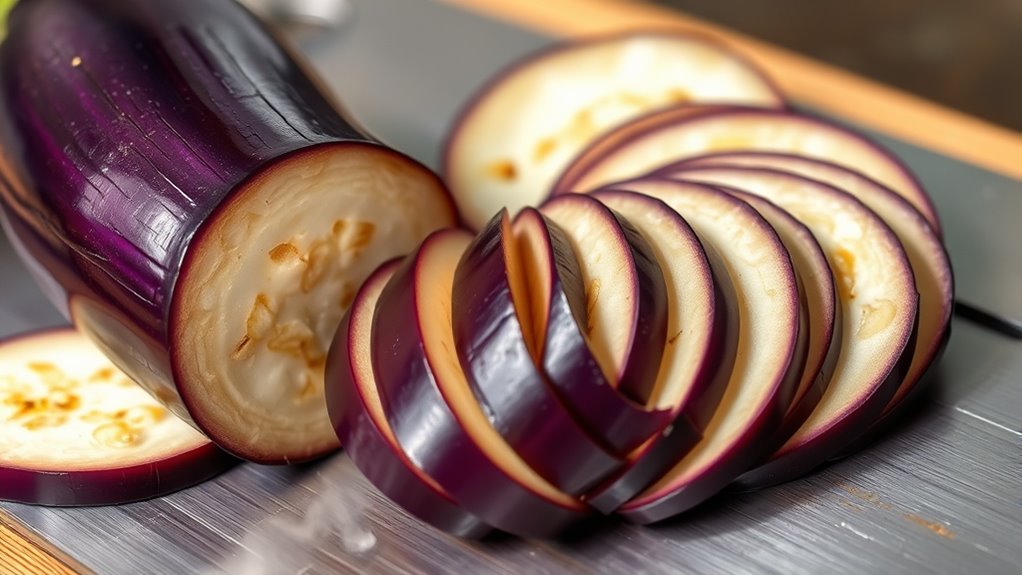
Cutting eggplant properly is essential for preparing it evenly and ensuring it cooks uniformly. The first step in achieving the perfect texture is selecting ripe eggplant. When shopping, look for firm, shiny, and smooth-skinned eggplants with a deep, vibrant color. Avoid any with wrinkles, soft spots, or blemishes, as these indicate overripeness or spoilage. Ripe eggplant has a slight give when pressed but quickly springs back, showing it’s fresh and firm. Picking a good eggplant sets the foundation for a successful dish, preventing the vegetable from turning spongy or mushy during cooking.
Once you’ve chosen a ripe eggplant, the next step is proper peeling. Not all recipes require peeling, but if you prefer a tender, less bitter result, peeling is advisable. To peel efficiently, use a sharp vegetable peeler or a paring knife, starting from the top and working downwards. Hold the eggplant firmly in one hand and peel in smooth, downward strokes, removing the thin skin in strips. This method keeps the process controlled and prevents damage to the flesh. Proper peeling techniques help eliminate the bitter outer layer and any tough skin that might interfere with even cooking. If you notice small brown seeds or a slightly bitter smell, peeling will also help remove these, resulting in a milder flavor and better texture.
When peeling, be gentle and avoid gouging into the flesh, as this can cause uneven slices that cook at different rates, leading to texture issues. If you prefer to keep the skin on, be sure to wash the eggplant thoroughly to remove any dirt or pesticides. Cutting into a clean, ripe eggplant with smooth skin ensures you’ll get clean slices that cook evenly. Additionally, understanding how the contrast ratio affects the appearance of cooked vegetables can help you choose the right cooking methods to enhance color and texture. Once peeled, you can proceed to cut the eggplant into your desired shape—slices, cubes, or strips—knowing that the initial quality and proper peeling set the stage for a well-cooked, non-spongy result.

OXO Good Grips Large Vegetable Y Prep Peeler, Black
The OXO Good Grips Large Vegetable Prep Peeler is perfect for peeling large or thick-skinned vegetables like eggplant…
As an affiliate, we earn on qualifying purchases.
As an affiliate, we earn on qualifying purchases.
Frequently Asked Questions
Can I Peel Eggplant Before Cutting?
Yes, you can peel eggplant before cutting if you prefer a milder flavor or smoother texture. Use peeling techniques like a vegetable peeler or paring knife for even, thin strips. Peeling enhances flavor by removing the slightly bitter skin, especially for dishes where you want a delicate taste. Keep in mind that leaving the skin on can add texture and nutrients, so choose based on your recipe and personal preference.
What’s the Best Type of Knife for Cutting Eggplant?
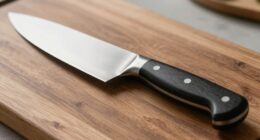
You should use a sharp, stainless steel or Japanese chef’s knife for cutting eggplant. Studies show that a sharp knife reduces prep time and enhances safety. Keep your knife well-honed to guarantee clean cuts, which help prevent mushiness. Use a gentle, steady cutting technique, applying even pressure, to maintain the eggplant’s shape and texture. This approach makes slicing easier and results in better cooking results.
How Do I Prevent Eggplant From Browning After Cutting?
To prevent eggplant browning after cutting, focus on proper eggplant preservation by applying a light coating of lemon juice or vinegar immediately after slicing. Use effective cutting techniques to minimize surface exposure, keeping the pieces submerged in water or stored airtight. This prevents oxidation, which causes browning. Cover the cut eggplant tightly, refrigerate if not used immediately, and avoid exposing it to air to keep it fresh and colorful.
Should I Salt Eggplant Before Cutting?
Yes, salting eggplant before cutting helps with moisture control. Use salting techniques by sprinkling salt generously over sliced or cubed eggplant, then let it sit for 30 minutes. This draws out excess moisture, reducing bitterness and preventing spongy texture during cooking. Rinse off the salt and pat dry before cooking. This simple step guarantees your eggplant stays firm and absorbs flavors better.
How Thick Should I Slice Eggplant for Different Recipes?
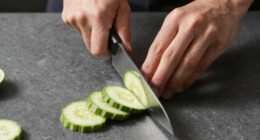
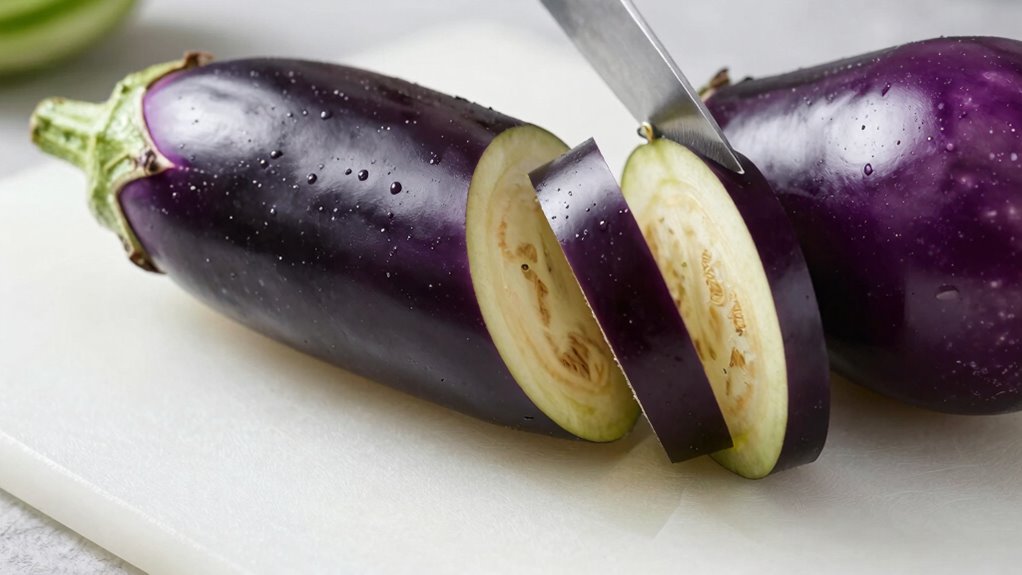
Like a master painter choosing the right brush, you should slice eggplant to fit your recipe. For grilling or roasting, go for ½-inch thick slices to guarantee even cooking and good texture. For stir-fries or stuffing, cut into ¼-inch thick slices or cubes. Proper eggplant storage keeps slices fresh, and selecting the right thickness enhances your cooking methods, making every dish a masterpiece.

Norpro 800 Veggie Tube Cutting Guide
Quickly cut cherry tomatoes, grapes, pitted cherries and olives
As an affiliate, we earn on qualifying purchases.
As an affiliate, we earn on qualifying purchases.
Conclusion
Now that you know how to cut eggplant properly, you’re all set to avoid that dreaded spongey texture. Just remember, patience is key—don’t rush the process or you’ll end up with a soggy mess. With a little care and attention, your eggplant will turn out perfectly every time. So go ahead, give it a shot and don’t let this opportunity slip through your fingers. Happy cooking!

ESSUE Egg Spatula, Grip and Flipp Tongs Spatula, Fried Eggs Turners, 2 in 1 Omelette Clamp, Frying Turning Grilling Kitchen Cooking Tool for Omelette, Pancake, Steak, Fish, and Egg Ziurmut, Red
↺Easy to Flipp and Grip Food: Using a thin and flexible silicone head with an angled edge, our…
As an affiliate, we earn on qualifying purchases.
As an affiliate, we earn on qualifying purchases.

Gramercy Mandoline Food Slicer, Vegetable Cutter, Potato Slicer, Mandolin for Kitchen, Veggie Cutter, Cucumber Tool – Comes with One Pair Cut-Resistant Gloves
Durable Stainless Steel Blade: The mandoline slicer features a V-shaped stainless steel blade that is durable and long-lasting.
As an affiliate, we earn on qualifying purchases.
As an affiliate, we earn on qualifying purchases.