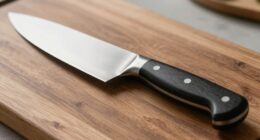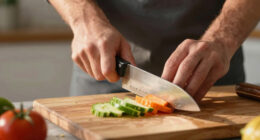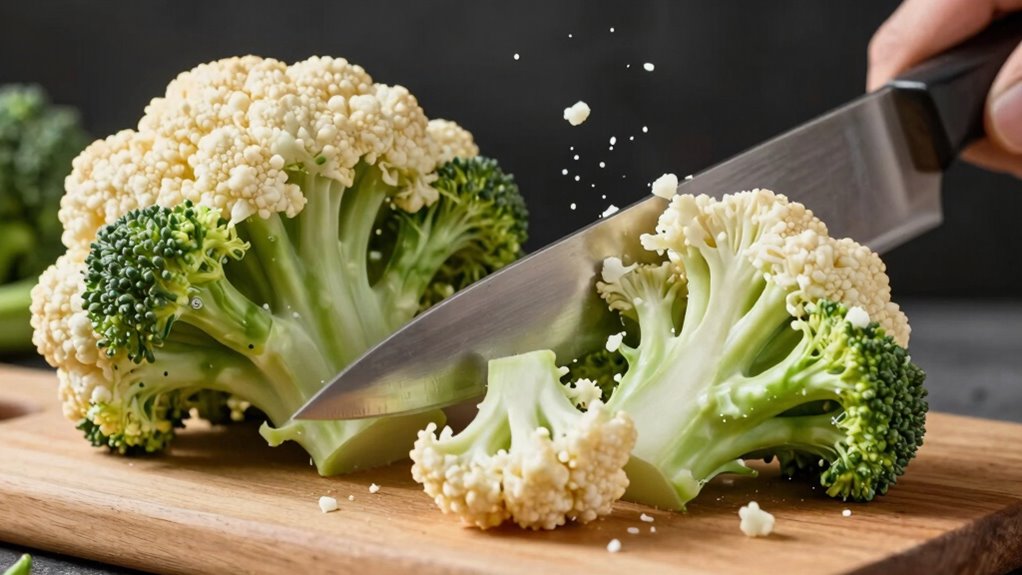

To cut broccoli and cauliflower without making a florets explosion, start with a sharp knife and work slowly with controlled, steady strokes. First, cut the stalk into manageable pieces, then separate the florets near the natural division points to keep them intact. Hold the vegetable firmly, curl your fingers to protect them, and avoid rushing the cuts. Mastering these techniques helps you make clean cuts—keep going for more tips to perfect your process.
Key Takeaways
- Cut close to the stalk or core to prevent florets from scattering during separation.
- Use steady, controlled strokes instead of rushing to maintain precision and safety.
- Break down the head into manageable sections before detaching florets to minimize explosion.
- Hold the vegetable firmly and keep fingers curled away from the blade’s path.
- Ensure your knife is sharp for clean cuts, reducing pressure that can cause florets to scatter.
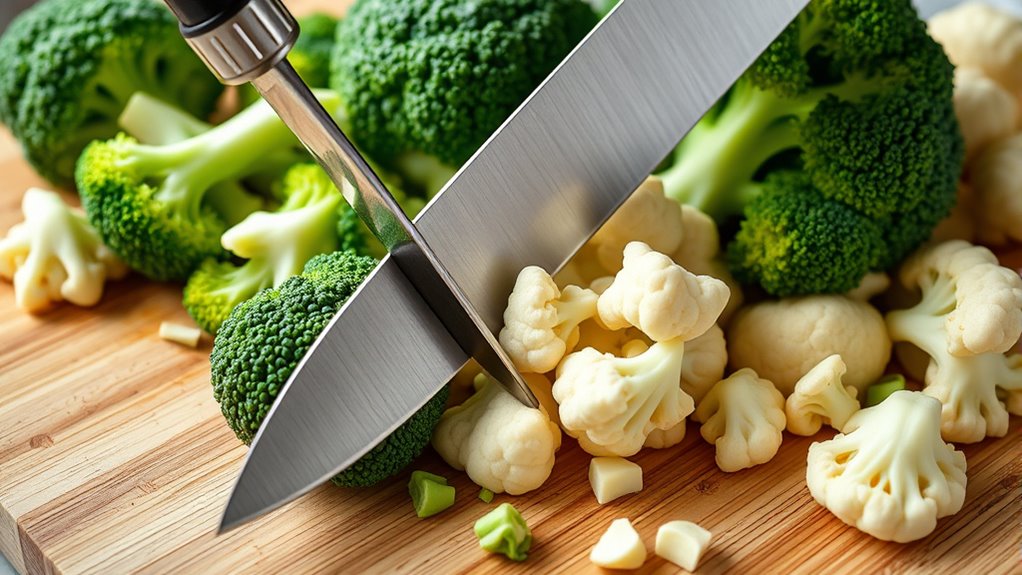
Ever wondered how to cut broccoli and cauliflower efficiently for your recipes? The key lies in mastering proper technique while emphasizing knife safety and cleaning techniques. When you handle these vegetables, it’s easy for florets to scatter everywhere if you’re not careful. To avoid making a mess and guarantee safety, start with a sharp knife. A dull blade requires more force, increasing the risk of slips or cuts. Keep your knife sharp and well-maintained, regularly honing it to guarantee precise cuts. Before you begin, wash your vegetables thoroughly using cleaning techniques that remove dirt and pesticides. Proper cleaning not only keeps your produce safe but also prevents bacteria from spreading during preparation. Additionally, understanding the importance of color accuracy can help you better judge the freshness and quality of your vegetables at a glance.
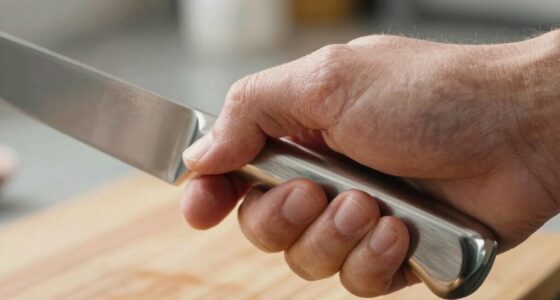
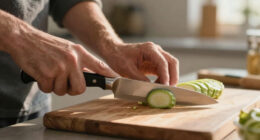
Once your broccoli and cauliflower are clean, place the vegetable on a stable cutting board. Use your non-dominant hand to hold the vegetable firmly, curling your fingers inward to avoid accidental cuts. With your dominant hand, grip the knife securely, keeping your fingers behind the blade at all times. This is vital for knife safety, giving you better control and reducing the chance of slipping. When you start cutting, aim for steady, controlled strokes rather than rushing. For broccoli, cut the stalk into manageable sections first, then separate the florets by gently pulling or slicing them apart. For cauliflower, remove the outer leaves and cut the head into halves or quarters before breaking down the florets.
To avoid florets exploding or scattering, make clean, precise cuts close to the stalk or core. If you’re separating florets, cut just below the head’s natural division point, which minimizes damage and dispersal. When trimming, work slowly and patiently, especially around tight or irregularly shaped parts. Remember, knife safety means always keeping your fingers away from the blade’s path and maintaining a firm grip. After chopping, clean your tools immediately with warm water and soap, following proper cleaning techniques. This prevents residue buildup and keeps your knives in top condition.

DDF iohEF Kitchen Knife, Chef's Knife In Japanese Stainless Steel Professional Santoku Cooking Knife, 7 Inch Non-slip Ultra Sharp Knife with Ergonomic Handle
【Premium Japanese Stainless Steel Chef's Knife】: This chef's knife is made of professional Japanese stainless steel with a…
As an affiliate, we earn on qualifying purchases.
As an affiliate, we earn on qualifying purchases.
Frequently Asked Questions
Can I Use a Food Processor to Cut Broccoli and Cauliflower?
Yes, you can use a food processor to cut broccoli and cauliflower, but you need to prioritize food processor safety. Use the pulse function to control the size of your florets and avoid over-processing. However, manual cutting techniques give you more control and prevent uneven pieces. Always handle vegetables carefully, and don’t overload the processor. Combining both methods guarantees safe, evenly sized florets without making a florets explosion.
What’s the Best Way to Store Cut Florets?
You’ll want to keep your cut florets in an airtight container or a resealable bag to prevent them from turning into a soggy, sad mess. Store them in the crisper drawer of your fridge to maximize freshness preservation. For the best flavor and crunch, use them within a few days. Proper kitchen storage isn’t just about saving space; it’s about keeping your veggies vibrant and delicious as if they just came from the market!
How Do I Prevent Florets From Falling Apart?
To prevent florets from falling apart, focus on proper knife techniques to maintain floret stability. Use a sharp knife and cut through the stem, avoiding excessive force that can cause breakage. When separating florets, apply gentle pressure and make clean, confident cuts. Keep the florets intact by not pulling or twisting them, and work slowly for better control. These steps help keep your florets whole and intact during preparation.
Are There Specific Tools Recommended for This Task?
Think of your kitchen as a sculptor’s studio, where precision tools shape your culinary masterpiece. You’ll want specialized knives with sturdy, sharp blades to glide through broccoli and cauliflower easily. Pair them with a cutting mat to stabilize your produce, preventing slips and floret explosions. These tools give you control, making clean cuts effortless and keeping your florets intact, so your dish looks as good as it tastes.
How Thin Should I Cut the Florets for Stir-Fry?
For stir-fry, you should cut the florets to about ¼ inch thick using a proper knife technique. Hold your knife steady and make clean, even cuts to guarantee uniform pieces. This cutting thickness helps the florets cook quickly and evenly without falling apart or becoming mushy. Practice a smooth slicing motion, keeping your fingers safe, and you’ll get consistent, thin florets perfect for stir-fry dishes.

BILLAMB Stainless Steel Cutting Boards for The Kitchen, Suitable for Meat, Fruits, Vegetables, Bread, and Baking Large-sized Cutting Boards (40 x 30cm/15.7 x 11.8 in)
This cutting board is made of durable stainless steel with a thickness of 0.15 cm (0.06 in), perfect…
As an affiliate, we earn on qualifying purchases.
As an affiliate, we earn on qualifying purchases.
Conclusion
Now that you know how to cut broccoli and cauliflower without the florets flying everywhere, you’re basically wielding a culinary Excalibur. With a steady hand and a bit of patience, you’ll tame these vegetables like a seasoned knight. Remember, every great chef has faced the chaos—think of it as conquering your own culinary Camelot. So go ahead, chop away with confidence, and turn your kitchen into a kingdom of perfectly prepared greens.

OXO Good Grips Vegetable Brush Black, 1 EA
Nylon bristles clean thoroughly
As an affiliate, we earn on qualifying purchases.
As an affiliate, we earn on qualifying purchases.

Utopia Kitchen Knife Sharpener Rod 12 Inch, Professional Honing Rod for Knife Sharpening with Hanging Hook, Black
Premium Steel Construction – The steel rod is made of carbon steel and plated with nickel-chrome; the fine…
As an affiliate, we earn on qualifying purchases.
As an affiliate, we earn on qualifying purchases.