To cut asparagus effectively, use a sharp knife for precise, uniform pieces. While snapping off the ends is popular, it often causes uneven cuts and waste. Proper storage keeps spears fresh and easier to handle, and a stable cutting board helps for safety. Using a knife gives you control over the size, ensuring even cooking and better presentation. Want to master these techniques for perfect cuts? Keep exploring to learn more.
Key Takeaways
- Using a sharp knife ensures precise, uniform cuts, unlike the unpredictable and wasteful snap method.
- Snapping off the ends relies on a myth that it yields the perfect break, but it often results in uneven pieces.
- Proper storage keeps asparagus fresh and firm, making it easier to cut with a knife.
- A stable cutting board and firm grip are essential for safe, controlled slicing.
- Knife-cut asparagus maintains fiber integrity, flavor, and presentation better than the snap method.
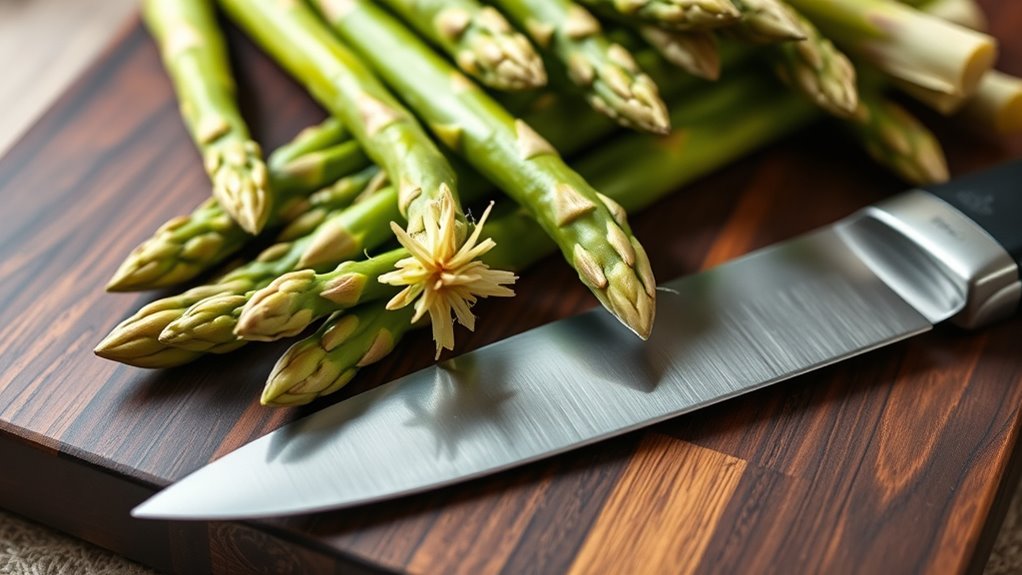
Cutting asparagus might seem simple, but doing it the right way guarantees your spears cook evenly and taste their best. Many people believe that snapping off the ends is the quickest method, but this “snap myth” often results in uneven cuts and waste. Instead, you should focus on using a sharp knife and proper technique to achieve clean, consistent pieces. Before you even start cutting, it’s essential to consider how you store your asparagus. Proper asparagus storage keeps the spears fresh and firm, making them easier to handle and cut. Keep asparagus upright in the refrigerator with the ends wrapped in a damp paper towel or stand them upright in a jar with a little water. This prevents wilting and maintains their crispness, which is vital for a smooth cutting process.
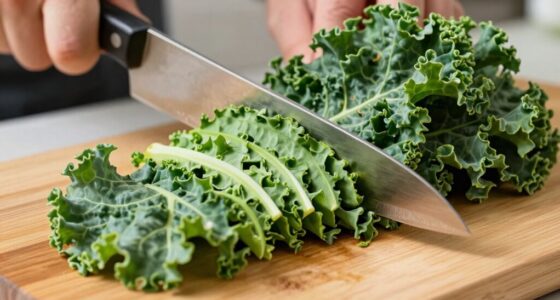
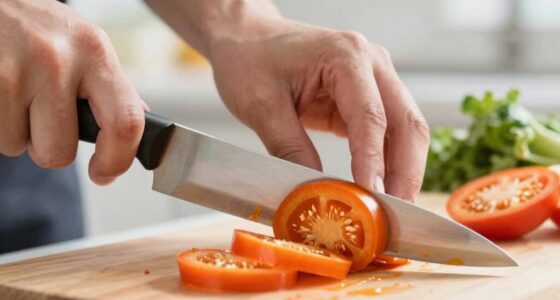
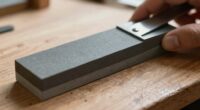
When it comes to preparing asparagus, knife sharpening plays a pivotal role. A dull knife not only makes cutting more difficult but also increases the risk of slipping and injury. Sharpen your knife regularly to guarantee it slices through the spears effortlessly. A sharp knife produces clean cuts, minimizing damage to the delicate fibers and maintaining the quality of the asparagus. When you’re ready to cut, lay the spears on a stable cutting board. Instead of relying on the snap method, hold the spear firmly and slice just below the tip, applying even pressure. For uniform pieces, aim to cut all the spears to a similar length, which helps them cook evenly.
The misconception that snapping asparagus ends is enough stems from the idea that the “natural break” indicates the perfect stopping point. While it’s true that the bottom part of the spear tends to be tougher, this method results in uneven lengths and can waste edible portions. Using a sharp knife allows you to control the cut precisely, giving you perfectly trimmed spears that cook uniformly. If you’re cutting for a specific recipe, such as spears for roasting or grilling, uniformity becomes even more critical. That’s why investing time in proper knife sharpening and technique is worthwhile. It guarantees your asparagus is prepared neatly, cooks evenly, and retains its flavor and texture.
Frequently Asked Questions
Can I Reuse Asparagus Trimmings for Soup or Stock?
Yes, you can reuse asparagus trimmings for soup or stock. When you trim asparagus, keep the trimmings aside and use proper trimming techniques to maximize flavor extraction. Asparagus flavor infuses well into broths, adding a subtle earthiness. Simply simmer the trimmings in water, then strain before adding the flavorful stock to your recipes. This way, you minimize waste and boost your dish’s natural taste.
Is There a Way to Peel Asparagus for Better Texture?
Did you know that peeling asparagus can considerably improve texture? To peel, use a vegetable peeler or a small paring knife, starting just below the tip and working downward. Peeling techniques remove the tougher outer layer, making the asparagus more tender and enjoyable, especially for dishes like salads or delicate sautés. This simple step enhances overall texture, ensuring each bite is smooth and refined.
How Do I Store Trimmed Asparagus to Keep It Fresh?
To keep your trimmed asparagus fresh, store it properly by placing it upright in a jar or glass with about an inch of water, similar to fresh flowers. Cover the tops loosely with a plastic bag to maintain humidity. This asparagus storage method helps preserve freshness, prevents wilting, and guarantees your asparagus stays crisp longer. Remember to change the water every couple of days for maximum freshness preservation.
What’s the Best Way to Prepare Thick vs. Thin Asparagus?
Did you know thinner asparagus cooks 50% faster than thicker spears? For thick asparagus, peel the lower half to remove tough skin and use a sharper knife for even cooking. Thin asparagus needs less prep—just trim and season with your favorite asparagus seasoning. For both, steaming or roasting works best. Remember, peeling enhances tenderness, especially for thick spears, making your dish more enjoyable.
Are There Safety Tips for Handling Sharp Knives When Cutting Asparagus?
To guarantee knife safety when cutting asparagus, always use proper cutting techniques and handle your knife carefully. Keep your fingers tucked away using a claw grip, and cut on a stable surface. Sharp knives are safer because they require less force, reducing slips. Focus on your task, avoid distractions, and store knives safely after use. By practicing good knife safety, you minimize risks and make your prep smoother.
Conclusion
Now that you know the best way to cut asparagus, you’ll enjoy your meals even more. Remember, snapping doesn’t always give you the perfect, tender part; a sharp knife guarantees even, clean cuts. Did you know that over 80% of chefs prefer using a knife for precision? Next time, skip the snap myth and get professional results with just a quick cut. Your asparagus will look better and taste fresher—happy cooking!