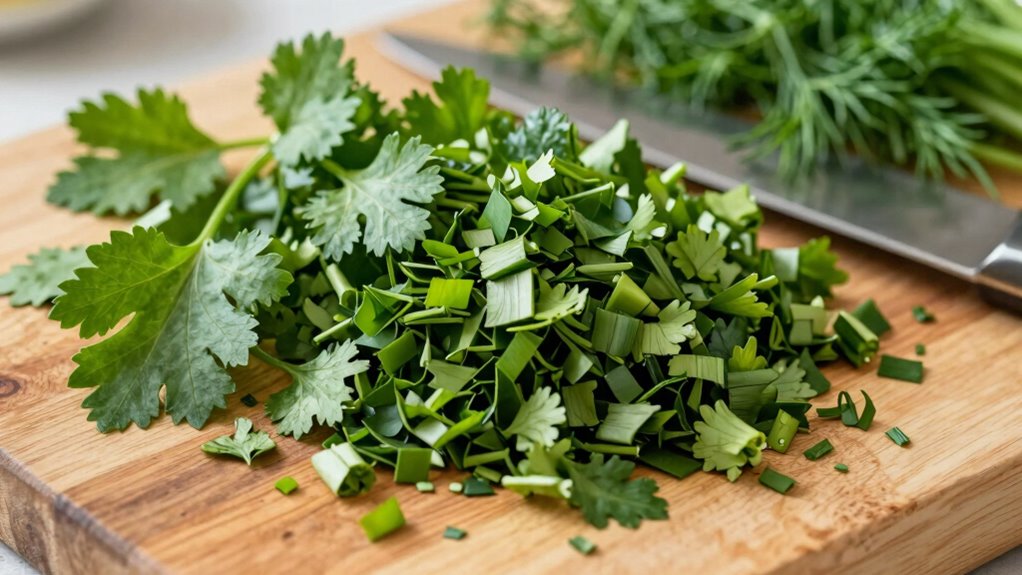

To chop parsley, cilantro, and dill without making paste, start by rinsing and thoroughly drying the herbs to prevent slipperiness. Hold a sharp knife with a firm grip, curling your fingers under to protect them. Use a gentle rocking motion, slicing in controlled, even strokes, and gather the herbs into a pile as you cut. Avoid pressing down hard to keep the herbs intact. With proper technique, you’ll keep your herbs fresh and flavorful—keep going to learn more tips.

Get kitchen gear delivered free — and shop member deals
- Fast, free delivery on millions of items
- Access to Prime Big Deal Days deals on October 6–7
- Prime Video, Amazon Music and more included
Key Takeaways
- Rinse herbs gently and thoroughly dry to prevent slipping and ensure clean, precise chopping.
- Use a sharp knife and a proper grip to control cuts and avoid mashing delicate leaves.
- Chop herbs with a gentle, rocking motion, gathering them into a pile for uniform pieces.
- Avoid pressing down hard; use controlled, even strokes to prevent turning herbs into paste.
- Chop herbs into small, consistent pieces immediately before use to preserve freshness and aroma.
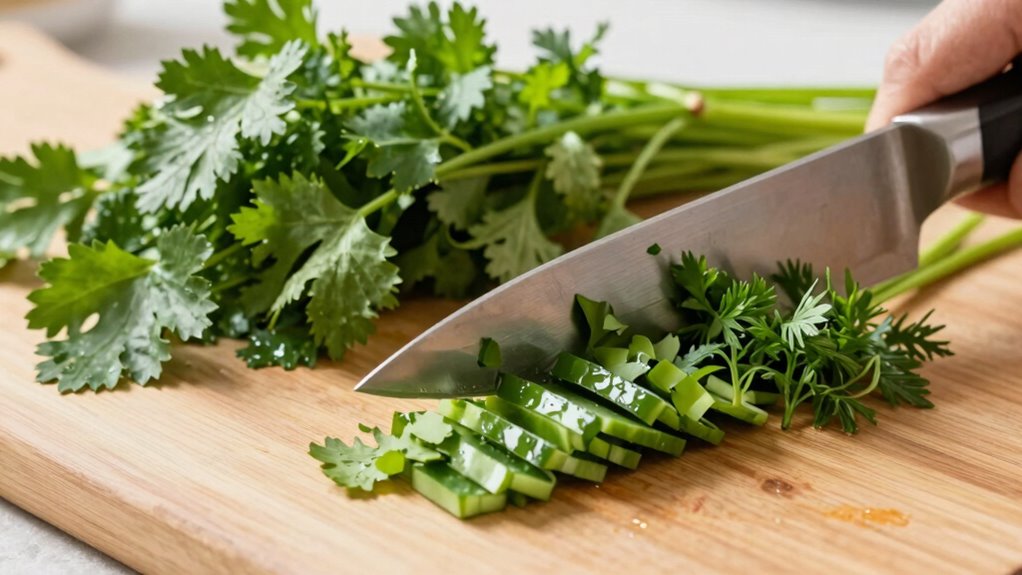
Chopping fresh herbs like parsley, cilantro, and dill is a simple skill that can elevate your dishes with vibrant flavor and aroma. To do this effectively, you need to master proper knife techniques and understand how to store your herbs to keep them fresh. When chopping herbs, your goal is to cut them into small, uniform pieces without turning them into a mash. This requires a sharp knife and a steady hand. Start by rinsing the herbs gently under cold water to remove any dirt or grit, then pat them dry with a towel or paper towel. Damp herbs can be slippery, making precise chopping more difficult, so guarantee they’re thoroughly dry. Proper herb storage techniques are essential for maintaining their freshness and flavor over time.
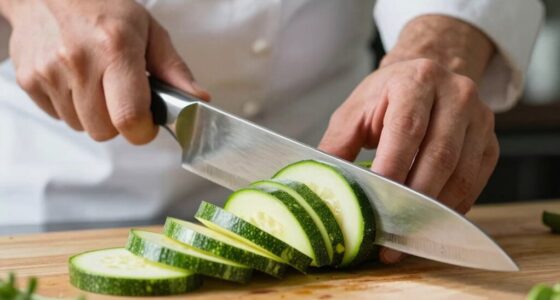
Using the right knife technique is key to chopping herbs without mashing them. Hold the knife with a firm grip, keeping your fingers curled under your knuckles to protect them from the blade. Use a rocking motion, slicing through the herbs with the tip of the knife and then pressing down. This technique allows for controlled, even cuts, reducing damage to the delicate leaves. Avoid pressing straight down, which can crush the herbs and turn them into a paste. Instead, slice with a gentle, rhythmic motion, gathering the herbs into a pile as you go. If the herbs are long or thick, you can fold or stack them to make chopping faster and more uniform. Additionally, proper knife skills are crucial for achieving the best results and preventing bruising of the herbs. Developing a consistent technique will also help maintain the herb’s freshness and flavor, ensuring your dishes taste their best. Practicing these techniques regularly can also improve your overall chopping speed and precision. Remember, a sharp knife not only makes the task easier but also minimizes the risk of accidents and preserves the integrity of your herbs.
As an affiliate, we earn on qualifying purchases.
Frequently Asked Questions
Can I Use a Food Processor to Chop Herbs?
Yes, you can use a food processor to chop herbs, but you should do so carefully to guarantee food processor safety. Use short pulses rather than continuous processing to avoid turning herbs into a paste. This method aligns with proper herb chopping techniques, helping you achieve finely chopped herbs without over-processing. Keep a close eye and pulse intermittently for the best results, maintaining control over the texture.
What’s the Best Way to Store Chopped Herbs?
To store chopped herbs effectively, you should prioritize herb flavor preservation. Place your herbs in airtight storage container options like small glass jars or resealable plastic bags. Squeeze out excess air to prevent moisture and preserve freshness. Keep the container in the refrigerator’s crisper drawer, and use within a few days for ideal flavor. This method helps maintain their vibrant taste and aroma, ensuring your herbs stay fresh longer.
How Do I Prevent Herbs From Bruising While Chopping?
Think of your herbs like delicate glassware—you want to handle them gently to preserve their herb freshness. To prevent bruising, use a sharp knife for clean cuts and avoid crushing the herbs. Keep your knife safe by using proper technique, which minimizes damage and keeps your herbs vibrant. With careful handling and a keen eye, you’ll chop herbs beautifully without bruising, ensuring maximum flavor and freshness in every dish.
Is It Necessary to Dry Herbs Before Chopping?
It’s best to dry herbs before chopping to preserve their flavor and maintain freshness. Excess moisture can cause herbs to bruise easily and turn slimy, which diminishes herb flavor preservation. Use a paper towel or a gentle spin in a salad spinner to remove surface water. Dry herbs chop more cleanly, release their essential oils better, and stay fresher longer. So, always dry herbs thoroughly for ideal flavor and freshness maintenance.
How Fine Should Herbs Be Chopped for Garnishing?
For garnishing, you want to chop herbs finely enough to release their flavor without turning them into a paste. Use a sharp knife and employ gentle chopping techniques, rocking the knife back and forth. Aim for small, uniform pieces that look appealing and enhance the herb flavor without overwhelming the dish. Keep your cuts consistent, and avoid over-chopping, which can muddle the fresh taste and texture.
As an affiliate, we earn on qualifying purchases.
Conclusion
So, next time you think chopping herbs is a tedious chore, remember: the real art is in preserving their vibrant texture and flavor—without turning them into a soggy mess. Ironically, in trying to make your herbs look perfect, you might just strip away their essence. But armed with these simple tips, you’ll keep your herbs fresh, flavorful, and far from the dreaded paste. Because sometimes, the best way to honor nature’s bounty is to handle it with a gentle touch.
As an affiliate, we earn on qualifying purchases.
As an affiliate, we earn on qualifying purchases.
Fall Picks
fall essentials
As an affiliate, we earn on qualifying purchases.