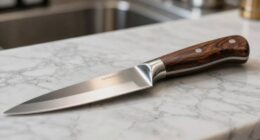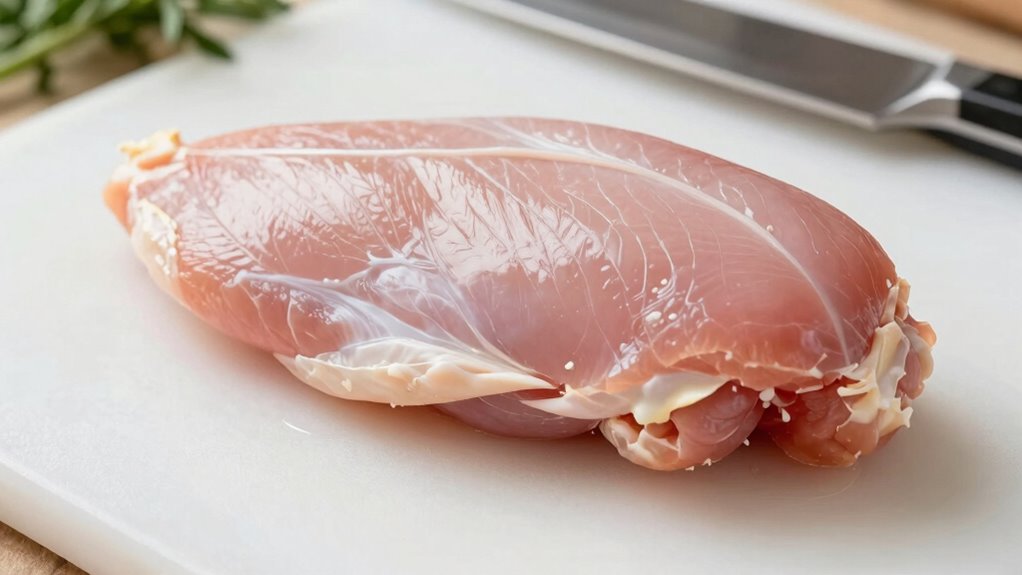

To butterfly a chicken breast evenly without holes or uneven spots, place it flat on a clean cutting board and use a sharp knife to slice horizontally into the thick side, stopping just before cutting all the way through. Keep your knife parallel to the board for an even cut. Then, carefully open the meat like a book and gently flatten it with your hand or a meat mallet for uniform thickness. Keep going to discover more tips for perfect results.
Key Takeaways
- Use a sharp knife or kitchen shears and cut horizontally into the thick side, stopping just before the edge.
- Keep the knife parallel to the cutting board to make even, controlled slices without holes.
- Open the sliced chicken flat like a book, ensuring the hinge remains intact.
- Gently pound or press the meat to even out any uneven sections and eliminate holes.
- Check the thickness throughout and use a meat mallet to flatten uneven areas for uniformity.
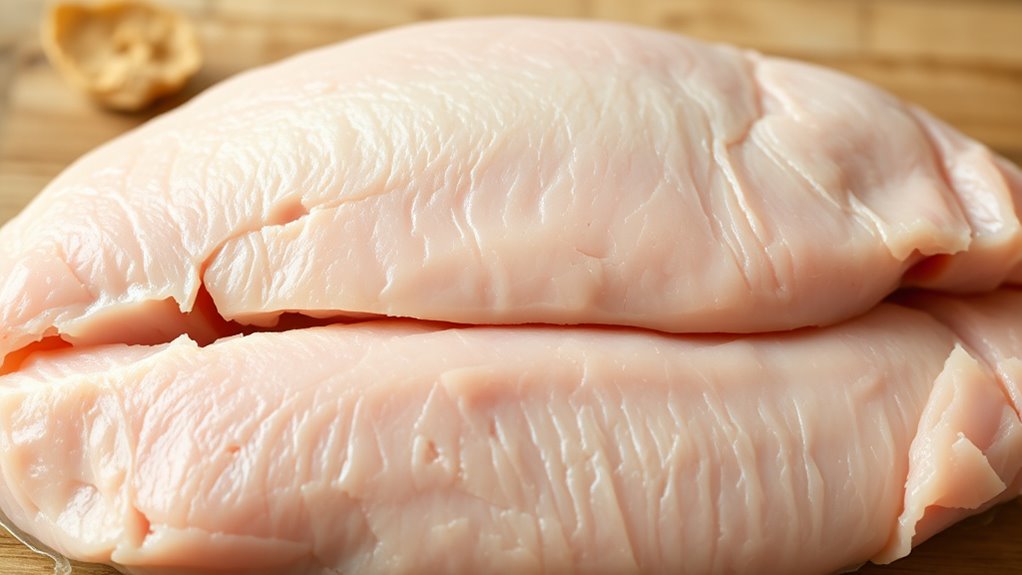
Butterflying a chicken breast is a simple technique that helps you cook the meat more evenly and quickly. When you master this method, you not only improve your cooking efficiency but also guarantee better poultry safety by reducing the risk of undercooked sections. Properly prepared chicken breasts cook uniformly, which is essential for meat safety, especially since poultry should reach an internal temperature of 165°F to eliminate harmful bacteria. By butterflying, you create a thinner, more consistent piece that cooks through evenly, decreasing the chances of raw or overcooked spots.
Butterflying chicken breasts ensures even cooking and enhances poultry safety.
To start, place your chicken breast on a clean cutting board. Use a sharp knife or kitchen shears to carefully slice horizontally into the thick side of the breast, stopping just before you cut all the way through. Think of it as opening a book, where the hinge remains intact. This gives you a pocket that you can open flat, creating a larger, thinner piece. When doing this, keep the knife parallel to the cutting board to avoid uneven cuts or holes. This technique helps you control the thickness, leading to more consistent cooking results, especially when applying different cooking techniques like grilling, pan-searing, or baking.
Once you’ve butterflied the chicken, gently open it up and press down to flatten it evenly. If you notice any uneven parts or thicker sections, you can use a meat mallet or the bottom of a heavy pan to gently pound the meat to an even thickness. This step is vital for poultry safety because it ensures that the entire piece reaches the safe internal temperature at the same time. An uneven chicken breast can have thicker areas that remain raw while the thinner parts are overcooked, which is risky and compromises food safety.
As you prepare to cook, remember that some cooking techniques work better with thinner, evenly flattened chicken breasts. Grilling or pan-frying are excellent choices because they allow rapid, uniform heat transfer. Always use a meat thermometer to check the internal temperature, making sure it hits the safe zone without overcooking. Proper technique and attentiveness during cooking not only improve the texture and flavor but also guarantee your poultry is safe to eat. Butterflying a chicken breast simplifies your cooking process and helps you achieve better results every time, guaranteeing even doneness and maximum safety with each meal.
Top picks for "butterfly chicken breast"
Open Amazon search results for this keyword.
As an affiliate, we earn on qualifying purchases.
Frequently Asked Questions
What’s the Best Tool for Butterflying Chicken Breast?
The best tool for butterflying chicken breast is a sharp, boning or chef’s knife, which is essential for precise cuts in culinary techniques. You could also use kitchen gadgets like a chicken breast splitter or a dedicated butterfly knife, making the process easier and more even. These tools help you create even, thin pieces without holes or uneven spots, ensuring your chicken cooks evenly and looks professional.
How Thick Should the Chicken Be After Butterflying?
After butterflying, aim for an even thickness of about ½ inch to ¾ inch. Use a ruler or your finger to measure proper thickness, ensuring consistency for even cooking. If some parts are thicker, gently pound them with a meat mallet to match the rest. This way, you’ll achieve even cooking, tender results, and prevent overcooking or drying out the thinner sections of your chicken breast.
Can I Butterfly Frozen Chicken Breast Safely?
Think of butterflying frozen chicken like trying to open a sealed treasure chest; it’s best to avoid forcing it open. You should never butterfly directly from frozen. Instead, use safe thawing methods like overnight refrigeration or cold water immersion. Proper storage guarantees the chicken stays safe, and thawing thoroughly prevents uneven cooking. Once fully thawed, you can butterfly evenly, ensuring no holes or uneven spots, for perfect cooking.
How Do I Prevent Tearing the Chicken While Butterflying?
To prevent tearing the chicken while butterflying, use a sharp knife for cleaner, safer cuts. Keep your knife safety in mind by holding it firmly and slicing slowly, applying even pressure. Make a gentle, controlled cut through the thickest part, avoiding excessive force. Maintain steady hands and focus on even slicing, which helps you cut smoothly without tearing. Patience and precision guarantee your chicken stays intact and perfectly butterflied.
Is There a Difference Between Butterflying and Pounding Chicken?
Butterflying and pounding chicken are both essential cooking techniques for meat preparation, but they serve different purposes. Butterfly involves slicing the chicken horizontally to create an even, thin piece, perfect for quick cooking and stuffing. Pounding uses a meat mallet to flatten the chicken, which helps with even thickness and tenderness. Both methods make your chicken cook more evenly, but butterflying keeps the meat intact, while pounding breaks it apart slightly.
Conclusion
Now that you know how to butterfly chicken breast evenly, you’ll impress everyone with your culinary skills—no more holes or uneven spots. Just like a skilled chef in a bustling modern kitchen, you’ve mastered the art of perfect preparation. Remember, patience and a steady hand are your best allies, whether you’re in a 21st-century kitchen or a Victorian cook’s atelier. With this trick up your sleeve, your chicken will cook evenly—and taste divine—every single time.