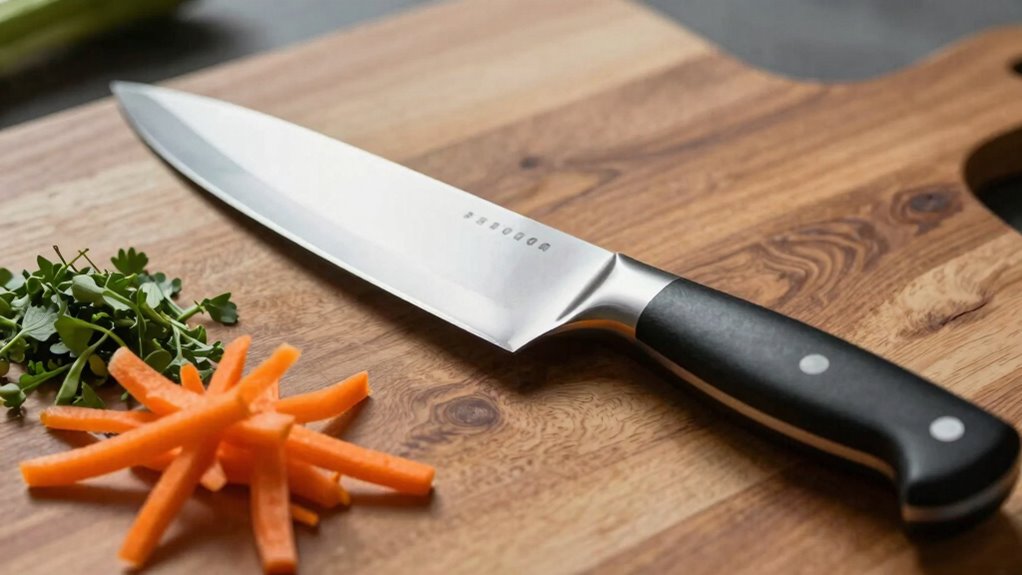
A Santoku makes more sense than a chef knife when you need precise, controlled cuts on vegetables or delicate ingredients. Its flat blade allows for straight, clean slices, perfect for detailed garnishes or presentation. The ergonomic handle offers better control and comfort for repetitive or intricate tasks. Plus, its lighter weight reduces hand fatigue during extended prep. If you want to learn more about when a Santoku outperforms a chef knife, keep exploring these key differences.
Key Takeaways
- When precise slicing, dicing, or chopping of vegetables is required, a Santoku offers better control and stability.
- For detailed garnishing and presentation work, the flat blade of a Santoku ensures clean, consistent cuts.
- If minimizing hand fatigue during repetitive tasks, the lighter weight and ergonomic handle of a Santoku are advantageous.
- When working with smaller ingredients or delicate foods, the Santoku’s shorter blade provides enhanced maneuverability.
- For versatile, all-in-one tasks, the Santoku’s design handles multiple kitchen tasks more efficiently than a traditional chef’s knife.
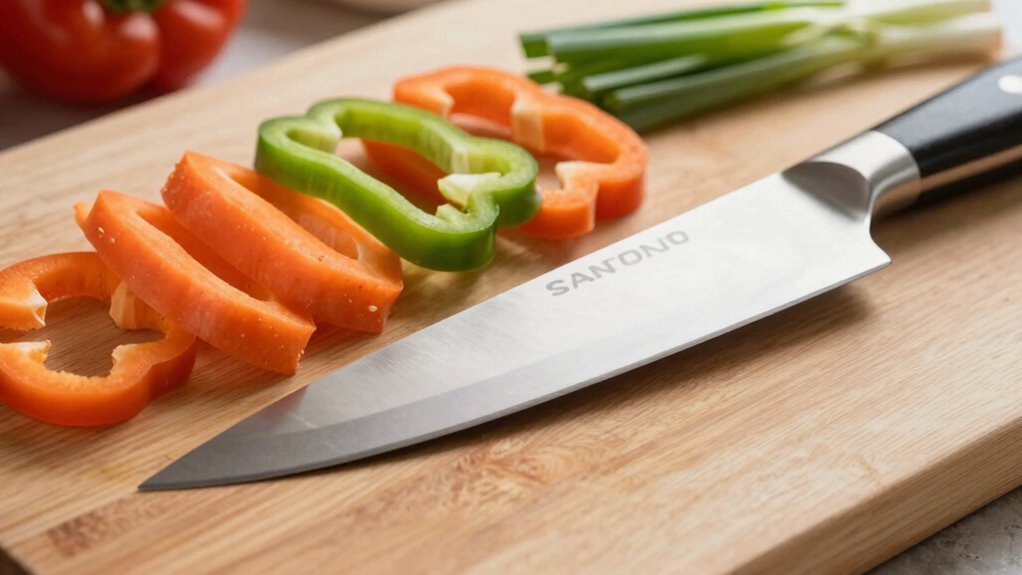
Choosing the right kitchen knife can considerably impact your cooking experience, especially when it comes to precision and comfort. When deciding between a Santoku and a chef’s knife, it’s essential to understand how each tool fits your cooking style. The Santoku, with its shorter, slightly wider blade and Granton edge, offers a different approach to knife versatility. It’s designed for slicing, dicing, and chopping, making it an excellent choice for a variety of tasks. Unlike the traditional chef knife, which excels at rocking cuts and larger slicing jobs, the Santoku provides more control and stability for precise, delicate cuts. If you often prepare vegetables or want a knife that handles multiple tasks with ease, the Santoku’s versatility becomes a significant advantage.
Your focus on cutting precision is *fundamental* when choosing between these two knives. The Santoku’s flatter blade allows you to make straight, clean cuts without the rocking motion typical of chef knives. This feature helps you achieve more consistent slices, especially when working on smaller ingredients or detailed garnishes. Its edge design minimizes tearing or crushing, ensuring your produce retains its shape and texture. For those who prioritize precision in presentation and texture, the Santoku offers an edge that complements your technique. Its shorter length also makes it easier to handle for controlled cuts, reducing fatigue during extended prep sessions. Additionally, its blade design enhances its suitability for detailed work, making it a valuable addition for precision-focused cooks. Moreover, its ergonomic handle contributes significantly to user comfort and control, especially during prolonged use. A well-designed handle can also prevent fatigue and provide better safety during intricate tasks. Furthermore, many Santoku knives feature dimpled edges that help prevent food from sticking, streamlining the prep process even more.
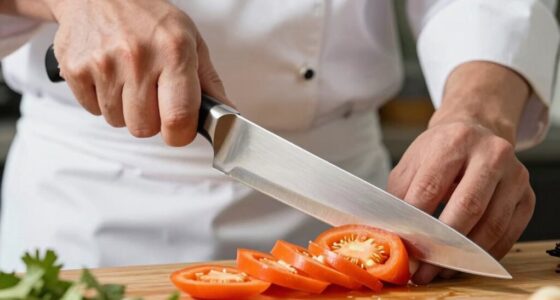
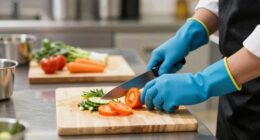
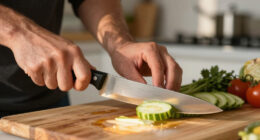
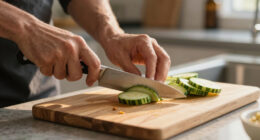
Santoku’s flat blade ensures precise, consistent cuts with minimal tearing, perfect for detailed garnishes and delicate ingredients.
Comfort plays a *pivotal* role, especially if you spend a lot of time in the kitchen. The Santoku’s lighter weight and balanced design reduce strain on your hand and wrist, making it easier to maneuver. This is particularly beneficial if you have smaller hands or prefer a more nimble, responsive tool. Its ergonomic handle provides a secure grip, allowing you to work with confidence and less fatigue. In comparison, a chef knife often has a longer blade and a heavier feel, which can be advantageous for larger slicing or chopping tasks but may feel cumbersome for detailed, repetitive cuts. Choosing the right knife ultimately hinges on your specific needs and preferences, especially how much control and comfort you prioritize during prep. When considering kitchen ergonomics, the Santoku’s design often proves to be more user-friendly for detailed, precise work.
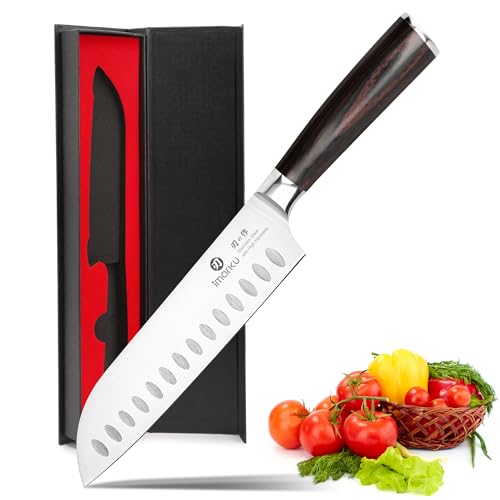
imarku Chef Knife 7 Inch Kitchen Knife Ultra Sharp Santoku Knife – High Carbon Japanese Chefs Knife, Kitchen Gadgets 2025, Apartment Essentials, Birthday Gifts for Him Her, Best Gifts for Women Men
Professional Santoku Knife: This imarku super sharp santoku knife is made of high carbon stainless steel that resists…
As an affiliate, we earn on qualifying purchases.
As an affiliate, we earn on qualifying purchases.
Frequently Asked Questions
What Are the Main Differences Between a Santoku and a Chef Knife?
A santoku differs from a chef knife mainly in blade design and cutting techniques. Its shorter, flatter blade makes precise chopping and slicing easier, especially for vegetables and boneless meats. You’ll find the santoku’s scalloped edges help prevent food from sticking. Use a gentle, rocking motion with a chef knife, but with a santoku, you’ll often chop straight down. Choose a santoku if you prefer more control for delicate, detailed cuts.
Can a Santoku Replace All Functions of a Chef Knife?
A santoku is like a versatile Swiss Army knife, but it can’t fully replace a chef knife. While it excels at slicing, dicing, and mincing with its Japanese design, it lacks the length and flexibility for certain tasks like breaking down large meats or delicate filleting. For knife versatility, a chef knife handles a broader range of kitchen chores, making it better suited for all-around use.
Which Knife Is Better for Beginner Cooks: Santoku or Chef Knife?
For beginner cooks, a Santoku often is better because it’s lightweight, easier to handle, and promotes good kitchen ergonomics. Its straight edge simplifies slicing and chopping, making knife maintenance straightforward. You’ll find it easier to control, reducing fatigue during prolonged use. While a chef knife is versatile, starting with a Santoku helps you develop proper technique and confidence before moving to more complex knives.
Are Santoku Knives Suitable for Heavy-Duty Chopping Tasks?
Like a trusty sword in a knight’s hand, a santoku isn’t ideal for heavy-duty chopping tasks. While it’s sharp and nimble, its design isn’t built for the vigorous, demanding cuts that require maximum knife durability. You’ll find a chef knife better suited for heavy-duty chopping because it can withstand more force and last longer through tough tasks. Stick to your chef’s knife for the heavy work, and keep your santoku for precision slicing.
How Does the Price of a Santoku Compare to a Chef Knife?
You’ll find that santoku knives are generally more affordable than high-end chef knives, but prices vary based on aesthetic appeal and brand reputation. If you choose a reputable brand with a sleek design, expect to pay more, yet it’s often worth the investment for quality. Cheaper options might lack durability, so balancing price with brand reputation and aesthetic appeal helps you get the best value for your money.
imarku Chef Knife 7 Inch Kitchen Knife Ultra Sharp Santoku Knife – High Carbon Japanese Chefs Knife, Kitchen Gadgets 2025, Apartment Essentials, Birthday Gifts for Him Her, Best Gifts for Women Men
Professional Santoku Knife: This imarku super sharp santoku knife is made of high carbon stainless steel that resists…
As an affiliate, we earn on qualifying purchases.
As an affiliate, we earn on qualifying purchases.
Conclusion
So, next time you’re faced with a delicate task, remember that choosing a Santoku over a chef’s knife is like wielding a samurai sword instead of a broad claymore—precision over brute strength. Just as Robin Hood knew when to draw his bow, knowing when a Santoku fits your cutting needs can make all the difference. Embrace this versatile tool, and your kitchen skills will be as sharp as a blade from legend.
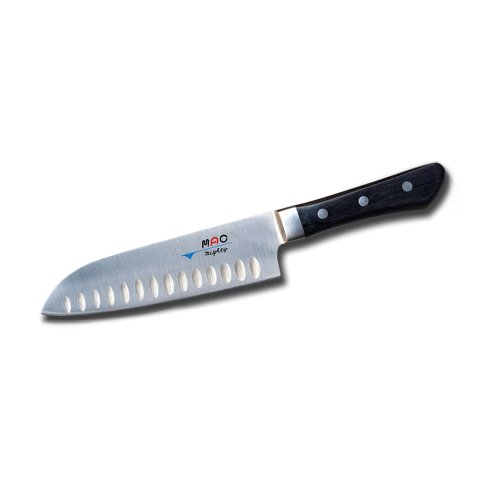
MAC Knife Professional series 6.5" Santoku with dimples MSK-65, made in Japan
2.5mm blade
As an affiliate, we earn on qualifying purchases.
As an affiliate, we earn on qualifying purchases.
imarku Chef Knife 7 Inch Kitchen Knife Ultra Sharp Santoku Knife – High Carbon Japanese Chefs Knife, Kitchen Gadgets 2025, Apartment Essentials, Birthday Gifts for Him Her, Best Gifts for Women Men
Professional Santoku Knife: This imarku super sharp santoku knife is made of high carbon stainless steel that resists…
As an affiliate, we earn on qualifying purchases.
As an affiliate, we earn on qualifying purchases.