
A gyuto stands out from a standard chef knife thanks to its balanced weight, which feels natural in your hand and improves control. Its craftsmanship emphasizes sharpness and edge retention, making cutting easier and more precise. The handle materials, like hardwood or resin composites, guarantee a comfortable grip even when wet. Overall, a gyuto offers better maneuverability and versatility, making it ideal for a variety of tasks. Keep exploring to discover how these design elements come together for superior performance.
Key Takeaways
- Gyuto typically has a thinner, more tapered blade for precision cuts compared to standard chef knives.
- It often features a lighter, more maneuverable design for better control.
- Gyuto’s blade geometry emphasizes versatility, suitable for a wide range of kitchen tasks.
- Handle materials and craftsmanship focus on aesthetics, grip, and balance, enhancing overall performance.
- Overall, Gyuto combines refined craftsmanship with a natural feel for professional and home use.

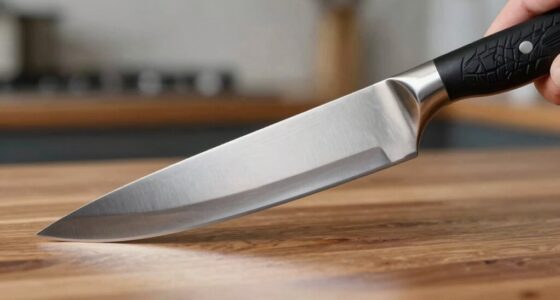
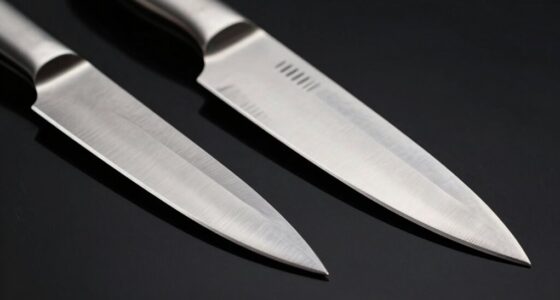
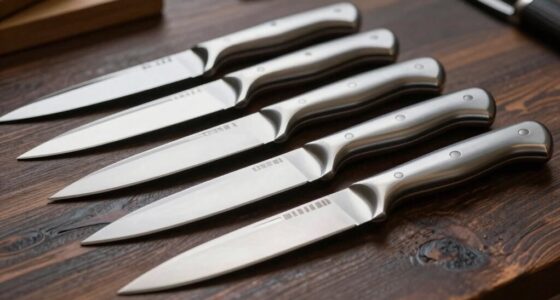
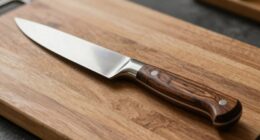
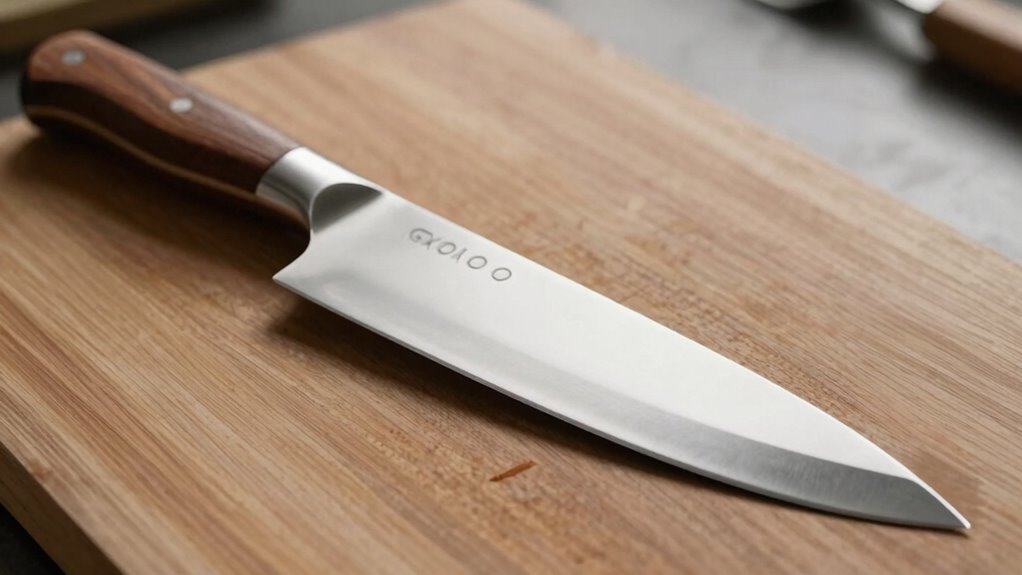
Have you ever wondered what sets a gyuto apart from a standard chef’s knife? The answer lies in its design and the way it’s crafted to enhance your cooking experience. One of the most noticeable differences is the knife’s balance. A gyuto is meticulously designed so that the weight distribution feels natural in your hand, allowing for smoother, more precise cuts. When you hold one, you’ll notice it feels just right—neither front-heavy nor tail-heavy—which reduces fatigue during extended use. This balanced feel gives you better control, making it easier to perform delicate slices or hefty chopping tasks without slipping or losing your rhythm. The balance isn’t just about comfort; it directly impacts your efficiency and safety in the kitchen. Additionally, the craftsmanship involved in creating a gyuto often emphasizes blade construction, ensuring the knife maintains its sharpness and edge retention longer. Another key aspect that makes a gyuto stand out is its handle material. Unlike many standard chef’s knives, which often feature synthetic handles, gyutos are frequently equipped with handles made from high-quality materials like hardwood, pakkawood, or even resin-infused composites. These handle materials are chosen not only for their aesthetic appeal but also for durability and grip. A good handle material provides a secure, comfortable grip even when your hands are wet or greasy, which helps you maintain control during intricate cuts. The handle shape and material work together to reduce hand fatigue and improve your overall grip, giving you confidence with every slice. Plus, the natural feel of premium handle materials adds a touch of elegance to the knife, making it a joy to use. Beyond the handle material, the overall craftsmanship of a gyuto emphasizes precision and quality. The blade’s construction, often with a focus on sharpness and edge retention, complements the balanced feel and ergonomic handle. This synergy results in a versatile knife that can handle everything from fine julienne cuts to heavy-duty chopping. Because of their design, gyutos are often lighter and more agile than traditional Western chef’s knives, which means you can maneuver them more easily without sacrificing power or precision. This is partly due to their blade geometry, which enhances their overall performance and maneuverability. This combination of knife balance and high-quality handle material makes the gyuto a favorite for professional chefs and home cooks alike, seeking a knife that feels natural in the hand and performs flawlessly. In essence, what makes a gyuto different is how thoughtfully designed every element is—from its perfect balance to its premium handle material—creating a knife that’s as comfortable as it is capable.

MITSUMOTO SAKARI 8 inch Gyuto Chef Knife, Japanese Hand Forged Kitchen Chef's Knives, 3-Layer 9CR18MOV High Carbon Steel, Rosewood Handle & Sandalwood Box
JAPANESE TRADITIONAL HAND FORGED: Professional chef knife blends traditional handmade forging craft with advanced tech and premium materials….
As an affiliate, we earn on qualifying purchases.
As an affiliate, we earn on qualifying purchases.
Frequently Asked Questions
Are Gyuto Knives Suitable for All Cutting Techniques?
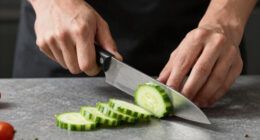
Yes, gyuto knives are suitable for all cutting techniques due to their versatility in techniques. You can use them for precision cutting, slicing, dicing, and chopping with ease. Their sharp, curved blade lets you rock and glide smoothly across ingredients, making them adaptable for various tasks. Whether you’re preparing vegetables or slicing meat, a gyuto’s design helps you execute a wide range of techniques efficiently and comfortably.
How Does the Weight of a Gyuto Compare to Other Chef Knives?
While a standard chef’s knife might feel more balanced due to its weight, a gyuto often balances better because of its design, making it more comfortable for extended use. Its weight is generally lightweight compared to Western-style knives, emphasizing knife balance and handle ergonomics. You’ll find the gyuto easier to control and maneuver, reducing fatigue. This thoughtful balance enhances your cutting precision, especially when working on delicate tasks or lengthy prep sessions.
Can a Gyuto Replace a Traditional Japanese Kitchen Knife?
Yes, a gyuto can replace a traditional Japanese kitchen knife in many situations. Its Japanese craftsmanship guarantees exceptional sharpness and balance, making it versatile for various tasks. Plus, its sleek knife aesthetics add a refined touch to your kitchen. While it offers the precision of a traditional Japanese knife, a gyuto’s design also provides the comfort and functionality you expect from a chef knife, making it an excellent all-around tool.
What Materials Are Commonly Used in Gyuto Blades?
You’ll find that gyuto blades are commonly made from high-carbon stainless steels or layered Damascus steel, which enhances their blade construction. These materials are chosen for their material durability, allowing the knife to maintain sharpness longer and resist rust. Some gyuto blades also incorporate VG-10 or SG2 steel, known for their strength and edge retention. This combination of quality materials guarantees your gyuto remains sharp and dependable through extensive use.
Is a Gyuto Easier to Sharpen Than a Standard Chef Knife?
A gyuto is generally easier to sharpen than a standard chef knife because its blade flexibility allows for more controlled, precise strokes, reducing the risk of uneven edges. Plus, the handle comfort helps you maintain steady pressure during sharpening. With proper technique, you can keep a gyuto sharp longer, and its high-quality steel responds well to honing, making maintenance simpler and more efficient for home cooks and professionals alike.
MITSUMOTO SAKARI 8 inch Gyuto Chef Knife, Japanese Hand Forged Kitchen Chef's Knives, 3-Layer 9CR18MOV High Carbon Steel, Rosewood Handle & Sandalwood Box
JAPANESE TRADITIONAL HAND FORGED: Professional chef knife blends traditional handmade forging craft with advanced tech and premium materials….
As an affiliate, we earn on qualifying purchases.
As an affiliate, we earn on qualifying purchases.
Conclusion
In the end, a gyuto offers you precision, versatility, and a touch of artistry that a standard chef’s knife might lack. It’s a tool that invites you to slice smoothly, chop confidently, and carve with grace. With its balanced design, sharp edge, and elegant form, a gyuto transforms everyday cooking into a culinary experience. Embrace its unique qualities, and you’ll find yourself creating more with less effort, turning simple ingredients into extraordinary dishes.

SHAN ZU 8 Inch Japanese Chef Knife, Hand Forged Gyuto Knife 9 Layers High Carbon 10CR18MOV Steel Kitchen Knife Ultra Sharp & Durable Professional Japanese Sashimi Knife with Ergonomic Rosewood Handle
Professional-Grade Construction – 9-Layer Clad Steel for Durability| The blade is constructed from 9 layers of high-carbon stainless…
As an affiliate, we earn on qualifying purchases.
As an affiliate, we earn on qualifying purchases.
MITSUMOTO SAKARI 8 inch Gyuto Chef Knife, Japanese Hand Forged Kitchen Chef's Knives, 3-Layer 9CR18MOV High Carbon Steel, Rosewood Handle & Sandalwood Box
JAPANESE TRADITIONAL HAND FORGED: Professional chef knife blends traditional handmade forging craft with advanced tech and premium materials….
As an affiliate, we earn on qualifying purchases.
As an affiliate, we earn on qualifying purchases.