If you focus on vegetable prep, a nakiri is your best choice because its flat, straight blade offers precise, uniform cuts while minimizing damage to ingredients, helping preserve freshness and flavor. A santoku, however, provides more versatility with its curved edge and rocking motion, making it useful for a variety of tasks. To pick the right one, consider whether you prioritize precision or versatility—continue exploring to find your ideal vegetable knife.
Key Takeaways
- Nakiri excels at precise, straight-down vegetable cuts, preserving texture and flavor with minimal cell damage.
- Santoku offers versatility with rocking, slicing, and dicing techniques, suitable for a variety of vegetable preparations.
- Nakiri’s wide, lightweight design enhances safety and reduces fatigue during high-volume vegetable prep.
- Santoku’s curved blade and heavier weight provide better control for forceful chopping and delicate slicing.
- Choose Nakiri for uniform vegetable slices; select Santoku for multi-technique versatility in vegetable-focused cooking.
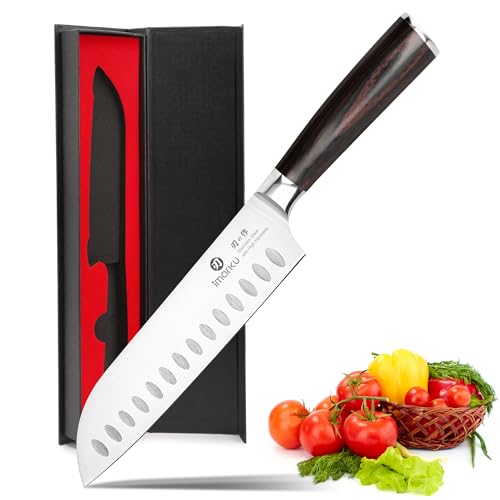
imarku Chef Knife 7 Inch Kitchen Knife Ultra Sharp Santoku Knife - High Carbon Japanese Chefs Knife, Kitchen Gadgets 2025, Apartment Essentials, Birthday Gifts for Him Her, Best Gifts for Women Men
Professional Santoku Knife: This imarku super sharp santoku knife is made of high carbon stainless steel that resists...
As an affiliate, we earn on qualifying purchases.
Design Differences and Their Impact on Vegetable Prep
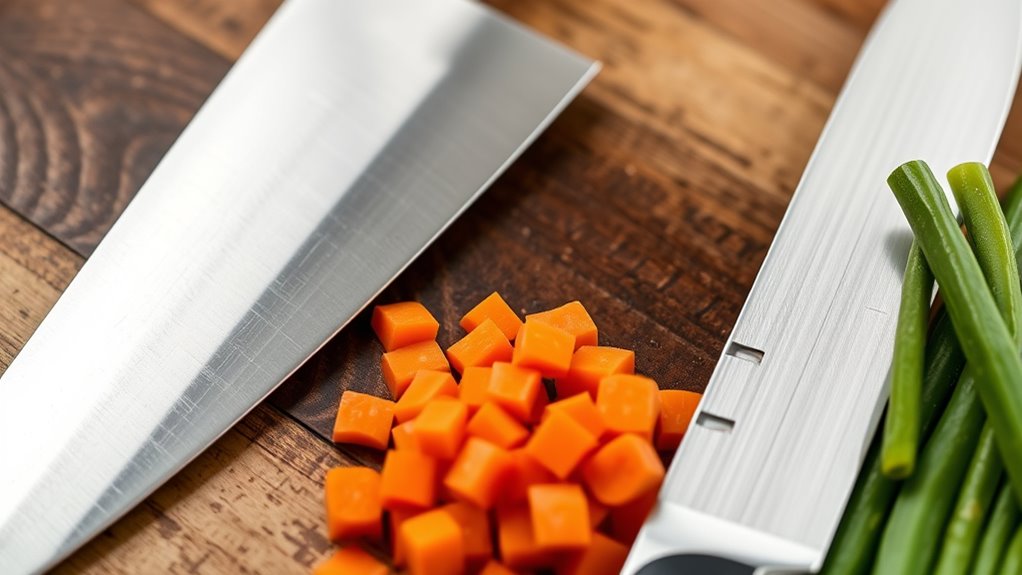
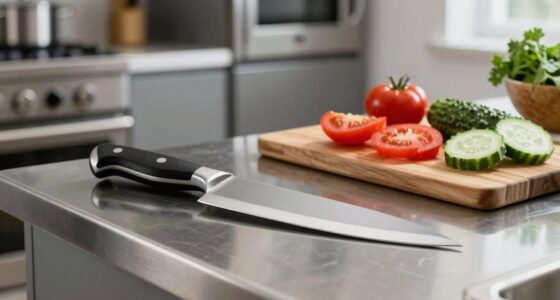
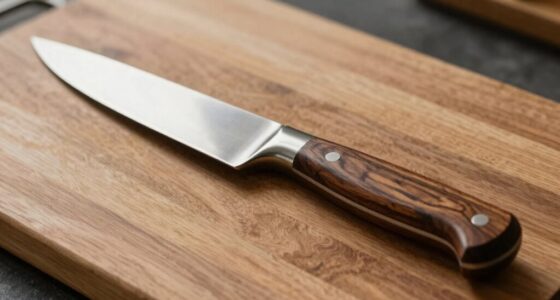
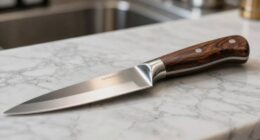
The design differences between a nakiri and a santoku considerably influence how you prep vegetables. The nakiri features a rectangular, flat-edged blade with a squared-off tip, making it ideal for vertical chopping. Its thin, straight blade allows full contact with vegetables, ensuring clean, precise cuts. In contrast, the santoku has a flat edge with a rounded or slightly curved tip, supporting a variety of cutting motions like rocking and slicing. The santoku’s thinner blade with a subtle curve offers versatility but may not provide the same control for straight, uniform slices. Additionally, the nakiri’s wider blade offers more knuckle clearance, enhancing safety and comfort during repetitive chopping. These design elements directly impact your technique, efficiency, and the quality of vegetable prep. Understanding blade shape can help you choose the best knife for your specific vegetable preparation needs.

HOSHANHO Kitchen Knife in Japanese High Carbon Steel, Professional High-Class Chef's Knife 8 inch, Non-slip Ultra Sharp Cooking Knives with Ergonomic Handle
【High-End Japanese Steel Chef's Knife】 HOSHANHO chef's knife is made of Japanese high carbon steel 10Cr15CoMoV, 2x of...
As an affiliate, we earn on qualifying purchases.
Cutting Techniques and Their Suitability for Vegetables
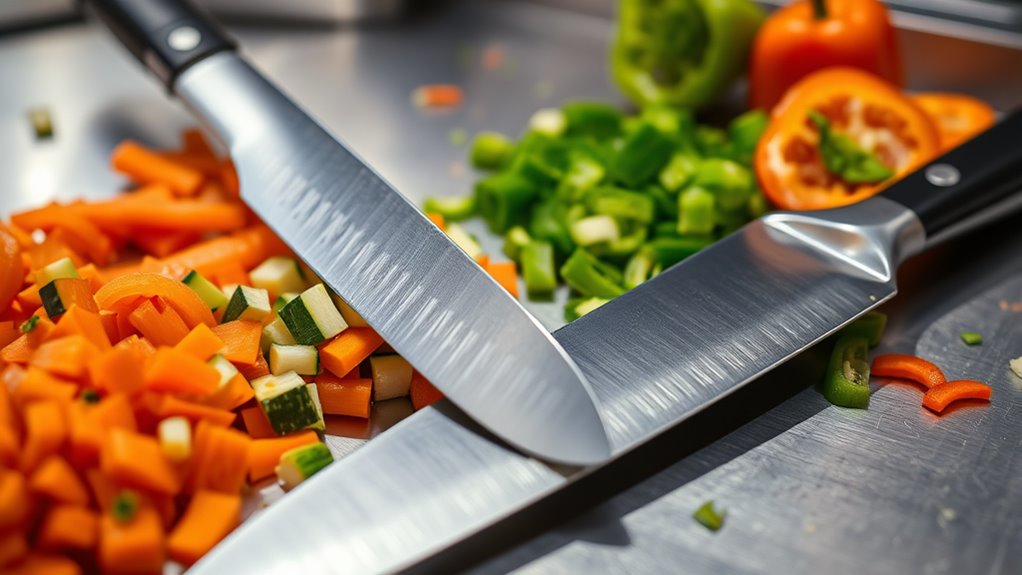
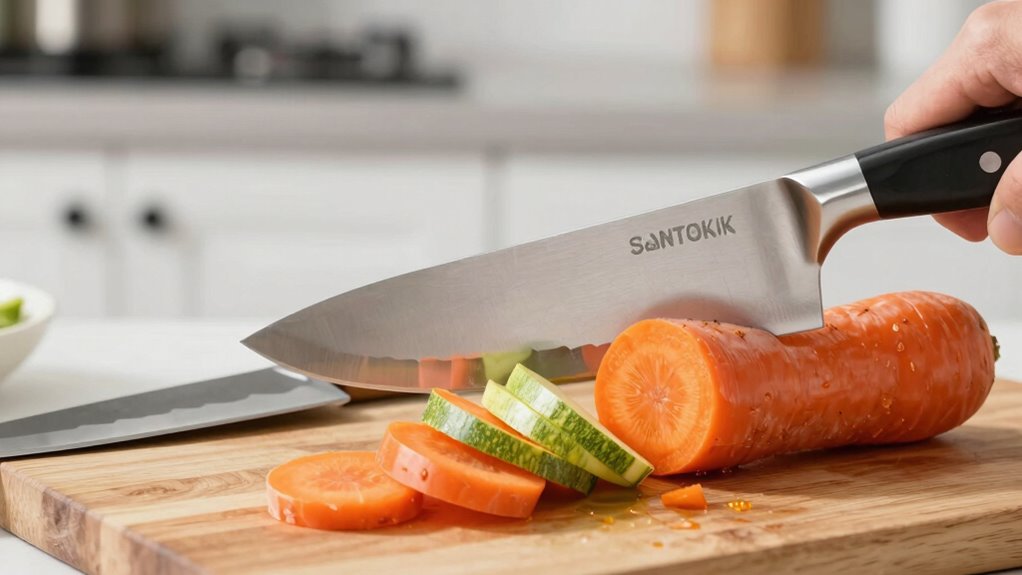
Different cutting techniques leverage the unique blade designs of nakiri and santoku to optimize vegetable prep. With a nakiri, you’ll mainly use push-chopping and straight up-and-down motions, which keep full blade contact for clean, uniform cuts. This method minimizes cell damage, helping vegetables retain freshness and texture. Its flat blade makes precise, even slices ideal for garnishes or mincing herbs. The santoku supports push-cutting, rocking, and slicing motions, offering versatility for different ingredients. Its thinner, slightly curved tip allows for more delicate, precise slices and dicing. While the santoku can handle a variety of cuts, it’s less specialized for high-volume vegetable prep. Both knives respond well to sharp, well-maintained edges, but the nakiri’s design emphasizes efficiency and precision specifically for vegetables. Blade geometry plays a crucial role in determining how effectively each knife performs for different vegetable cutting techniques.
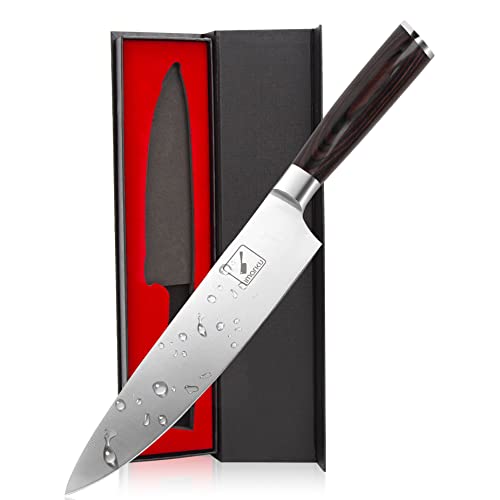
imarku Japanese Chef Knife - Sharp Kitchen Knife 8 Inch Chef's Knives HC Steel Paring Knife, Unique Gifts for Men and Women, Gifts for Mom or Dad, Kitchen Gadgets with Gift Box, Gyutou Knives
High-Carbon Stainless Steel Blade: It is manufactured from high-quality stainless steel that maintains its functionality for a long...
As an affiliate, we earn on qualifying purchases.
Primary Uses and Specializations in Vegetable Preparation
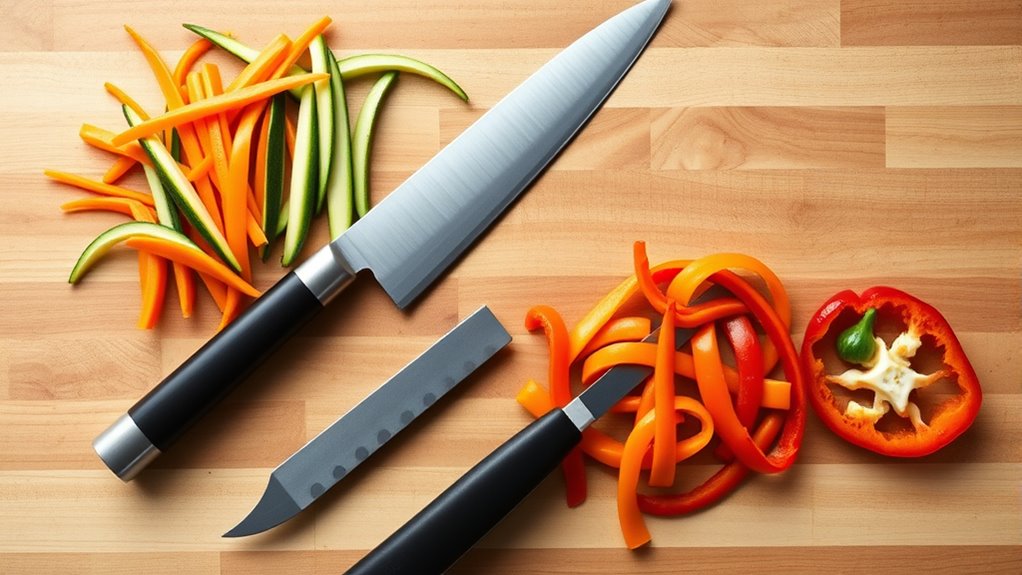
When preparing vegetables, your choice of knife impacts precision, damage prevention, and flavor retention. A nakiri’s flat, straight blade offers clean, uniform cuts that preserve texture and minimize bruising, making it ideal for delicate vegetables. Meanwhile, a santoku’s versatile design allows for precise slicing and dicing, especially when working with multiple ingredients.
Vegetable Cutting Precision
Nakiri knives excel at providing precise vegetable cuts, making them the ideal choice when you need uniform slices with minimal damage. The straight, thin blade allows you to push straight down, ensuring clean, even cuts that preserve the vegetable’s texture and flavor. Its flat edge maximizes contact with the cutting surface, reducing cell damage and bruising. The wide blade gives you better control, enabling consistent thickness in slices and juliennes. The squared-off tip helps with detailed tasks like trimming or creating decorative garnishes. Because of its design, you can achieve a high level of precision with minimal effort, making it perfect for intricate vegetable prep and maintaining ingredient integrity. In contrast, the Santoku offers versatility but isn’t as specialized for ultra-precise vegetable slicing.
Damage Prevention Techniques
To prevent damage to vegetables during prep, choosing the right knife technique is essential. With a Nakiri, use a straight, push-down motion to minimize cell crushing and bruising. Its flat blade makes full contact with the vegetable, ensuring even cuts without excessive force. Keep your grip firm but gentle, and avoid twisting or rocking motions that can tear or crush delicate produce. For a Santoku, employ a combination of push-cutting and rocking motions, which allow for more control but slightly increase the risk of damage if not careful. Maintain a steady, controlled motion, focusing on slicing without applying too much pressure. Both knives require sharp edges; dull blades increase the likelihood of tears and bruises. Proper technique helps preserve freshness, texture, and appearance of your vegetables. Additionally, high-quality materials in the knives can enhance durability and cutting precision, further reducing the risk of damage during vegetable preparation. Using the correct cutting techniques can also significantly improve your efficiency and safety in the kitchen. Incorporating ergonomic handles can improve comfort and reduce fatigue, allowing for more precise control during extended prep sessions.
Flavor Preservation Benefits
Using the right knife can considerably impact the flavor and freshness of your vegetables. A Nakiri’s straight, thin blade minimizes cell damage, helping vegetables retain their natural juices and flavors. Its precise, uniform cuts prevent bruising and oxidation, preserving texture and taste. The flat edge ensures full contact with the produce, reducing tearing or crushing. In contrast, a Santoku’s thinner, slightly curved blade supports clean slicing but may cause minor damage if not handled carefully. Additionally, the Nakiri’s blade design is specifically optimized for vegetable prep, making it a preferred choice for maintaining freshness.
- Nakiri’s straight edge limits cell damage, locking in flavor
- Flat blade maximizes contact, reducing tearing
- Thin blade minimizes crushing, preserving texture
- Precise cuts help maintain moisture and aroma
- Sharpness longevity enhances overall flavor retention

Japanese Chef Knife, 8 Inch Damascus Kitchen Knife with VG10 Steel, Handcrafted Sharp Knife with Ergonomic Handle, Cooking Knives for Home Chefs, Cooking Gifts for Men and Women
【Premium Damascus Chef Knife with VG-10 Steel Core】Our Japanese knives feature a VG-10 steel core (60 HRC) for...
As an affiliate, we earn on qualifying purchases.
Handling, Weight, and Safety Features for Efficient Vegetable Chopping
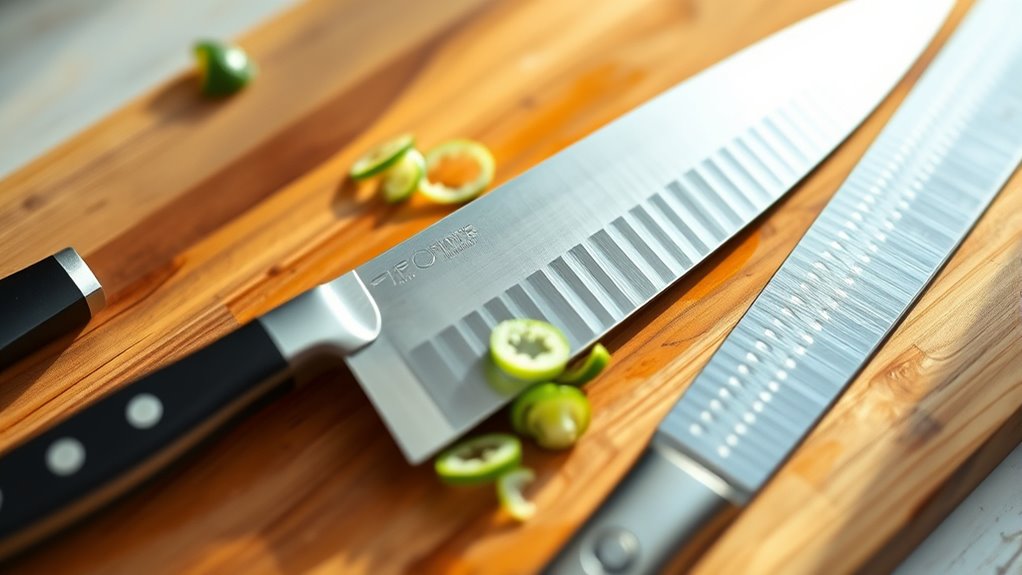
Your comfort and control depend on the knife’s balance and weight, which influence how easily you chop. A lighter Nakiri offers swift, precise cuts with less fatigue, while a heavier Santoku provides stability for forceful slicing. Safety features like wide blades and comfortable grips help prevent slips and enhance your confidence during vegetable prep. Additionally, understanding knife ergonomics can help you choose a model that minimizes strain during extended use. Considering proper grip techniques can further improve safety and efficiency when handling your vegetable knives.
Knife Balance and Control
Knife balance and control are essential for efficient vegetable chopping, as they directly influence your precision, comfort, and safety in the kitchen. A well-balanced knife feels steady in your hand, allowing smooth, controlled cuts without fatigue. The Nakiri’s lightweight design offers agility and quick maneuverability, perfect for repetitive chopping motions. Its wide blade provides excellent knuckle clearance, enhancing safety. The Santoku’s heavier weight offers stability and force, helping you apply pressure confidently. Its balanced center ensures control during slicing and dicing. Additionally, the knife weight distribution significantly impacts how comfortable and precise your cuts feel, especially during extended use. Proper knife ergonomics can further improve your chopping efficiency and safety. To optimize your technique, paying attention to market trends and news related to knife technology can also be beneficial. Consider these features: – Lightweight Nakiri for swift, precise movements – Heavier Santoku for stability and force – Wide blade for safe knuckle clearance – Balanced center for controlled cuts – Comfortable grip for extended use, which can help reduce fatigue during prolonged chopping sessions. Ensuring proper knife ergonomics can further improve your chopping efficiency and safety.
Weight Impact on Use
The weight of a knife substantially influences how efficiently you can chop vegetables, affecting both handling and safety. A lighter Nakiri allows for quick, nimble movements, reducing fatigue during extended prep sessions and giving you better control over delicate cuts. Its lightweight design minimizes the risk of slips, helping you maintain precision without exerting excessive force. Conversely, a heavier Santoku provides stability, enabling forceful cuts with less effort, which can improve safety when slicing tougher vegetables or multitasking. However, its weight demands more control to avoid accidents. Ultimately, your comfort depends on your strength and technique. A balanced weight helps you move smoothly through prep work, minimizing strain and maximizing safety. Incorporating proper knife maintenance can further enhance safety and performance during your culinary tasks. Additionally, understanding ergonomic design principles can help you select a knife that reduces strain and increases efficiency during prolonged use. Recognizing the importance of proper grip can also contribute significantly to safe and effective cutting techniques. Selecting a knife with an appropriate weight distribution can further optimize cutting efficiency and reduce fatigue over time. Being aware of your personal strength can guide you toward choosing a knife that feels comfortable and safe during extended use.
Safety Features and Comfort
Safety features and comfort play a crucial role in ensuring efficient vegetable chopping, as they directly impact control and ease of use. A well-designed knife helps you maintain stability and reduces fatigue during extended prep. Consider these aspects:
- Wide blade knuckle clearance for safe, comfortable handling
- Lightweight design for swift, fatigue-free chopping
- Balanced weight distribution for precise control
- Full tang construction for durability and safety
- Sharp, double-bevel edges for easy, safe sharpening
- Proper grip design enhances safety and reduces strain during use
These features enable you to cut confidently, minimizing slips and accidents. A comfortable grip and appropriate weight enhance your control, making vegetable prep quicker and safer. Whether you prefer the lightweight Nakiri or the slightly heavier Santoku, prioritizing safety features ensures a smooth, efficient cooking experience. Additionally, ergonomic handle design can significantly improve comfort and safety during prolonged use, especially when working with knife balance to prevent fatigue.
How Each Knife Preserves Vegetable Texture and Flavor
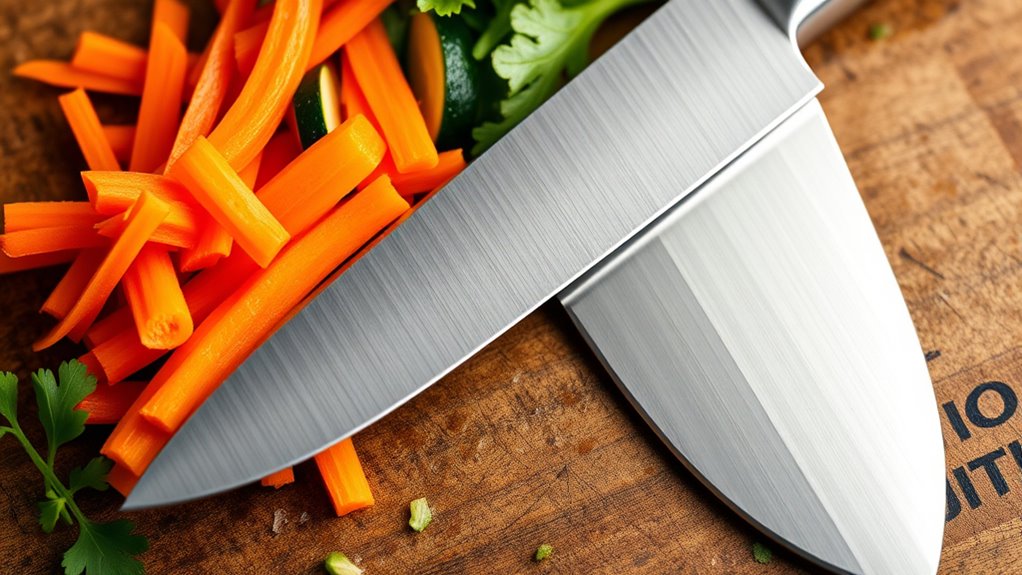
Because of their distinct blade designs, Nakiri and Santoku knives influence how well you preserve vegetable texture and flavor during prep. The Nakiri’s straight, thin blade minimizes cell damage by making full contact with vegetables, helping retain freshness and natural juices. Its vertical push-cutting technique produces clean, uniform slices that prevent bruising, preserving both texture and flavor. In contrast, the Santoku’s slightly curved, thinner blade allows for precise slicing and rocking motions, reducing tearing and crushing. Its versatility means you can handle delicate herbs and firm vegetables with care, maintaining their integrity. Overall, the Nakiri’s design focuses on gentle, straight cuts, offering superior preservation of texture and flavor, especially for high-volume vegetable prep. The Nakiri’s blade geometry encourages a more controlled cutting motion, which can help maintain the original cell structure of vegetables for a fresher taste. Additionally, the Santoku provides more control but may slightly compromise delicate flavors. Proper technique with each knife also plays a crucial role in vegetable preservation and ensuring the best flavor retention. Using the appropriate cutting techniques can further enhance how well you preserve the quality of vegetables during preparation. Moreover, the Nakiri’s blade thickness contributes to its ability to handle large quantities efficiently without damaging delicate tissues.
Advantages of Nakiri for Precision and Speed in Vegetable Tasks
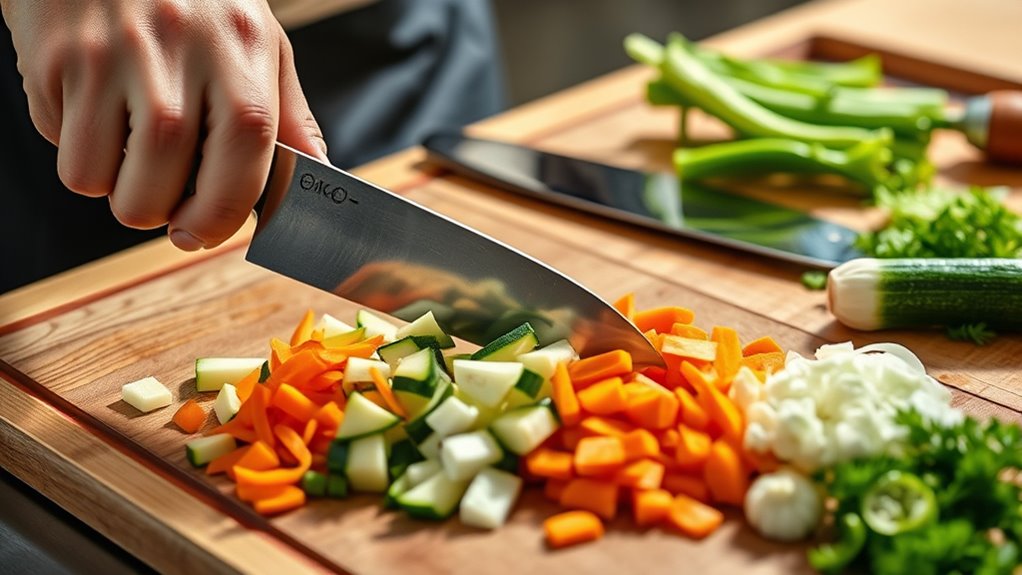
Nakiri knives excel in delivering both precision and speed for vegetable preparation thanks to their straight, thin blades designed for vertical chopping. This shape allows you to cut evenly and quickly, minimizing effort. You can:
- Make straight, clean slices with minimal pressure
- Chop large quantities rapidly using push motions
- Achieve uniform thickness for consistent cooking
- Minimize cell damage, preserving freshness
- Save time with efficient, controlled cuts
The flat edge allows you to work close to the cutting board, reducing fatigue. The lightweight design enhances speed without sacrificing control. With a Nakiri, you focus on precision, ensuring each cut is consistent, which speeds up meal prep and improves presentation. This combination makes it ideal for high-volume vegetable tasks where accuracy matters.
Versatility of Santoku in Vegetable and Protein Integration
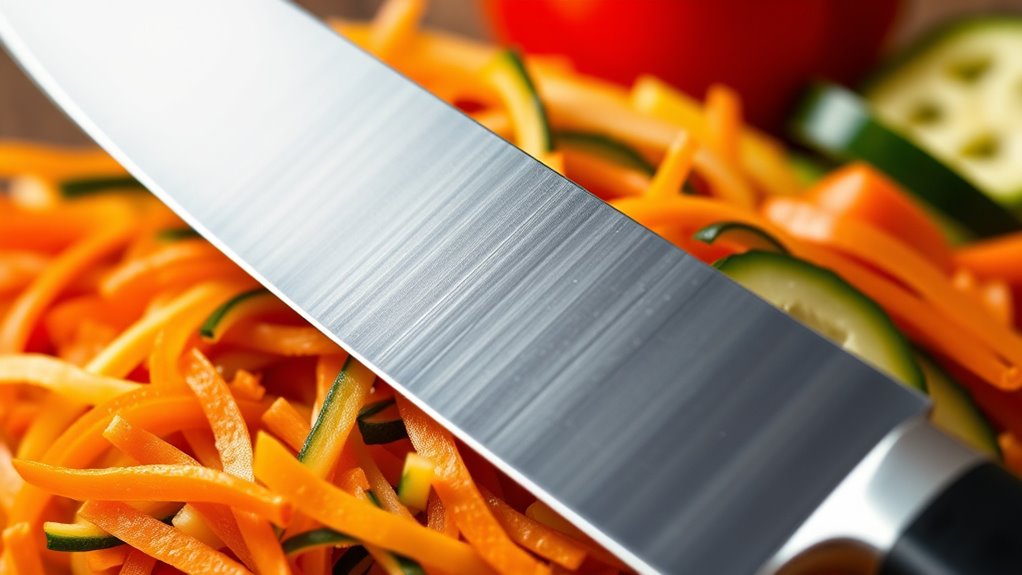
The Santoku knife’s design makes it highly versatile for integrating vegetables and proteins in a single cutting session. Its flat, slightly curved blade supports a variety of techniques, from push-cutting to rocking motions, making it perfect for handling multiple ingredients efficiently. You can easily slice vegetables for salads or prepare proteins like chicken or fish without switching tools. The rounded tip helps maintain control during delicate cuts, while its balanced weight provides stability. Use it to chop onions, dice peppers, or mince garlic alongside chicken pieces or fish fillets seamlessly. Its ergonomic handle also ensures comfort during extended use, making it a reliable choice for comprehensive meal prep. Additionally, the blade’s versatility allows you to adapt your cutting style to different ingredients, streamlining your cooking process.
Choosing the Best Knife Based on Vegetable-Focused Cooking Needs
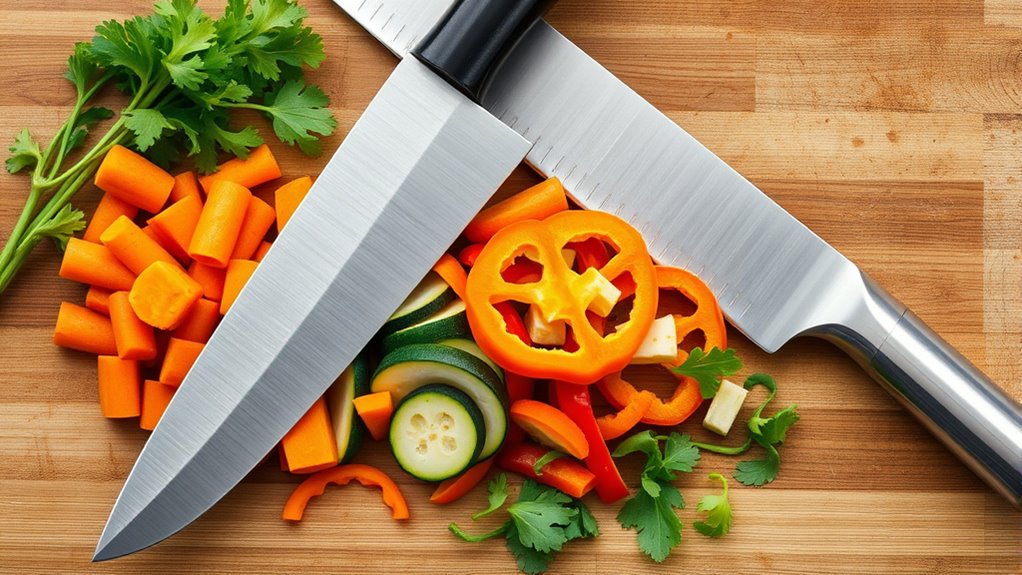
When choosing a knife for vegetable-focused cooking, selecting the right tool can considerably improve your prep work. Consider these factors to find the best fit:
- Blade design: Opt for a Nakiri if you want a flat, straight blade for precise, vertical chopping.
- Cutting techniques: Choose a Nakiri for push-cutting or straight up-and-down motions to minimize cell damage.
- Primary uses: If your focus is on vegetables, herbs, and fruits, a Nakiri’s specialized design is ideal.
- Weight and handling: A lightweight Nakiri offers swift, fatigue-free prep, while a Santoku provides stability for more forceful cuts.
- Advantages for vegetables: For uniform slices and quick prep without bruising, Nakiri outperforms other options.
Match your needs with these features to select the perfect vegetable-focused knife.
Frequently Asked Questions
How Does Blade Width Influence Vegetable Chopping Efficiency?
Blade width directly impacts your efficiency when chopping vegetables. A wider blade, like on a Nakiri, gives you more surface area, allowing for quicker, more even cuts and better control. It helps you maintain consistent thickness without damaging produce. Narrower blades require more effort and can lead to uneven slices. With a wider blade, you can work faster and achieve cleaner results, making vegetable prep smoother and more efficient.
Can a Santoku Handle Large Vegetable Batches Effectively?
Yes, a Santoku can handle large vegetable batches, but it’s like trying to tame a wild beast with a feather—less ideal. Its shorter, rounded blade isn’t built for massive chopping marathons. You’ll find yourself tiring quickly and sacrificing precision. For big batches, you’re better off with a Nakiri, designed for fast, efficient, and damage-free vegetable prep, turning a formidable task into a swift, satisfying process.
Which Knife Offers Better Control for Intricate Vegetable Garnishes?
You’ll find that a Nakiri offers better control for intricate vegetable garnishes. Its straight, thin blade allows precise, uniform cuts, making delicate work easier. The wide blade provides stability and knuckle clearance, helping you guide the knife smoothly. With its lightweight design, you can maneuver effortlessly for detailed work. Overall, Nakiri’s specialized shape and balance give you the finesse needed for beautiful, intricate vegetable garnishes.
Do Differences in Edge Geometry Affect Vegetable Preservation?
You’ll find that differences in edge geometry subtly influence how well you preserve vegetables. The Nakiri’s straight, thin edge gently slices through, minimizing cell damage and keeping veggies fresh and vibrant. In contrast, the Santoku’s more curved, slightly thicker edge offers versatility but can be a bit less delicate. So, if your goal is pristine, damage-free cuts, the Nakiri’s precise geometry helps maintain your vegetables’ natural texture and flavor.
Is One Knife More Suitable for Beginner Vegetable Prep?
For beginner vegetable prep, a Nakiri is more suitable because of its straightforward, flat blade that makes vertical chopping easier and safer. Its lightweight design reduces fatigue, and the wide blade provides excellent control. You’ll find it simple to make clean, precise cuts without much effort, helping you build confidence in your skills. While a Santoku works well too, the Nakiri’s design specifically caters to easy, efficient vegetable preparation.
Conclusion
If you focus mainly on vegetables, the nakiri’s sharp, straight edge and precise control might give you the speed and accuracy you need. However, don’t underestimate the santoku’s versatility—it can handle vegetables and proteins with ease. Many chefs believe the nakiri’s design naturally improves vegetable prep, making it the top choice for veggie lovers. Ultimately, your choice depends on your style, but trusting the nakiri’s efficiency might just make your prep faster and more enjoyable.