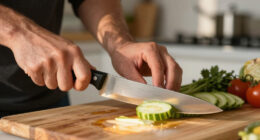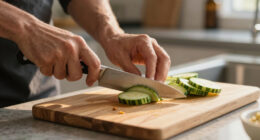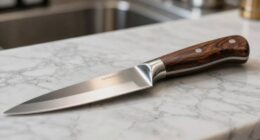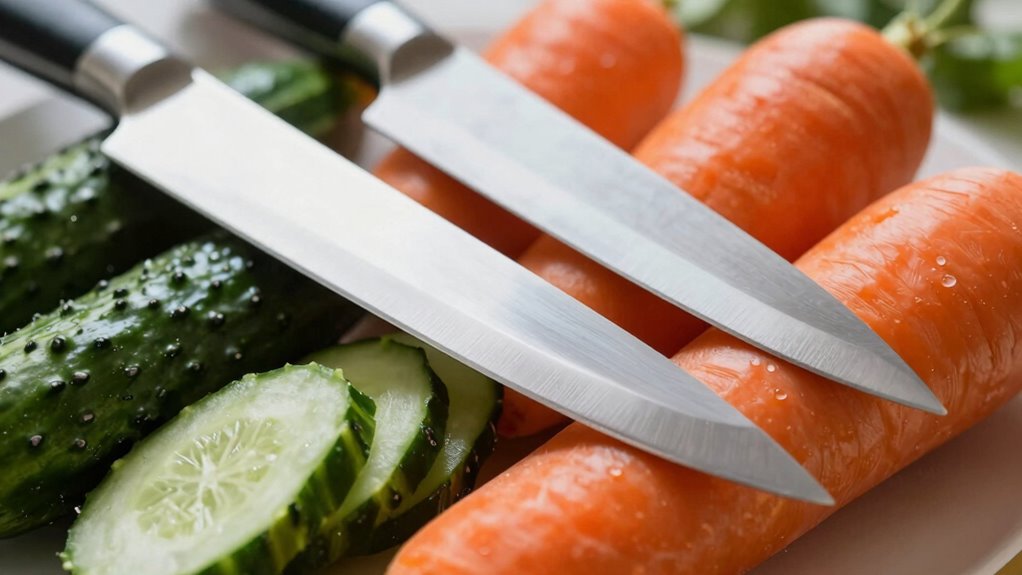

For vegetable prep, a Nakiri is your best choice if you prefer precise, straight cuts with push motions, thanks to its flat, rectangular blade that slices thinly with minimal damage. A Santoku offers more versatility, supporting rocking and slicing motions for various ingredients beyond vegetables, such as herbs and fish. To learn how each knife suits your style and what tasks they excel at, keep exploring the details ahead.
Key Takeaways
- Nakiri excels at precise, straight cuts for vegetables, ideal for julienne and brunoise with minimal damage.
- Santoku offers versatile slicing and dicing, supporting a broader range of vegetable prep tasks through rocking and push cuts.
- Nakiri’s flat, straight blade provides stability and control for delicate vegetable work; Santoku’s curved edge enhances efficiency and speed.
- Nakiri is specialized for vegetables, while Santoku’s design allows for easier handling of herbs and softer ingredients alongside vegetables.
- Both knives require proper maintenance; Nakiri often demands more careful sharpening due to its premium, high-quality blade.

HOSHANHO 7 Inch Nakiri Knife, Japanese High Carbon Stainless Steel Chef Knife, Multipurpose Meat Vegetable Sharp Kitchen Knife with Ergonomic Pakkawood Handle
【Ultra Sharp Blade】 Each Japanese nakiri knife is hand-polished by experts to achieve a sharp 15 degree edge…
As an affiliate, we earn on qualifying purchases.
As an affiliate, we earn on qualifying purchases.
Blade Shape and Design Features for Vegetable Cutting
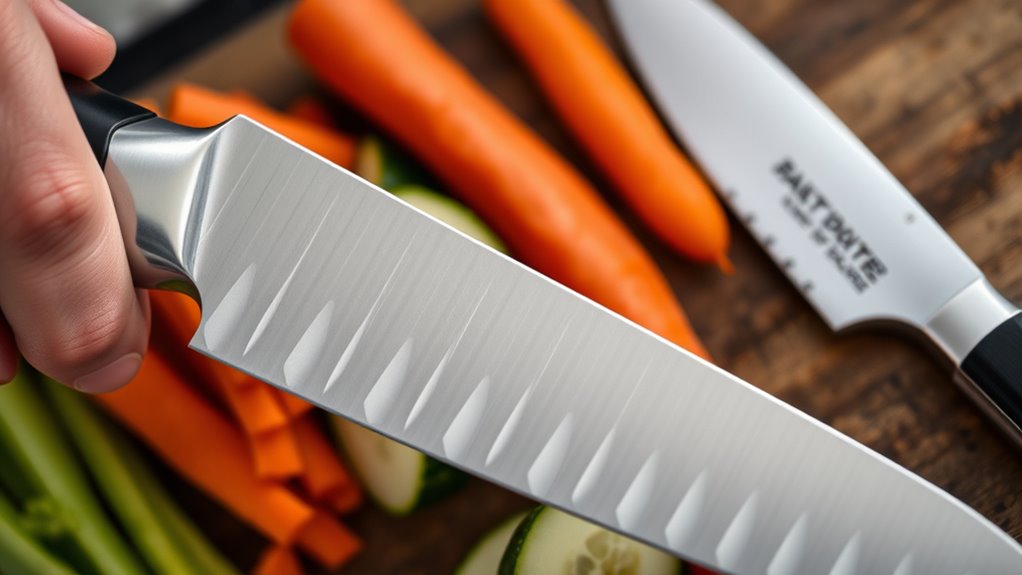
When choosing a knife for vegetable cutting, understanding the differences in blade shape and design is essential. The Nakiri features a straight, rectangular blade with no pointed tip, typically measuring 15-18cm. Its flat edge allows you to make clean, even cuts by pushing straight down. In contrast, the Santoku has a shorter blade, around 12-18cm, with a gently curved edge that tapers to a rounded tip. The curved shape facilitates rocking and slicing motions, while the semi-flat design helps with efficient chopping. The Nakiri’s straight profile keeps the blade flush with the cutting board, ideal for precise, uniform cuts. The Santoku’s rounded tip and curved edge make it versatile for slicing across a variety of ingredients, blending precision with ease of use.
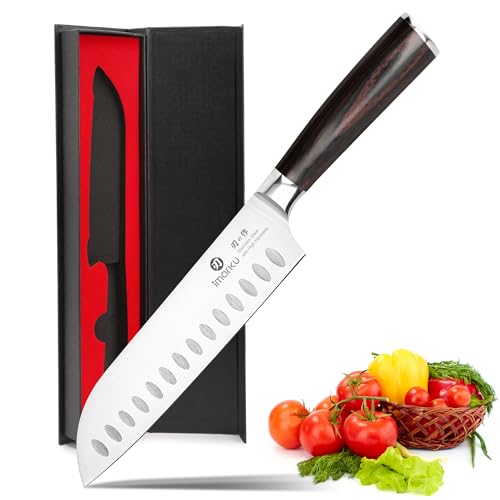
imarku Chef Knife 7 Inch Kitchen Knife Ultra Sharp Santoku Knife – High Carbon Japanese Chefs Knife, Kitchen Gadgets 2025, Apartment Essentials, Birthday Gifts for Him Her, Best Gifts for Women Men
Professional Santoku Knife: This imarku super sharp santoku knife is made of high carbon stainless steel that resists…
As an affiliate, we earn on qualifying purchases.
As an affiliate, we earn on qualifying purchases.
Cutting Techniques and Motion Suitability

Your choice of knife impacts how you cut and control your vegetables. Nakiri is perfect for straight up-and-down push cuts, giving you precise, even slices. On the other hand, Santoku’s curved edge suits rocking and push-cut motions, making it versatile for various chopping tasks. Additionally, using the appropriate cutting technique can help prevent injury risks, ensuring safety during food prep.
Motion Compatibility
The shape and edge design of each knife directly influence how well it performs specific cutting motions. You’ll find that a Nakiri’s straight edge excels at up-and-down push-chopping, making precise, clean cuts with minimal effort. Conversely, a Santoku’s curved edge supports rocking and push-cutting motions, enabling versatile slicing and dicing. The table below highlights their motion compatibility:
| Knife Type | Suitable Motions | Not Ideal For |
|---|---|---|
| Nakiri | Push-chopping, straight down cuts | Rocking, slicing with curved motion |
| Santoku | Rocking, push-cutting | Straight push-chop, delicate slicing |
| Both | General vegetable prep | Cutting through frozen foods or bones |
Additionally, understanding the cutting techniques suited to each knife can help optimize your prep process and ensure safety during use. Mastering the motion compatibility of each knife can also extend its lifespan and improve overall efficiency.
Cutting Precision
Cutting precision largely depends on the knife’s shape and how it interacts with your cutting motions. With a Nakiri, you’ll find that its straight edge excels at up-and-down push cuts, allowing for thin, uniform slices with minimal vegetable damage. The flat profile ensures your cuts are even and consistent, making it ideal for delicate vegetable work. Conversely, the Santoku’s curved edge supports rocking and push-cut techniques, giving you more flexibility for slicing and dicing. Its entire blade makes contact with food in one smooth motion, enhancing control and speed. Because of its design, the Santoku works well for a variety of ingredients beyond vegetables. Your choice influences how precisely you can cut, impacting presentation, texture, and overall prep quality.
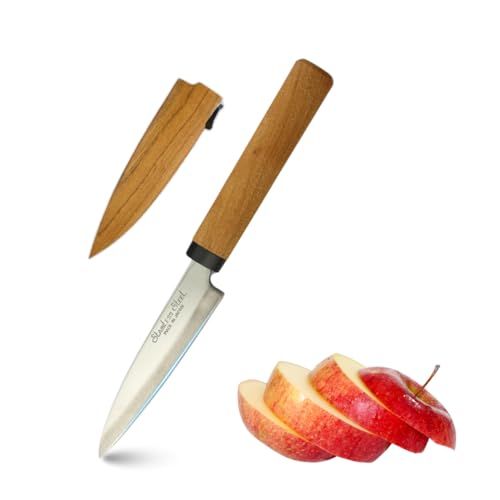
Japanese Paring Knife 4-Inch, High Carbon Stainless Steel Fruit Knife with Wooden Handle and Sheath, Small Utility Kitchen Knife for Peeling, Coring, Mincing, Made in Japan
Precision Japanese Paring Knife – 4-inch high carbon stainless steel blade with a pointed tip, perfect for peeling…
As an affiliate, we earn on qualifying purchases.
As an affiliate, we earn on qualifying purchases.
Precision and Texture Control in Vegetable Preparation
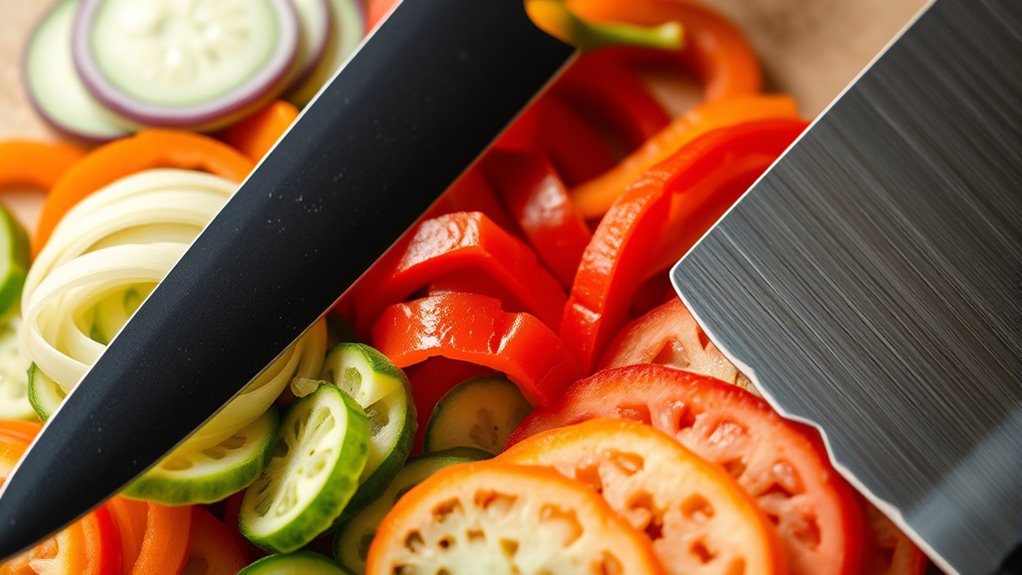
Achieving precise control over vegetable texture depends heavily on the knife you choose. With a Nakiri, the straight, flat edge allows you to make clean, even slices with minimal crushing, preserving the vegetable’s integrity. Its thin blade helps you create delicate julienne or brunoise cuts effortlessly, giving you fine control over texture. You can push straight down with confidence, ensuring uniform thickness and reducing cell damage. The absence of a curved edge means less rocking, which is ideal for precision work. Additionally, the Nakiri’s design promotes blade stability, making it easier to execute meticulous cuts without slipping. The blade geometry of the Nakiri is optimized for slicing finesse, which is especially beneficial for vegetables requiring precise texture control. Its lightweight construction further enhances control and maneuverability, allowing for more precise movements during detailed prep. A well-balanced Nakiri also contributes to cutting efficiency, reducing fatigue during extended use. Furthermore, the Nakiri’s ergonomic handle design provides a comfortable grip, aiding in sustained precision work. Conversely, a Santoku’s curved blade facilitates rocking cuts, making it easier to dice and slice quickly. While versatile, it may sacrifice some control over texture consistency compared to a Nakiri. Choose based on whether you prioritize fine, precise cuts or broader, efficient slicing.
HOSHANHO 7 Inch Nakiri Knife, Japanese High Carbon Stainless Steel Chef Knife, Multipurpose Meat Vegetable Sharp Kitchen Knife with Ergonomic Pakkawood Handle
【Ultra Sharp Blade】 Each Japanese nakiri knife is hand-polished by experts to achieve a sharp 15 degree edge…
As an affiliate, we earn on qualifying purchases.
As an affiliate, we earn on qualifying purchases.
Handling and Maneuverability for Delicate Ingredients
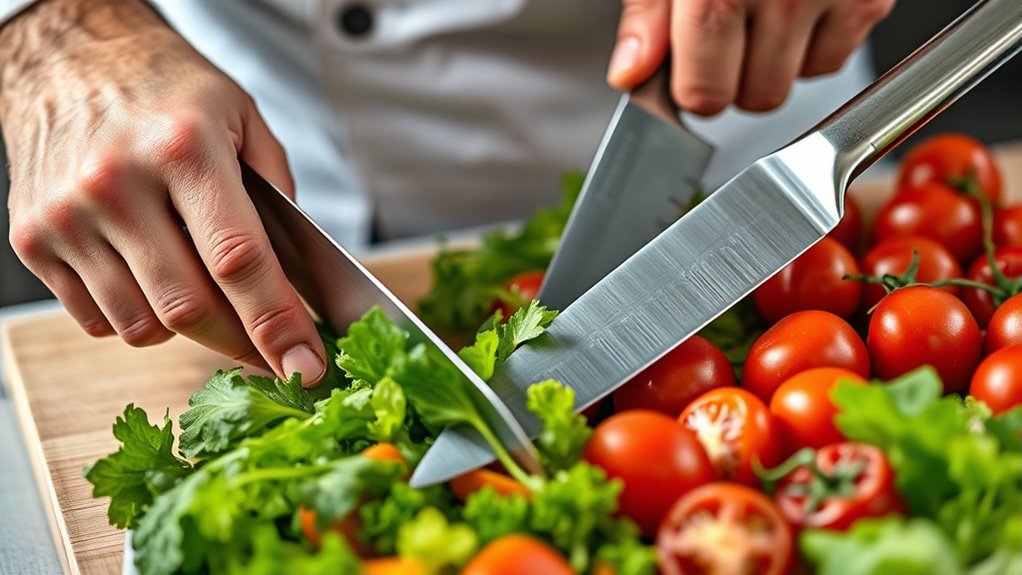
When handling delicate ingredients like tomatoes or herbs, your choice of knife considerably affects maneuverability. A Nakiri’s straight, flat blade offers excellent control for gentle slicing and precise, even cuts without applying excessive pressure. Its lightweight design allows you to maneuver easily, reducing the risk of crushing or tearing fragile items. You can perform delicate push-cutting motions smoothly, ensuring minimal damage to delicate textures. On the other hand, a Santoku’s curved edge and heavier weight provide stability and control for slicing or dicing softer ingredients. Its broader blade makes contact with ingredients more evenly, making it easier to create uniform slices. However, the curved design may require more finesse to avoid tearing herbs or squashing tomatoes. Overall, Nakiri offers better maneuverability for delicate ingredients, thanks to its lighter weight and straight profile.
Versatility in Kitchen Tasks Beyond Vegetables
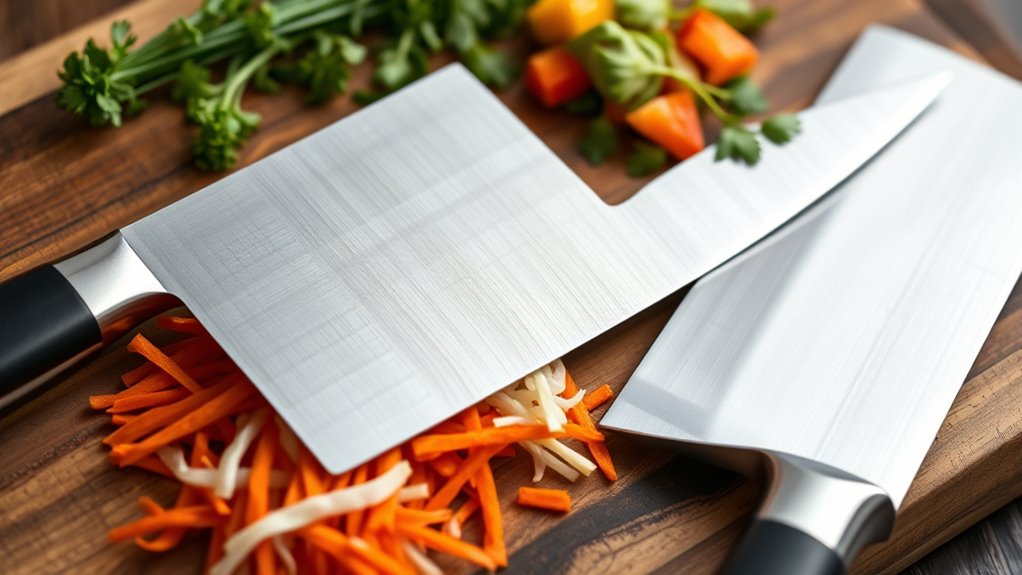
Both knives can handle more than just vegetables, but their designs influence how well they perform with other ingredients. You’ll find the Santoku more adaptable for slicing fish and meats, thanks to its versatile shape. Meanwhile, the Nakiri’s precision and light weight make it ideal for delicate tasks beyond vegetables, though it’s less suited for heavier proteins. For those seeking kitchen versatility, choosing the right knife depends on the specific tasks you prioritize. Additionally, understanding knife design can help you select the best tool for various culinary needs. Knowing about cutting techniques can further enhance your efficiency and safety in the kitchen. Exploring interior design basics can also inspire a well-organized kitchen space that complements your culinary tools.
Multi-ingredient Cutting Abilities
While Nakiri knives excel at precise vegetable cuts, they are generally limited to vegetable preparation due to their straight, flat blades. Their design makes them less suited for slicing through meat, fish, or softer ingredients requiring curved or rocking motions. The flat edge allows for thin, uniform cuts ideal for vegetables but doesn’t facilitate the versatility needed for other ingredients. Santoku knives, on the other hand, handle a broader range of tasks. Their curved edge and versatile shape enable slicing, dicing, and mincing meats, fish, and herbs with ease. The slightly rounded tip and shorter blade make them more adaptable for various kitchen chores. If you’re looking for a single knife to manage multiple ingredients beyond vegetables, the Santoku offers the flexibility you need.
Fish and Meat Preparation
Although Nakiri knives excel at vegetable prep, they aren’t well-suited for slicing meat or fish due to their straight, flat blades that lack the rocking motion needed for delicate cuts. For meat and fish, a Santoku offers more versatility because:
- Its curved edge enables smooth, rocking cuts for even slices.
- The shorter, more maneuverable blade improves control on delicate proteins.
- The double-bevel grind allows for efficient slicing and dicing of cooked or raw meats.
- Its weight provides stability for forceful cuts, like trimming or portioning.
While a Nakiri isn’t designed for this task, a Santoku’s shape and balance make it a better choice for handling meat and fish with precision and ease.
Overall Kitchen Flexibility
A versatile kitchen knife can handle more than just vegetables, allowing you to prepare a wide range of ingredients efficiently. The Santoku’s curved edge and weight make it suitable for slicing meats, fish, and herbs, providing control for various tasks. Meanwhile, the Nakiri’s straight blade excels at vegetable prep but isn’t ideal for other ingredients. Your choice impacts overall kitchen flexibility, depending on your cooking style.
| Task Type | Best Knife |
|---|---|
| Vegetables | Nakiri |
| Meat & Fish | Santoku |
| Herbs & Garnishes | Santoku |
| Dicing & Slicing | Both |
| Specialty Cuts | Nakiri |
Maintenance, Cost, and Longevity Considerations
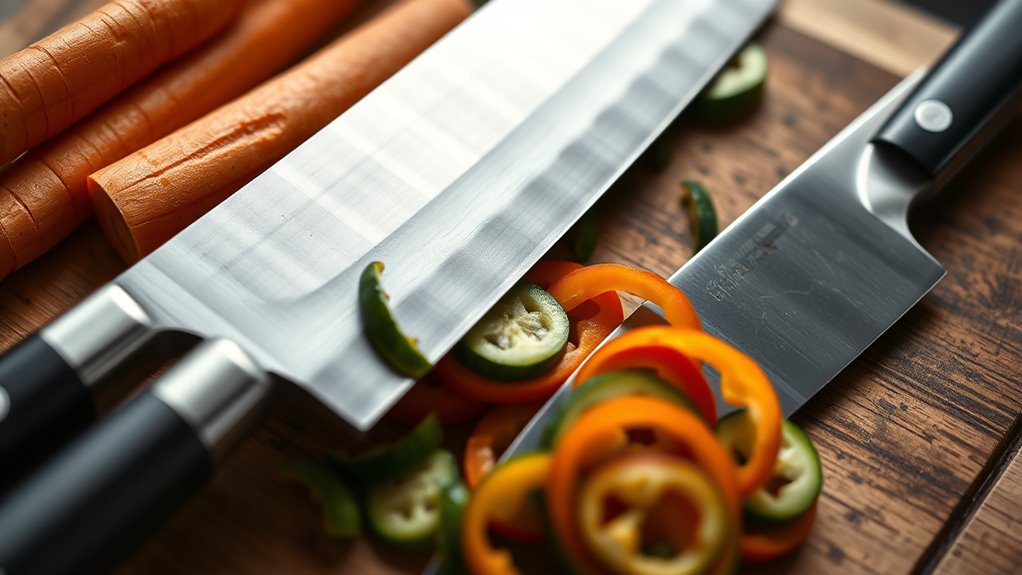
Maintenance, cost, and longevity are important factors to contemplate when choosing between a Nakiri and a Santoku knife. You’ll find that Nakiri knives tend to be pricier due to high-quality materials and intricate craftsmanship. They usually require careful sharpening with a whetstone to maintain their edge. Proper sharpening techniques are essential to preserve the blade’s performance over time. Proper blade maintenance can significantly extend the lifespan of your knives and ensure consistent cutting performance. Santoku knives are more affordable and often easier to clean and sharpen, thanks to their polished finish. To help you decide, here are key points:
- Nakiri knives are more expensive but made of premium materials, offering longer durability.
- Santoku knives cost less and are easier to maintain with basic sharpening tools.
- Both knives need regular honing to keep their edge sharp.
- Proper storage, like knife guards or blocks, extends longevity and prevents damage.
- Additionally, the materials used in these knives influence their overall lifespan and performance.
Frequently Asked Questions
Can a Nakiri Handle Slicing Soft Tomatoes Efficiently?
Yes, a nakiri can handle slicing soft tomatoes efficiently. Its straight, thin blade allows you to make precise, clean cuts with minimal pressure, which is perfect for delicate produce like tomatoes. The flat edge guarantees full contact with the surface, reducing squashing or tearing. Just use gentle, controlled push motions, and you’ll get even, smooth slices without damaging the soft interior.
Is a Santoku Suitable for Julienne Vegetable Cuts?
Did you know that most home cooks spend over 30% of their prep time on julienne cuts? A Santoku is suitable for julienne vegetables because its sharp, double-beveled edge and versatile design allow for precise, controlled slicing. Its shorter curved blade helps guide the vegetables smoothly, making julienne cuts easier. While not specialized like a mandoline, a Santoku offers enough finesse for efficient, uniform julienne prep.
How Does Blade Sharpness Impact Vegetable Prep Quality?
Blade sharpness greatly impacts your vegetable prep quality. When your knife is sharp, you’ll make cleaner, more precise cuts, minimizing cell damage and preserving flavor. It also reduces the effort needed, making slicing smoother and safer. Dull blades cause tearing, bruising, and uneven cuts, which can ruin presentation and texture. Regular sharpening guarantees your knife performs at its best, helping you prep vegetables efficiently and with excellent results every time.
Are Nakiri Knives Better for Vegan or Vegetarian Cooks?
You’ll find a nakiri is like a finely tuned scalpel for vegans and vegetarians—it’s designed solely for vegetable prep, making it the perfect tool for intricate cuts and precise slicing. Its straight, flat blade glides through produce effortlessly, preserving flavor and texture. If your focus is on vegetable mastery, a nakiri is a dedicated partner, helping you craft beautiful, even cuts with minimal effort.
Can Santoku Knives Be Used for Light Meat or Fish Slicing?
Yes, you can use a santoku for light meat or fish slicing. Its sharp, double-beveled edge allows for precise, smooth cuts, making it suitable for thin slices of cooked or raw fish and tender meats. The curved blade facilitates rocking motions, giving you control and efficiency. Just guarantee the knife is properly sharpened, and avoid using it for bones or frozen meats to maintain its effectiveness and longevity.
Conclusion
Think of your kitchen like a bustling garden—your knives are the trusty tools shaping each plant’s growth. Whether you choose the nakiri’s straight, precise cut or the santoku’s versatile curve, you’re nurturing your culinary garden. Both blades help you reap vibrant, healthy dishes. Pick the one that feels like an extension of your hand, and you’ll cultivate your skills and flavors with confidence, turning everyday prep into a delightful harvest.