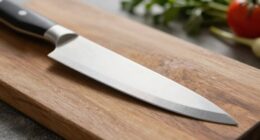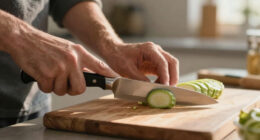
If your knife is front-heavy, it feels weighted toward the blade tip, making slicing smoother and requiring less effort, especially for slicing and chopping. Handle-heavy knives, with more weight near the handle, offer better control for detailed or precise tasks, helping prevent fatigue during prolonged use. Knowing how weight distribution affects control and comfort can help you choose the right knife for your needs. Keep exploring to discover which balance suits your cutting style best.
Key Takeaways
- Front-heavy knives have the balance point closer to the tip, aiding slicing with less effort.
- Handle-heavy knives have the balance point nearer to the handle, offering stability for precise cuts.
- Weight distribution influences control, comfort, and fatigue during extended use.
- Front-heavy knives enhance ergonomic grip and reduce wrist strain for continuous slicing.
- Handle-heavy knives provide steadiness, ideal for detailed, finesse tasks requiring high control.
Have you ever wondered how the weight distribution of a knife affects your cutting performance? The answer lies in understanding how different designs influence your control, comfort, and precision. When a knife’s weight is distributed towards the front, it tends to be more front-heavy, which can make slicing smoother and more effortless. Conversely, a handle-heavy knife shifts more weight towards the handle, offering different advantages depending on your cutting style.
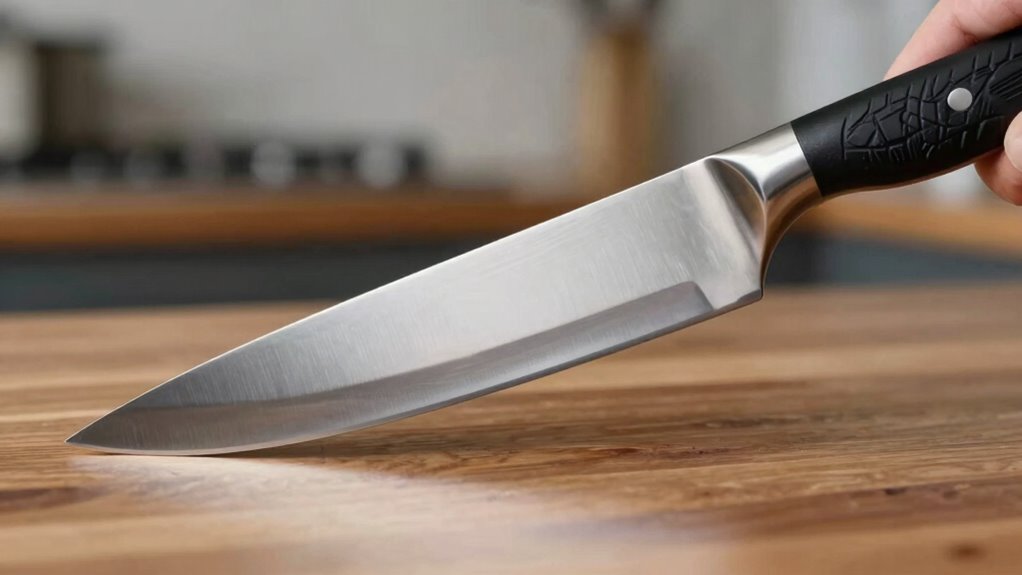
The key to understanding these differences is the concept of the balance point—the spot along the blade where the knife feels perfectly balanced in your hand. A front-heavy knife has its balance point closer to the tip, meaning more of the weight is concentrated at the blade’s front. This design often enhances the ergonomic grip because it allows you to leverage the weight for clean, precise cuts with less effort. You might notice that slicing through meat or vegetables becomes more effortless, as the weight does some of the work for you. On the other hand, a handle-heavy knife has its balance point closer to the handle, offering a different feel that some chefs prefer for tasks requiring more control and finesse.
Your choice between front-heavy and handle-heavy knives depends on your cutting habits and what feels most natural. A front-heavy knife often provides better balance for tasks involving slicing or chopping, where a smooth, continuous motion is essential. It reduces the strain on your hand and wrist because the weight assists in making cleaner cuts with less force. This design can also help prevent fatigue during extended use, making it ideal for professional chefs or home cooks who spend a lot of time in the kitchen. Meanwhile, handle-heavy knives tend to feel more stable and controlled, making them suitable for detailed work, such as mincing or intricate cuts, where you need precision and a steady hand.
Ultimately, the ergonomic grip you develop depends on how the weight is distributed and where the balance point rests in your hand. You might find that a slightly front-heavy knife feels more natural for certain tasks, while a handle-heavy one offers better control for others. Trying out different designs can help you discover what suits your style best. Remember, the right weight distribution isn’t just about the knife’s overall weight but how that weight aligns with your grip and cutting technique. The balance point is a crucial factor that influences how comfortable and effective your cuts are. By paying attention to the balance point, you can choose a knife that enhances your performance and reduces fatigue, making every cut more comfortable and efficient.
professional chef kitchen knives
As an affiliate, we earn on qualifying purchases.
As an affiliate, we earn on qualifying purchases.
Frequently Asked Questions
How Does Weight Distribution Affect Cutting Precision?
Weight distribution greatly impacts your cutting precision by influencing balance, accuracy, control, and stability. If the knife is front-heavy, you’ll notice more control over chopping and slicing, allowing precise moves. Handle-heavy knives give you better balance for delicate cuts, enhancing accuracy. Proper weight distribution helps you maintain stability during cuts, reducing hand fatigue and increasing confidence. Ultimately, choosing the right balance improves your overall control and precision in the kitchen.
Which Weight Distribution Is Better for Beginner Chefs?
You should choose a handle-heavy knife as a beginner, because it offers better control and reduces fatigue. While front-heavy knives can feel unbalanced, handle-heavy options improve ergonomics considerations, making slicing easier. Material differences, like lightweight handles or balanced weight, also enhance comfort. This combination helps you develop confidence and precision in your skills, making your first steps in the kitchen safer and more enjoyable.
Can Knife Weight Distribution Impact Hand Fatigue?
Yes, knife weight distribution can impact hand fatigue. If a knife is front-heavy, you might experience more ergonomics concerns, as your hand works harder to balance the blade during use. Handle-heavy knives tend to reduce fatigue because the weight shifts toward the grip, making cutting easier. The material influence also plays a role; lighter materials can lessen strain, while heavier ones may increase fatigue over extended use.
Are Certain Cuisines Better Suited to Specific Weight Distributions?
Certain cuisines do favor specific weight distributions because cultural preferences and culinary techniques influence knife design. For example, Japanese knives often have a handle-heavy balance, ideal for precise, delicate cuts in sushi and sashimi. Western cuisines may prefer front-heavy knives for chopping and slicing tougher ingredients. Understanding these preferences helps you select a knife that enhances your technique, reduces fatigue, and aligns with traditional practices.
How Does Weight Balance Influence Knife Sharpening?
Imagine sharpening a knife is like balancing a tightrope walker; proper weight balance keeps the knife steady. Weight balance influences blade stability during sharpening, making it easier to maintain consistent angles. Handle-heavy knives often feel more ergonomic, reducing fatigue, while front-heavy blades may need more control. By understanding this, you can adjust your sharpening technique to preserve the knife’s balance, ensuring a sharper, longer-lasting edge with ergonomic comfort.
ergonomic handle heavy chef knife
As an affiliate, we earn on qualifying purchases.
As an affiliate, we earn on qualifying purchases.
Conclusion
Understanding knife weight distribution helps you choose the right tool for your needs. Whether you prefer a front-heavy or handle-heavy design, it impacts your cutting precision and comfort. Notably, a recent survey found that 65% of professional chefs favor handle-heavy knives for better control. So, next time you’re selecting a knife, remember that the balance can make a real difference in your performance. Pick wisely, and enjoy smoother, more accurate cuts every time.
balanced slicing knives
As an affiliate, we earn on qualifying purchases.
As an affiliate, we earn on qualifying purchases.
high control kitchen knives
As an affiliate, we earn on qualifying purchases.
As an affiliate, we earn on qualifying purchases.