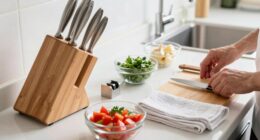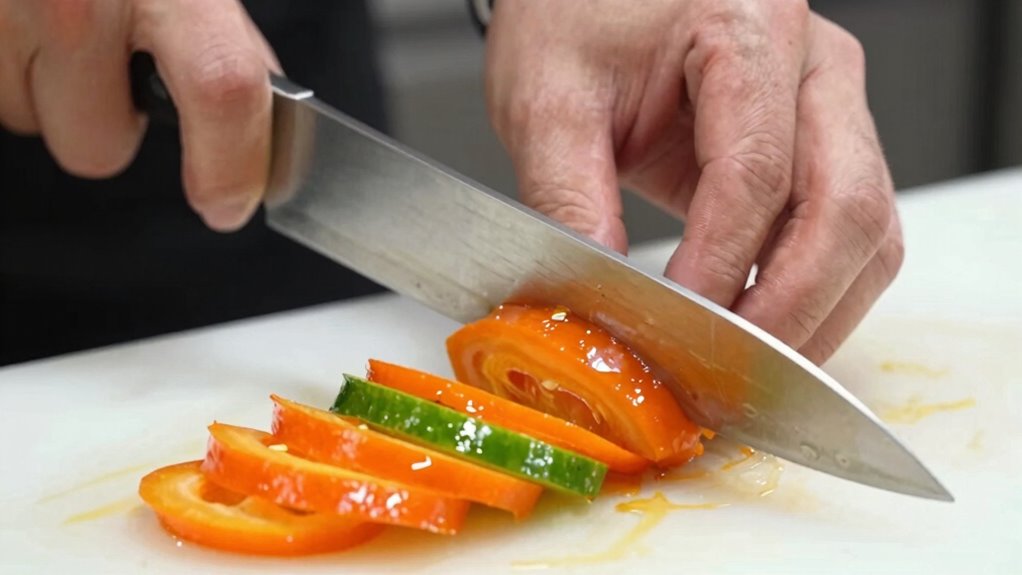

Your knife length impacts your rhythm and flow by dictating how smoothly and efficiently you cut. Longer knives allow broader cuts with fewer strokes, making your chopping more fluid and faster, especially for large veggies or herbs. Shorter knives offer more control for detailed, precise work, but may slow you down if you’re not comfortable. Choosing the right length helps you develop a consistent technique and smoother flow. Keep exploring to discover how to optimize your prep with the perfect knife.

Get kitchen gear delivered free — and shop member deals
- Fast, free delivery on millions of items
- Access to Prime Big Deal Days deals on October 6–7
- Prime Video, Amazon Music and more included
Key Takeaways
- Longer knives enable sweeping, continuous motions that create a smoother, more fluid chopping rhythm.
- Shorter knives promote controlled, precise cuts, slowing down the overall flow for detailed work.
- Knife length influences the choice of cutting techniques, affecting how seamlessly motions transition during prep.
- Properly maintained and comfortable knives enhance efficiency, maintaining consistent rhythm and reducing fatigue.
- Matching knife size to task improves overall flow, making food prep more intuitive and less disruptive.
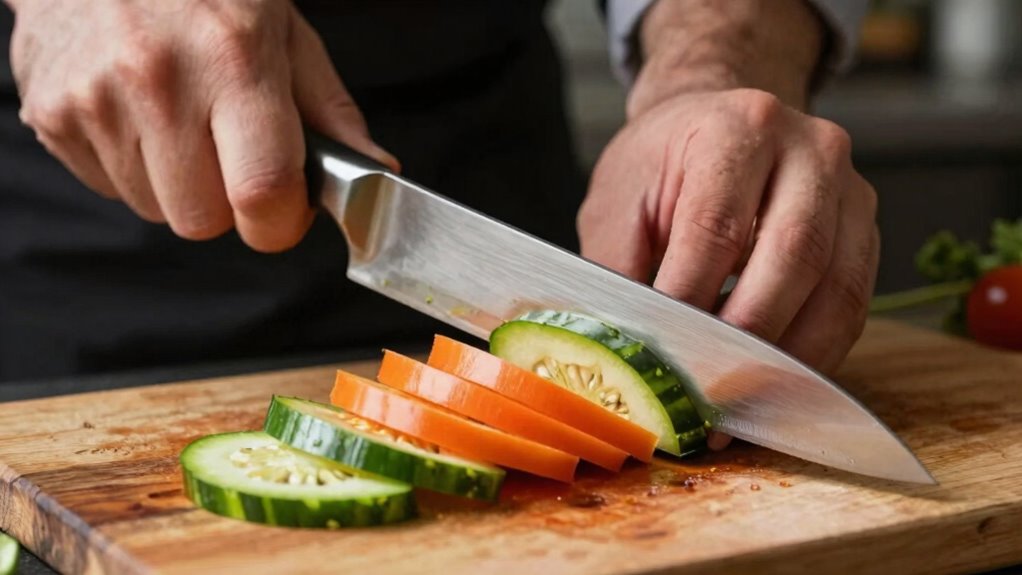
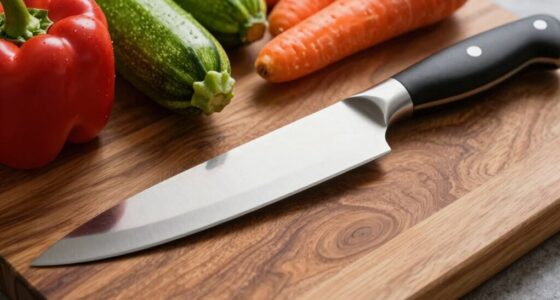
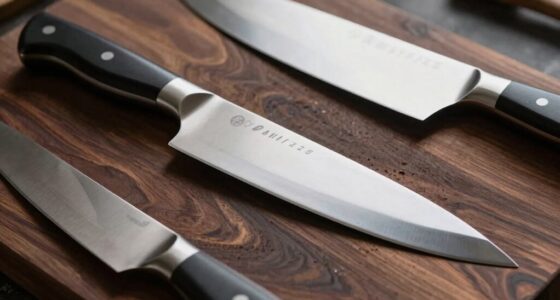
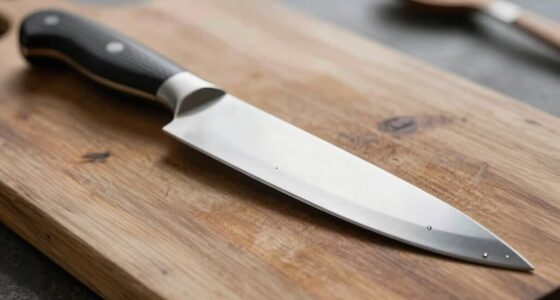
The length of your knife can considerably influence the rhythm and flow of your food prep on the board. When you’re chopping, slicing, or dicing, the size of the blade impacts how smoothly your motions feel and how efficiently you work. A longer knife, like a chef’s knife, allows you to make broader cuts with fewer strokes, which can speed up your prep and create a more fluid rhythm. Conversely, a shorter knife provides greater control for detailed work and smaller cuts, but it might slow your pace if you’re not accustomed to it. Your choice of knife length affects not just speed but also the way you approach each task, especially as it relates to different cutting techniques.
Choosing the right knife length enhances your rhythm, efficiency, and control during food prep.
If you’re using a longer knife, mastering proper knife sharpening becomes essential. A sharp, well-maintained blade glides through ingredients more effortlessly, reducing fatigue and maintaining a steady rhythm. When your knife is dull, you tend to press harder, which can disrupt your flow and cause uneven cuts. Regular knife sharpening ensures that your longer blade remains precise and responsive, allowing you to use fluid cutting techniques that leverage the full length of the blade. This makes your prep safer, quicker, and more enjoyable because you’re less likely to stumble or make errant cuts that interrupt your rhythm. Additionally, understanding the importance of knife maintenance can help you keep your tools in top condition for optimal performance. Proper maintenance also includes correct storage practices that prevent damage and keep your blades in prime condition. Developing consistent cleaning routines for your knives can also prolong their longevity and ensure they perform safely and effectively over time.
Your cutting techniques also adapt to the length of your knife. With a longer blade, you might favor rocking cuts or sweeping motions that utilize the entire length of the knife. These techniques enable you to maintain a continuous rhythm, especially during repetitive tasks like slicing large vegetables or herbs. On the other hand, shorter knives lend themselves to more controlled, precise movements—think of dicing small onions or mincing garlic—where small, deliberate cuts are necessary. Switching between these techniques depending on your knife length helps you develop a more intuitive workflow, keeping your movements fluid and efficient. Developing a consistent cutting style that matches your knife’s length can significantly improve your overall prep flow.
Ultimately, your comfort and familiarity with your knife’s length influence how seamlessly your prep proceeds. The right length, combined with sharpness and proper technique, allows you to establish a steady, rhythmic pace. Whether you’re executing quick, sweeping cuts or detailed, careful slices, your knife’s size shapes your overall flow. Proper knife sharpening keeps your blades in top condition, ensuring your cutting techniques stay smooth and effective. When your tools are suited to your style and skills, your food prep becomes more than just a task—it becomes a fluid, rhythmic process. Paying attention to ergonomic handling can also help prevent fatigue and improve control during prolonged prep sessions.
professional chef's knife 8 inch
As an affiliate, we earn on qualifying purchases.
As an affiliate, we earn on qualifying purchases.
Frequently Asked Questions
How Do Different Knife Lengths Affect Cutting Precision?
Longer knives typically offer better blade ergonomics, allowing you to maintain grip control more easily during precise cuts. Shorter knives provide increased maneuverability, helping you focus on accuracy, especially for delicate tasks. The length impacts your ability to stabilize the blade and apply consistent pressure. Ultimately, choosing the right knife length enhances your cutting precision by aligning with your grip control and the specific demands of each task.
What Materials Are Best Suited for Various Knife Lengths?
For precise cuts, shorter blades are best suited for delicate materials like paper or thin fabrics, where blade ergonomics enhance control. Medium-length blades work well for general tasks with durable materials like leather or plastic, offering a balance of control and strength. Longer blades excel with thicker, tougher materials such as wood or metal, providing leverage and durability. Always consider the material’s durability and how the blade length complements your grip for maximum results.
Can Knife Length Influence Safety During Chopping?
Yes, knife length can influence safety during chopping. Longer blades might be harder to control, increasing the risk of slips or accidents, especially if the blade ergonomics don’t suit your hand. Shorter knives often offer better control and precision. To guarantee safety, choose a knife length that fits comfortably in your hand, and always consider safety considerations like stability, control, and ergonomics to prevent injuries while chopping.
How Should I Choose the Right Knife Length for Specific Tasks?
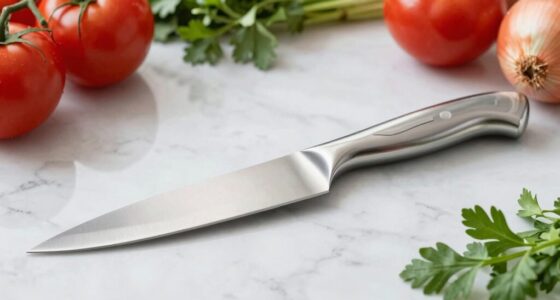
Studies show that choosing the right knife length improves safety and efficiency. For precise tasks like peeling or garnishing, opt for a 3-4 inch paring knife for better control. For chopping larger items, a 8-10 inch chef’s knife offers better leverage. When selecting, consider your hand size and comfort for safe knife handling. Proper storage safety also helps prevent accidents, so store knives securely to avoid injuries.
Does Knife Length Impact the Overall Presentation of the Dish?
Yes, knife length impacts your dish’s presentation aesthetics and visual appeal. A longer knife allows for cleaner, more precise cuts, making ingredients look uniform and elegant. Conversely, a shorter knife offers control for detailed work, enhancing intricate designs. Choosing the right length helps you achieve a polished look, elevating the overall presentation. When your cuts are neat and consistent, your dish appears more professional and visually attractive to diners.
high-quality kitchen knife sharpening kit
As an affiliate, we earn on qualifying purchases.
As an affiliate, we earn on qualifying purchases.
Conclusion
As you master different knife lengths, you’ll start to feel the subtle shifts in rhythm and flow beneath your hands. Each slice, chop, and glide takes on a new tempo, transforming your cooking experience. But the true test lies ahead—will you discover the perfect balance, or will the unexpected happen? Keep experimenting, stay alert, and let the rhythm guide you—you never know what’s just around the next cut. The kitchen’s secrets are waiting to be uncovered.
ergonomic paring knife for detailed work
As an affiliate, we earn on qualifying purchases.
As an affiliate, we earn on qualifying purchases.
knife storage block for kitchen knives
As an affiliate, we earn on qualifying purchases.
As an affiliate, we earn on qualifying purchases.
Fall Picks
fall essentials
As an affiliate, we earn on qualifying purchases.