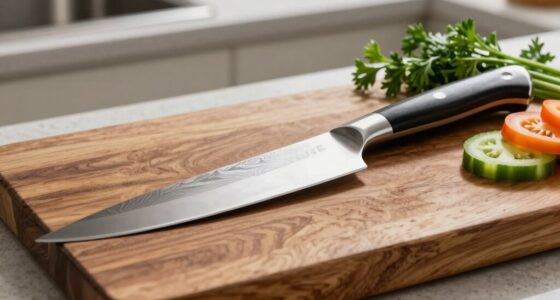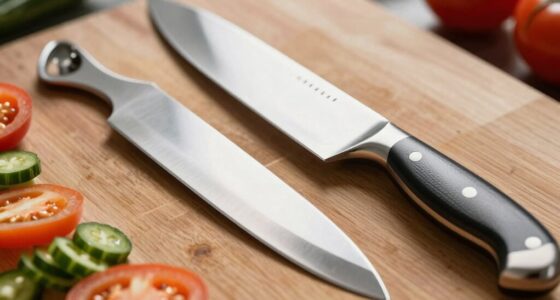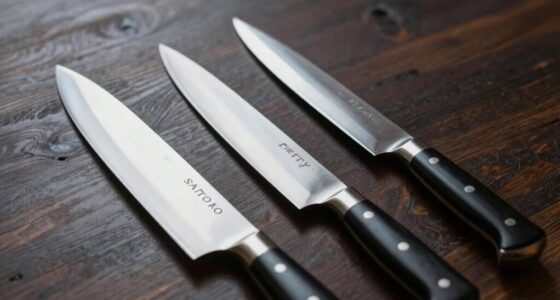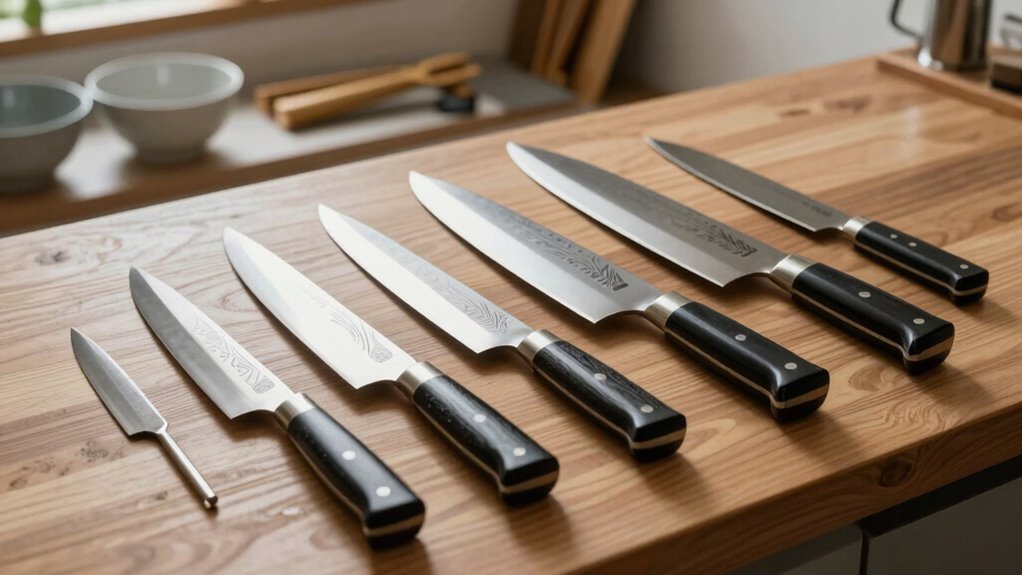
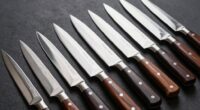
Japanese knife families are designed for specific tasks. Gyuto knives work well for general chopping and slicing, while Santoku blades excel at precision work like mincing. Nakiri is perfect for vegetables, and Deba handles fish filleting. Yanagi specializes in sashimi. Each knife features unique materials and craftsmanship that improve performance and durability. Exploring these options helps streamline your kitchen. Keep going to discover how to select, maintain, and use each knife for ideal results.
Key Takeaways
- Match knife types like Gyuto, Santoku, Nakiri, Deba, and Yanagi to specific kitchen tasks for optimal results.
- Gyuto is versatile for slicing, chopping, and dicing meat, fish, and vegetables.
- Nakiri and Usuba excel at vegetable prep, such as julienne and uniform cuts.
- Yanagi is ideal for delicate sashimi and fine protein slicing.
- Select specialized knives like Deba and Honesuki for fish filleting and poultry but prioritize general-purpose knives for everyday tasks.
Core Knife Families and Their Unique Roles
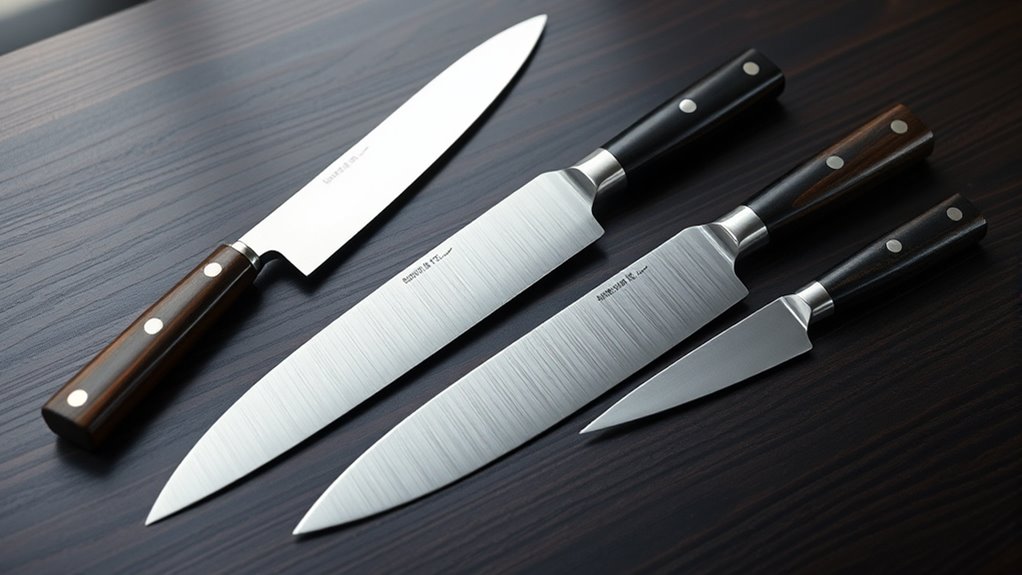
Have you ever wondered how Japanese kitchen knives are specialized for different tasks? Each core knife family plays a distinct role in your kitchen. The Gyuto, your versatile chef’s knife, handles chopping, dicing, and slicing meat, fish, and vegetables with a sharp, thin blade. The Santoku is perfect for precision work like mincing and dicing, thanks to its wide belly and curved spine ideal for rock-chopping. For vegetables, the Nakiri excels with its flat, square blade, making julienne strips effortless. The Deba, with its heavy, single-bevel blade, is your go-to for filleting fish and handling small bones. Finally, the Yanagi offers delicate, clean slices of sashimi, thanks to its narrow, single-edged design. These families form the foundation of effective Japanese cuisine preparation. Understanding knife design can enhance your technique and efficiency in the kitchen.
Material and Construction: What Sets Japanese Knives Apart
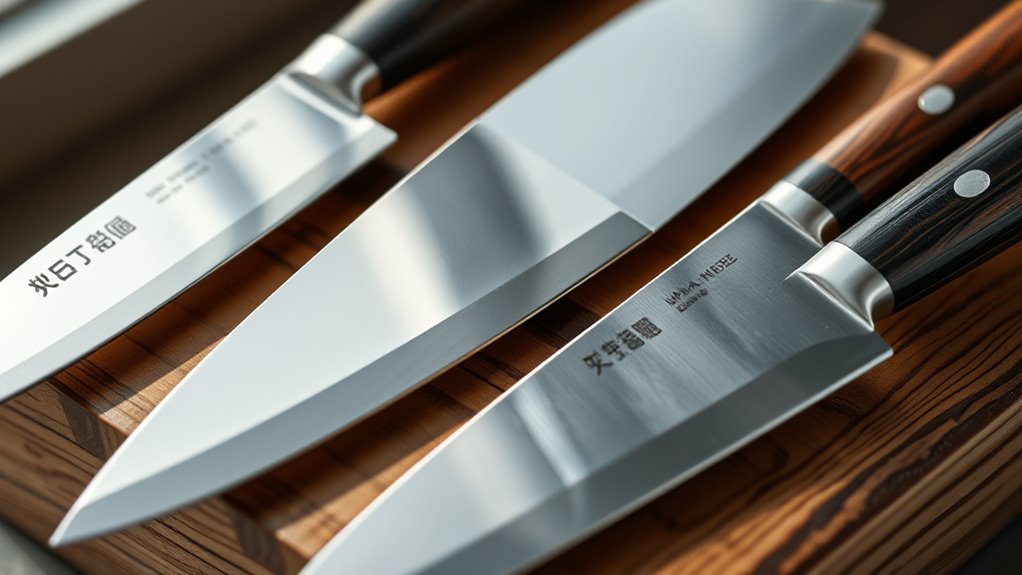
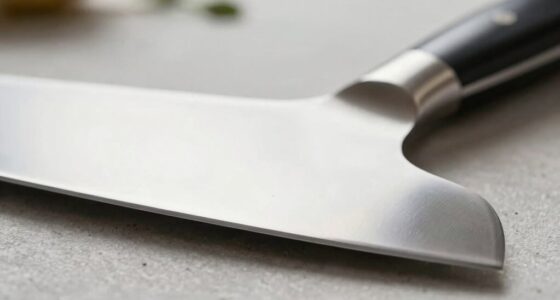
Japanese knives stand out primarily because of their specialized materials and meticulous construction, which deliver exceptional sharpness, durability, and edge retention. They often feature high-quality steel types like VG-10, White, or Blue Steel, known for their hardness and ability to hold an edge. The construction process emphasizes precise forging, differential hardening, and layered (laminated) techniques that create a sharp, resilient blade. These methods produce blades with a hard core and softer exterior layers, balancing sharpness with flexibility. The blades are typically thinner and lighter than Western counterparts, enabling finer cuts and greater control. Here’s a quick comparison:
| Material/Construction Aspect | Key Benefit |
|---|---|
| High-Carbon Steel | Sharpness and edge retention |
| Differential Hardening | Flexibility and durability |
| Layered/Clad Construction | Strength and corrosion resistance |
| Thin Blade Profile | Precision and effortless cutting |
Additionally, the layered construction techniques contribute significantly to the overall performance and longevity of Japanese knives.
Choosing the Right Knife for Different Kitchen Tasks
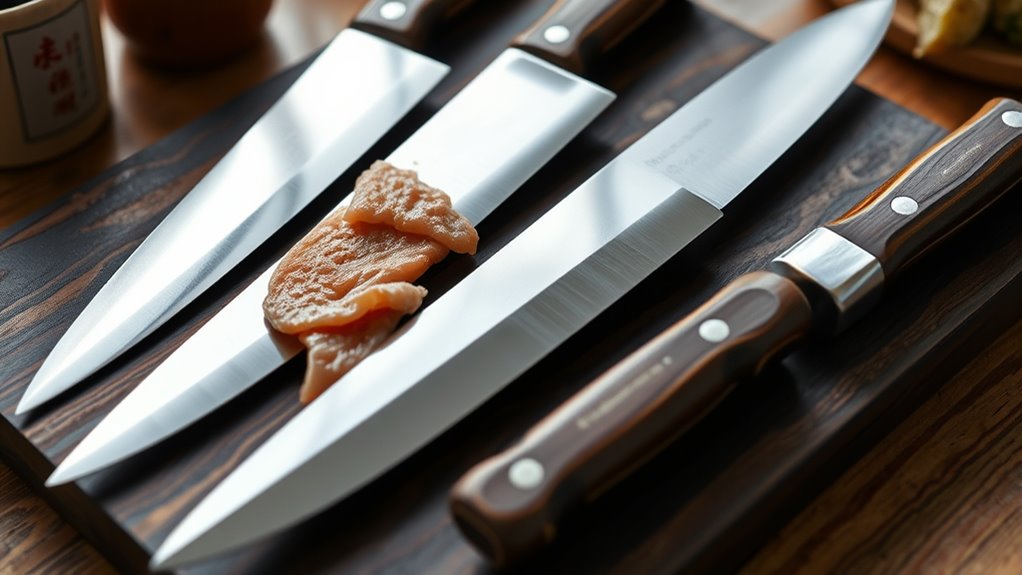
Choosing the right knife can greatly improve your efficiency and the quality of your cuts in the kitchen. For slicing fish sashimi or delicate proteins, a Yanagi is your best choice, offering clean, precise cuts. When chopping vegetables like carrots or daikon, a Nakiri or Usuba excels, with flat blades ideal for quick, uniform shredding. For general-purpose tasks, a Gyuto handles everything from meat to vegetables with ease, thanks to its versatile shape. If you need to mince garlic or herbs finely, a Santoku’s rocking motion makes it effortless. When working with poultry or small game, a Honesuki provides precise boning and skinning. Matching the knife to your task ensures better results and reduces fatigue, making your cooking smoother and more enjoyable. Additionally, understanding knife maintenance can extend the lifespan of your blades and keep your cuts consistently sharp. Practicing proper storage techniques can also help preserve the integrity of your knives over time. Incorporating proper sharpening methods into your routine is essential for maintaining a sharp edge and ensuring safety during use. Developing a good sharpening routine can significantly enhance your kitchen efficiency and prolong the life of your knives.
Maintenance and Sharpening Techniques for Longevity
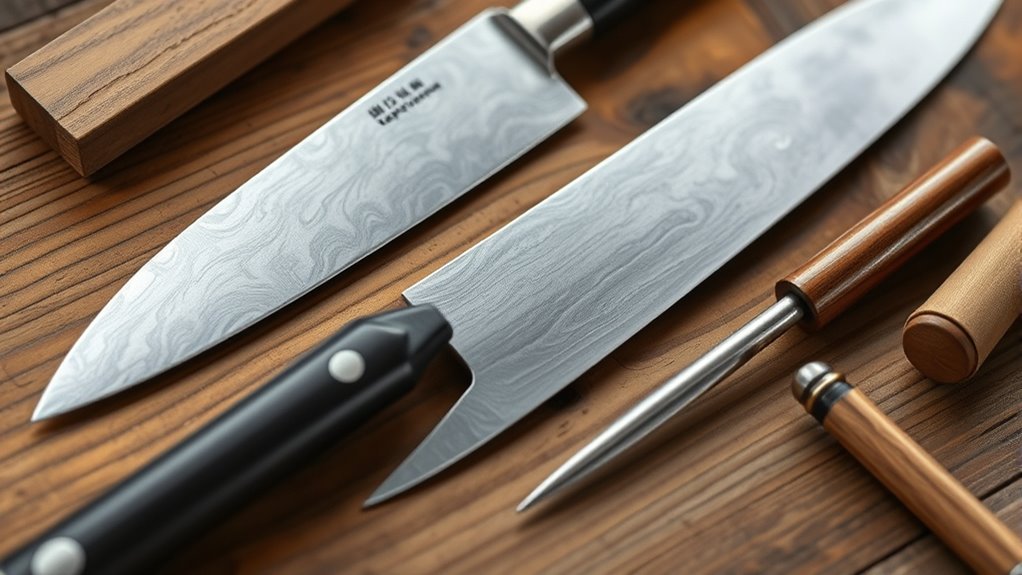
Proper maintenance and regular sharpening are essential to keep your Japanese knives performing at their best and to extend their lifespan. Start by hand-washing your knives immediately after use with mild soap and warm water, then dry thoroughly to prevent rust. Use a whetstone suited for Japanese knives—preferably a medium grit (1000-3000) for regular honing and a finer grit (6000-8000) for polishing. Soak the stone briefly before sharpening, then sustain a consistent angle (usually 15-20 degrees) throughout the process. Sharpen in smooth, even strokes, alternating sides to ensure an even edge. Finish with a leather strop or honing rod to realign the edge. Regular maintenance prevents dullness and keeps your knives sharp, ensuring precise cuts and a longer lifespan. Additionally, understanding the Free Floating technique can help you avoid unnecessary damage and maintain optimal performance. Practicing proper blade alignment can further enhance your sharpening results and protect your investment. Incorporating proper ventilation considerations during sharpening can also help reduce dust and debris, promoting a safer workspace.
Integrating Japanese Knives Into Your Cooking Arsenal
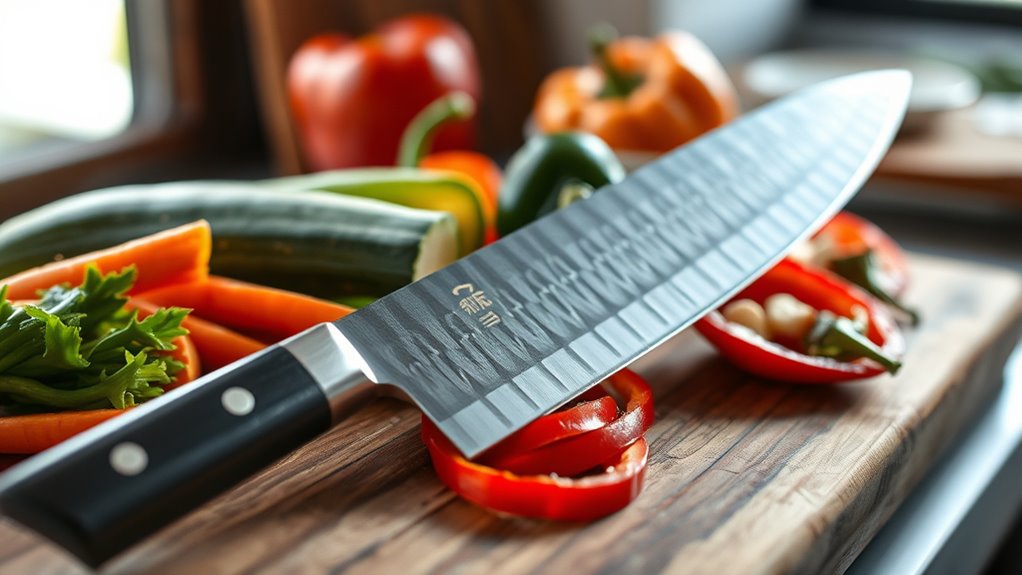
Incorporating Japanese knives into your cooking routine can substantially elevate your prep work and overall dish quality. Start by identifying which knives suit your typical tasks—use a Gyuto for versatile slicing, a Nakiri for vegetables, and a Yanagi for sashimi. Practice handling each knife with care to maximize precision and safety. Incorporate them gradually, replacing less specialized tools, to streamline your workflow. Maintain proper technique to access their full potential and preserve their sharpness. Experiment with different cuts and ingredients to discover each knife’s strengths. Remember, investing time in learning proper use and maintenance guarantees these knives become invaluable tools in your kitchen. Additionally, understanding the history of Japanese knives can deepen your appreciation and help you select the right tools for your needs. Exploring traditional craftsmanship behind these knives can also provide insight into their superior quality and durability. Developing a proper sharpening routine will ensure your knives stay in optimal condition and perform at their best.
Frequently Asked Questions
What Are the Main Differences Between Double-Bevel and Single-Bevel Japanese Knives?
Double-bevel knives have symmetrical edges, making them ideal for both right and left-handed users, and are easier to control for general tasks. Single-bevel knives, on the other hand, have an asymmetrical edge, providing more precise cuts, especially for traditional Japanese techniques like slicing sashimi. They require more skill to handle but offer greater control for specific tasks. Your choice depends on your skill level and the precision you need.
How Do I Identify Authentic Japanese Knives From Imitations?
You can identify authentic Japanese knives by checking their craftsmanship and materials. Genuine knives often feature a sharp, precise edge, high-quality steel, and traditional Japanese handles like D-shaped or octagonal shapes. Look for maker’s marks or stamps on the blade, and avoid cheap, overly heavy imitations with inconsistent finishes. Authentic knives also tend to have a lighter, balanced feel, reflecting their expert craftsmanship and traditional forging techniques.
Can Japanese Knives Be Used Effectively for Western-Style Cooking?
Yes, Japanese knives work well for Western-style cooking. You can use a Gyuto for chopping meat and vegetables, just like a Western chef’s knife. Santoku is versatile for slicing and dicing, while Nakiri excels at vegetables. Their sharpness and precision make prep easier. Just handle them carefully, and you’ll find they offer excellent control and efficiency in any cuisine style, blending traditional craftsmanship with modern kitchen needs.
What Is the Best Way to Store Japanese Knives Safely?
Think of your Japanese knives as delicate butterflies that need gentle care. Store them in a knife block, on a magnetic strip, or in a protective sheath to prevent dulling and accidents. Keep them dry and away from humidity, and avoid tossing them in drawers. Regularly clean and dry your blades, and sharpen them when needed. Proper storage keeps your knives sharp, safe, and ready for precise cuts every time.
Are There Specific Cleaning Methods to Preserve the Steel Quality?
You should hand wash your Japanese knives with mild soap and warm water immediately after use, avoiding abrasive scrubbers that can damage the steel. Dry them thoroughly with a soft cloth to prevent rust and corrosion. Occasionally, use a specialized steel polish or honing oil to maintain the blade’s quality. Never put your knives in the dishwasher, as harsh chemicals and high heat can compromise the steel’s integrity.
Conclusion
Once you get the hang of Japanese knife families, you’ll wonder how you cooked without them. Sure, they might seem delicate at first, but with proper care and sharpening, they’ll last for years. Don’t let the idea of maintenance scare you—it’s simpler than you think. Embrace these knives into your kitchen, and you’ll enjoy precision and joy in every cut. Your cooking will thank you, and so will your taste buds!