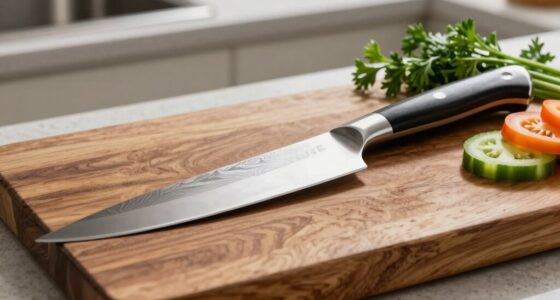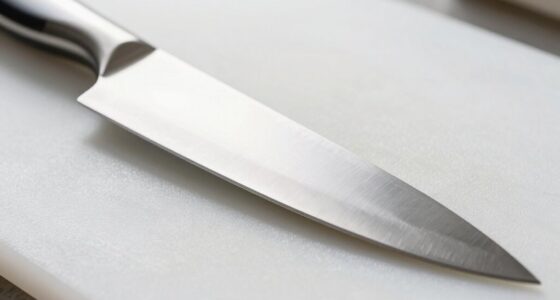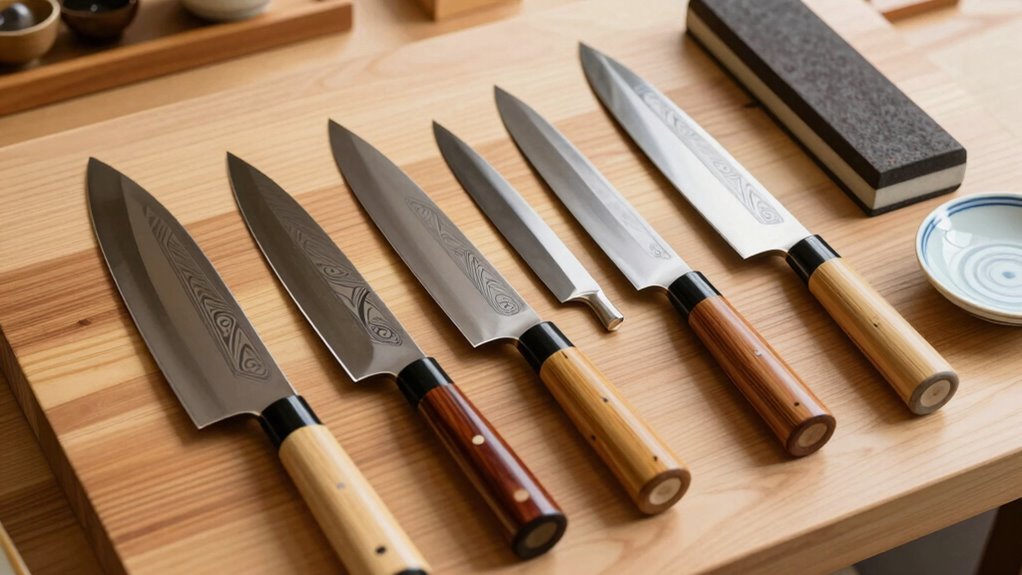
Japanese knife families are designed for specific tasks, from all-purpose options like Gyuto and Santoku to vegetable-focused Nakiri and Usuba. Seafood knives like Yanagiba and Sashimi-Bocho excel at fish prep, while specialized tools like Honesuki and Garasuki handle meat and poultry. Each knife differs in shape, bevel, and steel type, giving you precision and durability. Gain a better understanding of these differences, and you’ll be well-equipped to choose the right knife for every job.
Key Takeaways
- Japanese knives are categorized into all-purpose, vegetable-specific, fish, and meat knives, each with specialized shapes and functions.
- Key families include Gyuto, Santoku, Nakiri, Usuba, Yanagiba, and Honesuki, serving different culinary tasks.
- Blade design varies: single-bevel for precision and vegetables, double-bevel for versatility and ease of use.
- Steel types like high-carbon and stainless steel influence sharpness, durability, and maintenance needs.
- Understanding the purpose and characteristics of each family helps select the right knife for specific kitchen tasks.
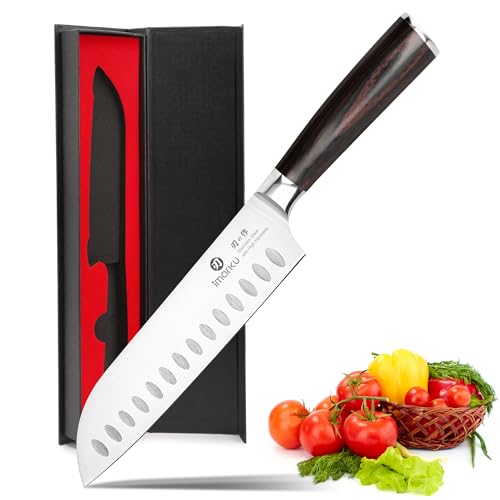
imarku Chef Knife 7 Inch Kitchen Knife Ultra Sharp Santoku Knife - High Carbon Japanese Chefs Knife, Kitchen Gadgets 2025, Apartment Essentials, Birthday Gifts for Him Her, Best Gifts for Women Men
Professional Santoku Knife: This imarku super sharp santoku knife is made of high carbon stainless steel that resists...
As an affiliate, we earn on qualifying purchases.
All-Purpose Knife Types and Uses
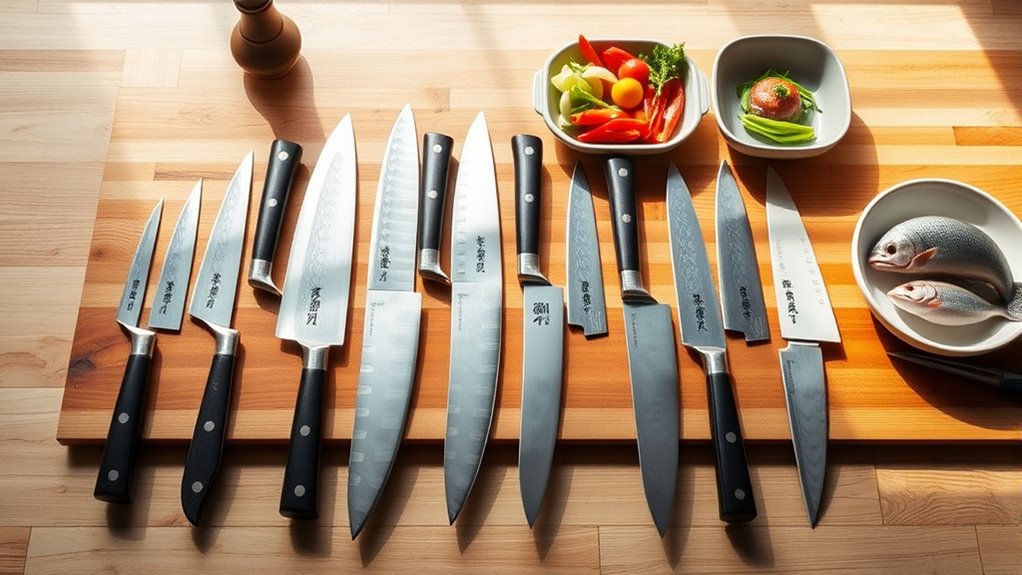
All-purpose Japanese knives are versatile tools designed to handle a wide range of kitchen tasks efficiently. The Gyuto is your go-to, with its curved blade ideal for rocking cuts and slicing meat, fish, and vegetables. The Santoku, meaning “three virtues,” features a straight edge perfect for chopping, mincing, and dicing, making it a true all-rounder. The Bunka offers a similar shape but with a reverse tanto tip, providing extra versatility for push cuts and detailed work. The Kiritsuke combines a prestigious appearance with multi-purpose functionality, suitable for slicing fish or vegetables. The Petty, smaller and lightweight, is perfect for peeling, trimming, and quick tasks. These knives’ sharpness, thinness, and precision in cutting make them essential for everyday cooking. Additionally, maintaining proper blade sharpness and handling techniques ensures a safer and more efficient experience in the kitchen. Regular honing and proper storage help preserve the cutting edge, ensuring optimal performance over time. Proper vetted maintenance practices can extend the lifespan and performance of your Japanese knives. Emphasizing proper knife handling and care can help prevent damage and maintain their cutting performance longer.
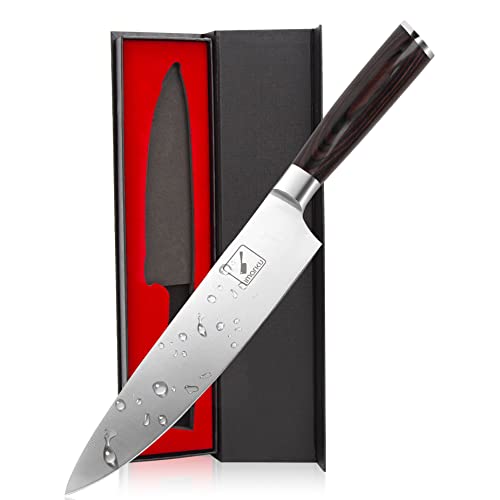
imarku Japanese Chef Knife - Sharp Kitchen Knife 8 Inch Chef's Knives HC Steel Paring Knife, Unique Gifts for Men and Women, Gifts for Mom or Dad, Kitchen Gadgets with Gift Box, Gyutou Knives
High-Carbon Stainless Steel Blade: It is manufactured from high-quality stainless steel that maintains its functionality for a long...
As an affiliate, we earn on qualifying purchases.
Vegetable-Specific Knives and Their Roles
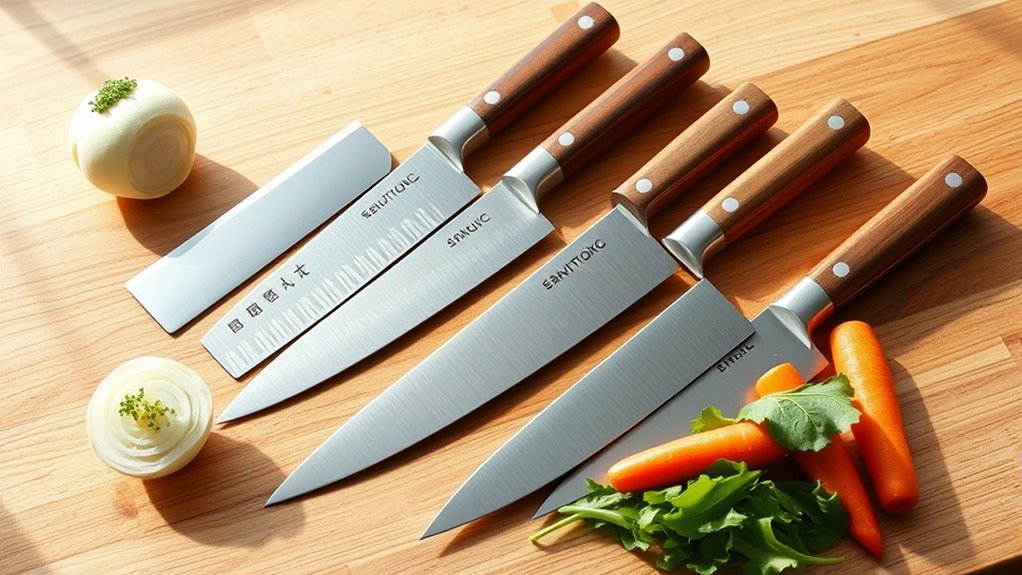
Vegetable-specific knives are designed for precise cuts and clean work, making prep faster and more efficient. Blade shapes and edge types vary, with some optimized for push cuts while others excel at downward chopping. Understanding these design differences helps you choose the right tool for perfect vegetable preparation. Proper knife technique is also essential for safety and achieving the best results. Recognizing knife maintenance ensures your tools stay sharp and effective over time, which is crucial for maintaining cutting performance and enhancing your overall cooking experience. Additionally, selecting the appropriate blade material can influence the durability and ease of sharpening of your knives. Being aware of modern knife technology can further assist you in selecting innovative and efficient tools.
Precise Vegetable Cuts
Have you ever wondered how Japanese knives achieve such precise vegetable cuts? It all comes down to the design and purpose of specific knives. Nakiri, with its straight edge, makes clean, straight downward slices, perfect for precision chopping. The Usuba, with its thin, single-bevel blade, excels at delicate, detail work like intricate garnishes or thin slices. Kamagata Usuba’s semicircular tip allows for detailed cutouts, giving you more control for artistic presentation. The Santoku blends the straight edge of Nakiri with a longer blade, enabling efficient slicing and dicing of vegetables. The Nakiri-Bocho emphasizes a rectangular shape, ideal for push cuts, maintaining accuracy and control. These knives are crafted for precision, helping you achieve uniform, beautiful cuts every time. Proper knife maintenance ensures your blades stay sharp and effective for precise cuts. Additionally, understanding the types of vegetable knives can enhance your cutting technique and results. Properly selecting the right knife for each task can significantly improve your efficiency and outcomes in vegetable preparation.
Blade Design Differences
The key to the effectiveness of vegetable-specific Japanese knives lies in their blade designs, which are tailored to perform precise cuts with minimal effort. Nakiri blades are straight, allowing clean, downward push cuts that minimize crushing. Usuba knives have thinner, single-bevel edges for detailed work and delicate vegetable carving. Kamagata Usuba features a semicircular tip, perfect for intricate cutouts. Santoku combines a straight edge with a slightly curved profile, balancing push and pull cuts for versatile vegetable prep. Nakiri-Bocho emphasizes a rectangular shape optimized for push chopping, making it easier to handle larger quantities. Each design focuses on reducing effort while maintaining precision, enabling you to achieve beautiful, consistent cuts that enhance presentation and texture in your dishes. Blade design differences are crucial in selecting the right knife for specific vegetable cutting tasks.

HOSHANHO Kitchen Knife in Japanese High Carbon Steel, Professional High-Class Chef's Knife 8 inch, Non-slip Ultra Sharp Cooking Knives with Ergonomic Handle
【High-End Japanese Steel Chef's Knife】 HOSHANHO chef's knife is made of Japanese high carbon steel 10Cr15CoMoV, 2x of...
As an affiliate, we earn on qualifying purchases.
Fish Preparation Knives and Their Specializations
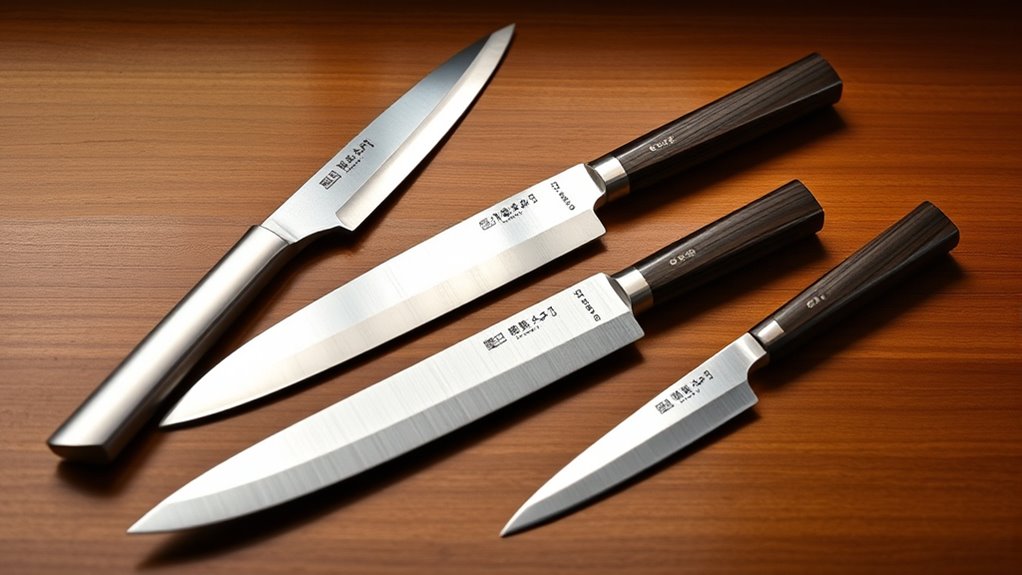
Fish preparation knives in Japanese cuisine are highly specialized tools designed to handle delicate and precise tasks such as filleting, slicing sashimi, and preparing seafood with minimal damage. These knives are crafted for accuracy and finesse, ensuring you can work efficiently while preserving the fish’s quality. Each knife’s shape and bevel serve a specific purpose, making them essential for expert seafood preparation. Additionally, understanding the Japanese knife families can help you select the right tool for each task, improving your overall technique. Mastery of the proper maintenance and sharpening techniques is also crucial to keep these specialized knives performing at their best.

Japanese Chef Knife, 8 Inch Damascus Kitchen Knife with VG10 Steel, Handcrafted Sharp Knife with Ergonomic Handle, Cooking Knives for Home Chefs, Cooking Gifts for Men and Women
【Premium Damascus Chef Knife with VG-10 Steel Core】Our Japanese knives feature a VG-10 steel core (60 HRC) for...
As an affiliate, we earn on qualifying purchases.
Meat-Cutting Knives and Butchering Tools
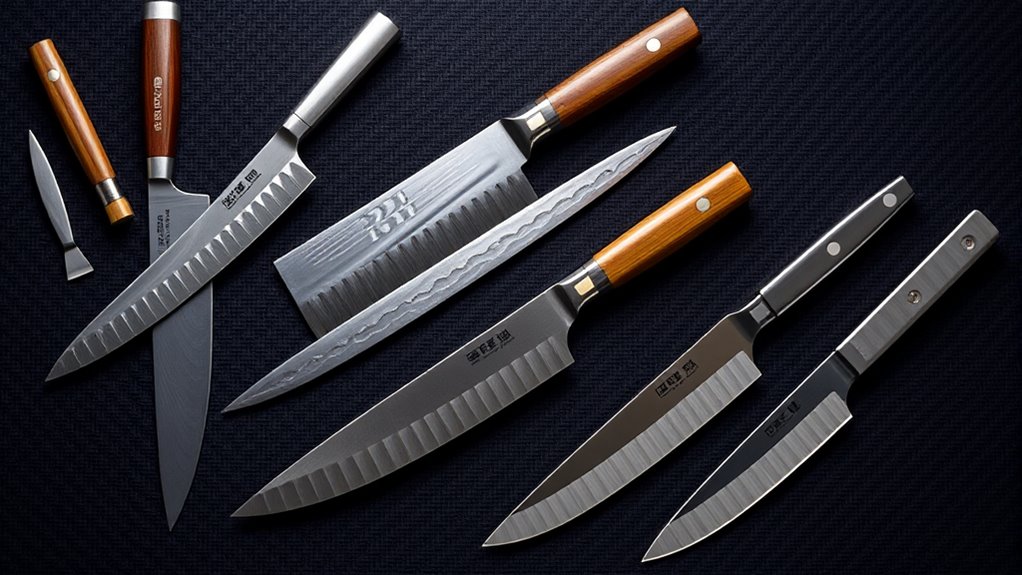
When it comes to meat preparation, choosing the right knife makes all the difference. You’ll want tools like the Honesuki or Garasuki to handle deboning and trimming tasks efficiently. Understanding how these knives support specific techniques can help you get cleaner cuts and better results. Additionally, selecting the appropriate free floating knife design can enhance your safety and precision in the kitchen. Proper handling and knife measurements are crucial for achieving optimal performance during butchering. Incorporating ergonomic grip considerations can further improve comfort and control when working with these specialized tools. Using the right automotive repair knowledge about proper maintenance can extend the lifespan of your knives and prevent accidents while working. Knowing about support breakfast options can also provide ideas for quick, nutritious meals after a long session of butchering.
Deboning and Trimming Techniques
Deboning and trimming meats require precision tools designed specifically for the task, guaranteeing clean cuts and minimal waste. A sharp, flexible boning knife allows you to navigate around bones and connective tissue effortlessly. Trimming knives help you remove excess fat and silver skin efficiently, improving presentation and flavor. The right tool makes these tasks safer and more precise. Keep these techniques in mind:
- Use a flexible boning knife for delicate bone work.
- Keep your knives sharp to prevent tearing tissue.
- Work with a steady hand, following the contours of the meat.
- Trim excess fat and sinew to enhance texture.
- Use controlled, smooth motions for clean cuts and minimal waste.
- Understanding the importance of proper technique can significantly improve your results.
Choosing the proper Japanese knives ensures efficient, precise deboning and trimming every time.
Knife Types for Meat
To efficiently carve and break down meat, selecting the right Japanese meat-cutting knives and butchering tools is essential. The Honesuki features a triangular blade ideal for deboning poultry with precision and control. The Garasuki, with its heavy single-edged design and pointed tip, handles breaking down larger cuts of meat and poultry with force. Gyuto knives, with their curved edge, excel at rock chopping through beef and larger meats. For crustaceans, the Kanisaki-Deba is specialized for crabs and lobsters, offering precise cuts. The Yo-Deba, with a European-style handle, provides versatility across various meat tasks. These knives combine sharpness, strength, and specialized shapes to streamline meat processing, making your butchering more efficient and precise. Understanding modern kitchen technology can further enhance your meat preparation techniques by integrating smart appliances for precise temperature control and efficient workflow. Additionally, proper knife maintenance ensures your tools stay sharp and safe for ongoing use. Incorporating appropriate sharpening techniques helps maintain optimal edge quality and prolongs the life of your knives. Moreover, selecting the right storage solutions can prevent damage and maintain your knives’ sharpness over time.
Slicing and Filleting Knives for Raw Fish and More
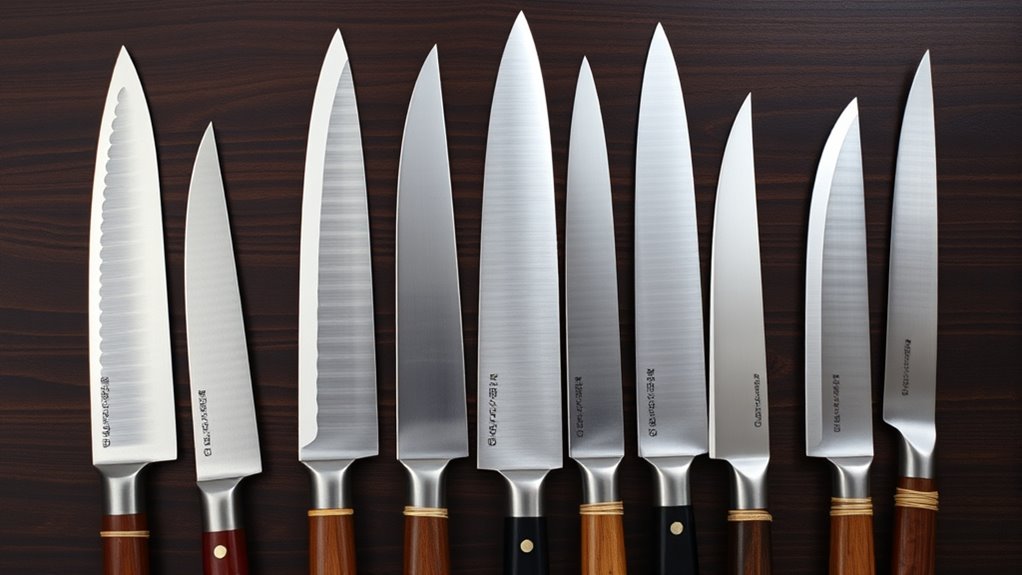
Ever wondered how Japanese chefs achieve perfectly thin, clean slices of raw fish? It’s all about using the right slicing and filleting knives. These blades are designed for precision, ensuring each cut preserves the fish’s texture and flavor. The Yanagiba, with its long, slender single-bevel blade, is ideal for sashimi, allowing uninterrupted, smooth strokes. The Sashimi-Bocho offers an equally long blade but focuses on delicate, paper-thin slices. The Takobiki combines a sword-like tip with a flat profile for octopus and sashimi. The Sujihiki, a double-bevel slicer, handles a variety of meats and fish with clean, precise cuts. The Hon-Deba, thicker and heavier, is perfect for general filleting tasks. Mastering these knives guarantees your raw fish presentation is as authentic and beautiful as a professional’s.
Key Characteristics of Japanese Knives
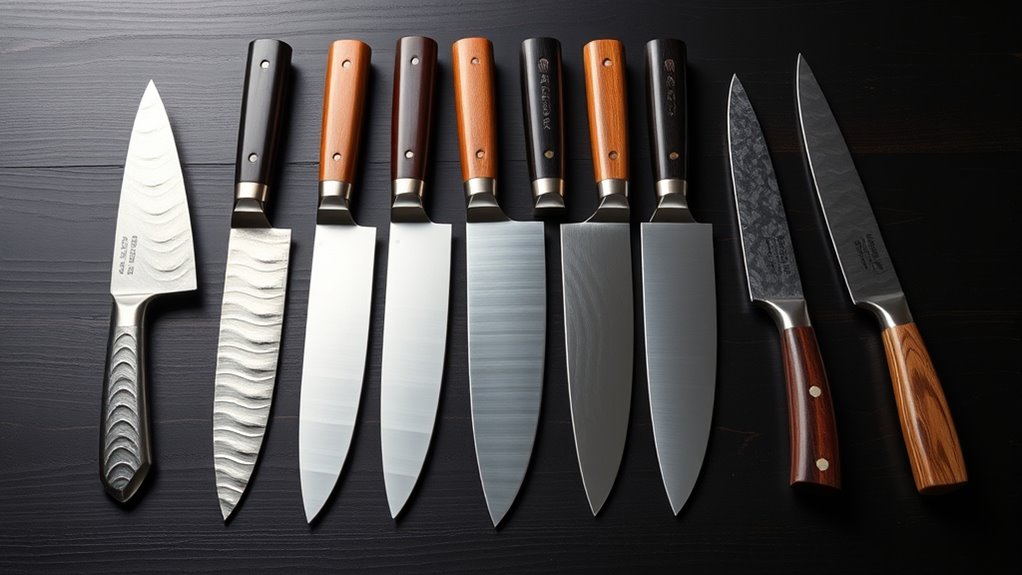
Japanese knives stand out for their unique construction and design features that set them apart from Western counterparts. They are typically thinner, harder, and more precise, allowing for cleaner cuts and sharper edges. Many Japanese knives are double-beveled, making them versatile for a variety of tasks, unlike traditional single-bevel knives used for specific cuts. The steel used is often high-carbon or stainless, offering excellent edge retention and sharpness. Handles usually feature a Japanese style, such as Wa-gyuto, which enhances balance and control. These knives are crafted with meticulous attention to detail, blending functionality with aesthetic appeal. Their lightweight design and sharp, thin blades enable precision and finesse, making them ideal for delicate tasks like slicing sashimi or vegetables with minimal effort. Steel quality plays a crucial role in their durability and performance.
Traditional Single-Bevel vs. Modern Double-Bevel Edges
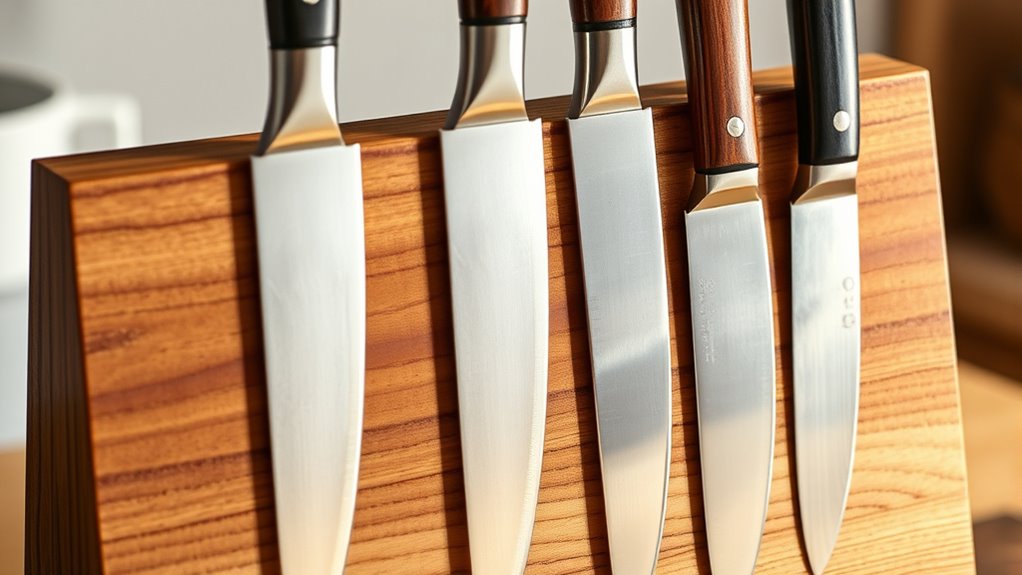
Have you ever wondered why traditional Japanese knives often feature single-bevel edges while modern designs favor double-bevels? The key difference lies in purpose and craftsmanship. Single-bevel knives are crafted for precision, allowing you to make cleaner, more controlled cuts, especially in delicate tasks like sashimi or vegetable carving. Double-bevel knives are versatile, suited for both left- and right-handed users, making them ideal for everyday cooking. Here are some important points:
- Single-bevel knives excel in precision and specialized cuts.
- Double-bevel blades are more durable and easier to use for beginners.
- Single-bevels are often sharper but require more skill to maintain.
- Double-bevels distribute force evenly, reducing damage.
- Traditional single-bevels are typically lighter and more delicate.
Choosing depends on your skill level and specific culinary needs.
Steel Types and Their Impact on Performance
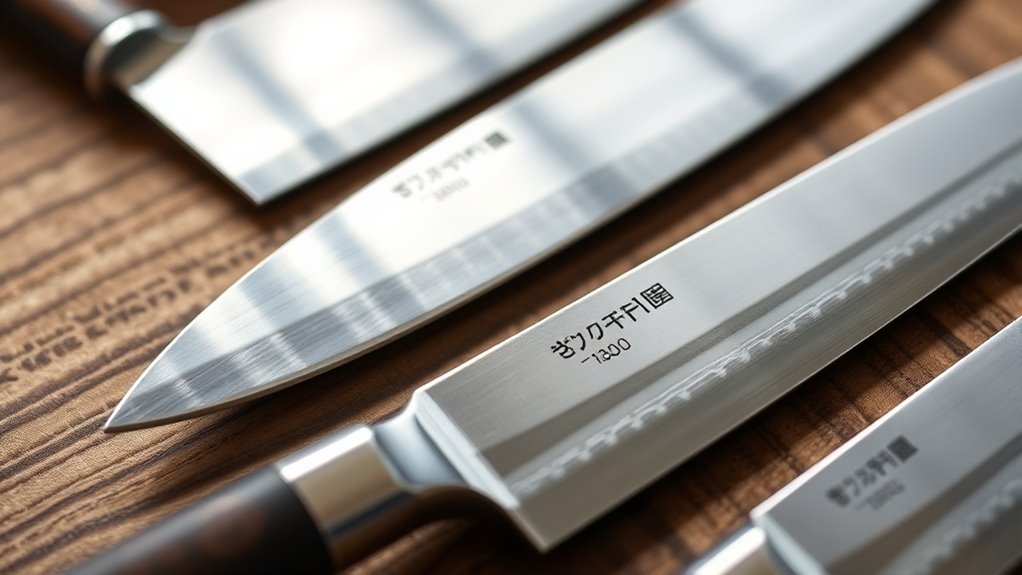
Steel quality markedly influences a knife’s sharpness, durability, and ease of maintenance. High-carbon steels, like SK-4 or White #2, sharpen easily and hold an edge longer but can rust if not properly cared for. Stainless steels such as VG-10 or AUS-10 resist corrosion and require less upkeep, though they may not stay sharp as long. Harder steels, often above 60 HRC, enable finer edges and better cutting performance but can be more brittle and prone to chipping. Softer steels, around 56 HRC, are more forgiving but need frequent sharpening. Your choice depends on your use and maintenance preferences. Remember, the steel’s composition and heat treatment substantially impact how well your knife performs and how much effort you’ll invest in keeping it sharp.
Popular Japanese Knife Styles in Modern Kitchens
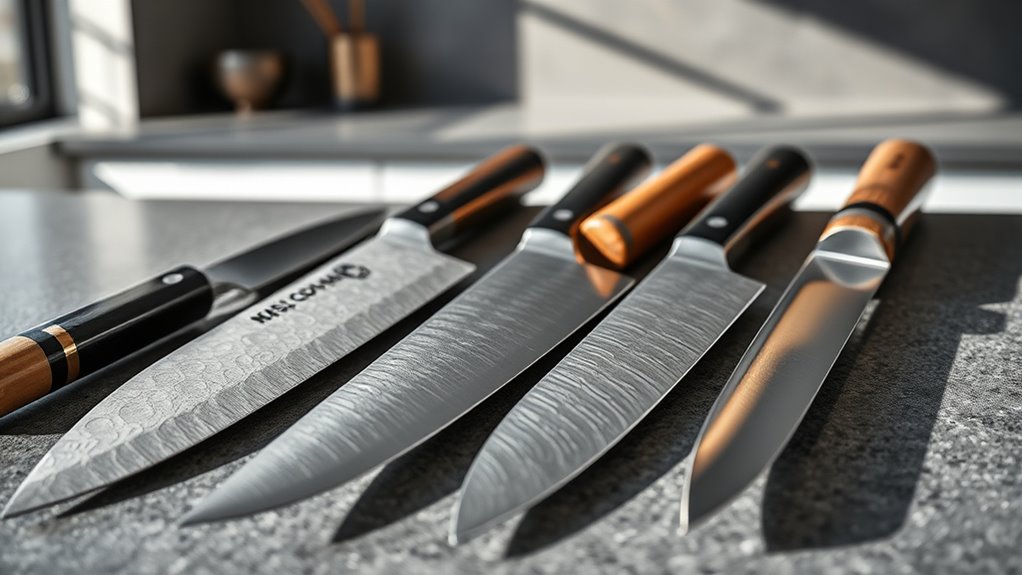
In modern kitchens, the popularity of Japanese knife styles continues to grow because of their exceptional precision, sharpness, and craftsmanship. You’ll find these knives versatile and perfect for various tasks. The Gyuto, with its curved blade, is great for rocking cuts on meats and vegetables. The Santoku, known for its straight edge, handles slicing and dicing with ease. Bunka knives offer a versatile design with a reverse tanto tip for push cuts. Kiritsuke combines multi-purpose functionality with a distinctive look, often used by professional chefs. For small tasks, the Petty knife is your go-to utility tool. These styles blend tradition with modern innovation, making them essential in contemporary kitchens. Whether you’re slicing fish or chopping vegetables, these Japanese knives deliver unmatched performance.
Frequently Asked Questions
How Do I Choose the Right Japanese Knife for My Cooking Style?
To pick the right Japanese knife, consider your cooking style. If you chop vegetables often, go for a Nakiri or Usuba for precision. For meat and poultry, a Honesuki or Gyuto works great. If you focus on fish, choose a Yanagiba or Deba. Think about the tasks you do most, then select a knife designed for those. Comfort and handling matter too, so try holding different options before deciding.
What Maintenance Is Required to Keep Japanese Knives Sharp?
To keep your Japanese knives sharp, you should regularly hone them with a ceramic or leather strop to realign the edge. Use a whetstone, preferably water stones, to professionally sharpen when needed, maintaining the correct angle. Avoid dishwasher cleaning, and hand wash and dry immediately after use. Store your knives properly, either in a knife block or on a magnetic strip, to prevent dulling and damage.
Are Single-Bevel Knives Suitable for Beginners?
Single-bevel knives are like a finely tuned instrument—precision takes practice. For beginners, they can be tricky because they require specific handling and sharpening techniques. If you’re new, you might find dual-bevel knives easier to control and maintain. However, with patience and proper guidance, single-bevel knives can become a valuable tool, offering exceptional slicing and a sharper edge. Just be prepared for a learning curve to master their unique skills.
How Does Steel Type Affect Japanese Knife Durability?
Steel type greatly impacts your Japanese knife’s durability. If you choose high-carbon steel, you’ll get a sharper edge that stays longer but may need more maintenance to prevent rust. Stainless steel offers better corrosion resistance, making your knife more durable with less upkeep. Harder steel holds an edge better but can be more brittle, risking chips. Knowing the steel helps you pick a knife that balances sharpness, longevity, and ease of care.
Can Japanese Knives Replace Western-Style Knives in My Kitchen?
Japanese knives can be your culinary chameleons, adapting to many tasks, but they might not fully replace Western-style knives. Their precision and thin steel excel at slicing and delicate work, yet bulky tasks like heavy chopping or breaking down large meats may be better suited to Western blades. Think of them as a versatile partner—great for finesse, but sometimes needing a teammate for the heavy lifting.
Conclusion
Think of Japanese knives as a finely tuned orchestra, each blade a different instrument perfectly crafted to create harmony in your kitchen. When you understand their unique roles and qualities, you can compose culinary masterpieces with precision and ease. Embrace these tools as your trusted musicians, and your cooking will sing with clarity and grace. Master the family, and every meal becomes a symphony you’ll cherish.