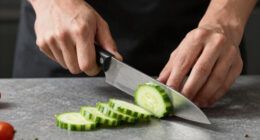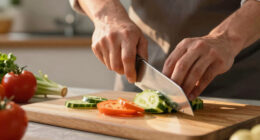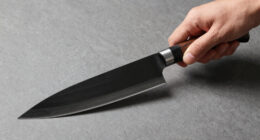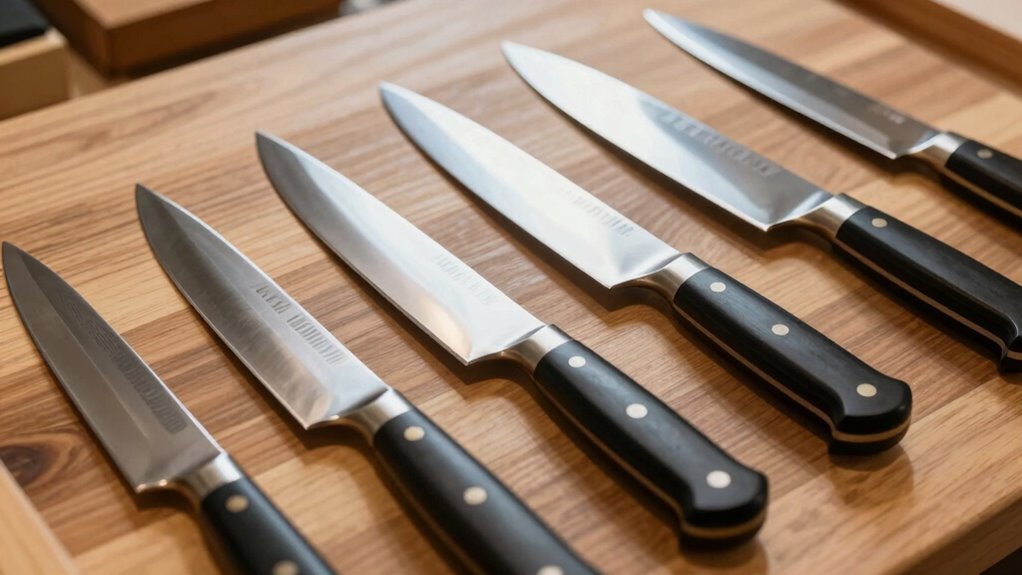
Choosing the right Japanese chef knife size makes cooking easier and more precise. For home cooks, an 8.3-inch gyuto is versatile for many tasks like chopping vegetables and slicing meat. A 6.5-inch santoku offers control for detailed work, while larger sizes are great for bulk prep. Keep in mind that comfort, the types of ingredients you prepare, and traditional craftsmanship influence your choice. To learn more about selecting the perfect knife for your needs, keep exploring the details ahead.
Key Takeaways
- Japanese chef knives come in various sizes, typically ranging from 165mm to 240mm, each suited for different tasks.
- A 210mm gyuto is versatile, ideal for general chopping, slicing, and dicing in home kitchens.
- Smaller sizes like 165mm santoku offer better control for detailed vegetable work and delicate tasks.
- Larger knives (e.g., 240mm) are suitable for slicing large cuts of meat or bulk preparation.
- Choosing the right size depends on your cooking style, preferred ingredients, and comfort during use.
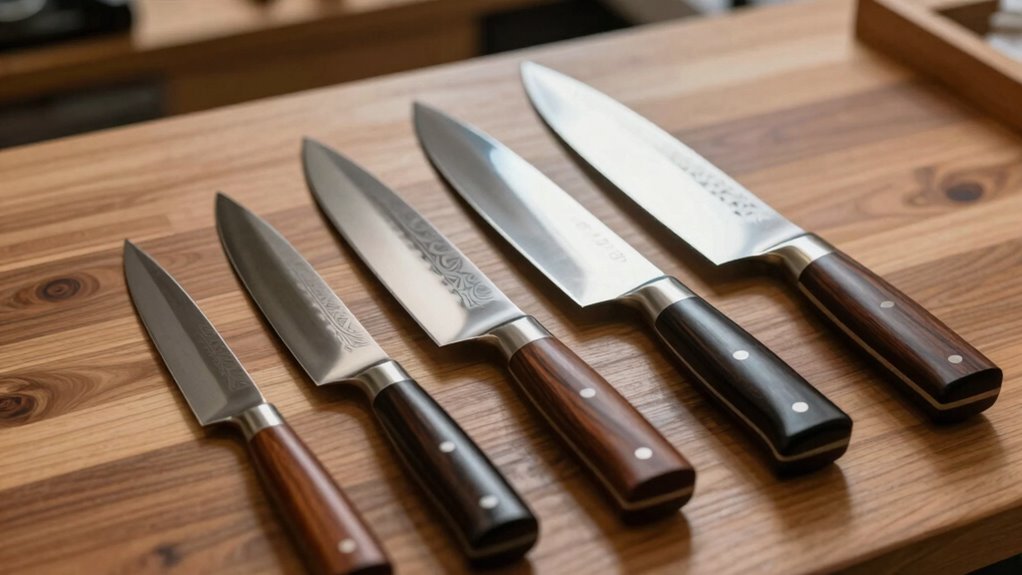
Choosing the right Japanese chef knife size can make a significant difference in your cooking experience, especially if you’re a home cook. The size of your knife influences how comfortably you handle it and how efficiently you prepare different ingredients. Understanding the various sizes and their purposes helps you select the perfect tool for your kitchen. Japanese knife history reveals a tradition rooted in craftsmanship and precision, with blades designed for specific tasks. These knives often feature a thinner, sharper edge compared to Western counterparts, allowing for delicate cuts and fine slicing. Knowing this background can deepen your appreciation for the craftsmanship behind each knife and guide you to choose one that suits your cooking style.
Choosing the right Japanese chef knife size enhances comfort, precision, and appreciation for craftsmanship in your cooking.
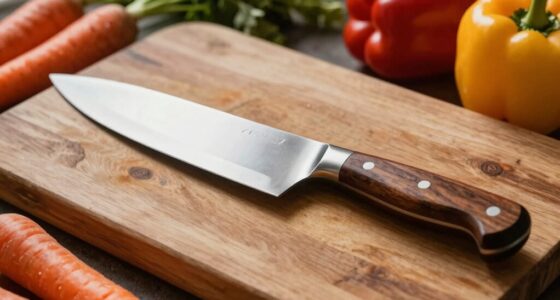
When selecting a size, consider the types of foods you prepare most often. A 210mm (8.3-inch) gyuto, the Japanese equivalent of a chef’s knife, is versatile and great for general tasks like chopping vegetables, slicing meat, and mincing herbs. If you prefer more control for intricate work, a smaller 165mm (6.5-inch) santoku might be ideal, especially if you cook frequently with vegetables or want a lighter, more maneuverable knife. Larger sizes, such as 240mm (9.4-inch) or more, excel at slicing large cuts of meat or preparing bulk quantities, but they may feel unwieldy for smaller tasks. It’s best to choose a size that balances your comfort and the scope of your cooking. Additionally, blade craftsmanship influences the knife’s performance, durability, and ease of maintenance. traditional forging methods contribute to the overall quality and strength of the blade, which can impact how it performs over time. Recognizing the importance of size can help you make a more informed decision based on your specific needs and culinary preferences.
Maintaining your Japanese knife properly is vital, regardless of size. Knife maintenance tips include hand-washing your blades immediately after use to prevent corrosion and dulling caused by dishwasher detergents. Regular honing with a whetstone or a honing rod keeps the edge sharp, which is essential for precise cuts and safety. Sharpening should be done periodically to restore the blade’s original sharpness, especially if you notice increased effort needed to cut through ingredients. Proper storage, like a knife sheath or a dedicated knife block, prevents accidental damage and preserves the edge. By practicing these maintenance tips, you extend your knife’s lifespan and guarantee it remains a reliable tool in your kitchen.
In the end, choosing the right Japanese knife size isn’t just about length; it’s about how it feels in your hand and suits your culinary needs. Take into account your cooking habits, the types of ingredients you most often prepare, and your comfort level with handling different sizes. Knowing the history behind these blades can deepen your appreciation, inspiring you to care for your knife with respect and precision. With proper maintenance, your Japanese chef knife will serve you well for years, making every meal prep more enjoyable and efficient.

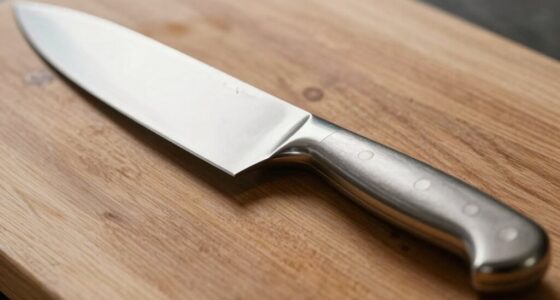
kanngou 8.27 Inch Japanese Chef Knife Kitchen Knife, Japan AUS-8 Alloy Steel Gyuto Knife with Full-Tang Pakkawood Handle, Chef's Knives with Premium Gift Box (Classic Series)
JAPANESE ALLOY STEEL AUS-8 KNIFE CORE, SUPER SHARP: The KANNGOU Japanese knife is made from Japnese alloy steel…
As an affiliate, we earn on qualifying purchases.
As an affiliate, we earn on qualifying purchases.
Frequently Asked Questions
How Do I Choose the Right Knife Size for My Hand?
To choose the right knife size for your hand, consider knife handle ergonomics—pick a handle that feels comfortable and secure during use. A smaller knife, like a 5-6 inch, suits those with smaller hands, while larger sizes provide more control for bigger hands. Also, think about knife size and storage; select a size that fits comfortably in your kitchen space and is easy to handle daily without strain.
Are Larger Knives Harder to Control?
Larger knives aren’t necessarily harder to control; it’s more about how their weight and blade length suit your hand. Heavier knives can feel more demanding initially, but with practice, they become an extension of your hand. Longer blades offer more cutting surface, which can be easier or trickier depending on your skill level. Ultimately, choosing a size that balances comfort with your cutting tasks makes control natural, not forced.
What’s the Best Knife Size for Beginner Home Cooks?
As a beginner home cook, a 6-inch chef’s knife is your best choice. It offers a great balance of control and versatility, especially with lightweight knife material that makes slicing easier. Look for a handle with comfortable grip, so your hand doesn’t tire quickly. This size helps you develop proper technique without feeling overwhelmed by a larger, heavier knife. Over time, you can explore different sizes as your skills improve.
Do Knife Sizes Vary by Cuisine Type?
Yes, knife sizes do vary by cuisine type because different culinary traditions prioritize specific tasks. For instance, Asian cuisines often use smaller, lighter knives for precision, while Western styles favor larger, heavier blades. When choosing, consider knife material for durability and handle comfort for extended use. Smaller knives suit delicate slicing, whereas larger ones excel in chopping and heavy-duty tasks typical in specific cuisines.
How Do I Maintain and Care for Different Knife Sizes?
To maintain and care for different knife sizes, you should regularly sharpen the blades to keep them performing well. Use proper blade sharpening tools suited for each knife type, and avoid using them on hard surfaces. Store your knives in dedicated storage solutions like a knife block or magnetic strip to prevent dulling and damage. Proper care guarantees your knives stay sharp, safe, and last longer, no matter their size.

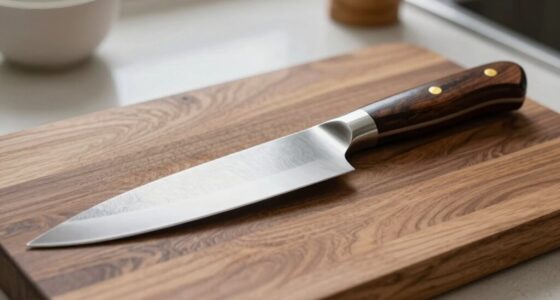
Babish High-Carbon 1.4116 German Steel Cutlery, 6.5" Santoku Kitchen Knife
Forged from a single piece of high-carbon 1.4116 German steel
As an affiliate, we earn on qualifying purchases.
As an affiliate, we earn on qualifying purchases.
Conclusion
Choosing the right Japanese chef knife size is like finding the perfect key for a lock—it unlocks your cooking potential. I once struggled with a too-large knife, feeling like I was wielding a sword rather than a tool. But once I switched to the ideal size, chopping became easier and more precise. Remember, picking the right size isn’t just about comfort; it’s about accessing a new level of confidence in your kitchen.

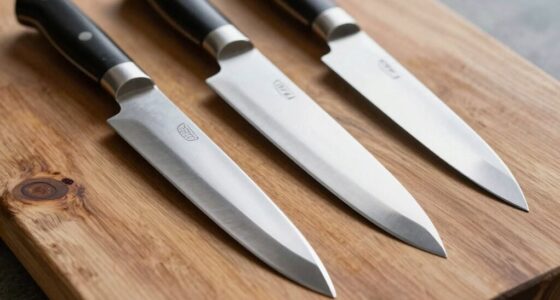
imarku 3 Pieces Knife set, Japanese HC Stainless Steel Kitchen Knife Set, Professional Chef Knife Set With Ergonomic Pakkawood Handle, Ultra Sharp Knives Set for Kitchen & Home Cooking, Gifts Box
Ultra Sharp Professional Edge:Each knife in the imarku kitchen knife set is carefully hand-polished by skilled craftsmen with…
As an affiliate, we earn on qualifying purchases.
As an affiliate, we earn on qualifying purchases.

HOSHANHO Carving Knife 12 Inch, Japanese High Carbon Steel Slicing Knife with Ergonomic Pakkawood Handle, Razor Sharp Brisket Knives for Meat Cutting, BBQ, Turkey
【Ground Sharp Edge】Blade's angle of 15 is the result of meticulous engineering and rigorous testing, specifically designed to…
As an affiliate, we earn on qualifying purchases.
As an affiliate, we earn on qualifying purchases.