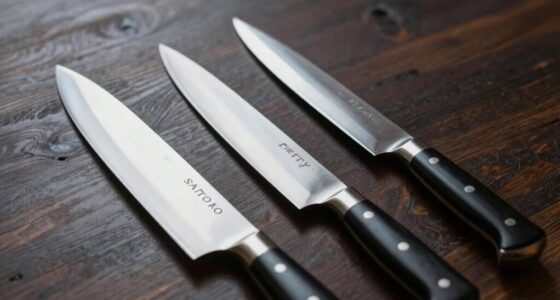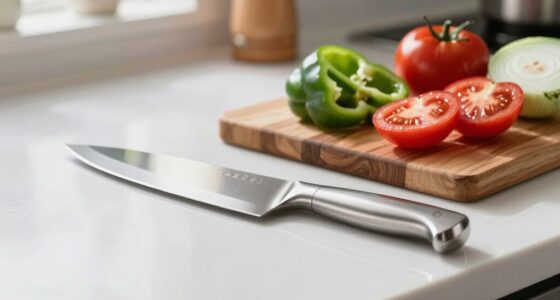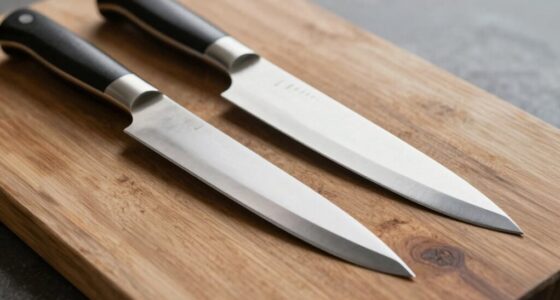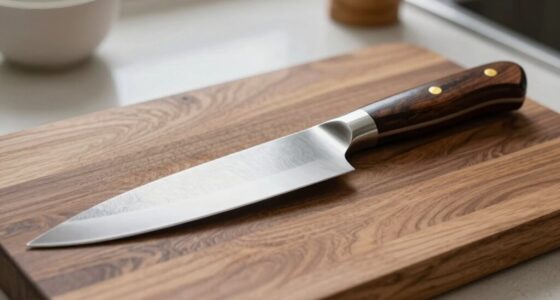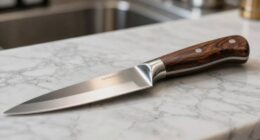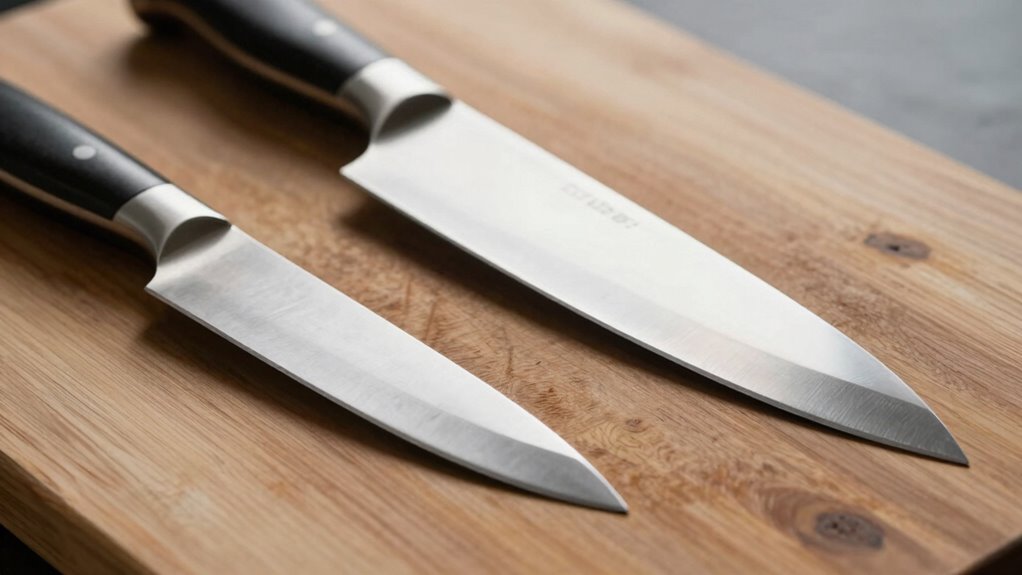

Choosing between an 8-inch and 10-inch chef knife depends on your kitchen space, hand size, and what tasks you do most. An 8-inch offers precision and control, ideal for detailed work, while a 10-inch provides more power and reach for bigger jobs. Consider your comfort, storage options, and typical cooking tasks. Keep exploring to discover how to match the perfect knife to your needs effortlessly.
Key Takeaways
- Choose an 8-inch knife for better control and precision, ideal for detailed tasks and smaller hands.
- Opt for a 10-inch blade for increased reach, power, and efficiency on larger chopping and slicing jobs.
- Consider your kitchen space and storage options; smaller kitchens benefit from 8-inch knives for space-saving.
- Match the knife size to your hand size and strength for comfort, safety, and reduced fatigue during extended use.
- Test different sizes by handling them to assess balance, grip comfort, and maneuverability before deciding.

Victorinox Fibrox Pro Chef’s Knife, 8 Inch – Swiss Army Kitchen Knife, High Carbon Stainless Steel Blade, Non-Slip Fibrox Handle, Dishwasher Safe, Black
For home chefs & professionals. This Fibro Pro chef's knife has been the top choice of both home…
As an affiliate, we earn on qualifying purchases.
As an affiliate, we earn on qualifying purchases.
Understanding the Basic Differences Between 8-Inch and 10-Inch Blades
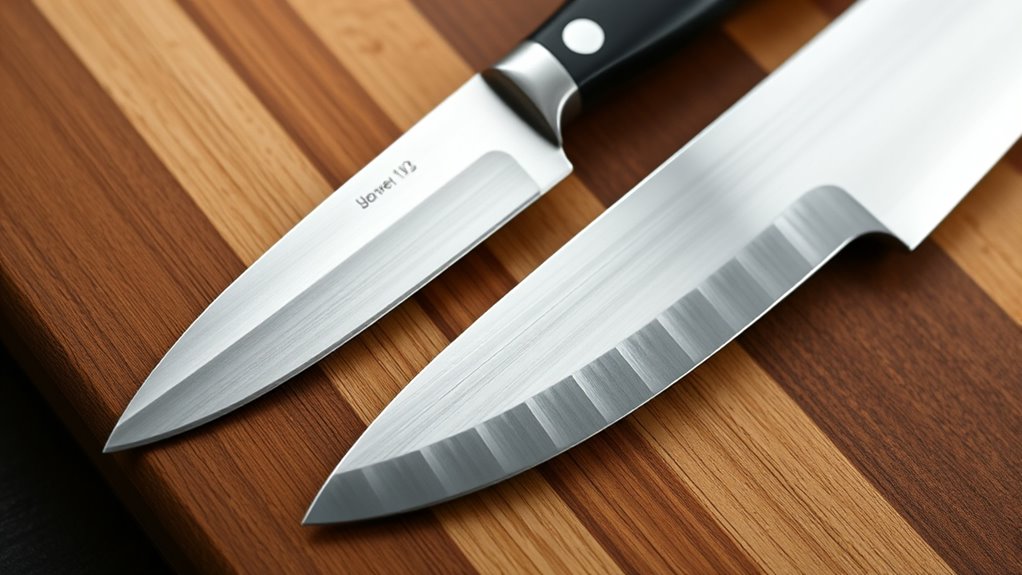
When choosing between an 8-inch and a 10-inch chef knife, understanding their basic differences is essential. Historically, the culinary history of these knives shows that the 8-inch blade became a standard for versatility and ease of control, favored by many professional chefs. The 10-inch knife offers more cutting power and a longer reach, making it ideal for larger tasks. Brand reputation also plays a role; reputable brands often produce high-quality blades with better balance and durability, regardless of size. An 8-inch knife provides precision for delicate cuts, while a 10-inch offers efficiency for bigger jobs. Knowing these differences helps you determine which size aligns with your cooking style, ensuring you choose a knife that performs well and lasts long. Additionally, blade length influences how comfortable you feel during extended use, which can impact your overall cooking experience. Furthermore, considering ergonomics and weight can help you select a knife that reduces fatigue during prolonged chopping sessions.

Mercer Culinary Ultimate White Chef's Knife, 10 Inch
QUALITY CONSTRUCTION: Knives are crafted with high-carbon Japanese steel for easy edge maintenance and a razor sharp blade…
As an affiliate, we earn on qualifying purchases.
As an affiliate, we earn on qualifying purchases.
How Your Kitchen Style and Space Influence Your Choice
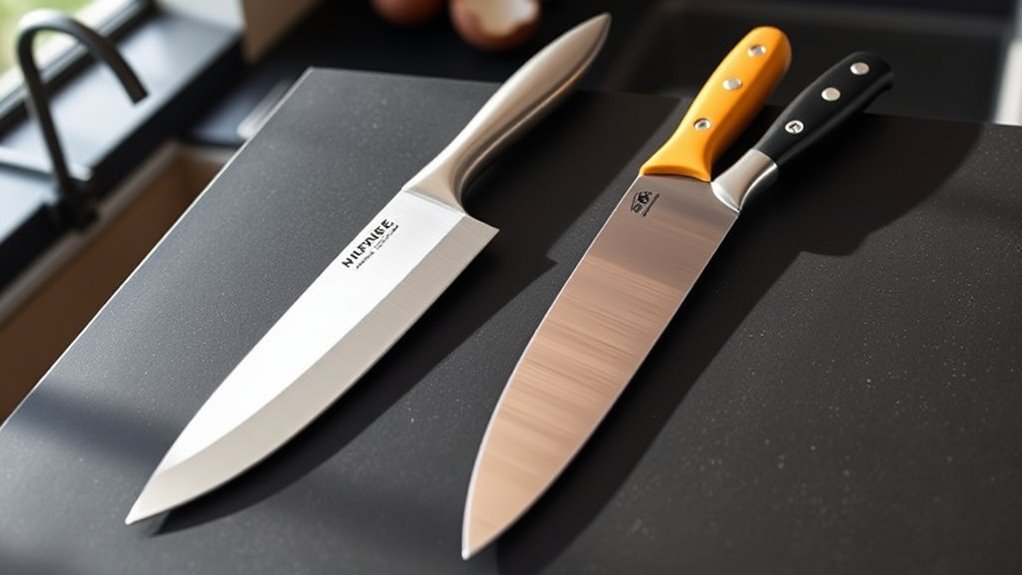
Your kitchen’s style and available space play a significant role in choosing the right chef knife size. If you have a compact kitchen with limited countertop material, a smaller 8-inch knife might be more practical, fitting easily into your workspace. Conversely, if your kitchen boasts a spacious layout with ample storage options, a 10-inch knife can be a versatile addition for larger tasks. Consider how your storage options accommodate knife storage—drawer inserts or magnetic strips may influence your choice. The aesthetic of your kitchen also matters; sleek, minimalist designs often favor smaller tools, while traditional or rustic styles can handle larger knives comfortably. Ultimately, your space and style should guide you toward a knife size that enhances efficiency without cluttering your kitchen. Additionally, European cloud innovation emphasizes sustainable and secure solutions, reflecting how tailored choices in your kitchen can promote efficiency and security in your home environment.

HOSHANHO Kitchen Knife in Japanese High Carbon Steel, Professional High-Class Chef's Knife 8 inch, Non-slip Ultra Sharp Cooking Knives with Ergonomic Handle
【High-End Japanese Steel Chef's Knife】 HOSHANHO chef's knife is made of Japanese high carbon steel 10Cr15CoMoV, 2x of…
As an affiliate, we earn on qualifying purchases.
As an affiliate, we earn on qualifying purchases.
The Impact of Hand Size and Strength on Knife Selection
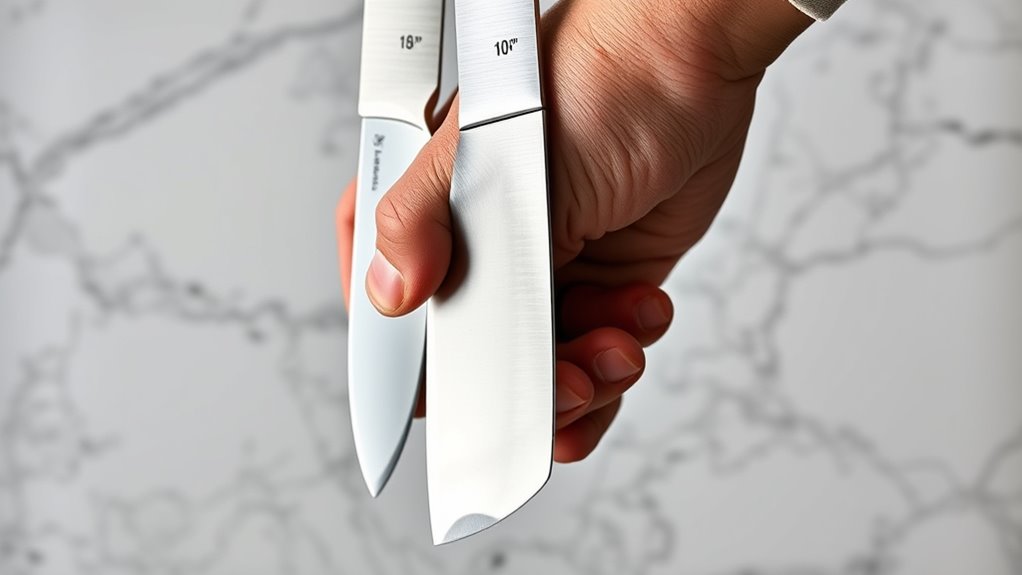
Hand size and strength are essential factors that directly influence which chef knife feels comfortable and safe to use. Your grip comfort and ergonomics considerations matter, as an ill-fitting knife can cause fatigue or slipping. If you have smaller hands, a 8-inch knife might provide better control, while larger hands may prefer the reach of a 10-inch blade. The right fit enhances safety and efficiency. Here’s a quick comparison:
| Factor | Impact on Selection |
|---|---|
| Hand size | Smaller hands benefit from shorter, lighter knives. |
| Grip comfort | Ergonomics considerations improve control and reduce strain. |
| Strength | Stronger hands can handle larger, heavier blades. |
| Control | Smaller knives offer precision, larger for power. |
| Fatigue | Proper fit minimizes fatigue during extended use. |
Choosing based on hand size and strength ensures better comfort and safer handling. Additionally, considering blade length can help match your needs for precision or power during cooking. Recognizing ergonomic design features can further enhance comfort and reduce injury risk during prolonged use. Properly designed knives can also help prevent injury by promoting a secure grip and reducing slips during cutting tasks. Understanding the material quality of the knife can also influence durability and ease of maintenance.
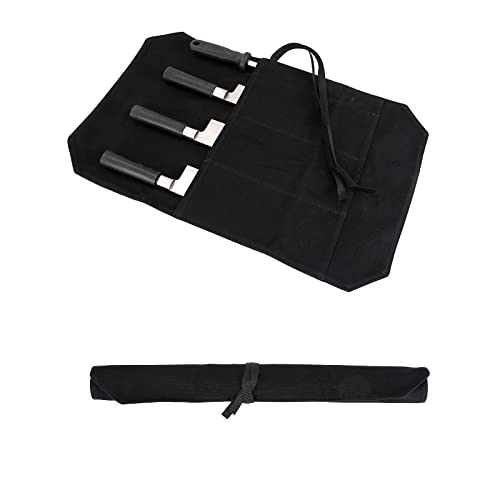
HERSENT Chef's Knife Roll Bag,Portable Travel Chef Knife Case Knife Bag Carrier Storage Bag with 4 Slots Best Gift for Pro Chef or Culinary Enthusiasts Men Women
CONVENIENT ACCESSIBILITY CHEF KNIFE ROLL BAG:4 knife sleeves holds 4 kitchen knives and accessories, such as paring, carving,…
As an affiliate, we earn on qualifying purchases.
As an affiliate, we earn on qualifying purchases.
Common Tasks and Which Size Performs Best
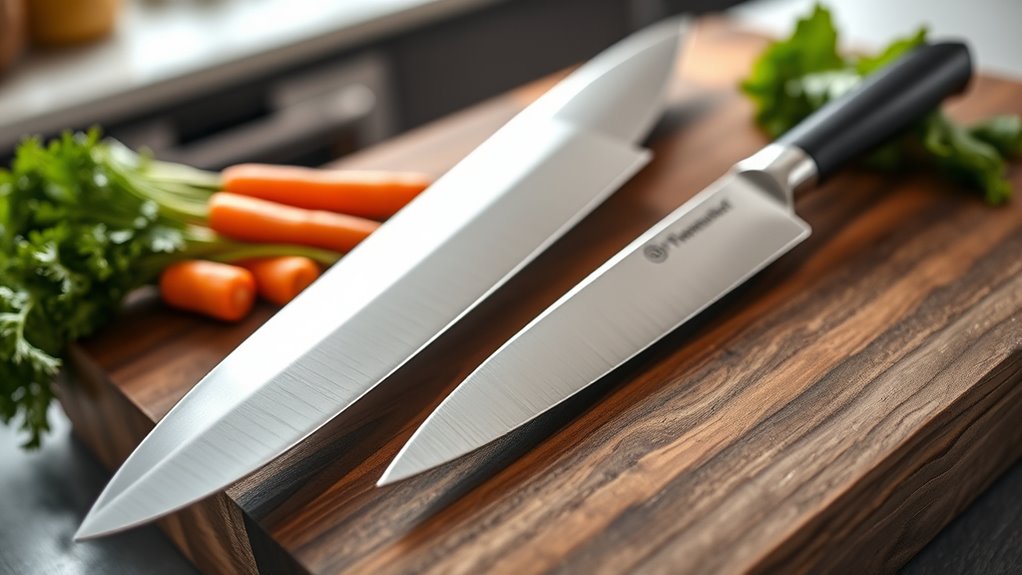
Choosing the right size chef knife depends largely on the tasks you perform most often. For chopping large vegetables or carving meat, a 10-inch knife offers more leverage and efficiency, making those tasks easier. The 8-inch is better suited for detailed work like mincing garlic or slicing fruits, where control matters. Consider knife maintenance; larger blades may require more care to keep sharp. Budget considerations also play a role—10-inch knives tend to be pricier, though they may last longer with proper care. For everyday tasks, both sizes can do the job, but matching the blade to your typical tasks ensures better performance and comfort. Knife size influences not only task suitability but also handling comfort and safety during use, especially when considering ergonomics for prolonged use. Additionally, the blade length can impact the overall weight and balance of the knife, affecting how comfortably you can work over extended periods. Proper blade maintenance and regular sharpening can extend the lifespan of either size, ensuring consistent performance.
Tips for Testing and Choosing the Perfect Fit
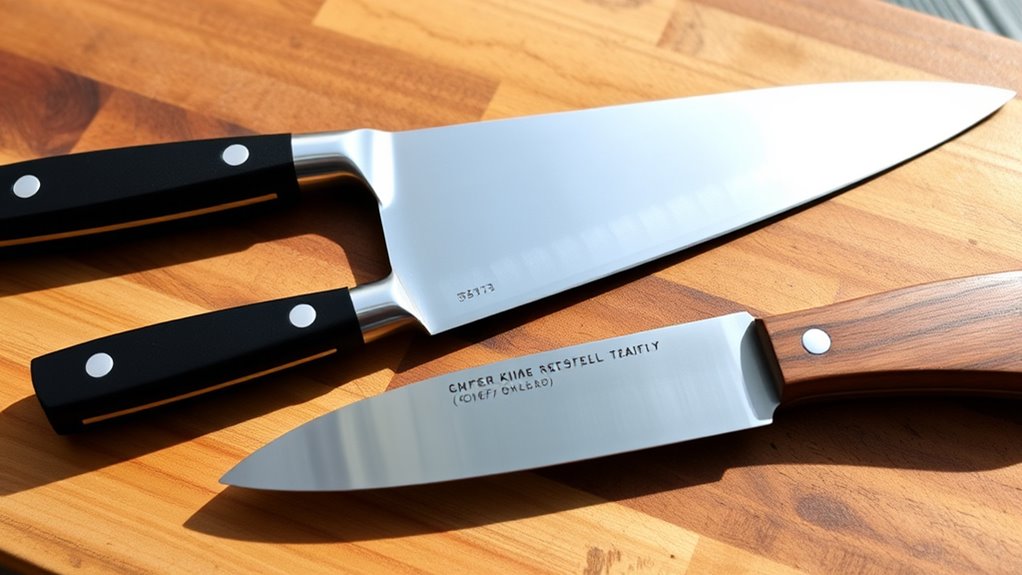
Finding the perfect chef knife size involves testing how it feels in your hand and how comfortably it performs during your typical tasks. To do this, hold different sizes and perform common cuts—slicing, chopping, and dicing. Pay attention to ergonomic comfort; the handle should feel natural and reduce strain. Also, consider aesthetic appeal—your knife should inspire confidence and joy in your kitchen. Use this table to guide your testing:
| Feel in Hand | Performance | Visual Appeal |
|---|---|---|
| Comfortable grip | Precise cuts | Beautiful design |
| Lightweight | Balance | Stylish finish |
| Secure hold | Smooth slicing | Attractive look |
| Less fatigue | Easy maneuvering | Elegant appearance |
| Confident handling | Efficient prep | Eye-catching |
Choosing the right size also involves understanding knife ergonomics, which can significantly impact your comfort and efficiency. Selecting a size that aligns with your hand size and cutting style can make a notable difference in kitchen safety. Additionally, testing the knife’s weight distribution can help ensure it feels balanced and comfortable during prolonged use. Being aware of blade sharpness is also essential, as a sharper knife can improve safety and cutting precision, making your work easier and more enjoyable. Considering blade material can also influence durability and ease of maintenance, helping you pick a knife that suits your needs. Fully considering these factors helps you select the size that best combines ergonomic comfort and aesthetic appeal to elevate your culinary experience.
Frequently Asked Questions
What Materials Affect the Weight and Balance of These Knives?
The blade material, like stainless steel or carbon steel, greatly influences the weight and balance of your knife, making it feel sturdier or lighter. Handle material, such as wood, plastic, or composite, also impacts overall balance and comfort. Heavier handles can shift the balance forward, while lighter ones provide more control. Choosing the right combination guarantees your knife feels natural in your hand and enhances your cutting precision.
How Does Handle Design Influence Chopping Efficiency?
You’re really on the ball when it comes to handling your knife efficiently. The handle design can make or break your chopping game, as an ergonomic grip ensures comfort and control. If your handle feels natural in your hand, you’ll slice through ingredients with ease, reducing fatigue. Look for handles that fit well and provide a secure grip—these details help you chop smarter, not harder, keeping your prep swift and safe.
Are There Safety Considerations Specific to Each Blade Size?
Yes, there are safety considerations specific to each blade size. A 10-inch knife may require more control, so you need to be extra cautious with your grip to prevent accidents. The 8-inch blade offers better maneuverability, reducing the risk of slips. Both blades should have durable handles and sharp edges to guarantee cutting precision, which helps prevent injuries caused by forceful or uneven cuts. Always focus on proper technique regardless of blade size.
Can These Knives Be Used Effectively by Left-Handed Cooks?
Yes, both knives can be used effectively by left-handed cooks. Look for knives with left-handed ergonomics or ambidextrous handles, which guarantee comfort and safety. These features balance the grip and blade control, making it easier to handle either size. Choosing a knife with ergonomic design tailored for left-handed use helps prevent slips and reduces fatigue, so you can chop and slice confidently regardless of your dominant hand.
How Does Storage and Maintenance Differ Between Sizes?
Storage and maintenance for your 8-inch or 10-inch chef knife should prioritize blade durability and proper knife sharpening. You’ll want a knife guard or a dedicated knife block to prevent damage and dulling. Regularly sharpen your knife to keep the edge sharp and ensure it cuts efficiently. The larger 10-inch may need more frequent attention due to increased use, but both sizes benefit from careful handling and proper storage to uphold their performance.
Conclusion
Choosing between an 8-inch and 10-inch chef knife is like finding the right dance partner—you need the perfect rhythm and comfort. Trust your kitchen space, hand size, and task needs to guide you. When you pick the right blade, cooking becomes a seamless waltz instead of a clumsy stumble. So, test, feel, and let your instincts lead you to the knife that will help you chop, slice, and dice with grace and confidence.