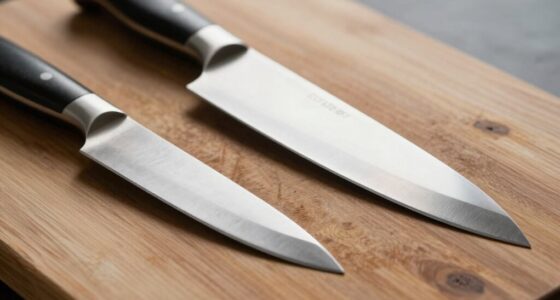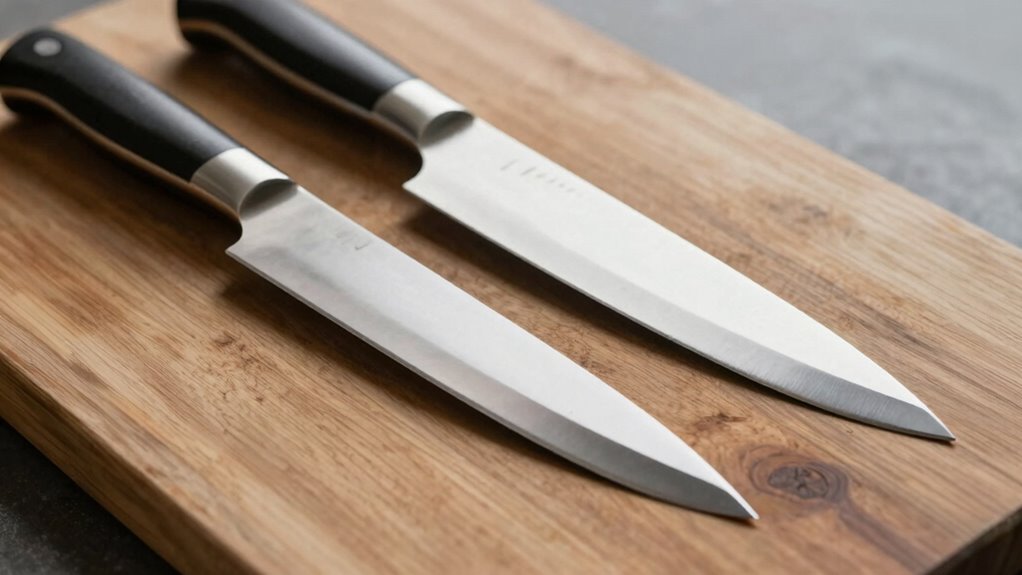
If you need a versatile knife for detailed work and tight spaces, a 210mm gyuto offers better maneuverability and precision, making it perfect for herbs and small vegetables. On the other hand, a 240mm gyuto excels at larger cuts, like big vegetables or meat, boosting your efficiency. Your choice depends on your prep style—nimble or speedy. Keep exploring to discover which size helps you work more comfortably and safely.
Key Takeaways
- Choose 210mm for detailed, precise tasks and tight spaces; 240mm for larger cuts and efficiency.
- 210mm offers better maneuverability and less fatigue during extended use.
- 240mm supports faster, sweeping cuts ideal for big vegetables and meat sections.
- Handle ergonomics and balance influence comfort and control for each size.
- Select based on your typical prep tasks and workflow for optimal safety and performance.
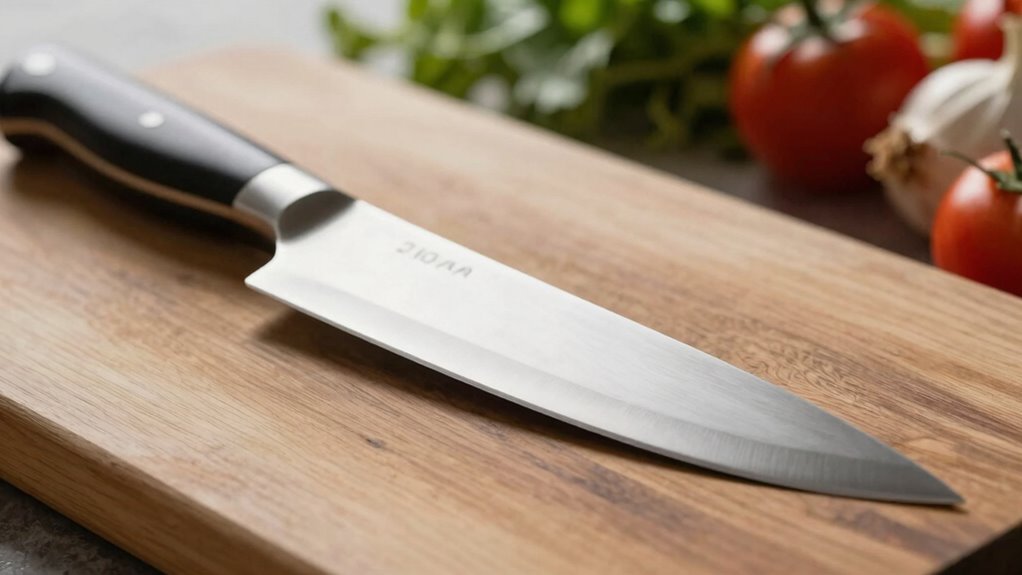
When choosing a gyuto, understanding the differences between a 210mm and a 240mm blade can considerably impact your cooking experience. The size you select influences how comfortable and efficient you are during prep, and it hinges on factors like blade balance and handle ergonomics. The 210mm gyuto, being slightly shorter, offers a nimbleness that many chefs appreciate for detailed work. Its compact size makes it easier to maneuver, especially when precision is key — like slicing herbs or trimming small vegetables. The shorter blade tends to feel lighter, which can reduce fatigue during extended prep sessions. Because of this, it often provides better blade balance for users who prefer a more agile, responsive knife.
A 210mm gyuto offers nimbleness and better balance for detailed, precise kitchen tasks.
In contrast, the 240mm gyuto stretches out further, giving you a longer, sweeping edge ideal for slicing large vegetables or sections of meat efficiently. Its extended length means a more natural, fluid motion, especially when handling big cuts. However, the longer blade can feel more unwieldy if you’re not accustomed to it, which is where handle ergonomics come into play. A handle designed for comfort and control becomes crucial to balance the weight distribution. When the handle fits well in your hand, it minimizes strain and allows for better control, regardless of blade length. Some chefs find that the slightly heavier 240mm knife offers a better overall blade balance once they’ve adjusted to it, helping them cut with power and precision.
Your prep style plays a significant role in choosing between these sizes. If you focus on intricate, detailed work or have a smaller cutting surface, the 210mm might suit you better. It’s lighter, more nimble, and easier to handle in tight spaces. On the other hand, if you often prep large quantities or prefer longer, sweeping cuts, the 240mm will serve you well. It allows for a faster, more efficient workflow without sacrificing control, especially if the handle ergonomics are tailored to your grip. Additionally, the blade length can influence overall safety and technique, making it an important aspect to consider. Choosing the right size also involves considering the balance and handle ergonomics, which can significantly affect how the knife feels during extended use. Furthermore, understanding the proper technique for each size can help maximize the knife’s performance and safety. Proper handling and technique can also help prevent fatigue and injury, especially during prolonged use.
Ultimately, it comes down to your comfort and the tasks you perform most. Both sizes can be excellent, but paying attention to blade balance and handle ergonomics ensures you pick a gyuto that feels natural in your hand. A well-balanced knife with a handle that fits comfortably helps you cut better, faster, and more safely. So, consider how each size aligns with your prep style, and don’t underestimate the importance of how the knife feels when you use it.

kanngou 8.27 Inch Japanese Chef Knife, 210MM Black Forged Japanese Knife with Red Sandalwood and Eboy Wood Handle, Gyuto Chefs Knives with Premium Gift Box (WA Series)
Timeless Craftsmanship: The Kanngou Japanese Chef Knife is crafted using traditional Japanese techniques, specifically Kurouchi Tsuchime (Black-Forged). This…
As an affiliate, we earn on qualifying purchases.
As an affiliate, we earn on qualifying purchases.
Frequently Asked Questions
Which Size Is Better for Beginner Chefs?
As a beginner chef, a 210mm gyuto is better because it offers better knife balance and handle comfort, making it easier to control and maneuver. Its smaller size reduces fatigue and enhances precision, which is ideal when you’re still developing your skills. The manageable length helps you build confidence in your cuts without feeling overwhelmed, setting a solid foundation for mastering more advanced techniques later.
How Does Blade Length Affect Cutting Precision?
A longer blade, like a 240mm, can improve your cutting precision by providing better blade balance, allowing for smoother, more controlled slices. It often boosts cutting speed since you can cover more surface area with each stroke. However, a shorter 210mm offers more maneuverability, making it easier to control with smaller, delicate cuts. Your choice impacts how accurately and efficiently you handle different prep tasks.
Are There Weight Differences Between 210MM and 240MM Gyutos?
You’ll find that 210mm gyutos are generally lighter, making them easier to maneuver for detailed tasks, while 240mm knives tend to be heavier, providing more stability for slicing. The weight differences mainly come from material choices—carbon steel or stainless steel—affecting the overall feel. If you prefer a nimble, responsive knife, go for the 210mm; if you want more control during slicing, the 240mm might suit you better.
Which Size Is More Versatile for Different Cuisines?
A 240mm gyuto is more versatile for different cuisines because it offers a good balance of length and control, making it suitable for various cooking styles. If you have ample kitchen space, it’s easier to maneuver for larger tasks or intricate cuts. The 210mm is better for smaller kitchens or precise work, but the 240mm adapts well to diverse culinary techniques, enhancing your overall prep experience.
Can a 210MM Gyuto Handle Larger Ingredients Effectively?
You can handle larger ingredients with a 210mm gyuto, but it might feel less balanced for bigger tasks. The knife’s balance and blade curvature influence control when cutting larger items, making the shorter blade less ideal for hefty ingredients. While it’s doable, a 240mm offers more leverage and a more natural curve for larger prep work, giving you better precision and comfort.

kanngou 240mm Gyuto Knife, 9.5 Inch Japanese Chef Knife with AUS-8 Alloy Steel, Black Forged Japanese Carving Knives for Meat with Full-Tang Pakkawood Hanle, Premium Box for Husband, Dad
JAPANESE ALLOY STEEL CORE, RAZOR SHARP: The KANNGOU Japanese gyuto knife is made from Japan alloy steel, known…
As an affiliate, we earn on qualifying purchases.
As an affiliate, we earn on qualifying purchases.
Conclusion
Choosing between a 210mm and a 240mm gyuto is like picking between a nimble ninja blade and a mighty sword—each can cut through your prep like lightning or crush through ingredients like a tidal wave. The smaller size zips around with agility, perfect for quick, precise cuts, while the larger commands authority, tackling big tasks with ease. Whichever you pick, remember: your knife becomes an extension of your hand—so choose one that’ll make your kitchen feel like a battlefield won!

Sumteene Japanese Chef Knife 9.5 inches,Professional Japanese Gyuto Knife with High Carbon Stainless Steel Blade with Red Ergonomic Handle for Household or Work
Professional Design: The flat knife surface can cut the ingredients into beautiful sections, and the blade line is…
As an affiliate, we earn on qualifying purchases.
As an affiliate, we earn on qualifying purchases.
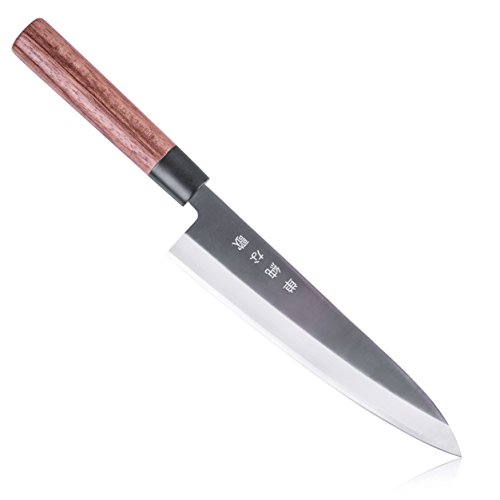
Traditional Japanese Professional Gyuto Kitchen Chefs Knife – Premium 8-inch High Carbon Stainless Steel Gyuto Sushi Knife with High Corrosion Resistance in a Single Bevel Chisel Edge Grind
HIGH QUALITY STAINLESS STEEL: Our 420HC stainless steel blades are heat treated for optimum hardness and edge retention…
As an affiliate, we earn on qualifying purchases.
As an affiliate, we earn on qualifying purchases.