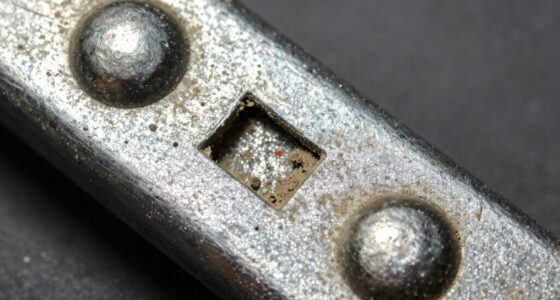

Black spots on stainless steel are usually caused by corrosion, mineral deposits, or mold from exposure to moisture and harsh cleaners. To treat them, gently wipe the spots with a soft cloth soaked in warm water and mild soap. For stubborn stains, try a vinegar and water mix, then rinse and dry thoroughly. Regular cleaning and moisture control help prevent future spots. Keep exploring to discover more effective tips for maintaining your stainless steel surfaces.
Key Takeaways
- Black spots on stainless steel often result from corrosion, mineral deposits, or mold caused by moisture and harsh cleaning products.
- Prompt cleaning with gentle methods, like vinegar and water, helps remove spots and prevent further damage.
- Regularly dry surfaces thoroughly after cleaning and maintain good ventilation to reduce moisture buildup.
- Use specialized stainless steel cleaners and protective coatings to prevent spots and prolong surface lifespan.
- Consistent maintenance and proper cleaning techniques are essential to avoid black spot formation on stainless steel surfaces.
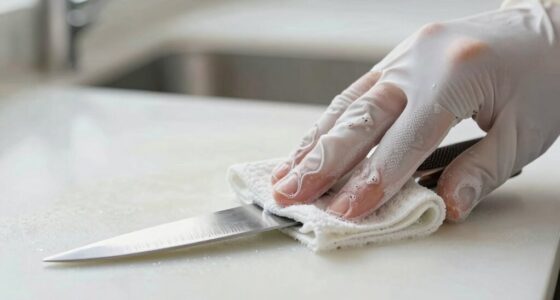
Have you ever noticed black spots appearing on your stainless steel surfaces? If so, you’re not alone. These unsightly marks can pop up unexpectedly and make your appliances or fixtures look dull and neglected. The good news is, understanding what causes them and how to address them can help you keep your stainless steel looking shiny and new. Black spots are often a result of corrosion, mineral deposits, or mold, especially if the surface has been exposed to moisture or harsh cleaning products. Addressing these spots promptly is *crucial* to prevent further damage and maintain the integrity of your stainless steel. Regular maintenance and preventive measures can significantly reduce the likelihood of spots forming. When it comes to cleaning techniques, the key is to use gentle, non-abrasive methods that won’t scratch or damage the surface. Start by wiping the affected area with a soft cloth soaked in warm water mixed with a mild dish soap. For more stubborn spots, a mixture of equal parts vinegar and water can be effective at dissolving mineral deposits and removing mold. Apply the solution with a soft cloth or sponge, then rinse thoroughly with clean water and dry with a microfiber towel to prevent water spots. For persistent black spots, you might consider using a specialized stainless steel cleaner, but always follow the manufacturer’s instructions to avoid damage.
Preventive measures play a *vital* role in stopping black spots from forming in the first place. Regular cleaning is essential; wipe down your stainless steel surfaces frequently with a damp cloth to remove dirt, grease, and moisture that can contribute to corrosion. Avoid using harsh chemicals or abrasive scrubbers, which can scratch the surface and make it more vulnerable to spots. After cleaning, always dry the surface thoroughly because moisture encourages mold and mineral buildup. Additionally, consider applying a protective coating designed for stainless steel to create a barrier against moisture and corrosion. Keep your environment dry and well-ventilated, especially in areas prone to humidity, like kitchens and bathrooms.

Weiman Stainless Steel Cleaner and Polish Wipes, 30 Count
Cleans, polishes & protects stainless steel: Our stainless steel cleaner for appliances removes fingerprints, grease, residue, and water…
As an affiliate, we earn on qualifying purchases.
As an affiliate, we earn on qualifying purchases.
Frequently Asked Questions
Can Black Spots on Stainless Steel Be Harmful to Health?
Black spots on stainless steel aren’t usually harmful to your health. They’re typically caused by corrosion or mineral deposits, posing minimal toxicity risks. However, if the spots are due to mold or bacteria, they could raise health concerns, especially if you have allergies or sensitivities. It’s best to clean the spots thoroughly to guarantee no bacteria or mold remain, reducing any potential health risks and keeping your stainless steel safe for daily use.
Are Black Spots More Common in Certain Types of Stainless Steel?
Yes, black spots are more common in lower-grade stainless steel, like 304, because they have higher corrosion susceptibility. These grades contain more chromium and nickel, making them less resistant to corrosion and more prone to spotting. Higher-grade stainless steel, such as 316, resists black spots better due to its improved alloy composition. To avoid spots, choose stainless steel with better corrosion resistance for your specific environment.
How Long Does It Take for Black Spots to Develop?
Black spots can develop within weeks or months, depending on exposure and conditions. The oxidation process triggers stain formation as moisture and contaminants react with the stainless steel surface. If you leave your stainless steel uncleaned or exposed to harsh environments, black spots may appear faster. Regular cleaning and proper maintenance slow down this process, helping you keep your stainless steel looking pristine and free of black spots.
Can Black Spots Be Removed Without Professional Help?
Yes, you can remove black spots from stainless steel without professional help using DIY cleaning and natural remedies. Try a mixture of baking soda and water to create a paste, then gently scrub the spots with a soft cloth. You can also use white vinegar or lemon juice to break down tarnish. Regular cleaning and proper drying help prevent future spots, keeping your stainless steel looking shiny and new.
What Preventive Measures Can Keep Stainless Steel Free of Black Spots?
To keep stainless steel free of black spots, you should regularly clean it with gentle cleaning agents that won’t damage the surface. Avoid harsh abrasives and instead, use a soft cloth with mild soap or specialized stainless steel cleaner. Applying protective coatings can also help prevent spots from forming. Additionally, dry the surface thoroughly after cleaning to prevent moisture buildup, which can lead to black spots over time.

Lifeproof Ceramic Coating Spray Kit – Shine, Seal & Protect Kitchen & Bath Surfaces, Repels Stains & Grime
EFFORTLESS CLEANING — Lifeproof Home Ceramic Coating prevents stains, smudges, fingerprints, water-spotting, soap-scum build-up, mineral build-up & more….
As an affiliate, we earn on qualifying purchases.
As an affiliate, we earn on qualifying purchases.
Conclusion
Now that you know what causes black spots and how to banish them, your stainless steel will shine like a mirror in the sun. Think of these spots as tiny shadows trying to dim your kitchen’s sparkle—they’re easily swept away with the right care. With a little effort, you’ll turn your surface back into a gleaming, pristine canvas. Say goodbye to those dark marks, and let your stainless steel glow like a star in the night sky.

Amazon Basics Microfiber Cleaning Cloths, Ultra Absorbent, Lint Free, Streak Free, Non-Abrasive, Reusable and Washable, 16" x 12", Blue/White/Yellow, Pack of 24
Microfiber 16 x 12-inch cleaning cloth (24-pack); ideal for cleaning cars, trucks, boats, and more
As an affiliate, we earn on qualifying purchases.
As an affiliate, we earn on qualifying purchases.

HD Cleaning Vinegar for Stainless Steel, Glass & Floors, 64 fl oz (2 pack value)
MULTI-PURPOSE CLEANING: HD Cleaning Vinegar is ideal for use on stainless steel, glass, and floors to remove dirt,…
As an affiliate, we earn on qualifying purchases.
As an affiliate, we earn on qualifying purchases.