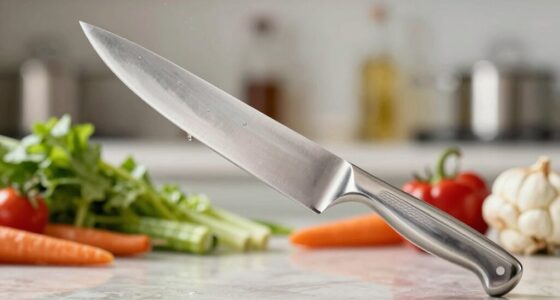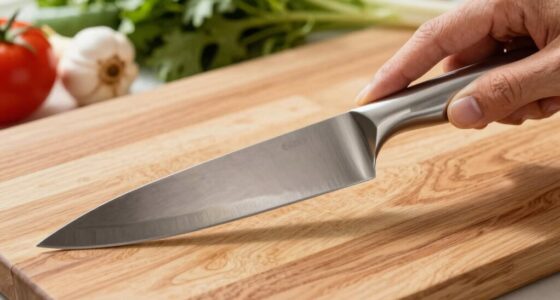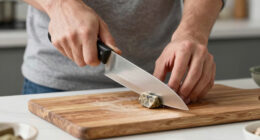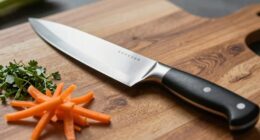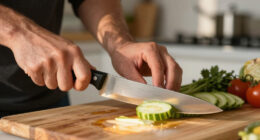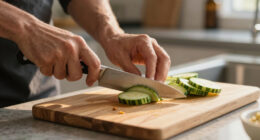
To teach beginner knife skills safely, start by emphasizing proper safety habits like washing hands, keeping knives sharp, and using a firm grip. Introduce controlled techniques such as the “rock chop” on a stable cutting surface, making certain fingers stay tucked away. Progress gradually from soft foods to tougher ingredients, offering continuous feedback and reinforcing safety. Developing confidence through repetition helps ensure techniques become second nature—keep going to discover more ways to cut confidently and safely.
Key Takeaways
- Start with basic safety rules: wash hands, keep knives sharp, and use proper grip techniques.
- Teach proper cutting posture and guiding hand position to ensure control and safety.
- Introduce controlled, simple cuts like the “rock chop” on soft ingredients first.
- Progress to advanced techniques such as slicing and dicing, emphasizing safety and uniformity.
- Encourage regular practice, provide feedback, and reinforce safety habits throughout skill development.
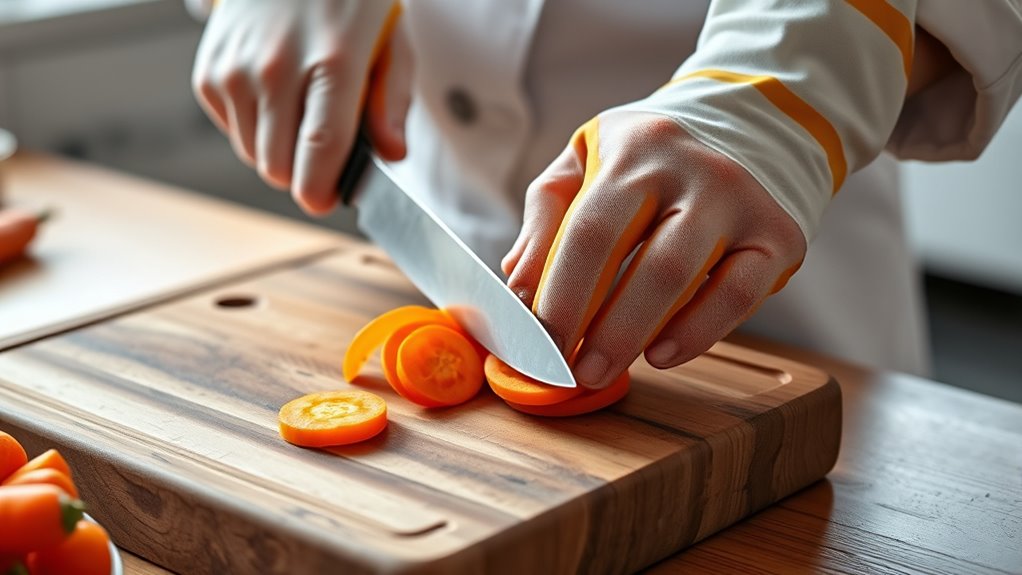
Have you ever wondered how to teach proper knife skills effectively? Teaching beginners knife skills requires patience, clear guidance, and a focus on safety. The first step is emphasizing knife safety, which is foundational for any successful lesson. Before handling any knife, remind your students to wash their hands thoroughly and to always keep their knives sharp—dull blades are more dangerous than sharp ones because they require more force and are more likely to slip. Show them how to hold the knife correctly, with a firm grip on the handle and a proper pinch grip at the blade’s bolster for better control. Stress that fingers should curl inward on the hand holding the food, creating a “claw” shape that keeps fingertips tucked away from the blade’s path. This safety technique is vital to prevent accidents as they learn cutting techniques.
Once safety is established, introduce basic cutting techniques. Start with simple, controlled motions like the “rock chop,” where the tip of the knife remains in contact with the cutting board, and the user rocks the knife back and forth. Demonstrate how to set up a stable cutting surface and position the food for maximum control. Encourage your students to use a smooth, deliberate motion rather than forcing the knife through the ingredients. Focus on maintaining a consistent pace and pressure to develop confidence and precision. Reinforce the importance of keeping the fingers of the guiding hand tucked and steady, which minimizes the risk of slips.
As they become more comfortable, introduce specific techniques such as slicing, julienning, and dicing. For slicing, show them how to use a gentle push-pull motion, keeping the knife blade in contact with the food and moving smoothly across it. For julienning, teach the importance of uniformity in size, which requires consistent cutting angles and motions. Dicing involves a precise sequence of slicing, stacking, and cutting into cubes, which helps develop control and accuracy. Throughout these steps, continually emphasize knife safety and proper cutting techniques, reinforcing good habits.
Encourage your students to practice regularly, starting with soft foods like bananas or tomatoes, which are easier to cut safely. As they gain confidence, they can progress to tougher ingredients like carrots or onions. Constantly observing and providing constructive feedback helps ensure they develop safe and efficient knife skills. Remember, patience and repetition are key. By building their skills gradually, focusing on safety and proper techniques, you help them become confident and competent in the kitchen, reducing the risk of accidents and improving their overall cooking experience.

Brewin CHEFILOSOPHI Japanese Chef Knife Set 5 PCS with Elegant Red Pakkawood Handle Ergonomic Design,Professional Ultra Sharp Kitchen Knives for Cooking High Carbon Stainless Steel
DESIGN PHILOSOPHY – The Chefilosophi Series professional kitchen knife set from Brewin combines cutting edge kitchen technology with…
As an affiliate, we earn on qualifying purchases.
As an affiliate, we earn on qualifying purchases.
Frequently Asked Questions
What Safety Gear Should Beginners Always Wear When Practicing Knife Skills?
When practicing knife skills, you should always wear protective gloves to prevent cuts and an apron for safety and cleanliness. These items help you stay protected from accidental slips or splashes. Keep your workspace organized and focus on proper technique. Wearing protective gear guarantees you’re minimizing risks, so take these precautions seriously. Safety gear is essential for building confidence and developing good habits while learning to handle knives safely.
How Do I Prevent Fatigue or Strain While Using a Knife for Extended Periods?
Did you know that repetitive strain injuries are common among home cooks? To prevent fatigue while using a knife, take regular breaks and incorporate hand stretches to relax your muscles. Focus on maintaining an ergonomic grip to reduce strain and improve control. Also, switch hands periodically, and don’t forget to stretch your hands and wrists to keep blood flowing and avoid discomfort during extended chopping sessions.
What Are Common Mistakes to Avoid When First Learning to Cut Vegetables?
When first learning to cut vegetables, avoid common mistakes like using a improper grip or rushing your cutting technique. Keep a proper grip on the knife with your fingers curled under to stay safe, and focus on controlled, even cuts. Don’t press too hard or use a messy cutting motion, which can lead to uneven slices or accidents. Practicing these fundamentals helps you build confidence and improves your skills safely.
How Can I Teach Children or Teenagers to Develop Safe Knife Handling Habits?
Teaching kids or teens safe knife handling is like guiding a young bird learning to fly; you start slow and steady. Focus on knife safety and skill development by demonstrating proper grip, using a stable cutting surface, and emphasizing patience. Make safety rules clear and practice with dull knives first. Encourage questions and supervision, building their confidence step by step so they develop good habits for life.
What Should I Do if I Accidentally Cut Myself While Practicing?
If you accidentally cut yourself while practicing, first aid procedures are essential. Stop knife use immediately, clean the wound with water, and apply pressure to stop bleeding. Use a clean bandage for wound care. If the cut is deep, seek medical help promptly. Keep calm and avoid moving the injured finger or hand too much. Proper wound care helps prevent infection and promotes healing.

Astercook Knife Set, 13 Pieces Kitchen Knives Set with Healthy Anti-Rust Coating, Dishwasher Safe, Stainless Steel Chef Knife Sets with 6 Blade Guards, Perfect Holiday Gifts for Kitchen
Multipurpose Knife Set: This kitchen knives set includes 8" Chef Knife, 8" Slicing Knife, 7" Santoku Knife, 8"…
As an affiliate, we earn on qualifying purchases.
As an affiliate, we earn on qualifying purchases.
Conclusion
Now that you know the basics, practice patience, prioritize safety, and progress with purpose. Perfecting knife skills takes persistence, but with proper technique and a positive mindset, you’ll become proficient quickly. Remember, practice makes perfect, and safety stays supreme. So, step steadily, stay sharp, and soon you’ll slice, dice, and dice with confidence and skill. Keep cultivating your craft, and enjoy the journey from beginner to bon vivant in your kitchen!

GORILLA GRIP BPA-Free Reversible Kitchen Cutting Board Set of 3, US Designed, Nonporous, Juice Grooves Catch Liquid, Slip Resistant Border, Dishwasher Safe, Durable Large Food Chopping Boards, Black
ULTRA DURABLE STRENGTH: 3rd Party Tested for durability, thick cutting boards have a nonporous surface that won’t splinter…
As an affiliate, we earn on qualifying purchases.
As an affiliate, we earn on qualifying purchases.

Plastic Training Knife Open Folder Style Combat Self Defense Practice Fixed Blade Martial Arts Weapon 8.25''
QUALITY MATERIAL: Solid training knife, well designed with nice rounded edges for light and medium contact training, molded…
As an affiliate, we earn on qualifying purchases.
As an affiliate, we earn on qualifying purchases.