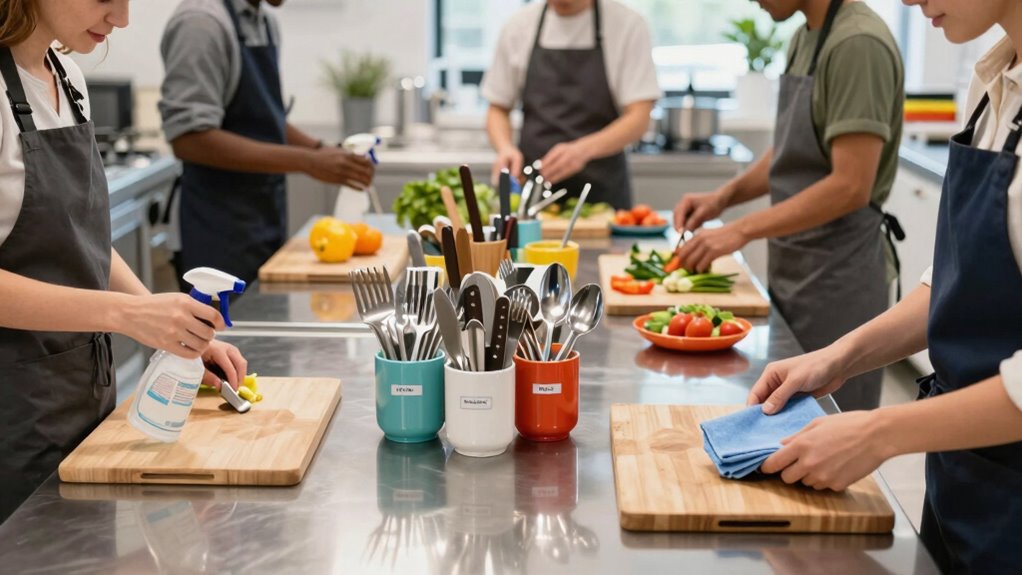

To keep a shared kitchen safer with different tools, establish clear cleaning schedules and assign responsibilities like wiping surfaces or sanitizing appliances. Regularly inspect tools for damage and make sure everyone reports issues immediately. Promote proper storage, label personal items, and follow safety protocols to prevent accidents. Maintaining good communication and practicing continuous vigilance helps everyone stay aware of hazards. Keep these tips in mind, and you’ll find practical ways to create a safer, more organized shared space.

Get kitchen gear delivered free — and shop member deals
- Fast, free delivery on millions of items
- Access to Prime Big Deal Days deals on October 6–7
- Prime Video, Amazon Music and more included
Key Takeaways
- Establish and enforce clear cleaning schedules for all shared tools and work areas.
- Regularly inspect and maintain tools, repairing or replacing damaged equipment promptly.
- Label personal tools and storage spaces to prevent misuse and confusion.
- Encourage open communication about hazards, repairs, and safety concerns among users.
- Promote responsible tool use and adherence to safety protocols to reduce accidents.
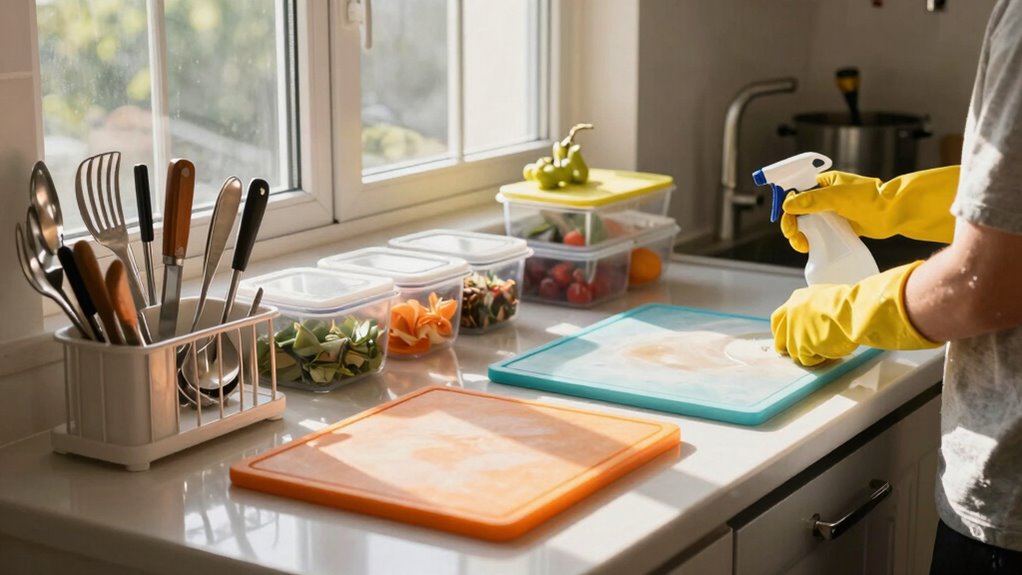
Sharing a kitchen can be convenient and enjoyable, but it also requires taking safety precautions to prevent accidents. When everyone uses different tools, the risk of mishaps rises, so staying organized and responsible is key. One of the most effective ways to keep the space safe is by establishing clear cleaning schedules. When everyone commits to regularly cleaning their tools and work areas, it reduces the chance of cross-contamination, slippery spills, and lingering bacteria. Make certain each person knows their responsibilities, whether it’s wiping down countertops, washing utensils, or sanitizing shared appliances. Consistency in cleaning not only keeps the kitchen hygienic but also helps prevent accidents caused by clutter or slippery residues.
Alongside cleaning routines, equipment maintenance plays an essential role in safety. Faulty or poorly maintained tools can cause injuries or malfunctions, so you should regularly inspect all equipment, including knives, blender cords, stove burners, and refrigeration units. If you notice any damage or wear, report it immediately and get it repaired or replaced. Proper maintenance ensures that tools work efficiently and safely, reducing the risk of electrical shocks, fires, or cuts. Taking a few minutes to maintain equipment can save you from more serious problems down the line. Always unplug appliances before cleaning or fixing, and follow manufacturer instructions for upkeep. When everyone adheres to these standards, it creates a safer environment where tools are reliable and less likely to cause accidents. Proper equipment maintenance is vital for preventing hazards and ensuring longevity of the tools. Regularly checking kitchen safety protocols can help identify potential risks before they become serious issues. Additionally, understanding the importance of indoor air quality can contribute to a healthier shared space by reducing airborne contaminants that may arise from cleaning products or cooking fumes. Implementing proper ventilation is also crucial in maintaining a safe and comfortable environment for all users.
In addition to routines and maintenance, communication is essential. Keep everyone informed about schedules, repairs, and any issues that arise. If someone notices a loose knob, broken handle, or a spill, they should report it immediately rather than leaving it for someone else to handle. This proactive approach prevents small problems from escalating into hazards. Also, respect each other’s tools and storage spaces — don’t share knives or utensils without asking, and label personal items if necessary. By respecting boundaries and maintaining open communication, you foster a cooperative atmosphere focused on safety.
Finally, remember that safety is an ongoing responsibility. Regularly revisit your cleaning schedules and equipment maintenance routines to adapt to changing needs or new tools. Encourage everyone to stay vigilant and proactive in preventing accidents. When everyone commits to these practices, sharing a kitchen becomes not just convenient but also safe for everyone involved. Proper organization, maintenance, and communication ensure that each person can use the space confidently, knowing safety is a priority.
Frequently Asked Questions
How Often Should Shared Kitchen Tools Be Sanitized?
You should sanitize shared kitchen tools after each use to prevent germs. Start by washing them with dish soap and hot water, then spray with a disinfectant spray for extra safety. For items that aren’t dishwasher-safe, make it a habit to disinfect them thoroughly before and after use. Regular sanitizing helps minimize cross-contamination and keeps everyone safe, especially when multiple people share the same tools.
What Are the Best Storage Practices for Shared Utensils?
You should organize utensils using clear storage containers to keep them clean and visible. Designate specific spots for different types of utensils, like spatulas or knives, to avoid cross-contamination. Regularly clean and sanitize these containers to prevent bacteria buildup. Encourage everyone to return utensils to their designated storage after use. Proper utensil organization and storage containers make shared kitchens safer and more efficient for all users.
How to Handle Cross-Contamination Risks in a Shared Kitchen?
Think of your shared kitchen as a bustling marketplace—cross-contamination spreads like rumors if not managed. You need strict hygiene education and food allergy management, like clear signs and designated stalls. Always wash hands, sanitize tools, and separate allergen-prone ingredients. Label everything clearly, and encourage fellow users to follow these safety steps. This way, you protect everyone’s health, turning the kitchen into a safe, harmonious space where all can enjoy their meals worry-free.
Are There Specific Cleaning Products Recommended for Shared Tools?
Yes, there are specific cleaning products recommended for shared tools. Follow strict cleaning protocols by using antibacterial or disinfectant sprays and wipes that are approved for kitchen use. Look for product recommendations on labels that specify they kill common germs and viruses. Regularly sanitize tools after each use, especially before switching between different users, to minimize cross-contamination risks and keep everyone safe in shared kitchen environments.
What Signage Helps Promote Safety in Shared Kitchen Spaces?
Think of signage as your kitchen’s silent guardian. You should display clear signs emphasizing food labeling and hygiene protocols, like “Wash Hands Before Use” or “Label Your Food.” These signs act as guides, ensuring everyone knows the safety rules. By making these instructions visible, you help prevent cross-contamination and promote a culture of cleanliness, turning your shared kitchen into a safer, more harmonious space for all users.
Conclusion
To keep shared kitchens safe, always clean your tools thoroughly, label everything clearly, and respect others’ space. Remember, a messy kitchen can turn into chaos faster than a tornado, so stay vigilant and considerate. By following these simple tips, you’ll create a harmonious space where everyone can cook safely and happily. Keep safety your top priority—after all, you’re not just sharing a kitchen, you’re building a community of culinary explorers!
Fall Picks
fall essentials
As an affiliate, we earn on qualifying purchases.