To pair cutting boards with knife tasks for safer, faster prep, choose the right material—wood or composite for preserving blades and safety, while avoiding glass or tile that dull knives quickly. Make certain your board is large and stable, with non-slip features for control. Match your knife technique and surface type—gentle, controlled cuts on softer surfaces for detail work and sturdier boards for heavy-duty tasks. Keep learning how proper pairing enhances your safety and efficiency everyday.
Key Takeaways
- Match small, precise tasks like peeling with end grain wood or plastic boards to preserve knife edges.
- Use larger, stable wooden or composite boards for chopping bulk ingredients to ensure safety and efficiency.
- Avoid glass or tile surfaces for delicate cuts, as they dull blades and reduce control.
- Select appropriate knife types—paring knives on smaller boards, cleavers on sturdy surfaces—to optimize task safety.
- Ensure cutting boards have non-slip features or are secured to prevent slipping during detailed or heavy-duty tasks.
Selecting the Right Cutting Board Material for Your Knife Type
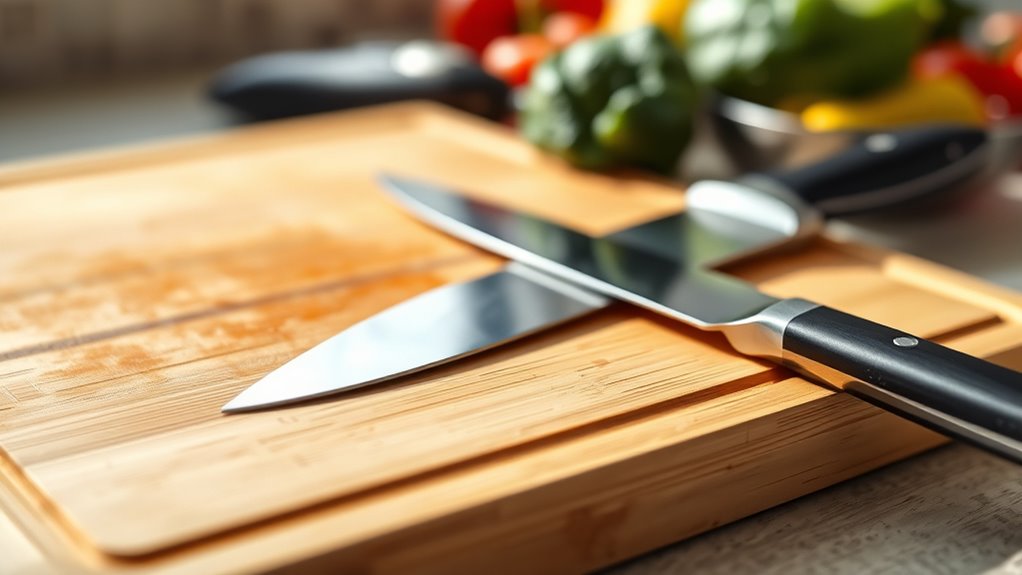
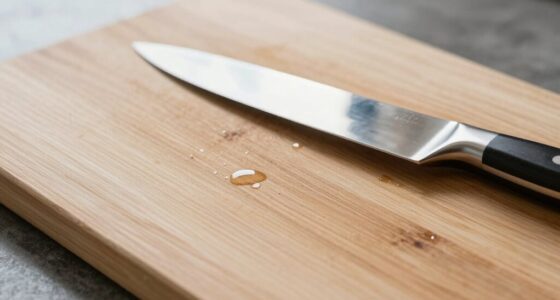
Choosing the right cutting board material is essential to preserve your knives and improve your cutting experience. For your chef’s knives, wood boards like maple or walnut are ideal because they’re gentle on blades and durable over time. Paring knives perform best on flat, smooth wooden surfaces, especially end grain wood, which self-heals and protects edges. German knives can handle plastic or rubber, but wood remains the top choice for edge preservation. High-performance steel knives need softer surfaces to prevent dulling, making wood or composite boards preferable. Avoid glass or tile, as they quickly dull blades and provide unstable surfaces. Wooden boards absorb impact and reduce stress on your knives, keeping them sharper longer and making your prep safer and more efficient. Additionally, understanding cutting board maintenance can help extend the lifespan of your boards and keep your knives in optimal condition. Incorporating proper cleaning techniques can further prevent bacteria buildup and preserve the integrity of your cutting surfaces. Using the right board material also enhances blade longevity, which is crucial for maintaining sharpness and reducing replacement costs. Recognizing the importance of material compatibility can guide you in selecting the most suitable cutting surface for your specific knives and tasks.
Determining Proper Size and Stability for Safe Cutting Practices
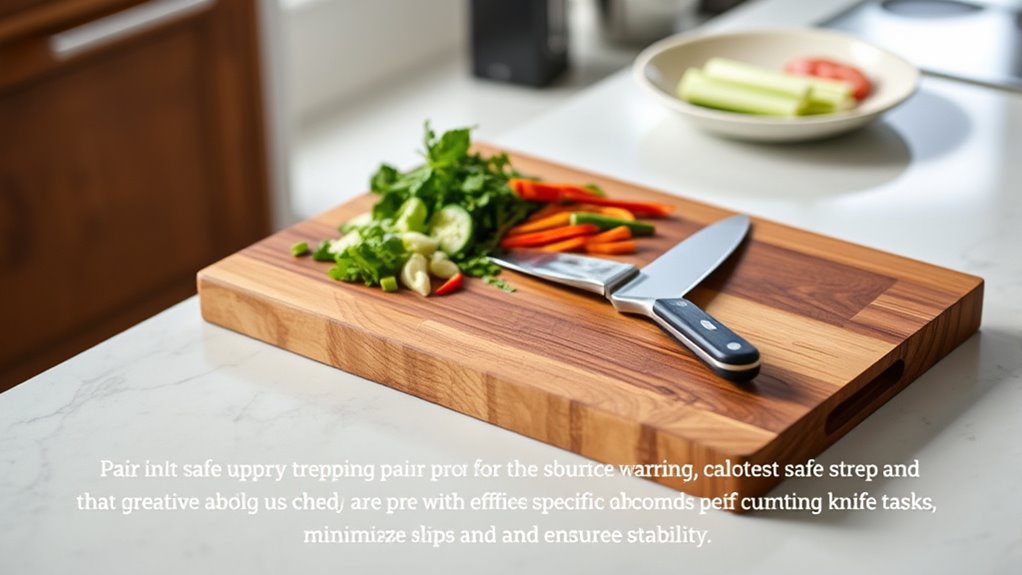
Selecting the right size and ensuring stability of your cutting surface are key to safe and effective food prep. Your cutting board should be larger than the food you’re working with to prevent items from falling off and to give you enough space for controlled cuts. A stable surface minimizes movement, reducing the risk of slips that can cause injuries. To achieve this, choose a cutting board that fits securely on your countertop, preferably with non-slip feet or a damp cloth underneath. Larger, heavier boards or those with mounting features provide better stability. Always make sure the board doesn’t wobble or slide during use. Incorporating a connected cutting board with slip-resistant features can further enhance safety. Using a non-slip mat underneath your board can also improve stability on smooth surfaces. Proper size and stability keep your hands safe, improve accuracy, and help maintain your knives’ sharpness over time.
Matching Knife Techniques to Appropriate Cutting Surfaces
Matching Knife Techniques to Appropriate Cutting Surfaces
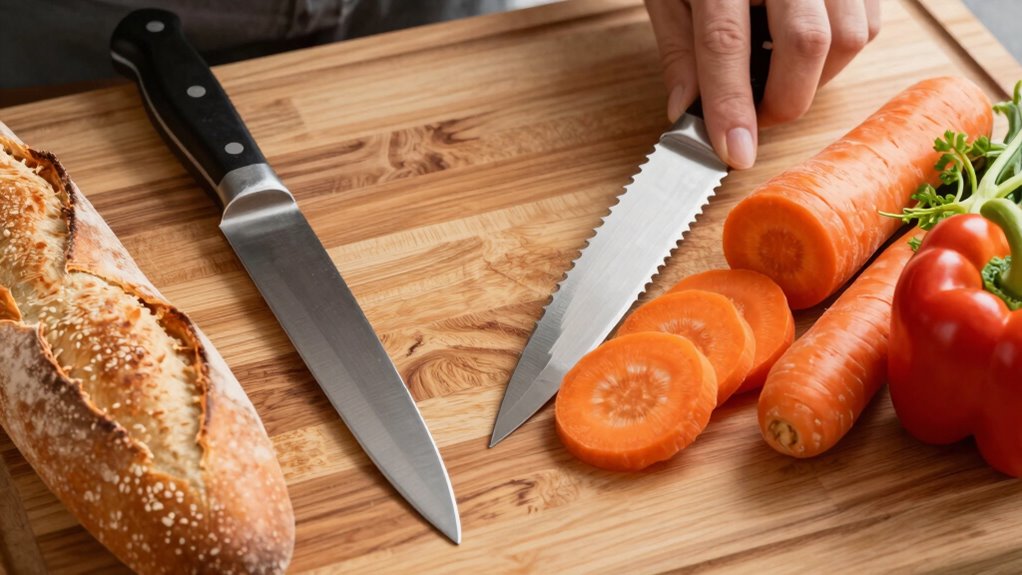
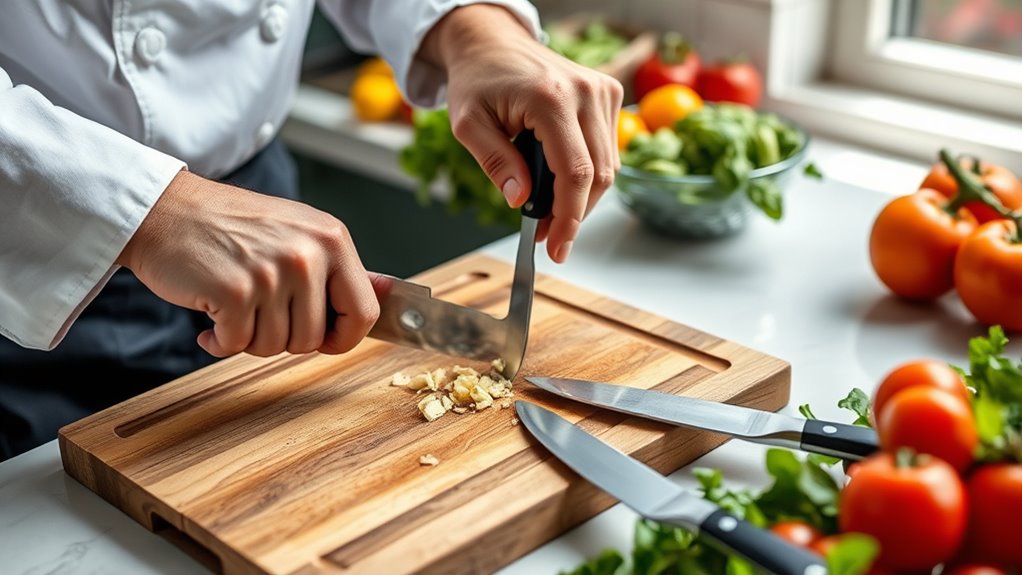
Matching your knife techniques to the right cutting surface guarantees safety and efficiency during food prep. Your method of cutting depends on the surface you choose. Use gentle, controlled strokes on wooden boards when dicing or chopping, especially with chef’s knives. The soft surface preserves your blade’s edge. For precision tasks like peeling or detailed work, keep paring knives on smooth, flat wooden boards, applying light, steady pressure. When slicing soft foods or doing delicate cuts, avoid hard surfaces like glass or tile, which dull blades quickly. Instead, lean on softer surfaces like wood or rubber mats. Additionally, choosing surfaces with proper color accuracy helps maintain consistent visual cues during prep, reducing mistakes. Selecting surfaces made from appropriate cutting surface material can also prevent cross-contamination and improve hygiene. Using appropriate cutting techniques aligned with the surface type minimizes blade wear and enhances safety. Proper pairing of techniques and surfaces not only reduces dulling but also extends the life of your knives, making food prep safer and more efficient. Aligning your technique with the appropriate surface reduces dulling, prevents accidents, and speeds up prep. Incorporating the right cutting surface maintenance can further prolong the lifespan of your tools and ensure optimal performance. Proper pairing makes all the difference in safe, effective food handling.
Maintaining Your Knives and Boards for Maximum Longevity
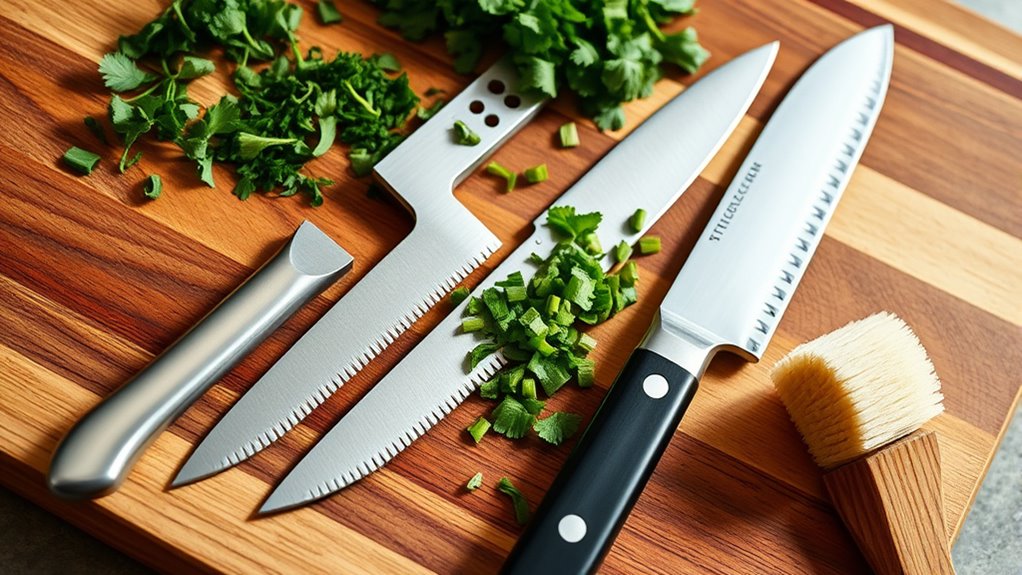
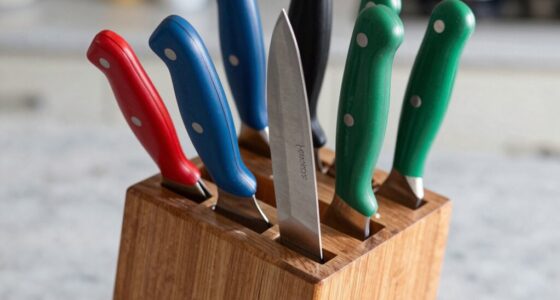
Proper maintenance of your knives and cutting boards guarantees they perform well over time and stay safe to use. Keep your knives sharp by honing them regularly—just a quick swipe after each use helps maintain their edge and prevents unnecessary dulling. When sharpening, use a quality stone or professional service to restore the blade’s shape effectively. Clean your cutting boards thoroughly after each use; plastic boards can go in the dishwasher, while wooden boards should be hand washed with mild soap and dried immediately to prevent warping or cracking. Sand any deep cuts or grooves on wooden boards to prevent bacteria buildup. Store knives safely in a knife block or on a magnetic strip, and keep boards in a dry, well-ventilated area. Proper care guarantees longevity and safe, efficient kitchen prep. Additionally, practicing proper sanitation and regular cleaning can help prevent cross-contamination and ensure your cutting surfaces remain safe for food preparation. Incorporating antimicrobial materials into your cutting boards can further reduce bacterial growth and enhance food safety. Using appropriate cutting techniques can also minimize damage to your boards and knives, extending their lifespan. Moreover, selecting high-quality materials for your cutting surfaces can significantly contribute to their durability and safety over time.
Task-Specific Pairings: From Detail Work to Heavy-Duty Tasks
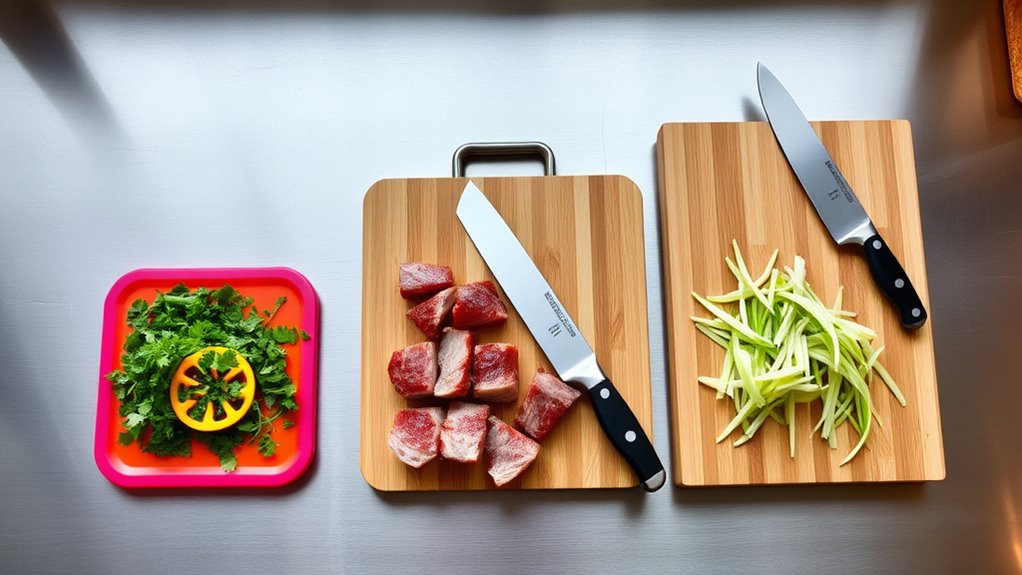
Different kitchen tasks demand specific knife and cutting board pairings to guarantee efficiency and safety. For detail work, you should use a paring knife on a flat, smooth wooden board, ideally end grain, to assure precision and protect the blade. When handling volume tasks like chopping vegetables or dicing, a chef’s knife is best suited for a larger, stable wooden or plastic board that can withstand rocking motions. For heavy-duty tasks such as cutting through bones or cartilage, switch to a cleaver or boning knife with a sturdy, non-slip surface like a thick wooden or rubber cutting board to prevent slipping and blade damage. Matching the right tools to each task minimizes accidents, preserves your knives, and speeds up prep.
Enhancing Safety With Proper Handling and Grip Techniques
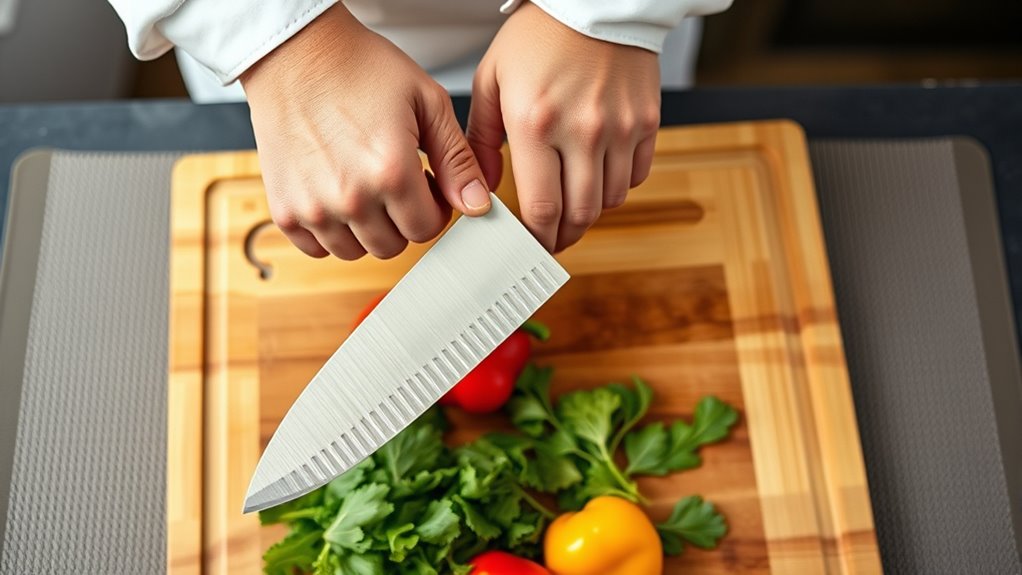
Using the right knife and cutting board pairings improves your prep, but safe handling is key to preventing accidents. Proper grip techniques ensure control and reduce slips. Keep your fingers curled in a claw shape to protect knuckles while guiding the knife. Use the pinch grip to maintain precision and stability during cuts. Always cut on a stable, appropriate surface to prevent slips. Proper handling involves controlled, deliberate movements with even pressure. Developing proper technique is essential for minimizing risk and increasing efficiency in the kitchen. Here’s a quick comparison:
| Technique | Benefit |
|---|---|
| Claw grip | Protects fingers from cuts |
| Pinch grip | Enhances control and accuracy |
| Proper stance | Improves balance and safety |
Tips for Efficient and Safe Food Preparation Workflow
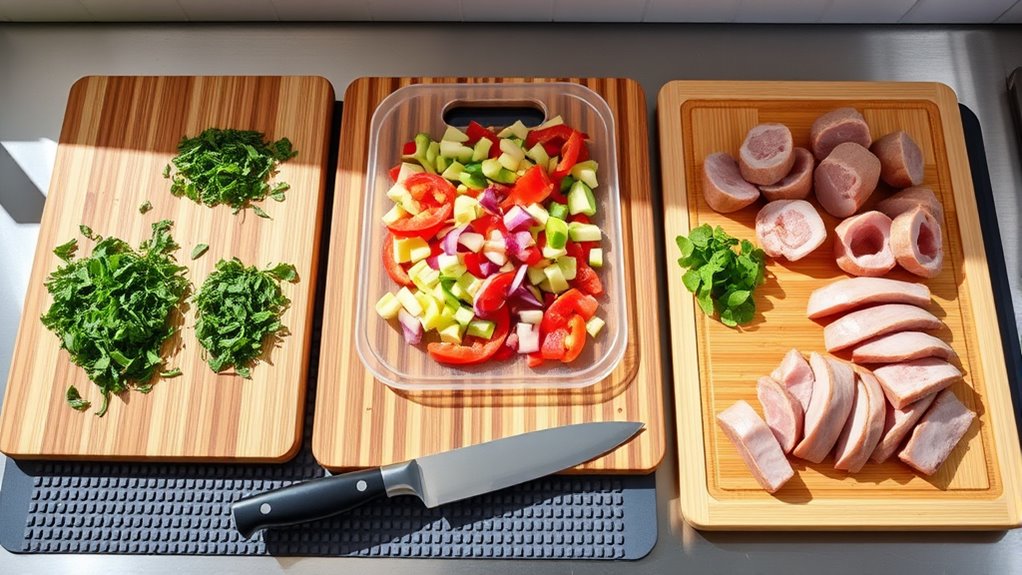
To keep your food prep efficient and safe, start by organizing your workstation so everything is within easy reach. Use proper knife techniques to reduce fatigue and prevent accidents, and always keep your tools sharp to work quickly and safely. Staying mindful of these tips helps streamline your workflow while protecting yourself from injuries. Additionally, understanding thermal behavior of your tools and surfaces can help you anticipate how they will respond during prep, further enhancing safety and efficiency.
Organize Workstations Effectively
An organized workstation is essential for ensuring both efficiency and safety during food preparation. To keep things running smoothly, focus on these three steps:
- Designate zones for different tasks, like chopping, assembling, and cleaning, to prevent cross-contamination and streamline flow.
- Arrange tools and ingredients within reach, placing knives, cutting boards, and utensils close to their specific tasks.
- Maintain a clean workspace by clearing debris and wiping surfaces regularly, reducing hazards and keeping ingredients uncontaminated.
Use Proper Knife Techniques
Mastering proper knife techniques is key to maintaining safety and efficiency in your food prep. Keep your grip firm yet relaxed, using the pinch grip to control the blade precisely. Use a claw hand to curl your fingers, keeping knuckles against the side of the knife for protection. When cutting, apply even pressure and use smooth, controlled motions, whether slicing, dicing, or chopping. Rest the knife on your knuckles or the cutting surface to guide straight cuts. Avoid excessive force; let the sharpness of your blade do the work. Maintain a stable, non-slip cutting board. Focus on fluid movements and proper alignment between your hand, knife, and cutting surface to reduce fatigue and prevent accidents. Consistent technique improves safety and speeds up your prep work. Using proper cutting techniques helps extend the lifespan of your knives and enhances your overall kitchen safety. Incorporating cutting surface stability can further improve your precision and reduce risks during food prep.
Maintain Cutting Tool Sharpness
Maintaining your cutting tools’ sharpness is essential for both safety and efficiency in food prep. A sharp knife reduces slipping, making cuts cleaner and safer. To keep your blades in top shape, follow these steps:
- Hone regularly with a honing steel to realign the edge, ideally before each use.
- Use a professional sharpening service periodically for a precise edge refresh.
- Store knives properly in a knife block or on a magnetic strip to prevent dulling and damage.
Avoid using dull blades, which require more force and increase the risk of slips. Keep your knives clean and dry after each use to prevent corrosion. Consistent maintenance guarantees safer, faster prep with less effort.
Frequently Asked Questions
How Often Should I Replace My Plastic Cutting Boards?
You should replace your plastic cutting boards every one to three years, depending on usage and wear. Look for deep cuts, grooves, or stains, which can harbor bacteria and make cleaning ineffective. If your board becomes excessively scratched or warps, it’s time for a new one to maintain food safety and guarantee your knives stay sharp. Regularly inspecting and replacing your boards keeps your prep safe, efficient, and hygienic.
Can I Use the Same Board for Raw Meat and Vegetables?
Imagine a vibrant red streak from raw meat contaminating a fresh green vegetable. You shouldn’t use the same board for raw meat and vegetables. Cross-contamination risks spreading bacteria, so it’s safer to have separate boards. Use a dedicated, color-coded wooden or plastic board for each task. This way, you protect your ingredients and keep your prep area clean, ensuring a safer, healthier meal every time.
What Is the Best Way to Sanitize My Cutting Boards?
You should sanitize your cutting boards by washing them thoroughly with hot, soapy water after each use. Rinse well and then disinfect with a diluted bleach solution (1 tablespoon of bleach per gallon of water) or white vinegar. For extra safety, especially after cutting raw meat, consider using a commercial sanitizer or running the board through the dishwasher if it’s dishwasher-safe. Regular cleaning keeps bacteria at bay and prolongs your board’s lifespan.
Should I Sharpen My Knives Before or After Cutting?
You should sharpen your knives before cutting to guarantee maximum precision and safety. When your blades are sharp, you use less force, which reduces the risk of slips and accidents. Dull knives require more pressure, increasing the chance of mishaps and damaging your food or cutting surface. Think of it like sharpening your focus before a big task—your cuts become cleaner, safer, and more efficient, making your prep easier and more enjoyable.
How Do I Prevent My Knives From Slipping During Use?
To prevent your knives from slipping during use, make sure you’re using a stable, non-slip cutting surface like a wooden board with a textured bottom or a damp towel underneath. Keep your grip firm and use the claw technique to hold food securely. Also, guarantee your knife is sharp, as dull blades are more likely to slip. Always focus on controlled, deliberate cuts for added safety.
Conclusion
By pairing your cutting boards with the right knives and techniques, you turn food prep into a smooth, safe dance rather than a chaotic mess. When you select the perfect surface, maintain your tools, and follow safety tips, you’ll breeze through tasks like a culinary superhero—faster than a lightning bolt! Mastering these pairings not only boosts your efficiency but transforms your kitchen into a fortress of safety and skill. Happy chopping!