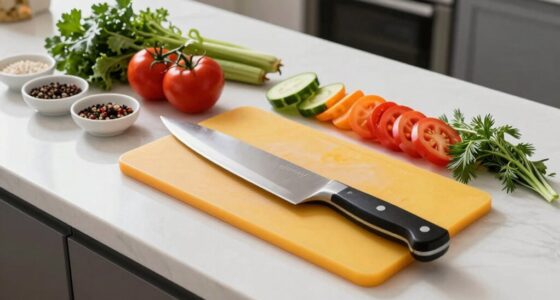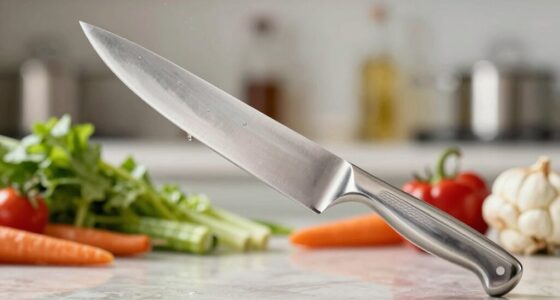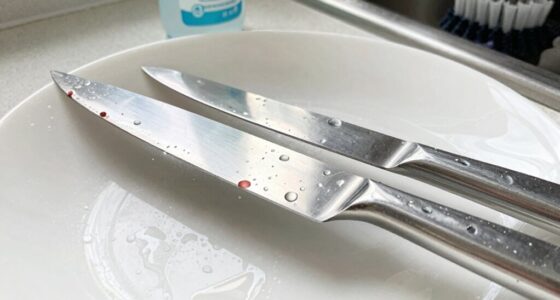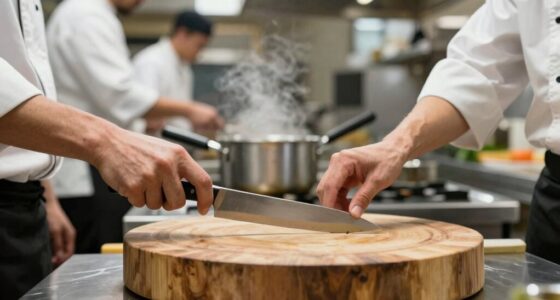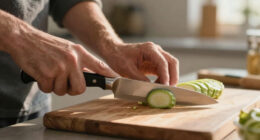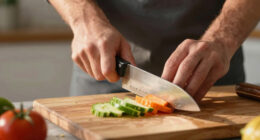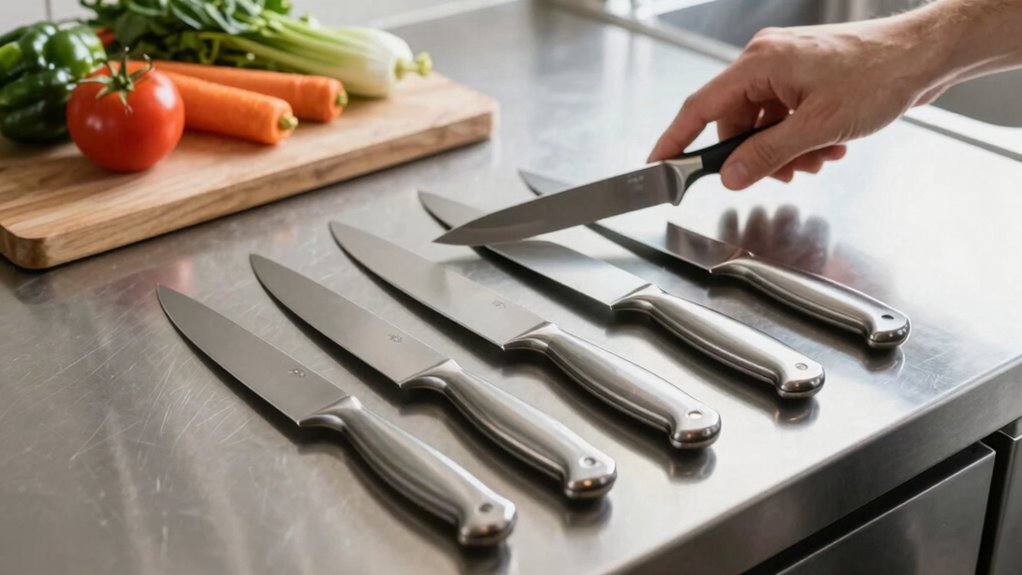
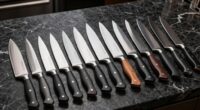
Prioritize keeping your knives sharp, as sharp blades cut better and reduce slips. Always cut away from your body and use a proper grip for control. Work in a well-lit, clutter-free area to prevent accidents. Store knives safely and choose those with rounded tips to lower injury risk. Mastering these key safety rules helps you stay safe, and if you keep going, you’ll discover even more tips to protect yourself in the kitchen.
Key Takeaways
- Always keep knives sharp; dull blades require more force and increase injury risk.
- Use a proper grip and keep fingers tucked to prevent slips during cutting.
- Store knives in designated, secure places like blocks or magnetic strips to avoid accidents.
- Focus fully on cutting tasks; avoid distractions and multitasking to maintain control.
- Use knives with rounded tips when possible for safer handling, especially in tight spaces.
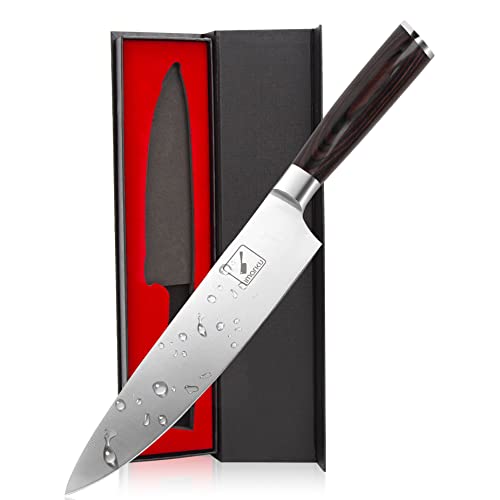
imarku Japanese Chef Knife – Sharp Kitchen Knife 8 Inch Chef's Knives HC Steel Paring Knife, Unique Gifts for Men and Women, Gifts for Mom or Dad, Kitchen Gadgets with Gift Box, Gyutou Knives
High-Carbon Stainless Steel Blade: It is manufactured from high-quality stainless steel that maintains its functionality for a long…
As an affiliate, we earn on qualifying purchases.
As an affiliate, we earn on qualifying purchases.
Always Use a Sharp Knife for Safety
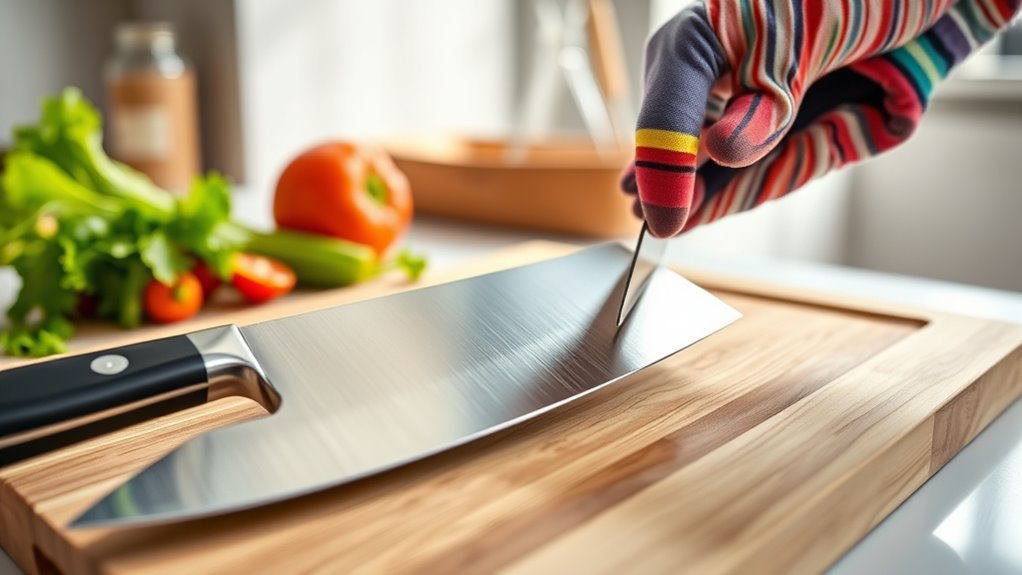
Using a sharp knife is essential for maintaining safety in the kitchen. Dull knives require more pressure to cut through food, increasing the risk of slips and accidental cuts. When your knife is sharp, you can control your cuts better, reducing the chance of losing grip or making unintended movements. A razor-sharp blade slices smoothly, so you don’t have to force it, which protects your fingers and hands. Regularly sharpening your knives keeps them in ideal condition, making your tasks easier and safer. Maintaining proper knife technique can also prevent accidents and improve your overall safety. Proper cutting techniques help you develop better control and precision while using knives. Additionally, using appropriate cutting surfaces can help preserve your knives’ sharpness and prevent damage. Proper storage methods also play a crucial role in maintaining your knives’ edge and safety. Avoid using dull knives for any cutting job, even if it seems convenient. A well-maintained, sharp knife helps you work efficiently while minimizing the risks of injury during food prep. Incorporating proper cleaning procedures ensures your knives stay in optimal condition, reducing the likelihood of accidents caused by corrosion or damage.

Magnetic Knife Holder for Wall, Knife Magnetic Strip Magnetic Knife Holder for Refrigerator Mount Knife Rack Kitchen Utensil Holder Metal Tool Holder Knife Block Kitchen Organizers Accessories 10 Inch
Heavy Duty and Solid magnetic knife holder: Our magnetic knife holder for refrigerator contains powerful magnets and has…
As an affiliate, we earn on qualifying purchases.
As an affiliate, we earn on qualifying purchases.
Cut Away From Your Body and Hands
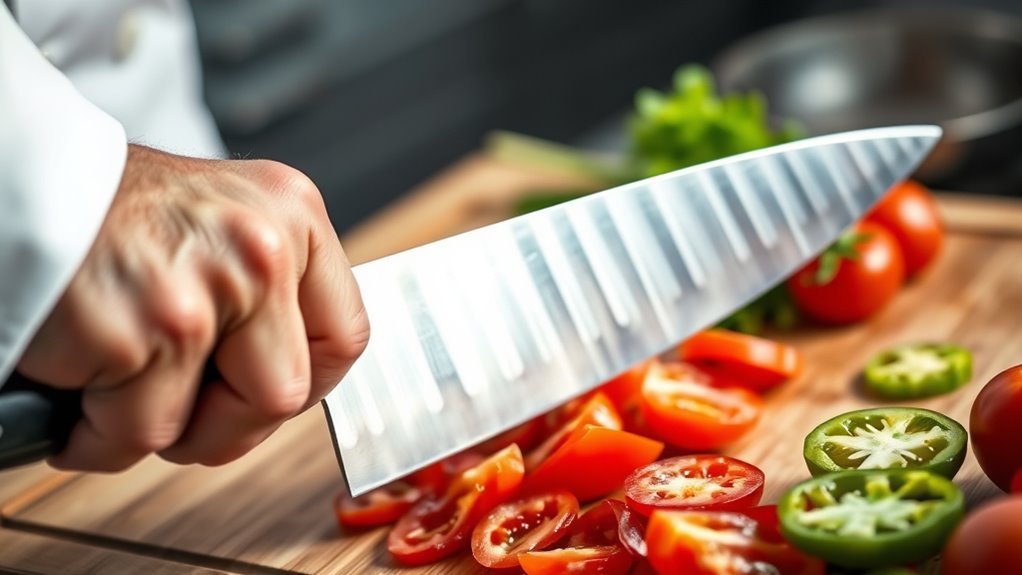
Always keep your cutting path clear of your body and hands to make certain injuries do not occur. Use a proper grip to maintain control and avoid slips that could cause cuts. Stay focused on your task to ensure you cut safely and accurately. Incorporating visual and auditory cues can help improve your technique and awareness while cutting. Additionally, maintaining proper wiring basics can prevent electrical hazards if using powered tools or appliances nearby. Being aware of knife safety rules and practicing correct handling techniques can further reduce the risk of accidents. For example, understanding and adhering to European cloud security standards can help protect sensitive data and ensure compliance. Remember that understanding precious metal IRA markets can help you make informed investment choices, just as following safety rules helps prevent mishaps.
Maintain Clear Cutting Path
Maintaining a clear cutting path is essential for safe knife use, as it directs the blade away from your body and hands. Always position your knife so the cutting motion moves outward, not inward or toward yourself. Keep your fingers curled and tucked under your knuckles on the hand holding the food; this creates a barrier and prevents slips. Confirm your workspace is free of clutter, so you can cut smoothly without obstructions. Use controlled, deliberate strokes rather than rushing through cuts, which can cause accidental slips. Staying mindful of the blade’s path helps prevent injuries by reducing the chance of accidental contact with your fingers or body. Focusing on proper technique and maintaining focus are key to preventing knife injuries during your prep work. Additionally, ensuring you have a stable surface and proper grip can significantly enhance cutting control and safety. Practicing proper technique and maintaining focus are key to preventing knife injuries during your prep work. Incorporating safe handling practices into your routine can further reduce the risk of accidents and improve overall safety.
Use Proper Grip Technique
To reduce the risk of injury, you should grip the knife firmly with a comfortable, controlled hold while ensuring your cutting motions always move away from your body and hands. This technique helps prevent slips and accidental cuts. Keep your fingers tucked safely on the hand holding the food, away from the blade’s path. Focus on maintaining control throughout each cut. Incorporating proper knife storage can also help prevent accidents and keep your blades sharp for safer use. Additionally, understanding knife safety guidelines can further reduce the likelihood of mishaps in the kitchen. Practicing proper cutting techniques can help develop safer habits and improve overall efficiency. Developing good knife handling habits is essential for safe and effective cutting. Being aware of vetted safety advice from trusted sources can further enhance your safety practices in the kitchen.
Stay Focused During Cuts
Staying focused during knife cuts is essential for safety, as distraction can lead to accidents. Always cut away from your body, hands, and fingers to prevent injuries if the knife slips. Keep your attention on the task, avoiding multitasking or interruptions. Use a stable cutting surface and ensure good lighting to maintain focus. Hold the knife securely with a proper grip, and avoid rushing through cuts, which increases the risk of slips. Be aware of your fingers’ position, keeping them tucked away from the blade’s path. If your mind drifts or you’re tired, pause and regain focus before continuing. Incorporating simple routines can help you stay alert and prevent accidents while preparing meals. Additionally, practicing safe handling techniques can reinforce good habits and reduce the chance of injury over time. Maintaining awareness of your environment and proper technique is vital for consistent safety. Being mindful of your surroundings further minimizes the chance of unexpected hazards during knife work. Developing a routine of regular safety checks can also help you stay vigilant and prepared.

Intelitopia Complete Knife Sharpening Stone Set – Dual Grit Whetstone 400/1000 3000/8000 Knife Sharpener with Leather Strop, Flattening Stone, Bamboo Base, 3 Non-slip Rubber Bases & Angle Guide
【Complete Knife Sharpening Stone Kit】You don't need to be a Pro to sharpen your blades, all you need…
As an affiliate, we earn on qualifying purchases.
As an affiliate, we earn on qualifying purchases.
Choose the Right Knife for the Job
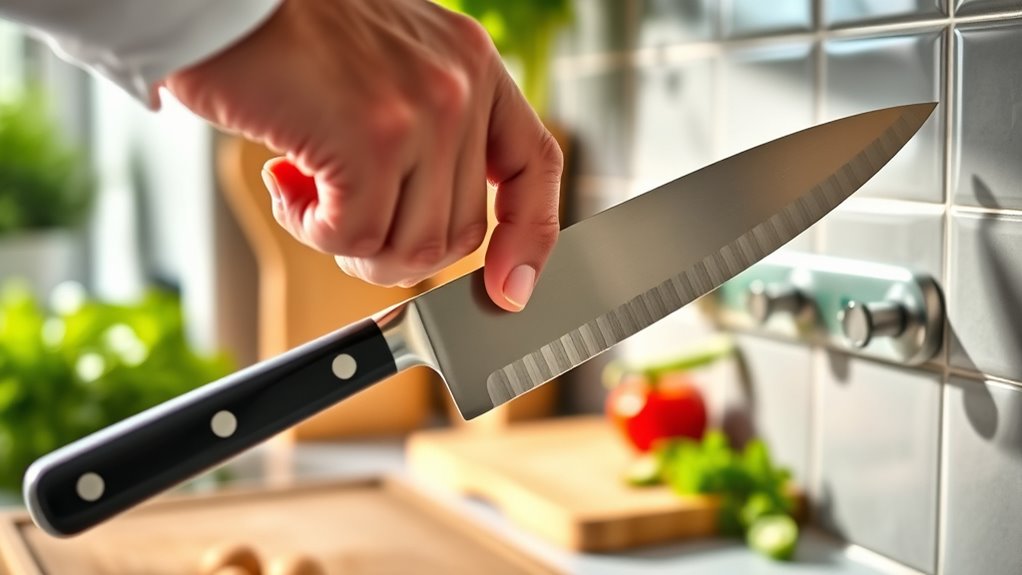
Choosing the right knife for the task is essential to guarantee safety and efficiency in the kitchen. Using an appropriate knife reduces slips, minimizes force needed, and helps you maintain control. Here are three key points:
- Use a chef’s knife for chopping, slicing, and dicing — it’s versatile and balances well for most tasks. Selecting the appropriate dog breed for your lifestyle can also help prevent behavioral issues and ensure compatibility.
- Pick a serrated knife for bread and soft foods — it cuts smoothly without crushing or tearing. Being aware of ethnicity backgrounds can also enrich your understanding of diverse culinary traditions and techniques. Understanding material properties of different knife blades can further improve your selection process.
- Select a paring knife for detailed work — ideal for peeling and intricate tasks.
Avoid forcing a dull or inappropriate knife through food, as it increases the risk of slips and injuries. Choosing the correct tool helps safer, faster, and more precise food prep.

HAUSHOF Steak Knives Set of 4, Sharp Serrated Steak Knives, Premium Stainless Steel Steak Knife Set with Gift Box, Black Handle
GREAT FOR ON THE GO: Still trying to figure out what to expect from a steak set? Want…
As an affiliate, we earn on qualifying purchases.
As an affiliate, we earn on qualifying purchases.
Keep Your Work Area Well-Lit and Clutter-Free
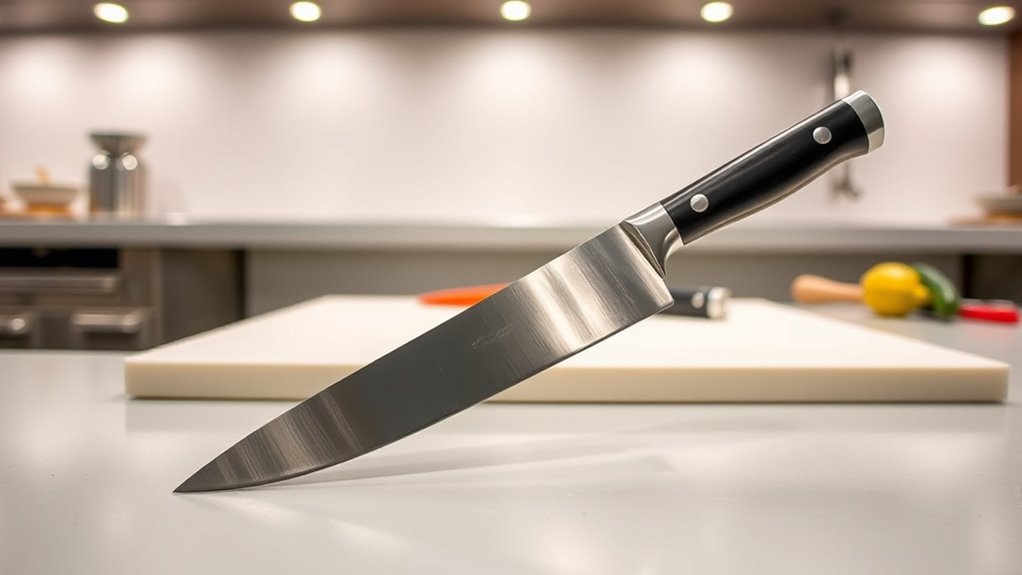
A well-lit and clutter-free work area is essential for safe knife handling. Good lighting ensures you see exactly what you’re cutting, reducing mistakes and slips. A tidy workspace prevents accidents caused by misplaced tools or obstacles. When your area is organized, you can focus on your task without distractions or hazards. Keep knives and utensils stored properly and clear away unnecessary items. Regularly check your work surface for spills or debris. Here’s a quick guide:
| Aspect | Why It Matters | Tips |
|---|---|---|
| Lighting | Enhances visibility | Use bright, natural light or strong overhead fixtures |
| Clutter | Prevents accidental slips | Clear counters before starting |
| Storage | Keeps knives accessible and safe | Use scabbards or drawers |
| Work Surface | Ensures stability | Maintain a clean, flat surface |
| Organization | Reduces search time and hazards | Group tools and ingredients systematically |
Proper Grip and Controlled Slicing Techniques
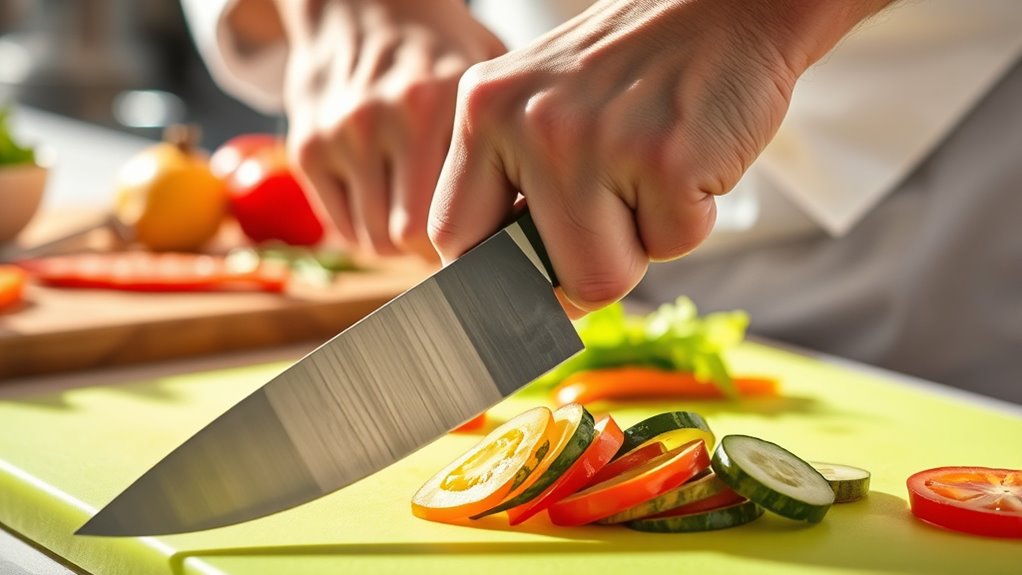
You should grip the knife firmly with a proper hold to maintain control. Use smooth, deliberate slicing motions to reduce the risk of slips and injuries. Practicing controlled techniques helps keep your fingers safe and makes cutting more efficient.
Grip Firmly and Correctly
Maintaining a firm and correct grip on the knife is essential for safe and efficient cutting. A secure hold prevents slips and gives you full control over your movements. To ensure you’re gripping correctly:
- Keep your handle firm but relaxed to avoid fatigue and maintain precision.
- Use your dominant hand, wrapping your fingers around the handle with a firm grip.
- Keep your guiding hand’s fingers curled inward, away from the blade, to protect them during slicing.
A proper grip allows you to slice steadily and accurately, reducing the risk of accidents. Avoid gripping too tightly, which can cause fatigue and loss of control. Focus on a balanced, controlled hold to make every cut safe and effective.
Use Smooth, Controlled Slices
Using smooth, controlled slices is key to knife safety and efficiency. When you make deliberate, even motions, you reduce the chance of slips and injuries. Focus on maintaining a steady rhythm, applying consistent pressure, and letting the knife do the work. Proper grip helps control your movement and prevents accidents. Keep your hand steady and move the knife in a fluid, controlled manner. To keep your technique consistent, follow this simple guide:
| Step | Action | Tip |
|---|---|---|
| 1 | Grip the knife securely | Use a firm, comfortable hold |
| 2 | Use even, gentle pressure | Avoid forcing the blade |
| 3 | Slice with a rocking motion | Keep the motion smooth |
| 4 | Maintain a consistent pace | Don’t rush or slow down suddenly |
| 5 | Keep fingers clear of blade | Use a claw grip for safety |
Controlled, steady slices keep you safe and make prep easier.
Store and Handle Knives Safely
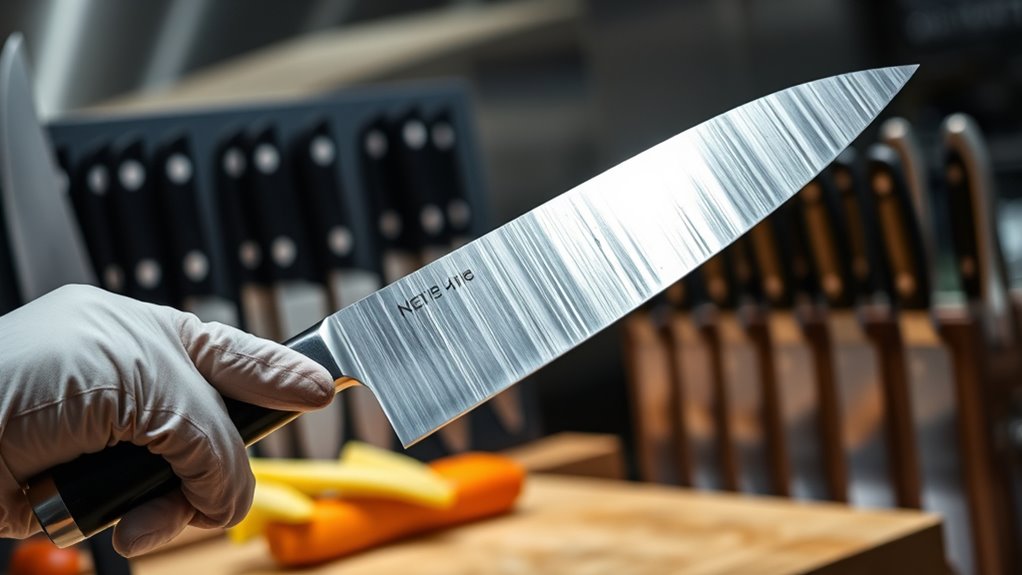
Proper storage and handling of knives are essential to prevent accidents and guarantee safety in the kitchen. You should always store knives securely to avoid unintended contact. When handling knives, grip the handle firmly, keeping your fingers away from the blade. Use a controlled motion when passing or placing knives down to prevent slips. To maximize safety, follow these guidelines:
Proper knife storage and handling are key to kitchen safety and injury prevention.
- Store knives in a designated knife block, magnetic strip, or sheath to keep blades protected and prevent accidental cuts.
- Always carry knives with the blade pointed downward and away from your body.
- Wash knives carefully, avoiding the sink’s bottom where blades can slip or come into contact with other utensils.
Consistent safe handling reduces injury risks and maintains your knives’ condition.
Prioritize Rounded Tips to Reduce Injury Risks
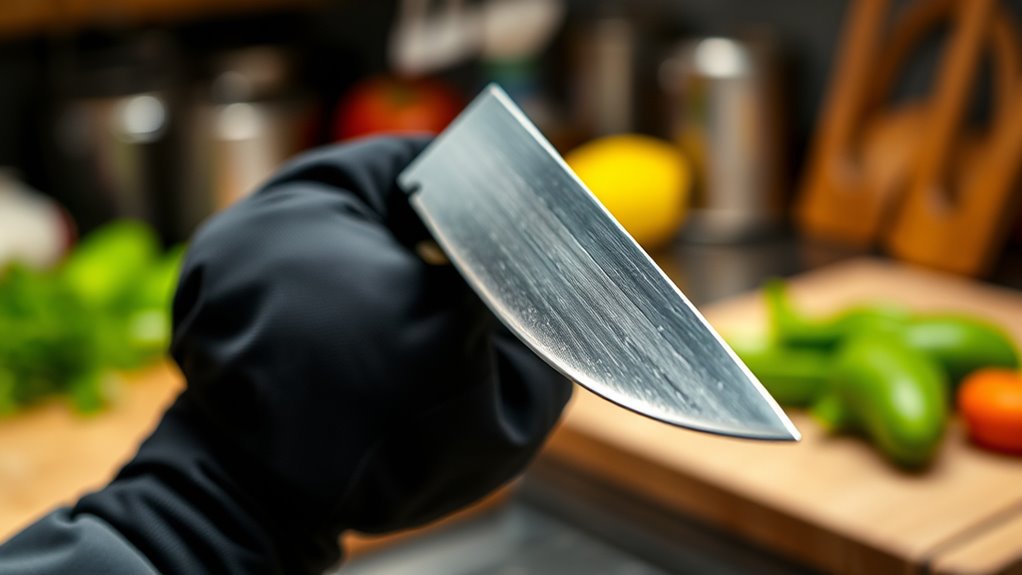
Because sharp, pointed knives pose a higher risk of serious cuts, choosing knives with rounded tips is a simple yet effective safety improvement. Rounded tips reduce the chance of accidental punctures and lacerations, especially when working quickly or in tight spaces. Unlike pointed blades, rounded tips are less likely to accidentally jab or poke you during routine tasks. They’re also safer for less experienced cooks and shared kitchens, where safety protocols may vary. While pointed knives are useful for piercing or detailed work, most home cooks don’t need them daily. Opting for rounded-tip knives minimizes injury risks without sacrificing functionality. If you’re stocking your kitchen, prioritize these safer options to protect yourself and others. It’s a small change that can make a big difference in safety.
Frequently Asked Questions
How Often Should I Sharpen My Kitchen Knives for Safety?
You should sharpen your kitchen knives every 1 to 3 months, depending on how often you cook. Regular sharpening keeps blades sharp, reducing the need for excessive force and lowering injury risk. Check your knives regularly—if they start to drag or require more pressure, it’s time to sharpen. Using a honing steel between sharpenings also maintains the edge, ensuring safe and efficient cutting every time you cook.
What Are the Best Ways to Prevent Slips While Cutting?
To prevent slips while cutting, always guarantee your knife is sharp, so it slices smoothly without applying excessive force. Use a stable, non-slip cutting board and keep your work area well-lit. Maintain a proper grip on the knife and direct cutting motions away from your body. Avoid distractions and clutter, and work slowly when handling tough or slippery ingredients. These habits keep you safe and improve your overall control.
Are There Specific Materials for Safer Knife Storage?
Think of it as hitting two birds with one stone—you want safe storage and easy access. Use knives stored in secure, designated containers like scabbards, magnetic strips, or knife blocks made from non-slip materials such as silicone or rubber. Avoid storing knives loose in drawers or on uneven surfaces, which can cause slips or accidental cuts. Proper storage keeps blades protected and your fingers safe, making your kitchen a safer place.
How Can I Identify a Properly Maintained Knife?
You can identify a properly maintained knife by checking its sharpness; it should cut smoothly without much pressure. Look for a clean, rust-free blade and a secure, tight handle. A well-maintained knife doesn’t have nicks, chips, or dull spots. Test it on a piece of paper—if it slices easily, it’s sharp and well-kept. Regular honing and proper cleaning make certain your knife stays in great condition for safe use.
What Protective Gear Is Recommended for High-Risk Cutting Tasks?
For high-risk cutting tasks, wear protective gear like steel mesh or Kevlar gloves to guard your hands. Did you know that fingers account for 66% of knife injuries? Using gloves markedly reduces this risk, especially when handling sharp blades or working with dull or broken knives. Always make certain your work area is well-lit and stable to prevent slips, and handle knives carefully to stay safe.
Conclusion
Remember, safety with knives is about more than just rules—it’s about respect and awareness. Keep your knives sharp, handle them carefully, and stay focused while cutting. Use the right tools and store them properly to prevent accidents. As the saying goes, “A stitch in time saves nine.” Taking these simple precautions now can save you from injury later. Stay cautious, stay safe, and always treat your knives with care.