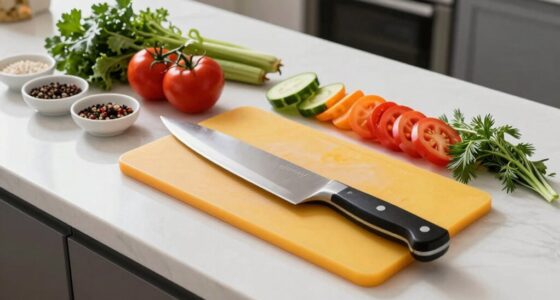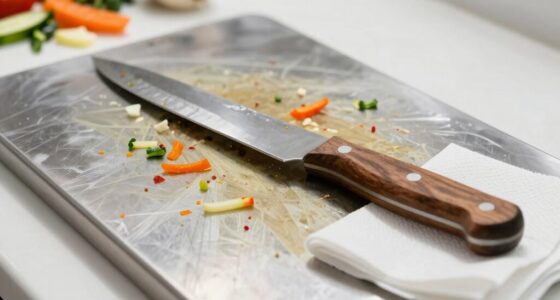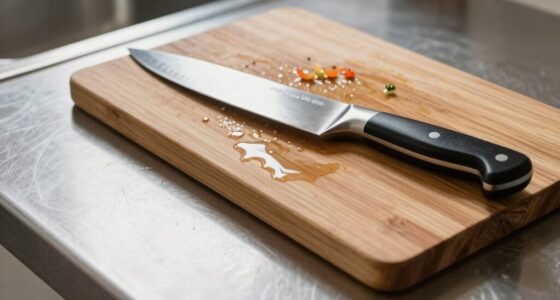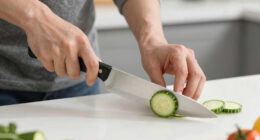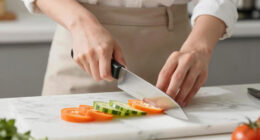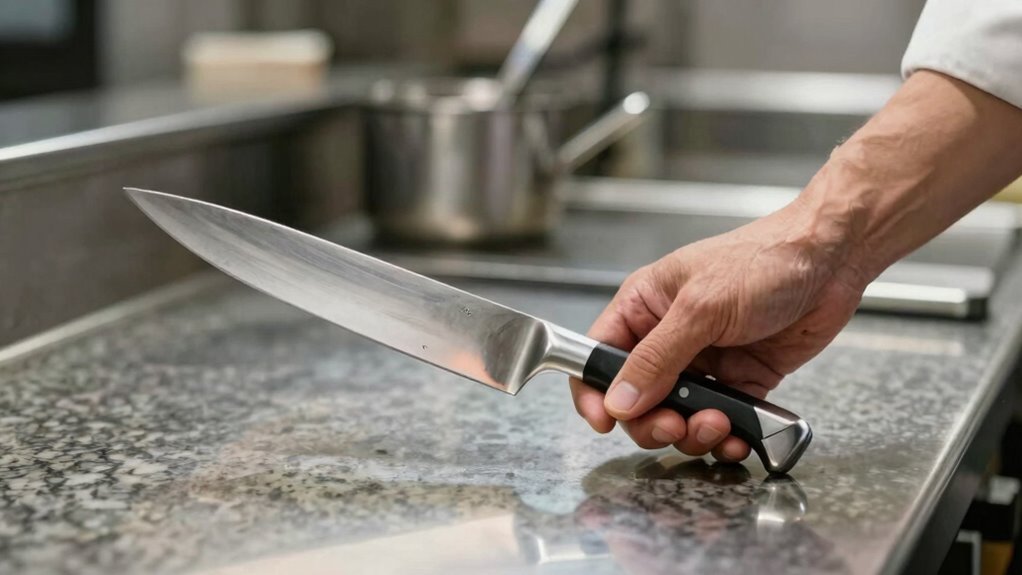
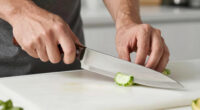
To safely hand off a knife using the counter-set method, first place the blade securely on the counter, making it visible and stable. Clearly communicate with your partner, saying “knife coming through,” and wait until they acknowledge readiness. When transferring, hold the handle firmly, keeping the blade away from both of you, and pass it smoothly with controlled movements. If you want to master this technique and prevent accidents, continue exploring key safety tips and steps.
Key Takeaways
- Place the knife securely on the counter before passing to ensure control and predictability.
- Clearly communicate “knife coming through” and confirm the receiver is ready to prevent surprises.
- Maintain eye contact and use deliberate, smooth movements during the transfer for safety.
- The receiver should grasp the handle firmly with an open palm, avoiding the blade.
- Remove your hand carefully once the receiver’s grip is secure to complete the transfer safely.

Handing a knife safely is vital to prevent accidents and injuries in the kitchen. When you’re transferring a knife from one person to another, proper technique guarantees everyone stays safe. The key is to establish a clear, predictable process that minimizes the risk of slips or cuts. One effective method is the counter-set approach, where the knife is positioned securely on the counter before the hand-off. Before you initiate the transfer, make sure your knife grip is firm yet controlled, catching the handle comfortably with your dominant hand. Your fingers should wrap around the handle, with your thumb resting along the side for added stability. Avoid gripping the blade itself, as this increases the chance of accidental cuts and reduces control.
When you’re ready to hand off the knife, position it with the blade facing away from both yourself and the other person. This orientation minimizes the risk of injury if the knife slips during the transfer. As you approach to pass the knife, keep your movements deliberate and smooth. Use your non-dominant hand to steady the handle or blade, depending on what feels safest and most stable for you. It’s essential to communicate clearly—say “knife coming through” or “here’s the knife”—so the other person knows what to expect. When the receiver is ready, they should extend their hand with an open palm, fingers relaxed, and make eye contact to confirm they’re prepared. Proper knife handling techniques are crucial for safety during this process.
The receiver then takes the handle firmly, using a secure knife grip. They should avoid grabbing the blade, which could lead to cuts or loss of control. Instead, they position their hand so that their thumb and index finger form a “pocket” around the handle, giving them maximum control during the transfer. Once the receiver has a solid grip, the giver can carefully remove their hand, ensuring the knife remains stable. To practice cutting techniques safely, both parties should be aware of the proper way to hold the knife—using a pinch grip or a claw grip—so that the knife remains steady and precise during slicing or chopping.
Throughout the hand-off, maintaining eye contact and clear communication helps prevent surprises or awkward movements. Always be mindful of your surroundings and verify your workspace is clear of obstructions. With consistent practice of these steps—focusing on a secure knife grip, controlled movements, and effective communication—you’ll make the process of handing off a knife safe and efficient. This method not only protects everyone in the kitchen but also promotes good habits when handling knives during meal prep.

Dowellife Cut Resistant Gloves Food Grade Level 5 Protection, Safety Kitchen Cut Gloves for Chef Oyster Shucking Mandolin Knife Butcher Meat Cutting
Protect your hand from cuts and abrasions—The high performance cut resistant material HDPE is adopted and the gloves…
As an affiliate, we earn on qualifying purchases.
As an affiliate, we earn on qualifying purchases.
Frequently Asked Questions
What Are Common Mistakes to Avoid During Knife Hand-Offs?
You should avoid common mistakes like not maintaining a proper grip on the knife or failing to communicate clearly during the hand-off. Make certain your grip is secure before passing, and clearly say “knife” or “pass” to alert your partner. Don’t rush or get distracted, as this increases the risk of accidents. Focus on steady, confident movements and open communication to guarantee a safe and smooth hand-off.
How Can I Teach Children to Pass Knives Safely?
Imagine each child as a tiny lighthouse guiding safe kitchen practices. To teach children about passing knives, use clear teaching techniques that emphasize child safety. Show them the proper grip, explain the importance of eye contact, and practice slow, deliberate hand-offs. Reinforce these habits with patience and praise, turning safe knife passing into a bright beacon of responsibility they carry with confidence, ensuring everyone in the kitchen stays safe.
Which Knives Are Safest for Beginner Home Cooks?
For beginner home cooks, serrated knives and paring knives are the safest choices because their design minimizes slips. To keep them safe, regularly maintain your knives by honing and sharpening, ensuring they’re in good condition. Store them properly in a knife block or on a magnetic strip to prevent accidents. Good knife maintenance and proper storage make handling easier and safer, boosting your confidence in the kitchen.
How Does the Counter-Set Method Compare to Other Hand-Off Techniques?
The counter-set method stands out because it emphasizes proper knife grip and precise hand positioning, making hand-offs safer. Unlike passing directly or overhand techniques, it keeps the knife securely on the counter, reducing the risk of slips. You actively control the knife’s movement, ensuring a steady transfer. This method minimizes accidents, keeps your grip consistent, and promotes confidence, especially for beginners learning safe knife handling.
What Should I Do if a Knife Slips During Hand-Off?
If a knife slips during hand-off, stay calm and focus on your grip and hand positioning. Quickly but carefully secure the knife with your dominant hand, making certain your fingers are safely away from the blade. Use a firm, controlled grip, and communicate clearly to the other person. Don’t panic—regain control first, then proceed with caution to prevent injury and ensure safety for everyone in the kitchen.

Cuisinart Stainless Steel Hollow Handle 15-Piece Cutlery Block Set, Kitchen Knife Set with Steel Blades for Precise Cutting, Durable Knives with Ergonomic Handles, C77SS-15PK
SUPERIOR PERFORMANCE: Experience precision with the Cuisinart Stainless Steel Hollow Handle 15-Piece Cutlery Block Set with high-carbon stainless…
As an affiliate, we earn on qualifying purchases.
As an affiliate, we earn on qualifying purchases.
Conclusion
By mastering the counter-set method, you turn a potentially dangerous moment into a dance of safety and trust. Think of it as passing a flame—carefully and with intention—so both hands stay protected. Remember, a confident handoff keeps your kitchen a safe haven, not a battleground. When you follow these simple steps, you’re not just sharing a knife—you’re sharing safety, turning everyday tasks into moments of mindful mastery. Stay alert, and keep your kitchen a secure space for all.
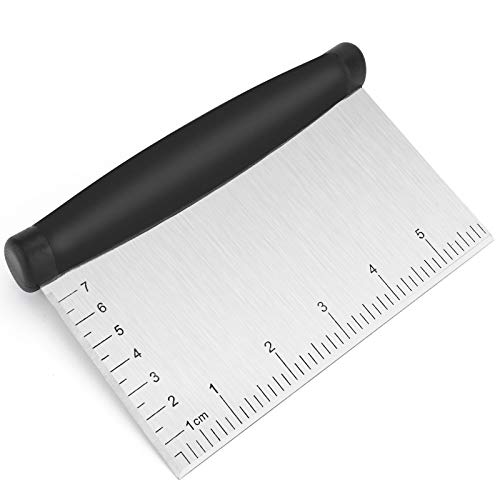
UUBAAR Bench Scraper & Chopper – 6 Inch Stainless Steel Dough Cutter with Contoured Grip, Multi-Purpose Kitchen Tool for Baking Cooking, Food Scraper Chopper & Pastry Knife
Premium bench scraper kitchen tool: Professionally designed food scraper tool, it's easy to use and make your baking…
As an affiliate, we earn on qualifying purchases.
As an affiliate, we earn on qualifying purchases.

DICEVICE EverGrip Ergonomic Grip for Chef Knife & Kitchen Knives – Helper for Precise Cutting & Improved Cutting Comfort | Cooking Knife Tool Accessory & Pinch Grip Trainer
🔪 REDUCE HAND STRAIN & CHOP IN COMFORT – Say goodbye to hand fatigue and wrist pain during…
As an affiliate, we earn on qualifying purchases.
As an affiliate, we earn on qualifying purchases.