Many people think they follow basic knife safety rules, but they often make simple mistakes daily. Using the wrong knife for a task, leaving blades dull, or storing knives carelessly increases your risk of cuts. Cutting toward your body, not paying attention, or placing knives in unsafe spots adds danger. If you want to stay safe and confident with knives, understanding these common slip-ups can make a big difference in preventing accidents. Keep going to learn more tips to stay safe.
Key Takeaways
- Always use the right knife for each task and keep blades sharp to prevent slips and injuries.
- Store knives properly in knife blocks or magnetic strips, avoiding leaving them loose or unattended.
- Maintain proper cutting technique, cutting away from your body, with a secure grip and stable surface.
- Focus fully on cutting tasks; distractions increase the risk of accidents.
- Regularly clean, sharpen, and inspect knives to ensure safety and optimal performance.

Intelitopia Complete Knife Sharpening Stone Set – Dual Grit Whetstone 400/1000 3000/8000 Knife Sharpener with Leather Strop, Flattening Stone, Bamboo Base, 3 Non-slip Rubber Bases & Angle Guide
【Complete Knife Sharpening Stone Kit】You don't need to be a Pro to sharpen your blades, all you need…
As an affiliate, we earn on qualifying purchases.
As an affiliate, we earn on qualifying purchases.
Using the Wrong Knife for the Task
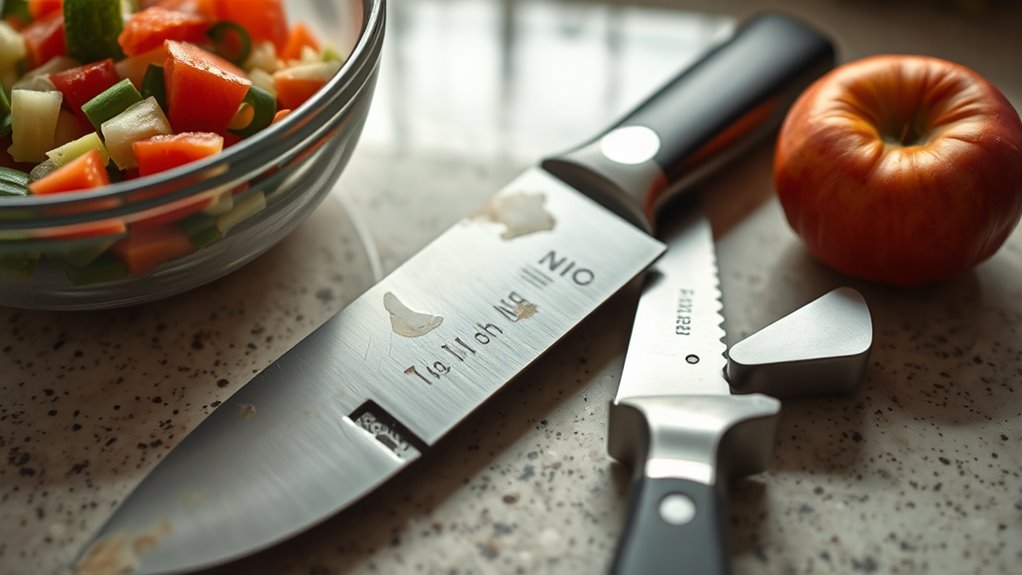
Using the wrong knife for a task can increase the risk of accidents and make your work more difficult. The blade material plays a vital role in performance; for example, a softer steel may dull quickly, forcing you to apply more pressure and risking slips. Conversely, high-quality stainless steel blades stay sharper longer and cut more smoothly. blade material also affects how well a knife maintains its edge over time. Handle ergonomics also matter—an uncomfortable or poorly balanced handle can cause fatigue and reduce control. Choose a knife with an ergonomic handle that fits your grip comfortably, especially for extended use. Proper knife maintenance is also essential to keep blades in optimal condition and prevent accidents. Regular sharpening and cleaning help maintain blade sharpness and safety during use. Additionally, understanding the importance of ergonomic design can help prevent strain during prolonged cutting tasks. Being aware of knife safety practices can further reduce the risk of injuries in the kitchen. Always select a knife to minimize hazards and make your kitchen tasks easier and safer.

Magnetic Knife Holder for Wall, Knife Magnetic Strip Magnetic Knife Holder for Refrigerator Mount Knife Rack Kitchen Utensil Holder Metal Tool Holder Knife Block Kitchen Organizers Accessories 10 Inch
Heavy Duty and Solid magnetic knife holder: Our magnetic knife holder for refrigerator contains powerful magnets and has…
As an affiliate, we earn on qualifying purchases.
As an affiliate, we earn on qualifying purchases.
Not Keeping Knives Sharp Enough
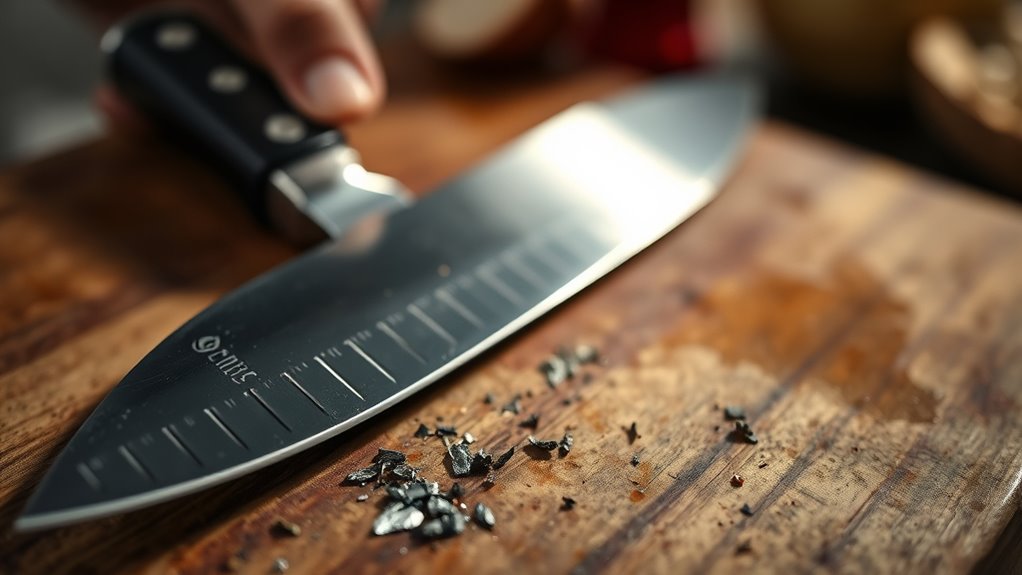
A dull knife can be just as dangerous as a sharp one because it requires more force to cut, increasing the chance of slips and injuries. Proper blade maintenance is essential for safety, and this includes regular sharpening. If you neglect sharpening frequency, your knife’s edge becomes less effective and more prone to slipping. Regularly maintaining your blades keeps them sharp, reducing the effort needed and improving control. Use a whetstone or a sharpening tool suitable for your knife’s material, and do it consistently. Remember, a sharp knife not only makes cutting easier but also safer. Blade maintenance plays a significant role in ensuring clear and detailed cuts, especially in intricate or delicate tasks. Incorporating proper tool care into your routine can prolong the life of your knives and enhance safety. Additionally, understanding the 16PF personality traits can help users develop better habits and routines for knife maintenance tailored to their individual tendencies. Developing a regular sharpening schedule helps prevent blades from becoming dangerously dull. Don’t wait until your blade is dull; incorporate blade maintenance into your routine to prevent accidents and ensure safer, more precise cuts every time.

Plys Kitchen Meat Cleaver Knife, Unique Effort Saving Knife Professional Stainless Steel Chef Cooking Knives for Cutting Meat Vegetable Father Mother
PREMIUM MATERIAL & CRAFT – We inherit and improve traditional hand forging techniques, from high-temperature treatment, hand forging,…
As an affiliate, we earn on qualifying purchases.
As an affiliate, we earn on qualifying purchases.
Improper Grip and Technique
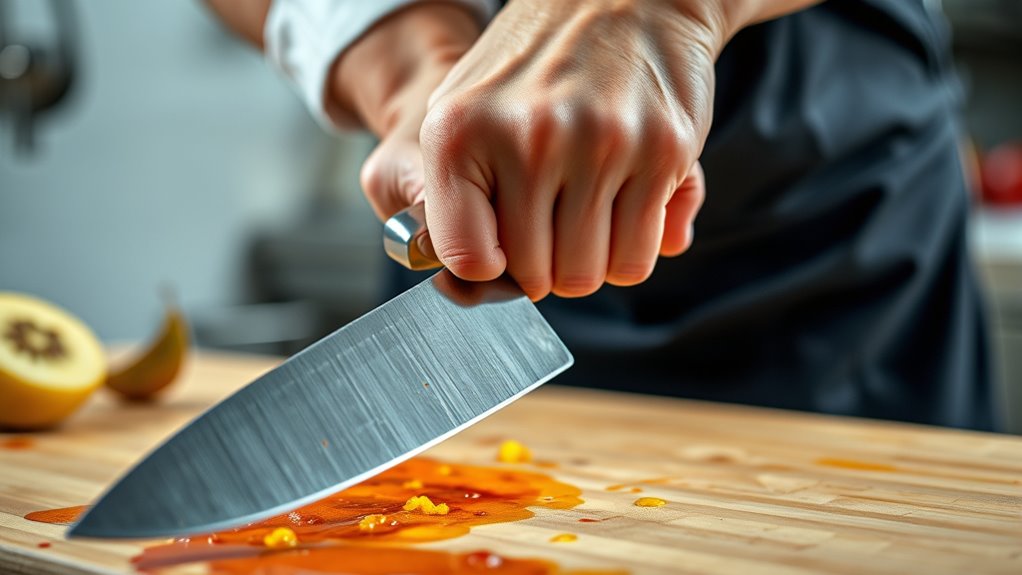
Holding the knife with the wrong grip can lead to slips and accidents. Your cutting technique also plays a big role in safety and efficiency. Using proper grip and technique helps you cut safely and accurately every time. Additionally, maintaining the correct hand position reduces the risk of injury and improves your control during cutting tasks. Proper knife maintenance ensures the blade remains sharp, which is crucial for safe and effective cutting. Regularly sharpening your knives prevents the need for excessive force and minimizes the chance of mishaps. Ensuring your cutting surface is stable and clean also contributes significantly to safe handling. Incorporating proper safety practices into your routine further minimizes risks and enhances overall kitchen safety.
Proper Grip Matters
One common mistake that can lead to accidents is gripping the knife improperly. To guarantee safety, focus on maintaining a proper grip that leverages the ergonomic handle design of your knife. A secure, comfortable grip reduces slipping and increases control. Avoid gripping too tightly, which can cause fatigue and decrease precision. Instead, practice grip strength training to build steady control without excessive force. Hold the handle firmly but relaxed, with your fingers wrapped around it and your thumb stabilizing the blade. This approach allows for better maneuverability and reduces the risk of slips. Remember, a proper grip isn’t just about comfort; it’s essential for safe, effective cutting. Using the correct technique also minimizes muscle strain, making your cutting more efficient and reducing fatigue during extended use. Developing a safe cutting technique is key to preventing accidents and improving overall safety in the kitchen. Additionally, ensuring that your knife is properly balanced and maintained can further enhance control and safety during use. Proper grip and technique are especially important when working with auditory processing challenges, as they help maintain focus and prevent mishaps.
Cutting Technique Errors
Improper grip and technique can lead to dangerous cutting errors that increase the risk of injury. When your grip isn’t secure, you might slip, causing accidental cuts. Poor technique also affects blade maintenance; a dull or damaged blade requires more force, increasing accidents. Always use a proper grip, keeping your fingers curled under to protect your fingertips. Cutting on an unstable or unsafe cutting board height heightens the danger, so ensure your cutting board is stable and clean. Proper technique minimizes the force needed and reduces strain on the blade, helping it stay sharp longer. Remember, maintaining your blade’s sharpness through regular blade maintenance improves control and safety. Adopting correct cutting methods and prioritizing cutting board safety keep you safer and more efficient in the kitchen. Additionally, blade safety tips can further enhance your overall kitchen safety practices.

Cook N Home Acacia Wood Knife Storage Block without Knives, 20 Slot Universal Knife Holder Countertop Butcher Block Knife Stand for Easy Kitchen Storage
Acacia Wood Knife Block: The Cook N Home knife block is made of acacia wood and has 20…
As an affiliate, we earn on qualifying purchases.
As an affiliate, we earn on qualifying purchases.
Forgetting to Use a Stable Cutting Surface

Using a stable cutting surface is essential for safe knife handling. When your cutting surface shifts or wobbles, it creates stability issues that increase the risk of slips and accidents. Always make sure your cutting board is secure, whether by placing a damp towel underneath or choosing a non-slip mat. Avoid cutting on uneven or unstable surfaces like plates or flimsy countertops, which can cause the knife to slip unexpectedly. Remember, a stable cutting surface provides control and precision, reducing the chance of injury. Neglecting this simple step might seem minor, but it can lead to dangerous situations. Take a moment to double-check your setup before you start chopping—your safety depends on it. Proper stability keeps your cuts accurate and your fingers safe. Ensuring a secure cutting surface is a fundamental part of safe knife handling that many overlook. Additionally, regularly inspecting your kitchen tools and surfaces can help maintain a safe environment for all your food preparation tasks. Being aware of thermal behavior and how your tools interact with different surfaces can further enhance your safety and efficiency.
Leaving Knives in the Sink or Unattended
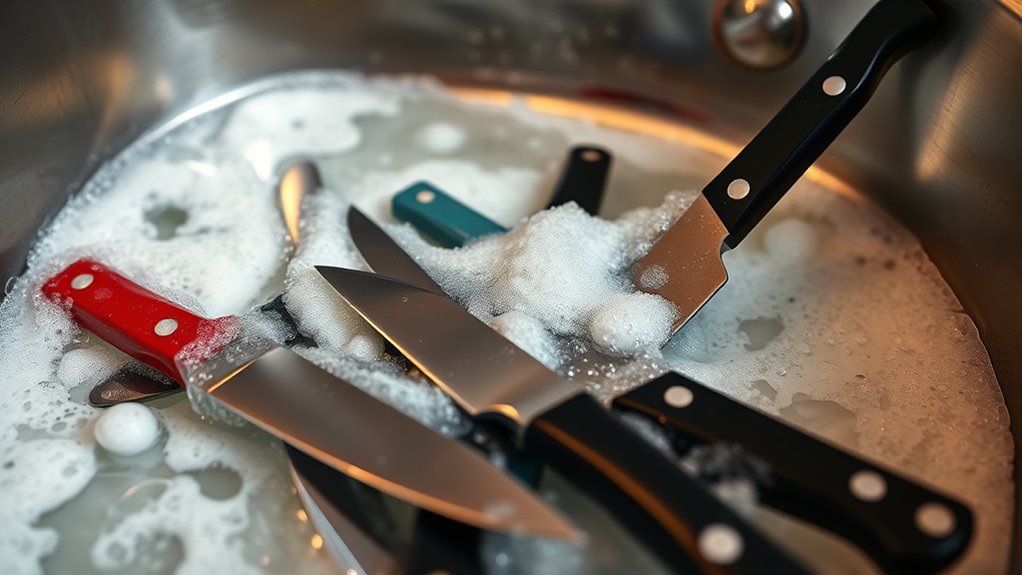
Leaving knives in the sink or unattended increases your risk of cuts and accidental injuries. Someone might reach in without seeing the blade, causing harm. Always store knives properly when not in use to stay safe. Proper storage methods are crucial and can be supported by understanding safety guidelines for handling sharp objects. Additionally, implementing storage solutions like knife blocks or magnetic strips can help prevent accidents and keep blades accessible yet secure.
Risk of Cuts
When knives are left in the sink or unattended, the risk of cuts increases considerably. You might accidentally grab the wrong end or slip while reaching into the sink. Proper blade maintenance is essential—dull blades require more force and can slip more easily, raising your injury risk. Always store knives safely when not in use, rather than leaving them exposed. Wearing protective gear, like cut-resistant gloves, can add an extra layer of safety if you need to handle knives quickly or in tight spaces. Avoid rushing or reaching blindly into sinks or drawers containing knives. Taking these precautions reduces the chance of accidental cuts, helping you stay safe while maintaining your knives and handling them confidently.
Accidental Injuries
Accidental injuries often happen when knives are left in the sink or unattended, creating a hidden hazard in the kitchen. It’s easy to forget a sharp blade isn’t safe to reach into or grab. These kitchen accidents can cause serious cuts or puncture wounds. To prevent injury, always clean and store knives immediately after use, and never leave them in the sink or on countertops where they can be hidden or mistaken for something harmless. Keeping knives out of reach of children and alerting everyone in the household to their presence helps avoid unintentional contact. Proper planning and awareness are key to injury prevention. By staying vigilant and handling knives carefully, you reduce the risk of accidental injuries and make your kitchen a safer space for everyone.
Proper Storage Tips
To prevent injuries, it’s important to store knives properly and avoid leaving them in the sink or unattended on countertops. Leaving knives exposed increases the risk of accidental cuts, especially if someone reaches into the sink or forgets they’re there. Instead, use magnetic strips mounted on the wall to keep knives accessible yet secure. They hold blades safely out of reach of children and prevent clutter. Alternatively, drawer dividers designed for knives keep blades organized and protected, reducing the chance of accidental contact. Always guarantee knives are stored with the blades facing down or away from you. Proper storage minimizes hazards, keeps your knives in good condition, and promotes safe handling every time you cook.
Cutting Toward Your Body Instead of Away

Cutting toward your body considerably increases the risk of injury. When you cut in this direction, a slip or loss of control can cause the blade to cut into your hand or arm. To stay safe, always cut away from yourself whenever possible. Proper blade hygiene is essential; a clean blade reduces the chance of slipping and ensures better control. Regular sharpening techniques keep your knife sharp, making cuts more precise and reducing the need for excessive force. A dull blade is more prone to slipping, which can lead to accidents when cutting toward your body. By maintaining good hygiene and sharpness, and always cutting away, you greatly reduce your risk of injury and keep your kitchen safer.
Failing to Pay Attention When Handling Knives
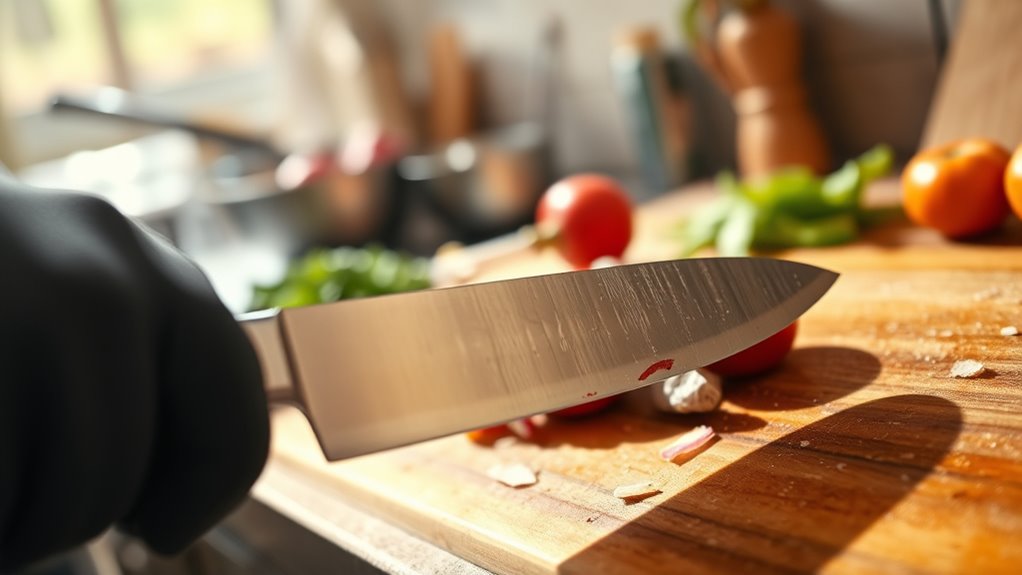
Paying close attention while handling knives is key to preventing accidents. When you’re distracted during chopping, your focus slips, increasing the risk of cuts. Ignoring safety symbols, like warning labels or safety instructions, only worsens the danger. Distractions can come from conversations, phones, or multitasking, diverting your eyes and mind from the task. This lapse in concentration can cause slips or accidental cuts. Always stay alert and prioritize safety, especially when chopping or slicing. Remember, a moment of distraction can lead to injury.
Stay focused and alert when handling knives to prevent accidents and injuries.
- Keep your focus on the task at hand, avoiding distractions during chopping
- Never ignore safety symbols or warnings on knives or kitchen tools
- Pause if your attention wanes, and return only when fully focused
Storing Knives Carelessly
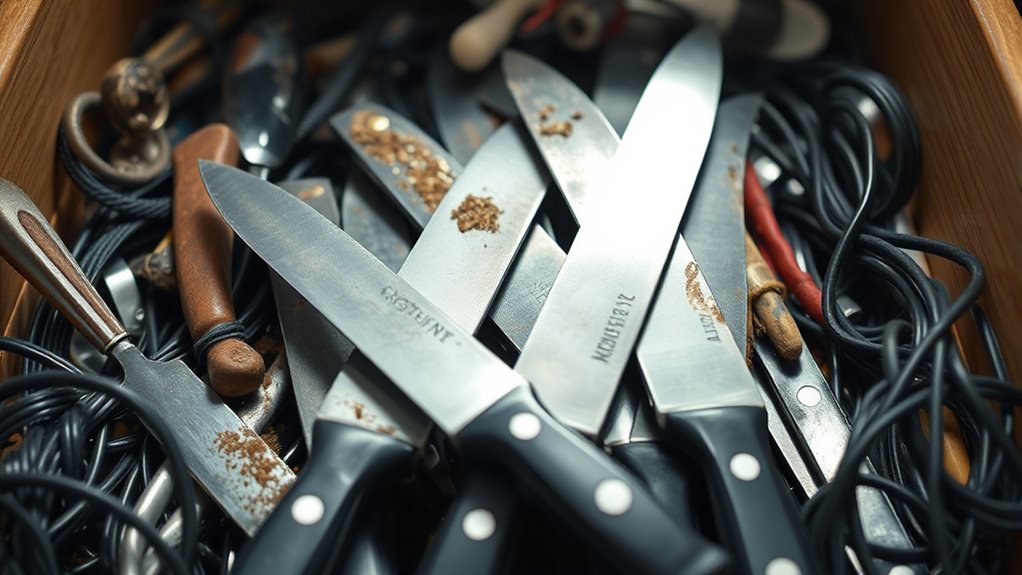
Storing knives carelessly can lead to dangerous accidents in the kitchen. If you toss your knives into a cluttered knife drawer, you risk cutting yourself when searching or grabbing one. Dull or damaged blades may slip, causing injuries. Using a knife rack is a safer alternative; it keeps blades separated and protected. Avoid leaving knives loose in a drawer or stacking them with other utensils, which increases the chance of accidental cuts. Always make certain knives are clean and dry before storing, and choose a storage method that keeps edges safe and accessible. Proper storage not only prevents injuries but also maintains your knives’ sharpness and longevity. Being mindful of how you store your knives is a simple step toward a safer, more organized kitchen.
Frequently Asked Questions
How Often Should I Sharpen My Kitchen Knives?
You should sharpen your kitchen knives every 1 to 3 months, depending on usage. Regular knife maintenance keeps blades sharp and safe, preventing accidents. Use proper sharpening techniques like honing or using a whetstone, and avoid over-sharpening, which can damage the blade. Pay attention to how your knives perform; dull blades require more force and pose safety risks. Consistent sharpening guarantees your knives stay effective and safe for all your cooking tasks.
What Is the Best Way to Store Knives Safely?
You might think tossing knives in a drawer keeps them handy, but that’s a recipe for accidents. The best way to store knives safely is with proper knife storage like a magnetic strip or a knife block, ensuring sharp blades stay protected and organized. This knife organization prevents injuries and keeps your blades in top shape. So, avoid chaos—choose a safe, dedicated spot for your knives every time.
How Can I Improve My Grip for Better Control?
To improve your grip for better control, focus on hand grip techniques that keep your fingers safely away from the blade. Use a firm, yet relaxed grip, placing your fingers with proper finger positioning—wrap your fingers around the handle and keep your thumb along the side for stability. Practice these techniques regularly to develop muscle memory, ensuring safer, more precise cuts every time.
Why Is Using a Cutting Board Important for Safety?
Using a cutting board is vital for safety because it provides a stable, controlled surface that prevents slips and accidents. It also helps protect your knives from damage, maintaining proper knife maintenance. If you don’t have a cutting board, you might consider safe cutting surface alternatives like a silicone mat. Always make certain your surfaces are secure to keep your cutting experience safe and efficient, reducing the risk of injuries.
What Are Signs My Knife Is Too Dull?
Your knife’s dullness is a danger sign—you’ll find yourself fighting to cut, risking slips that could cause serious injuries. If it drags or tears at food instead of slicing smoothly, it’s time for knife maintenance. Always wear safety gear, like cut-resistant gloves, until you sharpen or hone it. A dull knife is unpredictable and unsafe; don’t ignore these signs—act swiftly to keep your kitchen safe.
Conclusion
Did you know that every year, thousands of injuries happen because of simple knife safety mistakes? By using the right knife, keeping it sharp, and paying attention, you can drastically reduce your risk. Remember, over 70% of cuts occur because people forget basic safety rules like cutting away from their body or leaving knives unattended. Stay alert and practice safe habits—your fingers will thank you!