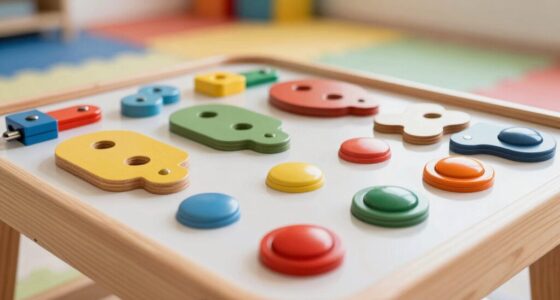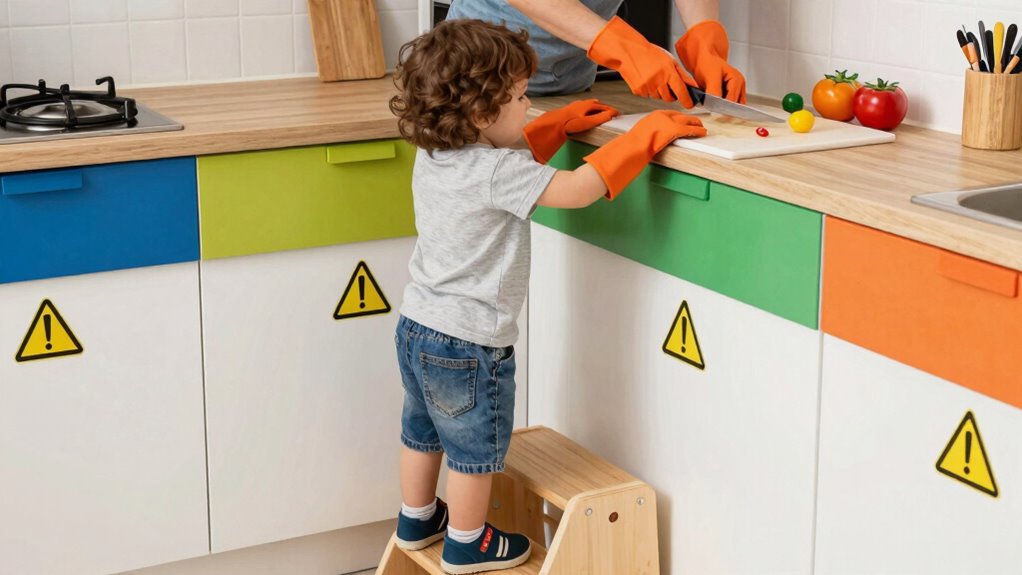
To keep kids safe around prep zones and sharp tools, you should always supervise them closely, explaining dangers clearly and calmly. Child-proof cabinets, safety locks, and barriers help restrict access to hazardous tools. Create designated work areas away from children, and use safety gear like gloves or aprons when handling sharp objects. Consistent supervision, safety education, and quick access to first aid are essential. Keep your family safe — discover more tips to protect your little ones effectively.
Listen free for 30 days with Audible
Thousands of audiobooks and originals — cancel anytime.
As an affiliate, we earn on qualifying purchases.
Key Takeaways
- Constantly supervise children near prep zones and sharp tools, guiding safe handling and explaining dangers calmly.
- Use child-proof locks and safety covers on drawers, cabinets, and utensils to prevent access.
- Establish physical barriers or gates to separate children from hazardous areas.
- Teach children about safety boundaries and proper tool use with age-appropriate language.
- Keep a well-stocked first aid kit nearby and learn basic first aid for quick injury response.
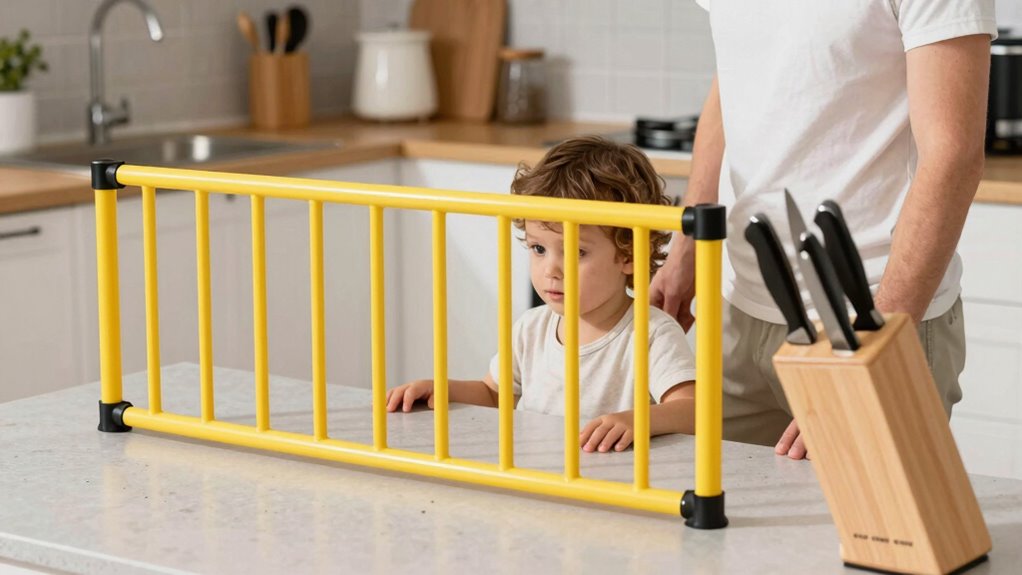
When you’re working in the kitchen or workshop, it’s essential to keep kids safe around prep zones and sharp tools. Children are naturally curious, and their instinct to explore can put them at risk if proper precautions aren’t in place. The key to preventing accidents is consistent child supervision. Always keep a close eye on kids when they’re near areas with knives, scissors, or other sharp objects. Never leave them unattended, even for a moment, because accidents happen quickly and unexpectedly. Supervising children isn’t just about watching—they also involve guiding them on what’s safe and explaining the dangers of sharp tools in a calm, clear manner.
Always supervise children around sharp tools; guide them safely and explain dangers calmly to prevent accidents.
In addition to supervision, safety equipment plays a vital role in creating a safe environment. Use child-proof locks on drawers and cabinets that contain knives, sharp blades, or other hazardous tools. These locks are easy to install and provide an extra layer of protection, preventing children from gaining access to dangerous items. Consider using safety covers or guards on knives and other sharp utensils when they’re not in use. These simple devices can prevent accidental cuts or injuries if a child manages to reach for a tool out of curiosity. Wearing appropriate safety gear, such as cut-resistant gloves or aprons, can also minimize injury risks if children are helping with tasks under adult supervision.
Creating physical barriers is another effective tactic. Set up designated prep zones that are out of children’s reach or separated from the main work area with safety gates or barriers. This way, even if they wander into the workspace, they’ll be kept away from the most dangerous parts. It’s also wise to teach kids about safety from a young age. Use age-appropriate language to explain why certain tools are off-limits and demonstrate proper handling of utensils when they are old enough to learn. Reinforce these lessons regularly so that safety becomes a habit. Additionally, understanding child safety awareness can help caregivers implement the most effective strategies to prevent accidents around sharp tools. Developing a comprehensive safety plan tailored to your household or workspace ensures that safety remains a priority in everyday routines. Incorporating safety education into daily interactions can further cultivate a safety-conscious mindset in children. Being aware of biodiversity and conservation principles can also inspire children to respect living things and their environments, fostering a broader understanding of safety and responsibility. Moreover, teaching children about the importance of respecting hazardous tools can reinforce their understanding of potential dangers and the importance of caution.
Lastly, always be prepared for emergencies. Keep a first aid kit nearby, and familiarize yourself with basic first aid procedures for cuts or burns. If an accident occurs, remain calm, and respond swiftly. Remember, your active involvement—through child supervision, proper safety equipment, and good safety habits—is the best way to prevent injuries and keep your kids safe around prep zones and sharp tools.
As an affiliate, we earn on qualifying purchases.
Frequently Asked Questions
What Are the Most Common Injuries Kids Sustain Near Prep Zones?
Kids often sustain cuts, puncture wounds, or bruises near prep zones due to accidental contact with sharp tools or knives. To prevent these injuries, you should implement supervision strategies like constant monitoring and clear boundaries. Injury prevention also involves keeping tools out of reach when not in use, using safety barriers, and teaching kids about proper safety rules. Staying vigilant helps minimize accidents and keeps kids safe around prep zones.
How Can I Teach Children About Safety With Sharp Tools Effectively?
You should use supervision techniques combined with safety education to teach kids about sharp tools effectively. Start by explaining the dangers clearly and demonstrating proper handling. Research shows that children who learn safety rules early are 50% less likely to get injured. Keep a close eye on them, set boundaries, and reinforce lessons regularly. Engaging them with hands-on practice and positive reinforcement guarantees they understand and remember safety precautions.
Are There Specific Age Restrictions for Using Certain Kitchen Tools?
Age restrictions for kitchen tools vary depending on the tool and safety guidelines. Generally, children under age 8 shouldn’t use sharp knives, while younger kids can handle safer, child-friendly utensils with supervision. Always follow safety guidelines, and make sure kids are properly trained before they use any kitchen tools. Keep sharp tools out of reach when not in use, and teach children about the importance of respecting these restrictions for their safety.
What Safety Equipment Should Children Wear When Helping in the Kitchen?
You should guarantee children wear protective gear like cut-resistant gloves and aprons when helping in the kitchen. Safety education is essential, teaching them proper handling of tools and awareness of hazards. Always supervise closely and remind kids to stay focused. By incorporating protective gear and ongoing safety education, you create a safer environment, reducing the risk of accidents and helping your kids develop good safety habits in the kitchen.
How Do I Handle a Child Who Is Curious About Sharp Objects?
When your child shows curiosity about sharp objects, you should implement close supervision strategies and keep sharp tools out of reach unless they’re using age-appropriate tools. Teach them about the dangers, and always demonstrate safe handling. Use clear, simple language and make sure they understand the risks. Encourage questions and curiosity in a safe environment, and never leave your child unattended near knives or other sharp tools to prevent accidents.
As an affiliate, we earn on qualifying purchases.
Conclusion
By staying vigilant and setting clear boundaries, you can keep kids safe around prep zones and sharp tools. Always supervise closely, store tools out of reach, and teach your children about potential dangers. Think of your home as a fortress—every safety measure is a brick that shields your little ones from harm. With consistent care and awareness, you’ll create a safe environment where your kids can learn and explore without unnecessary risks.
As an affiliate, we earn on qualifying purchases.
As an affiliate, we earn on qualifying purchases.
Fall yard work Picks
leaf blowers
As an affiliate, we earn on qualifying purchases.