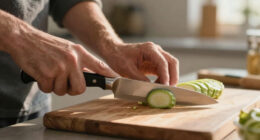
To pass a knife safely, wait until your partner signals they’re ready and pay attention to their cues. Hold the handle firmly with a steady, controlled motion, keeping the blade pointed away from both of you. Make eye contact and communicate clearly, using simple words or signals. If they’re not ready, place the knife down carefully and wait. Staying attentive and practicing these steps helps guarantee safe sharing—keep going to learn even more effective techniques.
Key Takeaways
- Ensure the recipient is ready and paying attention before passing the knife.
- Hold the knife securely with the blade facing downward and away from both parties.
- Make eye contact and use verbal cues to confirm the recipient’s readiness to receive the knife.
- Pass the handle first with a controlled, steady motion, keeping the blade pointed away.
- Place the knife safely on the work surface if not immediately received, with the blade down and handle visible.
imarku Chef Knife 7 Inch Kitchen Knife Ultra Sharp Santoku Knife - High Carbon Japanese Chefs Knife, Kitchen Gadgets 2025, Apartment Essentials, Birthday Gifts for Him Her, Best Gifts for Women Men
Professional Santoku Knife: This imarku super sharp santoku knife is made of high carbon stainless steel that resists...
As an affiliate, we earn on qualifying purchases.
Choose the Right Moment to Pass the Knife
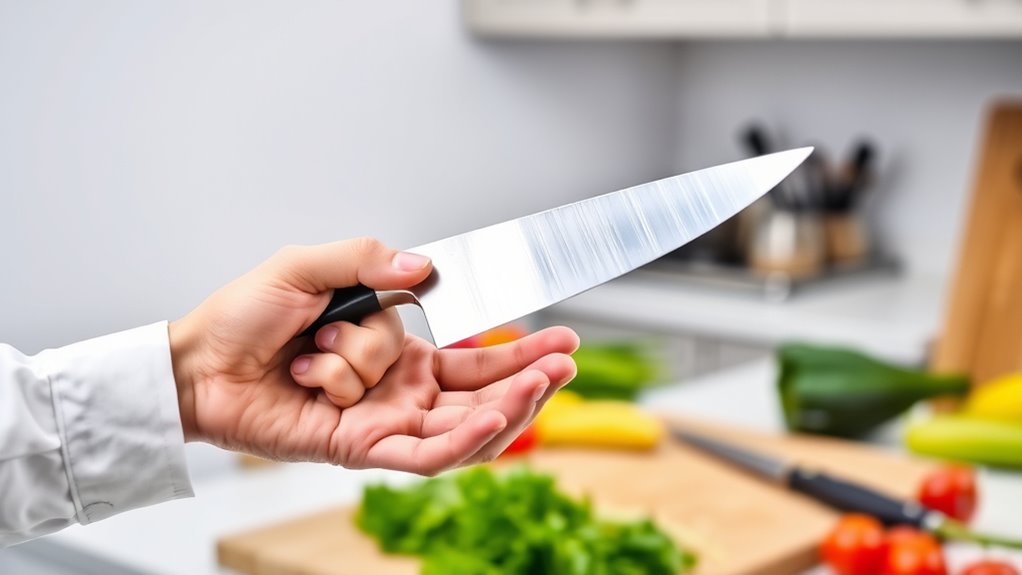
Choosing the right moment to pass a knife is essential for safety in the kitchen. Your timing awareness plays a pivotal role in preventing accidents. Wait until the person you’re passing the knife to is ready and paying attention, avoiding rushed or distracted moments. Follow proper passing etiquette by making eye contact and ensuring your hands are clear of the blade. Don’t rush the transfer; instead, wait until they signal they’re prepared to receive it. Clear communication helps both of you stay safe. If the person is focused on a task, pause briefly until they are free to accept the knife safely. Remember, patience and attentiveness are key to passing knives securely and avoiding potential injuries. Additionally, understanding the importance of proper handling techniques can further reduce the risk of accidents. Practicing knife safety protocols reinforces safe practices and minimizes hazards during meal preparation.
imarku Japanese Chef Knife - Sharp Kitchen Knife 8 Inch Chef's Knives HC Steel Paring Knife, Unique Gifts for Men and Women, Gifts for Mom or Dad, Kitchen Gadgets with Gift Box, Gyutou Knives
High-Carbon Stainless Steel Blade: It is manufactured from high-quality stainless steel that maintains its functionality for a long...
As an affiliate, we earn on qualifying purchases.
Use the Correct Hand Signal When Passing a Knife
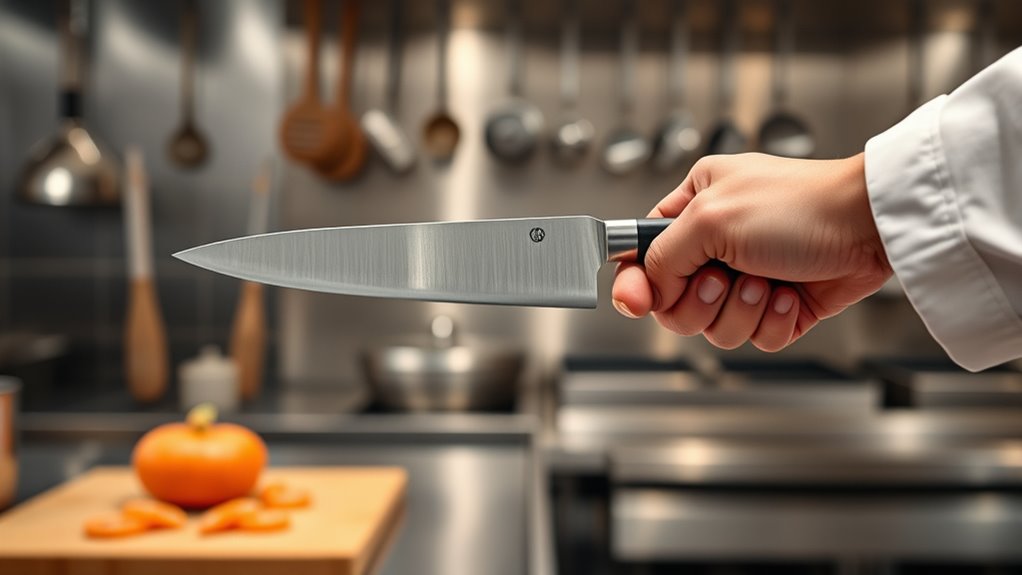
Using the correct hand signal when passing a knife helps guarantee both safety and clear communication. Always approach with your passing stance stable and confident. When handing over the knife, hold it with a secure knife grip, typically by the handle, ensuring the blade faces downward and away from your body. Extend your arm with a steady, controlled motion, keeping the knife low and level. Make eye contact with the recipient to confirm they’re ready, then present the handle clearly. Avoid quick or careless movements, as these can cause accidents. By maintaining a consistent passing stance and a firm knife grip, you minimize the risk of slips or miscommunication, ensuring everyone stays safe during food prep.

HOSHANHO Kitchen Knife in Japanese High Carbon Steel, Professional High-Class Chef's Knife 8 inch, Non-slip Ultra Sharp Cooking Knives with Ergonomic Handle
【High-End Japanese Steel Chef's Knife】 HOSHANHO chef's knife is made of Japanese high carbon steel 10Cr15CoMoV, 2x of...
As an affiliate, we earn on qualifying purchases.
Ensure the Knife Is Properly Held and Controlled
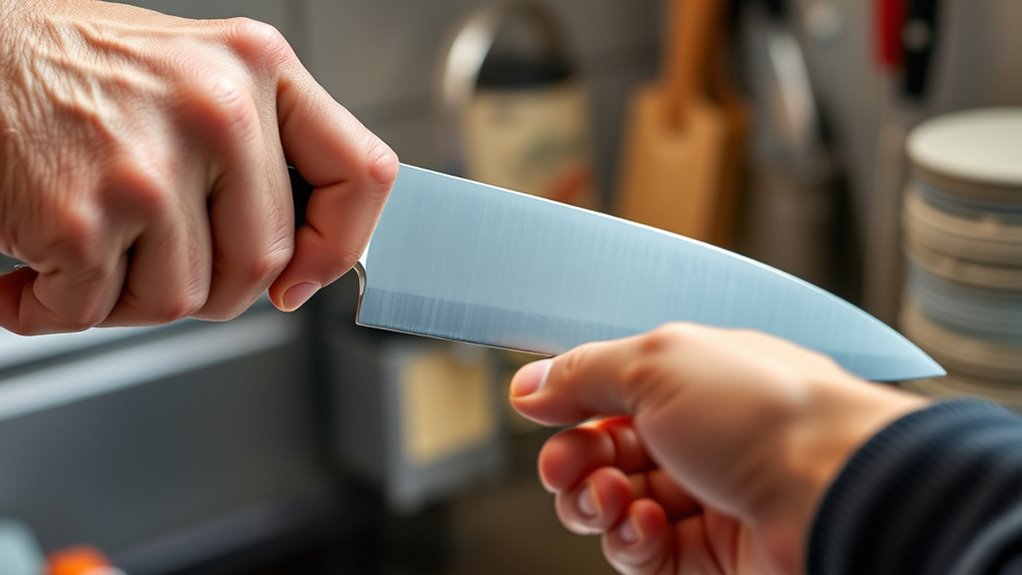
To guarantee safety when passing or handling a knife, you need to hold it properly and keep it under control at all times. Use a proper grip, gripping the handle firmly but comfortably, ensuring your fingers are away from the blade. Maintain controlled motion, moving the knife steadily without sudden jerks or quick movements. This controlled technique helps prevent accidental slips or drops. Keep the blade pointed away from yourself and others, and always be aware of your hand position. When passing the knife, hold it securely with a controlled grip, making sure your partner can grasp it safely. Staying focused and deliberate in your movements minimizes the risk of injury and ensures safe handling during food prep. Additionally, being aware of proper knife handling techniques can further reduce the risk of accidents. Practicing safe handling practices, especially in busy kitchen environments, is essential for preventing injuries. Incorporating safety protocols such as using cut-resistant gloves can provide extra protection during knife work.

Japanese Chef Knife, 8 Inch Damascus Kitchen Knife with VG10 Steel, Handcrafted Sharp Knife with Ergonomic Handle, Cooking Knives for Home Chefs, Cooking Gifts for Men and Women
【Premium Damascus Chef Knife with VG-10 Steel Core】Our Japanese knives feature a VG-10 steel core (60 HRC) for...
As an affiliate, we earn on qualifying purchases.
Communicate Clearly With Your Kitchen Partner
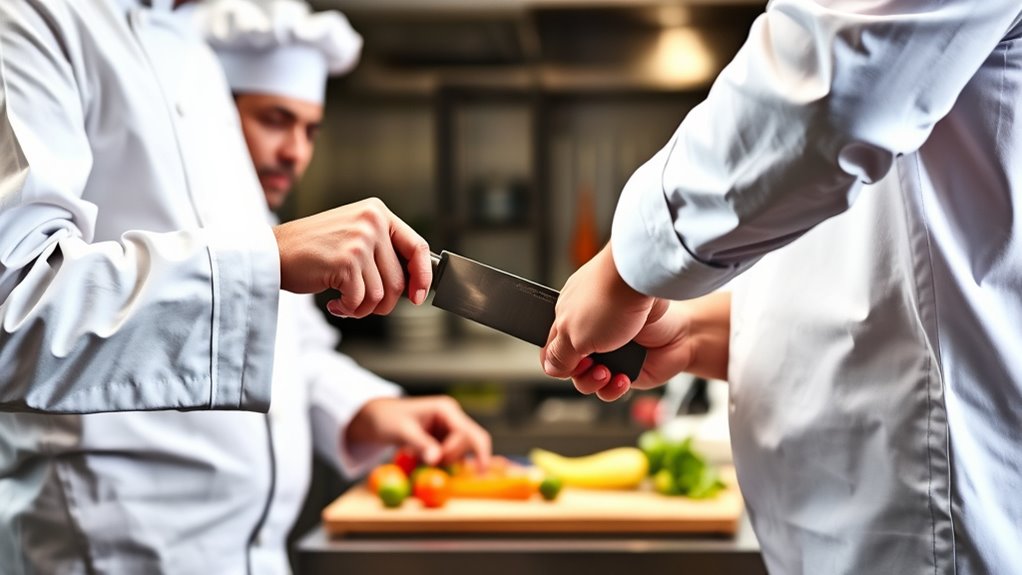
Clear communication is essential when passing a knife to your kitchen partner. Use simple verbal cues to indicate your intentions, and establish hand signals for added safety. This helps prevent accidents and keeps both of you focused on safe handling. Additionally, maintaining awareness of your surroundings and equipment can further enhance safety during these exchanges. Being familiar with home cleaning appliances and their proper use can also promote a safer kitchen environment. Understanding modern kitchen technology can improve overall safety and efficiency in your cooking routine. Recognizing how performance upgrades influence your tools and environment can also help you adapt your safety practices accordingly. Paying attention to safe handling techniques is crucial for preventing injuries during knife exchanges.
Clear Verbal Cues
Effective communication is essential when passing a knife in the kitchen. Use clear verbal cues to guarantee your partner understands your intentions. Before passing, confirm your partner’s knife grip and position, so everyone is on the same page. Say explicitly, “I’m passing the knife now,” rather than relying on vague gestures. Maintain eye contact and speak in a steady, calm voice to reinforce the passing etiquette. Avoid rushing or dropping hints, as miscommunication can lead to accidents. Clear verbal cues help prevent surprises, ensuring both of you are ready for the transfer. Remember, concise and direct language fosters safety and trust. When you communicate clearly, you create a safer environment and make passing a knife a smooth, controlled process. Additionally, incorporating smart kitchen technology, such as voice-activated assistants, can aid in enhancing communication and safety during meal prep. Being aware of kitchen safety protocols further supports accident prevention and promotes a secure cooking environment. Understanding proper knife handling techniques can also reduce the risk of mishaps and increase confidence during kitchen tasks. Practicing these communication methods promotes a safer kitchen, especially when working with sharp tools. To further enhance safety, consider using protective gear like cut-resistant gloves for added security when handling knives.
Establish Hand Signals
Establishing hand signals with your kitchen partner is a crucial step in ensuring smooth and safe knife passing. Clear signals prevent confusion and reduce accidents. Focus on consistent hand positioning, like raising your hand or forming a specific gesture, to indicate when you’re ready. Use distinct signals for different actions, such as a thumbs-up for “go” or a flat palm for “wait.” Maintaining proper knife grip and hand positioning is vital; avoid gripping the knife too tightly or slackening your hold unexpectedly. To emphasize the importance, see the table below:
| Signal | Meaning |
|---|---|
| Up hand | Ready to receive or pass |
| Flat hand | Stop or wait |
| Point | Indicate direction |
| Thumbs-up | Confirm safety |
| Palm down | Pause or slow down |
Consistent signals foster communication and safety in your kitchen. Additionally, understanding knife safety techniques can further prevent accidents while passing or handling knives. Being aware of proper cutting practices also helps in maintaining a safe and efficient workspace. Incorporating auditory cues like verbal commands can complement visual signals and enhance communication, especially in noisy environments. Recognizing the significance of effective communication in kitchen safety underscores the importance of these practices.
Keep the Blade Pointed Away From Both People
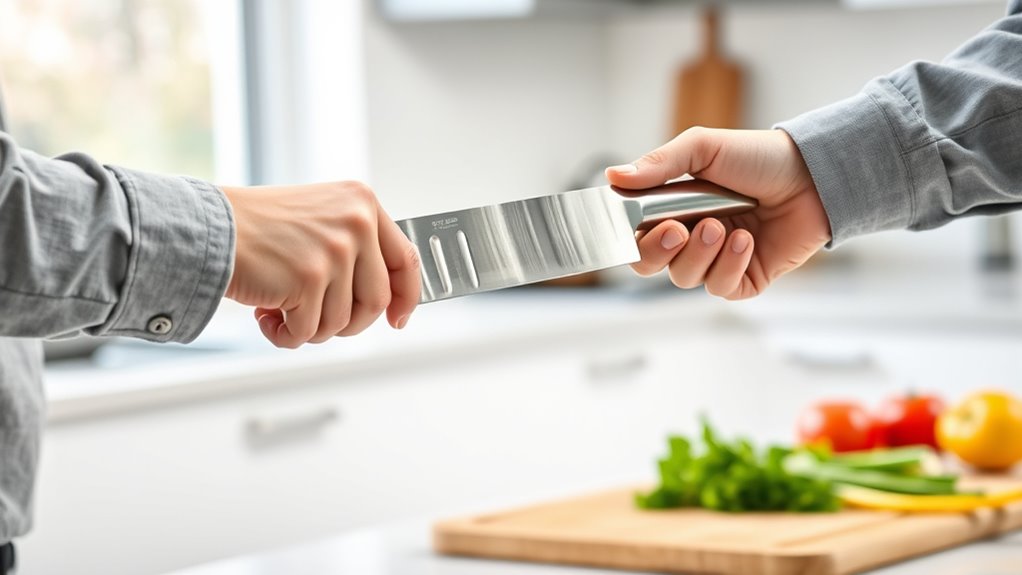
To prevent accidents, always keep the blade pointed away from yourself and others when passing a knife. Proper blade orientation is vital for safety awareness. Hold the knife firmly by the handle, ensuring the sharp edge faces downward or away from anyone nearby. This minimizes the risk of accidental cuts if the knife slips. When passing the knife, communicate clearly and move smoothly to avoid sudden shifts that could change the blade’s direction. Keep your focus on maintaining control and awareness of your surroundings. Remember, always treat the blade as if it’s sharp and dangerous, regardless of its appearance. By consistently keeping the blade pointed away from both people, you create a safer environment in the kitchen for everyone involved. Additionally, understanding knife handling techniques can further reduce the risk of accidents and promote safe practices. Practicing proper safety protocols can help reinforce these habits and prevent potential injuries. Being aware of safe passing methods ensures everyone in the kitchen stays protected during food prep. Incorporating proper grip and stance can also improve control and safety during knife use.
Use a Firm Grip and Steady Movements

Gripping the knife firmly and moving smoothly help prevent slips and accidents during passing or cutting. A firm grip ensures you maintain control, reducing the risk of the knife slipping from your hand. Keep your hand steady and avoid sudden jerks or quick motions that could cause mishaps. Use steady movements when passing the knife, making your actions predictable and controlled. This not only keeps you safe but also reassures the person receiving the knife. Focus on maintaining a consistent, secure hold, and move deliberately without rushing. When you handle the knife with a firm grip and steady movements, you create a safer environment for everyone in the kitchen, minimizing the chances of accidental cuts or drops.
Wait for the Receiver to Confirm They Are Ready
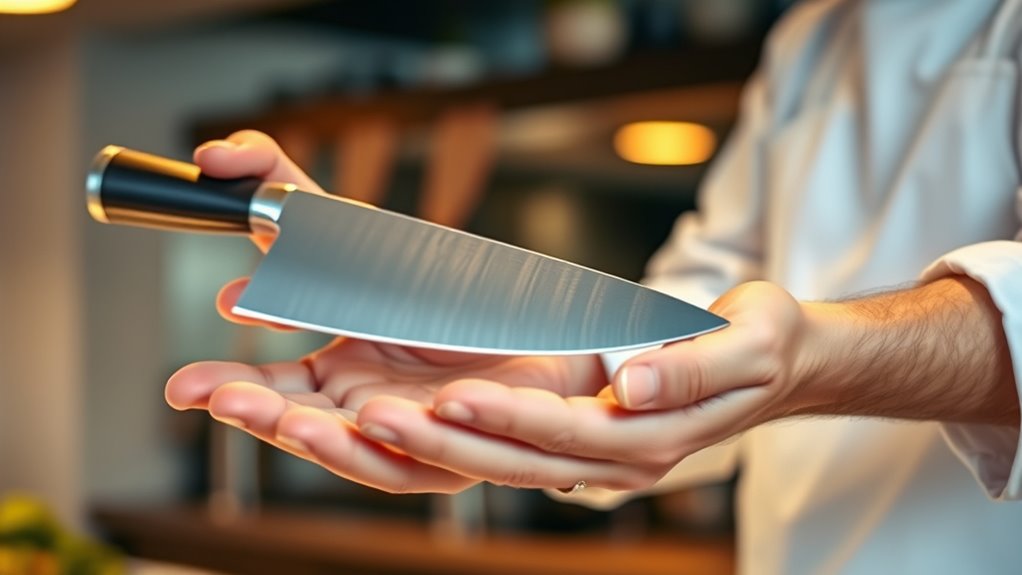
Before passing the knife, make eye contact and make sure the other person notices you. Clearly say “Ready” to confirm they’re prepared to receive the blade. Waiting for this confirmation helps prevent accidents and keeps everyone safe.
Make Eye Contact
Making eye contact with the person receiving the knife is a simple yet essential step to guarantee safety. This ensures clear communication and confirms they’re ready to accept the knife, respecting proper knife etiquette. To do this effectively:
- Look directly at the receiver to catch their attention.
- Wait for their eye contact to acknowledge they understand.
- Observe their body language to gauge if they’re prepared.
- Be patient and avoid rushing; safety comes first.
- Be aware of body language cues that indicate readiness or hesitation, helping to prevent accidents.
- Remember, user consent management is important when handling sensitive information, and applying this principle here involves ensuring both parties are comfortable with the exchange.
- Incorporating safe handling practices can further reduce risks during the passing process.
This small gesture promotes kitchen safety by preventing misunderstandings or accidental drops. It also shows respect for proper knife etiquette, emphasizing mutual awareness. Remember, a quick, confident eye contact signals it’s safe to proceed, making the passing process smooth and secure for everyone involved.
Say “Ready” Clearly
How can you guarantee the receiver is truly prepared to accept the knife? Clear safety communication is essential. Before passing the knife, look them in the eyes and say “Ready” loudly and confidently. This simple step confirms they understand you’re about to hand over the knife and are prepared for proper knife handling. Wait for their response—if they say “Ready,” you know they’re prepared to receive it safely. Never assume readiness; verbal confirmation minimizes accidents. This practice reduces confusion and ensures both of you are on the same page. By clearly stating “Ready,” you help maintain safe knife handling procedures, preventing slips or mishandling. Good safety communication is key to passing a knife safely and responsibly in any kitchen setting.
Place the Knife Down Safely if Not Receiving It Immediately
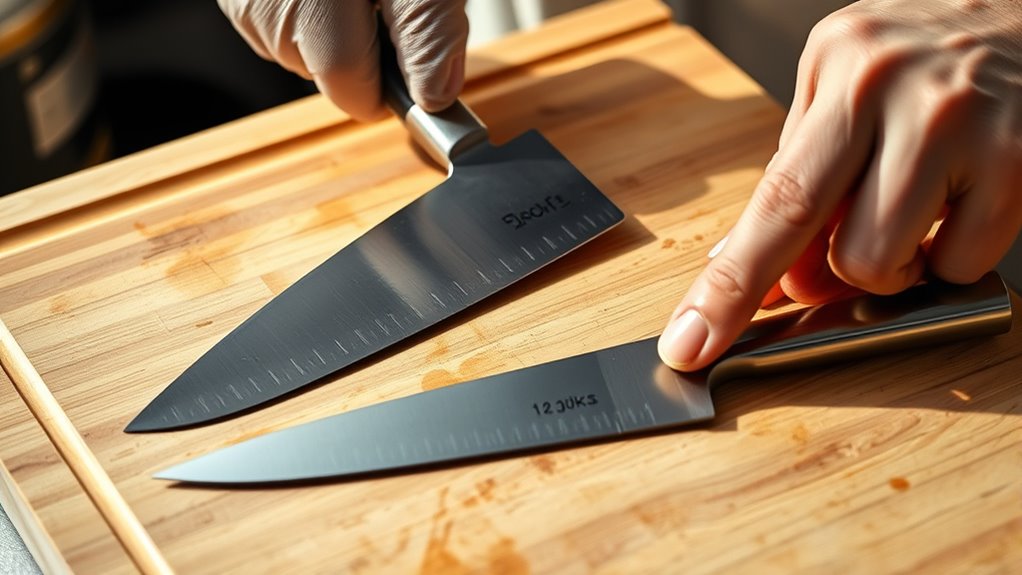
If you’re not receiving a knife immediately, it’s important to place it down carefully rather than leaving it in a precarious position. Proper knife placement guarantees safety for everyone nearby. Choose a spot within the safety zones—areas away from the edges and where it won’t be accidentally knocked or grabbed. To do this safely:
- Set the knife flat on the work surface, blade down.
- Ensure the handle is visible and accessible.
- Keep it away from your cutting area to avoid accidental cuts.
- Place it in a designated safety zone, away from other utensils or clutter.
This prevents accidental slips or injuries and keeps the workspace organized. Always prioritize safe knife placement when you’re not actively using or passing the knife to someone else.
Practice Safe Passing Techniques Regularly
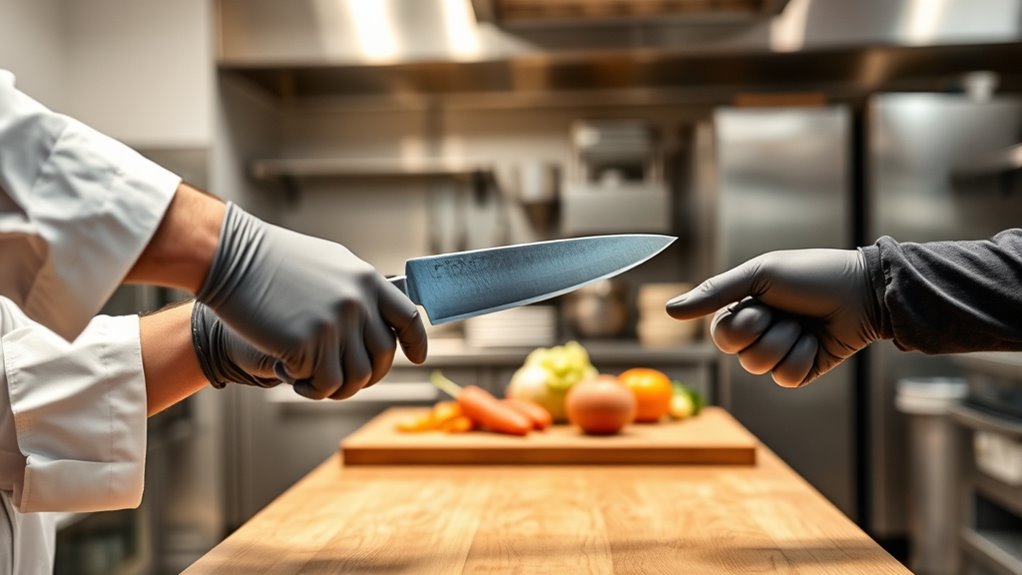
Practicing safe passing techniques regularly helps prevent accidents and keeps your kitchen environment secure. By consistently honing your passing techniques, you reinforce good knife safety habits that reduce the risk of cuts or injuries. Always communicate clearly with others when passing a knife, using a firm grip and a controlled motion. Make sure to pass the knife handle first, keeping the blade away from both yourself and your partner. Regularly reviewing and practicing these techniques ensures everyone in the kitchen understands and follows proper knife safety. Developing this habit minimizes surprises and helps maintain a safe workspace. Remember, the key to safe passing lies in consistency—by practicing these techniques often, you create a safer, more efficient cooking environment for everyone.
Frequently Asked Questions
What Should I Do if the Other Person Isn’T Looking When I Pass the Knife?
If the other person isn’t looking when you pass the knife, use visual cues like clearly holding the handle and maintaining eye contact if possible. Always combine this with verbal communication, saying “knife coming through” or “here’s the knife” to alert them. Keep your movements slow and steady, ensuring they’re aware of the knife’s movement. This combination helps prevent accidents and keeps everyone safe.
How Do I Handle Passing a Very Sharp or Heavy Knife Safely?
When passing a very sharp or heavy knife, you should grip the handle firmly with a secure knife grip, keeping your hand clear of the blade. Use proper hand positioning by offering the handle with the blade pointed downward and your palm open. Always guarantee the recipient is ready before passing, and avoid rushing. This minimizes risk, giving both of you control and safety during the transfer.
Is It Necessary to Wear Protective Gloves When Passing Knives?
You don’t need protective gloves when passing knives if you use proper knife grip techniques and handle them carefully. Gloves can sometimes diminish your dexterity, making it harder to control the knife. Instead, focus on maintaining a firm grip, passing the knife with the blade down, and communicating clearly with others. These practices help prevent accidents and ensure safety without the need for protective gloves.
How Can I Teach Children or Beginners to Pass Knives Safely?
Imagine guiding a young apprentice along a tightrope, steady and confident. You teach children or beginners to pass knives by emphasizing a firm yet gentle knife grip and proper hand positioning. Show them how to hold the knife by the handle, keeping fingers clear of the blade, and always communicate clearly when passing. Practice slowly, reinforcing safe habits, and encourage them to stay focused to prevent accidents.
What Are Common Mistakes to Avoid When Passing a Knife?
When passing a knife, don’t forget to maintain a proper grip on the handle and make sure your hand is steady. Avoid rushing or giving unclear signals—clear communication is key. Don’t pass the knife with the blade pointed toward yourself or others, and never hold it loosely. Instead, keep the knife secure and communicate your intentions clearly, so your partner knows exactly when and how to take it safely.
Conclusion
So, next time you’re in the kitchen, remember: passing a knife isn’t a high-stakes game—unless you’re aiming for a trip to the ER. Master these simple steps, stay alert, and avoid turning your cooking chaos into a hospital visit. Because nothing says “I love you” like safely handing over a sharp blade—and maybe, just maybe, keeping all your fingers intact. Happy, injury-free cooking!