Start by washing and peeling produce to prevent cross-contamination, then chop or slice ingredients after cleaning. Organize ingredients based on their cooking order, such as chopping vegetables last for salads or at the beginning for stir-fries. Keep your main knife sharp and handle it safely, cutting away from your body and avoiding multitasking with other tools. Maintaining an organized, tidy workspace helps prevent accidents. If you keep these steps in mind, you’ll increase efficiency and safety—discover more tips ahead.

Get kitchen gear delivered free — and shop member deals
- Fast, free delivery on millions of items
- Access to Prime Big Deal Days deals on October 6–7
- Prime Video, Amazon Music and more included
Key Takeaways
- Start with washing and peeling produce to prevent cross-contamination and prepare ingredients for chopping.
- Chop or slice ingredients in a logical sequence aligned with the recipe to streamline cooking.
- Keep the knife sharp and clean throughout to ensure safety and efficiency during prep.
- Organize workspace to minimize clutter, making it easier to switch between ingredients smoothly.
- Handle the knife with controlled, deliberate movements, cutting away from the body and storing it safely after use.
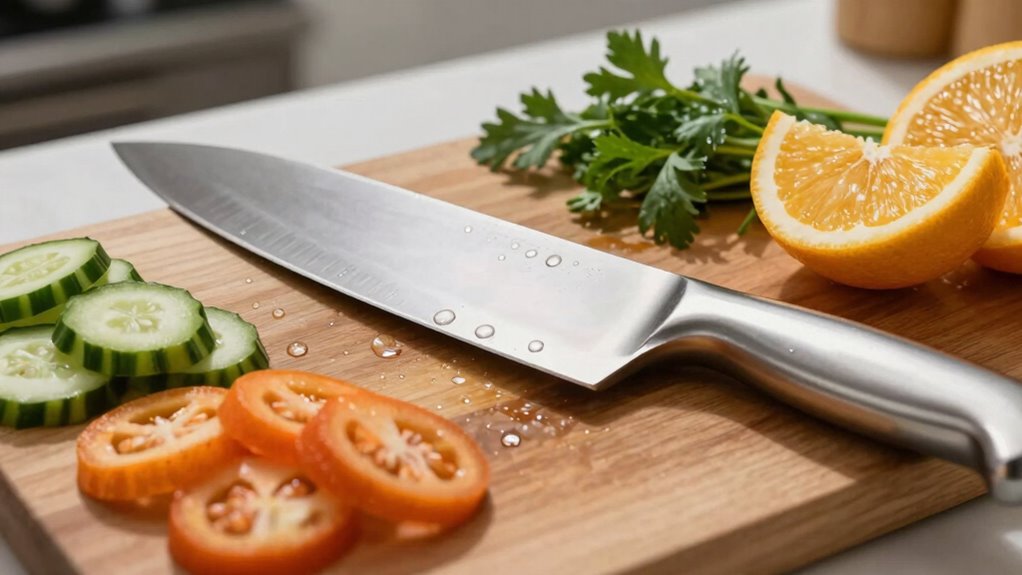
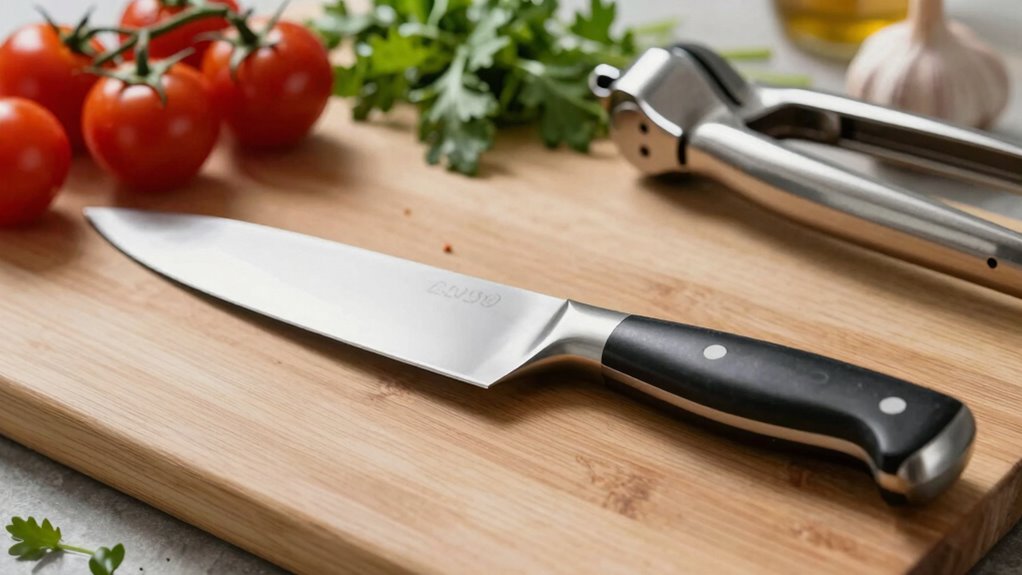
When preparing meals with just one main knife, organizing your tasks efficiently can save you time and effort in the kitchen. This approach helps you avoid unnecessary switching between tools, which can slow you down and increase the risk of accidents. To do this effectively, start by planning your prep order based on the type of ingredients and their preparation needs. For example, wash and peel produce first, then move on to chopping or slicing. This sequence prevents cross-contamination and keeps your workspace cleaner. Remember, keeping your knife sharp is crucial for both efficiency and safety. Regular knife maintenance, like honing and occasional sharpening, ensures you cut smoothly and reduce the risk of slips or injuries. A dull knife requires more force and can easily slip, leading to cuts, so taking care of your main knife should be a priority.
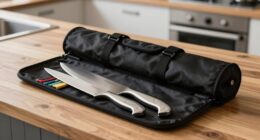
In terms of kitchen safety, always handle your knife with respect. When you’re preparing ingredients, move systematically to avoid clutter and accidental cuts. Clearing away scraps and organizing ingredients as you go not only keeps your workspace tidy but also minimizes hazards. If you need to switch tasks, do so deliberately; don’t rush or use your knife as a pry tool. Remember to always cut away from your body and keep your fingers tucked in, especially when chopping smaller items. When transitioning from prep to cooking, clean your knife thoroughly and store it safely, ideally in a knife block or protective sheath. Proper knife maintenance extends the life of your tool and ensures it performs safely over time. Proper handling techniques are essential for maintaining control and preventing accidents during all stages of prep. Additionally, understanding the importance of knife safety techniques can significantly reduce the risk of mishaps in the kitchen. Using a systematic approach to prep helps keep your workspace organized and your movements intentional, further enhancing safety and efficiency. The order of tasks also depends on how you plan your cooking. For instance, if you’re making a salad, you might start by washing and drying leafy greens, then moving on to slicing vegetables for the toppings. If you’re preparing a stir-fry, chop your ingredients in the order you’ll add them to the pan, which helps streamline your cooking process. Always keep your main knife sharp and clean throughout the process, and avoid multitasking with other sharp objects. Proper task sequencing not only enhances safety but also makes your cooking more organized and efficient. When you follow a logical prep sequence, you reduce unnecessary movements, which enhances your kitchen safety and efficiency. Properly managing your prep tasks with one main knife means you’ll spend less time in the kitchen, with fewer accidents, and produce better results in your cooking.
professional chef knife sharpening kit
As an affiliate, we earn on qualifying purchases.
As an affiliate, we earn on qualifying purchases.
Frequently Asked Questions
How Do I Choose the Right Main Knife for Different Tasks?
To choose the right main knife, consider its ergonomics to guarantee comfortable handling during extended use. Opt for a knife with a balanced weight and a comfortable grip. Also, evaluate material durability; stainless steel blades are resilient and maintain sharpness longer. For tasks like slicing, dicing, or chopping, select a versatile knife that combines ergonomic design with durable materials, making your prep easier and more efficient.
Can I Reuse the Same Knife for All Prep Tasks?
Absolutely, you can reuse the same knife for all prep tasks—if you enjoy risking cross-contamination and poor kitchen ergonomics. But realistically, switching knives keeps your workspace safe and efficient. Proper knife storage prevents dulling and accidents, while a dedicated knife for different tasks minimizes bacteria transfer. So, while one knife might seem convenient, multiple blades are smarter, safer, and kinder to your cutting board (and your sanity).
What Safety Tips Should I Follow When Switching Tasks?
When switching tasks, always follow proper knife handling and safety protocols to prevent accidents. Carefully clean and dry the knife before changing tasks to avoid cross-contamination. Use a cutting board with a non-slip surface, and keep your fingers tucked away from the blade. Pay attention to your surroundings, and never rush. These safety tips help you maintain control, reduce injury risks, and guarantee safe, efficient prep work.
How Do I Maintain the Knife’s Sharpness During Prep?
Think of your knife like a fine dancer—keeping it sharp guarantees smooth, precise movements. To maintain its sharpness, regularly perform knife polishing with a honing steel and avoid cutting on hard surfaces. Store it properly in a knife block or on a magnetic strip to prevent dulling. These simple storage solutions and daily care help preserve your knife’s edge, making every prep task effortless and safe.
Are There Specific Prep Tasks That Require Specialized Knives?
Yes, some prep tasks do require specialized knives. For example, filleting fish benefits from a flexible fillet knife, while precision slicing of herbs is easier with a paring or small utility knife. These knives are designed for unique cutting techniques that a standard chef’s knife can’t handle efficiently. Using the right tool guarantees safety, accuracy, and preserves the quality of your ingredients, making your prep work more efficient and enjoyable.
As an affiliate, we earn on qualifying purchases.
Conclusion
Imagine yourself as the conductor of a well-orchestrated symphony, each prep task harmonizing seamlessly. When you follow the best order with your main knife, your kitchen rhythm flows effortlessly, like a maestro guiding a flawless performance. With every chop and slice in harmony, your meal comes together beautifully—precise, efficient, and satisfying. Trust in this sequence, and you’ll create culinary masterpieces with the grace and confidence of a seasoned conductor directing their orchestra.
As an affiliate, we earn on qualifying purchases.
food prep organization containers
As an affiliate, we earn on qualifying purchases.
As an affiliate, we earn on qualifying purchases.
Fall Picks
fall essentials
As an affiliate, we earn on qualifying purchases.