
TL;DR

Get kitchen gear delivered free with Prime
- Fast, free delivery on millions of items
- Prime Video, Amazon Music and more included
- Member-only deals all year
A Hunker report highlights Meissen Blue Onion, a blue-and-white porcelain pattern that collectors seek and that may sell for hundreds of dollars per piece. Reported prices vary by item, condition and seller; the crossed-swords mark can help distinguish Meissen from the similar Blue Danube pattern.
A Hunker report says Meissen Blue Onion porcelain, a blue-and-white pattern made by the German manufacturer, can sell for hundreds of dollars per piece and may turn up at thrift stores, flea markets or estate sales. The figures cited are retail and online asking prices, not guaranteed sale values, and authentication and condition can affect what a buyer will pay.
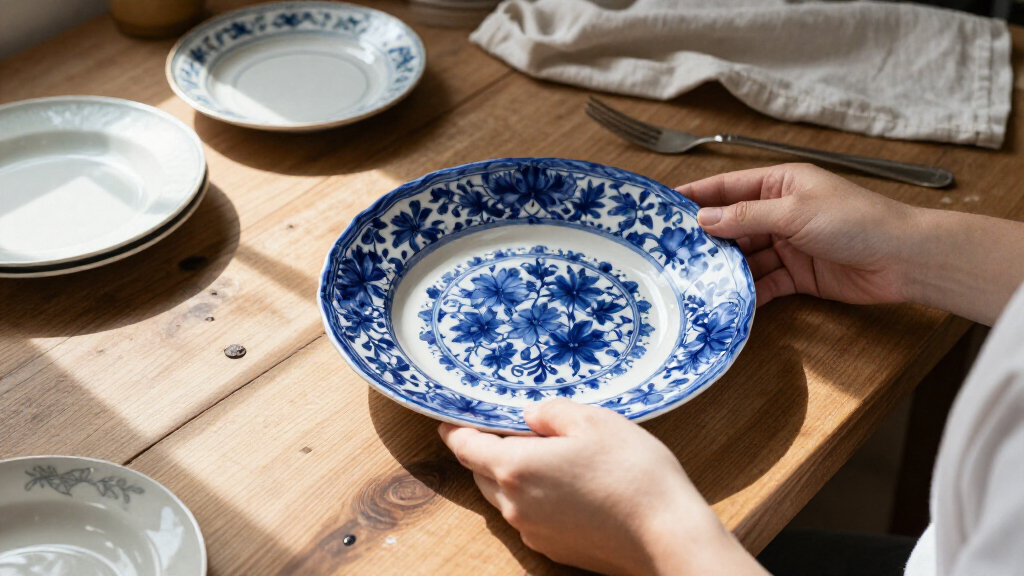
The pattern is distinguished by cobalt-blue decoration on white porcelain. Hunker reports that individual plates can retail for about $200 to $500, while a square bowl was listed by TableArt for $615 at the time of the article. An Etsy listing for a table set for six was priced at nearly $800, and an hors d’oeuvre set on Chairish was estimated to fetch $850. These examples reflect specific listings, not a single established market price.
For identification, the report points to the mark on the underside. Authentic Meissen pieces carry the factory’s crossed-swords mark, while the similar Japanese pattern Blue Danube is marked with its name inside a blue rectangle near the word “Japan.” The designs can look much alike from above, so checking the base is a practical first step before treating a thrift-store find as Meissen.
Hunker says a complete estate-sized collection could approach $3,000 on the replacement market. That is not a promise of resale proceeds: the article notes that age, size, condition, rarity, maker’s marks and whether a set is complete all influence collector interest and price. Meissen still produces Blue Onion porcelain, and the pattern appears on many forms beyond dinner plates, including bowls, gravy boats and candlesticks.
How the Mark Can Change a Find
For shoppers sorting through secondhand china, the difference between a familiar blue-and-white design and a marked Meissen piece can have a meaningful effect on its potential value. The crossed-swords mark gives buyers a concrete detail to check rather than relying only on the pattern’s appearance. It also matters to sellers who want to describe a piece accurately and avoid confusing Meissen with Blue Danube.
But the reported prices should be treated as reference points, not appraisals. A listed asking price or replacement estimate does not establish what a particular item will sell for. Condition and completeness may be especially relevant: a damaged plate or incomplete service may attract a different offer than a well-preserved, coordinated set. The report does not provide verified thrift-store sale examples or final transaction records.
Products Worth Considering

KitchenAid 5.5-Qt Bowl-Lift Stand Mixer, Porcelain White (KSM55SXXX)

KitchenAid 8-Cup Grain and Rice Cooker with Integrated Scale, Porcelain White

Ninja Mega Kitchen System Blender and Food Processor, 1500W, 72-oz Pitcher, 8-Cup Bowl, Black (BL770)
As an affiliate, we earn on qualifying purchases.
A Pattern With Chinese Motifs
Meissen porcelain originated in Saxony in the early 18th century. Hunker’s account credits Johann Friedrich Böttger with developing hard-paste porcelain in Europe, and says Meissen artist Johann Gregor Höroldt later developed blue underglaze decoration influenced by Chinese porcelain. Around 1739, Höroldt created the Blue Onion design by adapting motifs associated with Ming Dynasty-era Chinese ceramics.
The pattern’s name is misleading: the rounded forms often identified as onions are generally believed to depict fruit. Ariel Davis of The Brooklyn Teacup told Hunker that “the famous ‘onions’ aren’t onions at all,” adding that historians believe the original forms were pomegranates and peaches, symbols associated in Chinese culture with prosperity, fertility and longevity. Blue Onion is part of a broader tradition of blue-and-white china, but its Meissen origin and maker’s mark are central to identifying it.
““The famous ‘onions’ aren’t onions at all.””
— Ariel Davis of The Brooklyn Teacup, as quoted by Hunker
Prices Depend on Each Piece
The supplied report does not establish a standard price for Blue Onion porcelain or confirm that the cited listings sold at their asking or estimated prices. The amounts are tied to particular items and marketplaces, and the article does not give transaction dates or sale records for each example. Its estimate of nearly $3,000 for a complete estate-sized set is specifically described as replacement-market value, which may differ from what a seller receives.
It is also unclear how often authentic Meissen pieces appear in thrift stores or how frequently shoppers identify them correctly. A crossed-swords mark can help with identification, but the report does not provide a full authentication process or explain how to assess every mark, date or condition issue. Buyers considering a costly purchase may want an independent specialist’s assessment rather than relying on pattern recognition alone.
Check Marks Before Pricing
For a possible find, the next practical step is to inspect the underside for the Meissen crossed swords or the Blue Danube label, then document the item’s condition and any chips, cracks or repairs. Compare like-for-like pieces rather than using a single online listing as a valuation. For a larger collection, record how many matching pieces are present and whether the service is complete.
Any final price will depend on the item and the buyer. The Hunker report offers examples and identification guidance, but it does not announce a new appraisal standard or guarantee future returns. Collectors and sellers will need to rely on current comparable sales and, where appropriate, expert authentication to establish what a particular piece is worth.
Key Questions
What is Meissen Blue Onion porcelain?
It is a blue-and-white porcelain pattern associated with the German Meissen manufacturer. Hunker dates its design to around 1739 and says it adapted motifs influenced by Chinese ceramics.
How can I distinguish Meissen Blue Onion from Blue Danube?
Check the underside. According to Hunker, authentic Meissen pieces carry a crossed-swords mark; Blue Danube pieces are labeled in a blue rectangle near the word “Japan.”
How much can a Blue Onion plate be worth?
Hunker reports retail prices of roughly $200 to $500 for single plates. That range is not a guaranteed sale price; condition, size, age, rarity and buyer demand can affect an individual piece’s value.
Does a complete set sell for more?
A complete set may attract collector interest, and Hunker cites an estimate approaching $3,000 on the replacement market for an estate-sized collection. Replacement value is not necessarily the amount a seller would receive.
Are the rounded shapes in the pattern onions?
Not necessarily. Ariel Davis of The Brooklyn Teacup told Hunker that historians generally identify the forms as pomegranates and peaches, rather than onions.
Source: hunker.com