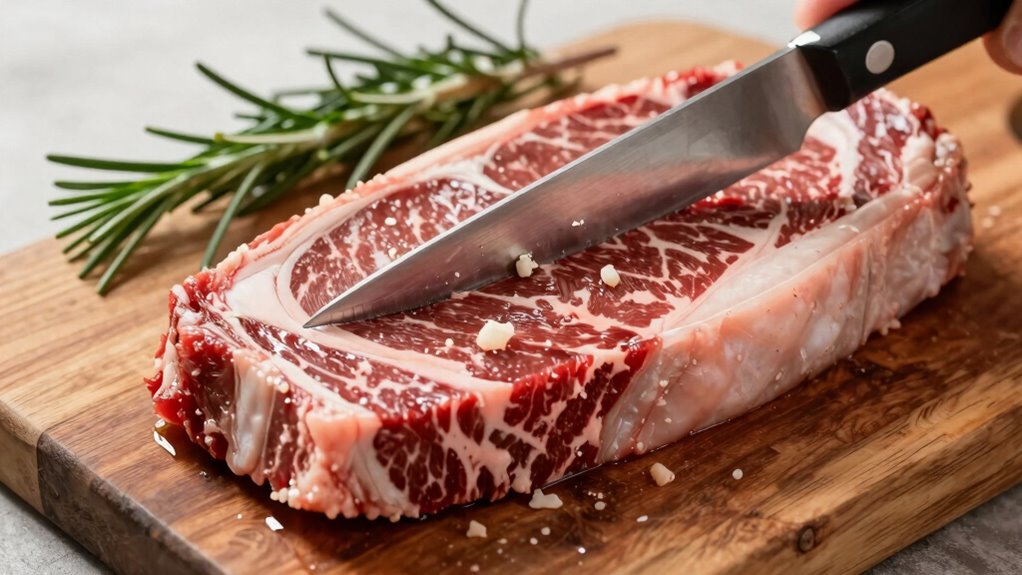
To trim fat without wasting good meat, start by recognizing natural fat lines and making precise cuts with a sharp knife. Remove large chunks of fat while leaving a thin layer for flavor and moisture. Use small trims first, then cook to assess if more trimming is needed. Season well to enhance flavor and mask minor imperfections. Remember, proper technique reduces waste and keeps your meat tender and tasty—if you want to master this skill, you’ll find more helpful tips ahead.

Get kitchen gear delivered free — and shop member deals
- Fast, free delivery on millions of items
- Access to Prime Big Deal Days deals on October 6–7
- Prime Video, Amazon Music and more included
Key Takeaways
- Identify natural fat lines and trim only larger chunks, leaving a thin layer for flavor.
- Use sharp knives and precise cuts to remove fat efficiently without cutting into the meat.
- Start with small trims, cook, then assess to refine your trimming technique.
- Balance fat removal to prevent greasiness while maintaining moisture and flavor.
- Season or marinate meat to enhance flavor and compensate for minor fat reduction.
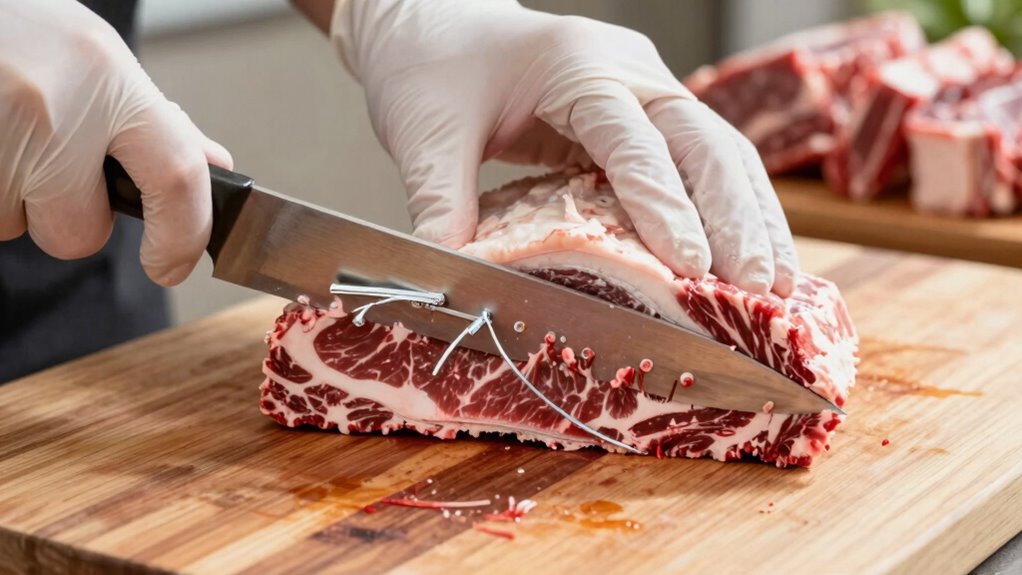
Trimming fat from meat is essential for healthier eating and better flavor, but it’s easy to end up wasting good meat in the process. The key is to remove only the excess fat while preserving the lean portions, ensuring you don’t sacrifice taste or texture. When approaching this task, your seasoning techniques can make a big difference. Instead of relying solely on salt and pepper, consider marinating or applying dry rubs that complement the meat’s natural flavors. Seasoning techniques can help mask minor imperfections in the meat and enhance its overall taste, even if you trim a bit more fat than usual. Additionally, understanding the natural fat lines in meat can help you make more precise cuts and minimize waste. Your choice of cooking methods also plays a vital role in how much fat you can trim without losing quality. For example, slow-cooking or braising can render out fat while tenderizing tougher cuts, so you don’t need to remove every bit beforehand. Grilling or broiling allows excess fat to melt away and drip off, which makes trimming less critical before cooking. Conversely, pan-frying or sautéing might require more careful trimming because the fat remains in contact with the meat, affecting the final flavor and healthiness. Adjust your technique based on the cut and your health goals, but always aim to trim just enough to prevent overly greasy results.
Incorporating proper knife skills can significantly improve your precision and efficiency when trimming fat, helping you avoid waste and achieve the desired results. To practice precise trimming, start by using a sharp knife and a clean cutting surface. Hold the meat steady and carefully cut along the natural fat lines, removing larger chunks but leaving a thin layer of fat that adds flavor during cooking. Remember, some fat is beneficial—it keeps the meat moist and enhances taste, especially if you’re using appropriate cooking methods. If you’re unsure, trim a small portion first, then cook it to see how it turns out. This approach helps you refine your technique without sacrificing too much meat.
Always keep in mind that the way you season and cook the meat influences how much fat you need to trim beforehand. Proper seasoning techniques can compensate for slight differences in fat content, and choosing the right cooking method allows you to manage fat content naturally. The goal isn’t to eliminate all fat but to balance health considerations with flavor. With practice, you’ll develop a keen eye for trimming just enough, ensuring you enjoy lean, flavorful meat without waste.
sharp boning knife for meat trimming
As an affiliate, we earn on qualifying purchases.
As an affiliate, we earn on qualifying purchases.
Frequently Asked Questions
What Tools Are Best for Trimming Fat Efficiently?
You should use a sharp, flexible boning or paring knife for trimming fat efficiently. These tools give you control, allowing you to follow meat marbling closely without wasting good meat. Proper cooking techniques, like gentle trimming, help preserve flavor and tenderness. Keep your tools sharp and work slowly to remove excess fat while maintaining the meat’s quality, ensuring a tasty, well-trimmed cut every time.
How Do I Identify the Most Flavorful Fat to Keep?
Like a seasoned chef in a bustling kitchen, you identify the most flavorful fat by focusing on fat varieties like marbled fat and fat caps, which offer rich flavor extraction. Look for fats that are creamy, white, or slightly yellow, indicating good quality. Avoid overly firm or dry fats. Keep the fat that’s tender and well-marbled, as it will enhance your dish’s taste without wasting good meat.
Can Trimming Fat Affect the Meat’s Seasoning?
Trimming fat can impact flavor retention, but you can still keep your meat tasty by being selective. Removing excess fat reduces health concerns and helps avoid greasiness, yet leave some to preserve juiciness and flavor. Focus on trimming only the tough, less flavorful fat, while keeping the good marbling. This way, you maintain the meat’s richness and taste, balancing health considerations without sacrificing essential flavor.
How Should I Store Trimmed Fat for Later Use?
You should store trimmed fat in an airtight container or resealable plastic bag to keep it fresh. For longer storage, consider freezing it, which preserves flavor and quality. Use storage containers that are freezer-safe to avoid leaks or odors. Label the container with the date to track freshness. Proper storage guarantees you can later incorporate the fat into cooking techniques like sautéing or roasting, enhancing flavor without waste.
Is It Safe to Eat the Fat I Trim Off?
Think of the fat you trim as a hidden treasure, but safety’s key. It’s generally safe to eat if it’s fresh and handled properly, but cooking methods matter—render it down to eliminate bacteria or use it as a fat substitute in recipes. Avoid eating old or spoiled fat, as it can pose health risks. When in doubt, trust your senses and store trimmed fat properly for safe use later.
As an affiliate, we earn on qualifying purchases.
Conclusion
Trimming fat without wasting good meat is all about balance and technique. Remember, nearly 30% of beef is fat, so knowing how to remove only the excess helps you save money and enjoy healthier meals. By using a sharp knife and following proper trimming methods, you guarantee you keep the flavorful parts while discarding the unwanted fat. With practice, you’ll become more efficient, making every cut count and maximizing your meat’s quality without unnecessary waste.
As an affiliate, we earn on qualifying purchases.
As an affiliate, we earn on qualifying purchases.
Halloween Picks
halloween
As an affiliate, we earn on qualifying purchases.