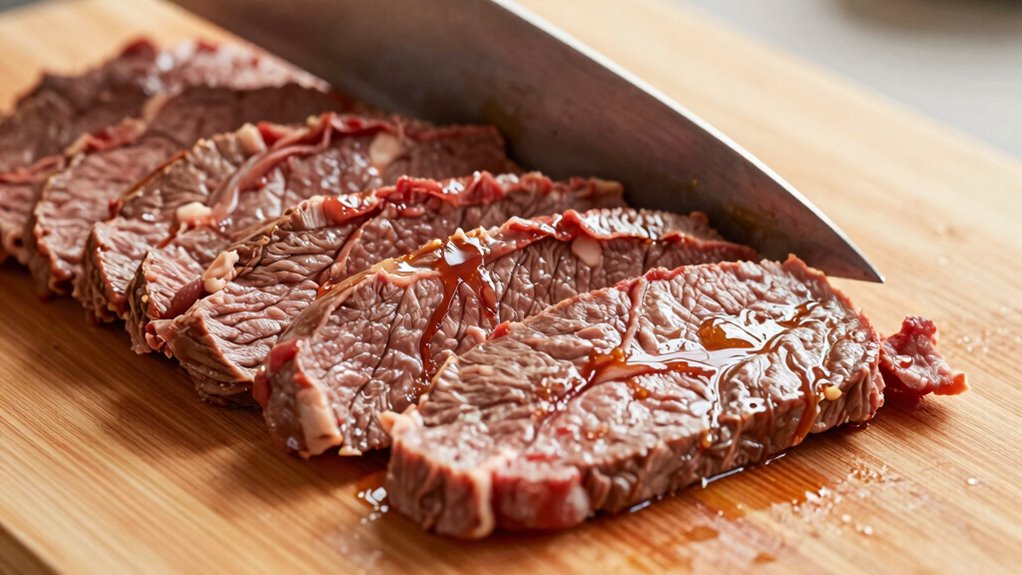

To slice proteins thin for stir-fry, start by partially freezing the meat for about 30 minutes to firm it up. Use a sharp, flexible knife and work on a stable surface for better control. Slice against the grain in steady, even strokes, applying consistent pressure to guarantee uniform thickness. Proper technique and tools make all the difference, and if you keep going, you’ll learn additional tips for perfect slices every time.

Get kitchen gear delivered free — and shop member deals
- Fast, free delivery on millions of items
- Access to Prime Big Deal Days deals on October 6–7
- Prime Video, Amazon Music and more included
Key Takeaways
- Partially freeze the meat for about 30 minutes to firm it up before slicing.
- Use a sharp, high-quality knife with a flexible blade for precise, thin cuts.
- Slice against the grain and with even, steady pressure for uniform thickness.
- Maintain a controlled, steady slicing rhythm to ensure consistent thin slices.
- Marinate the meat beforehand to enhance flavor and tenderness, making slicing easier.
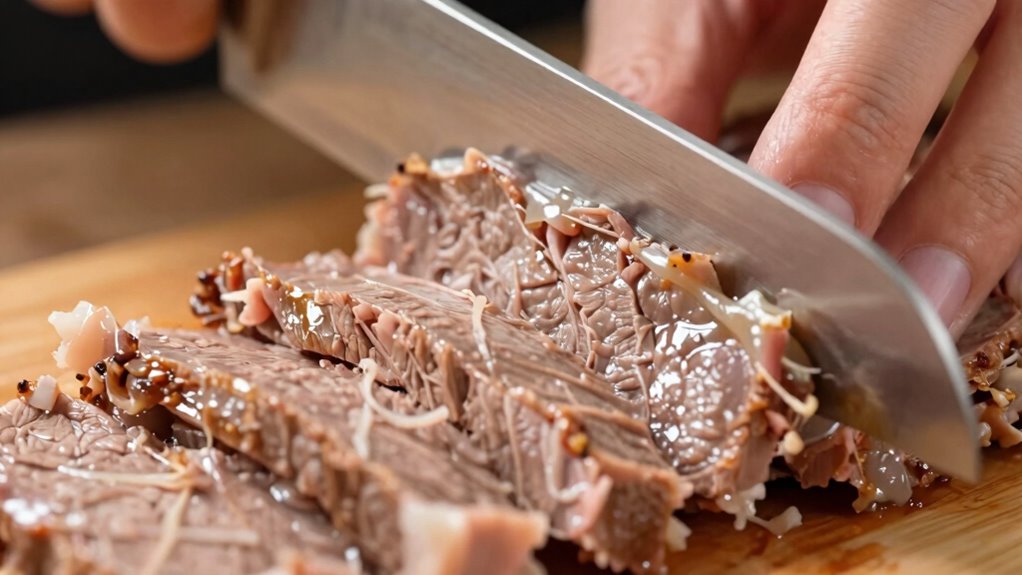
Slicing proteins thin is vital for achieving quick, evenly cooked stir-fries with tender bites. When your slices are uniform and thin, they cook faster, guaranteeing you don’t end up with overcooked edges or raw centers. To get there, mastering marinating techniques and using the proper cutting tools makes all the difference. Marinating isn’t just about flavor; it also helps tenderize the meat, making thin slicing easier and more effective. A good marinade with acidic ingredients like soy sauce, vinegar, or citrus can soften tougher cuts, allowing you to cut cleanly and evenly. Let the meat soak for at least 30 minutes, but no more than a few hours, to keep it tender without turning mushy. The marinade also helps the meat hold flavor and moisture during cooking, resulting in a juicier, more flavorful stir-fry. Additionally, understanding the importance of proper slicing techniques can further improve your results. Using the right cutting tools and techniques can make a noticeable difference in achieving thin, even slices. When it comes to cutting tools, investing in a sharp, high-quality chef’s knife is vital. A dull blade makes slicing difficult, and you risk tearing the meat or creating uneven pieces. Guarantee your knife is properly sharpened before you start; a razor-sharp blade glides through the protein smoothly, giving you clean, thin slices. For even better control, some cooks prefer a slicing or carving knife with a thin, flexible blade, which allows for more precise cuts. Always work on a stable cutting surface, and if the meat is particularly cold, it’s easier to get thin, uniform slices. You might want to partially freeze the meat for about 30 minutes beforehand; this firms it up and makes slicing much easier. Remember that proper handling techniques also play a role in achieving the best results when slicing proteins. Developing a steady slicing rhythm and maintaining consistent pressure can help produce uniform slices with minimal effort. Additionally, practicing consistent slicing pressure can help ensure each slice is uniform and thin.
As an affiliate, we earn on qualifying purchases.
Frequently Asked Questions
Can I Use a Regular Knife Instead of a Sharp Chef’s Knife?
You can use a regular knife, but it’s not ideal. A sharp chef’s knife makes slicing easier and safer, especially when you’re doing thin cuts for stir-fry. Keep your knife well-maintained by regular sharpening to prevent slipping and uneven slices. For better results, marinate your meat to soften it, making it easier to cut thinly with any knife. Remember, sharper knives give cleaner, more precise slices.
How Do I Prevent the Meat From Sticking While Slicing?
To prevent sticking, start by chilling your meat for easier slicing. Use a non-slip cutting surface like a bamboo or plastic board, which minimizes slipping. Marinating techniques, like adding a touch of cornstarch or oil, can help create a barrier that reduces friction. Keep your knife sharp, and slice with smooth, steady strokes. These tricks turn tedious slicing into a seamless, satisfying skill, keeping meat neatly separated and ready to stir-fry.
Is It Better to Freeze the Meat Beforehand?
Freezing the meat beforehand is a great idea to improve meat texture and make slicing easier. You should freeze it for about 30-60 minutes, just until it’s firm but not frozen solid. This short freezing time helps you get thin, even slices, reducing sticking and tearing. Keep an eye on it to prevent freezing completely, which can make slicing tricky and affect the meat’s tenderness.
What Are Alternative Proteins Suitable for Thin Slicing?
Slicing alternative proteins is like carving a sculpture; it takes patience and the right approach. You can use plant-based alternatives like tofu, tempeh, or seitan, which slice well when chilled. Seafood options like shrimp or thin fish fillets are also suitable, offering delicate, quick-cooking choices. Keep these proteins firm and cold, and use a sharp knife to achieve thin, even slices perfect for stir-fry dishes.
How Do I Store Sliced Proteins for Later Use?
You should store sliced proteins in an airtight storage container or resealable plastic bag to keep them fresh. Before storing, marinate them if desired, which enhances flavor and tenderizes the meat. Make sure to remove excess air from the bag or container and keep it in the refrigerator, ideally using it within 1-2 days. Proper marinating techniques and storage help maintain quality and prevent spoilage for later use.
As an affiliate, we earn on qualifying purchases.
Conclusion
Think of slicing proteins for stir-fry like crafting a delicate sculpture—you need steady hands and patience to reveal the true beauty within. When you master this skill, every slice becomes a brushstroke, transforming simple ingredients into a vibrant masterpiece. With practice, you’ll turn your kitchen into an artist’s studio, creating dishes that not only taste amazing but look stunning too. Keep honing your technique, and soon, you’ll be the maestro of perfect, thinly sliced proteins.
As an affiliate, we earn on qualifying purchases.
As an affiliate, we earn on qualifying purchases.
Fall Picks
fall essentials
As an affiliate, we earn on qualifying purchases.