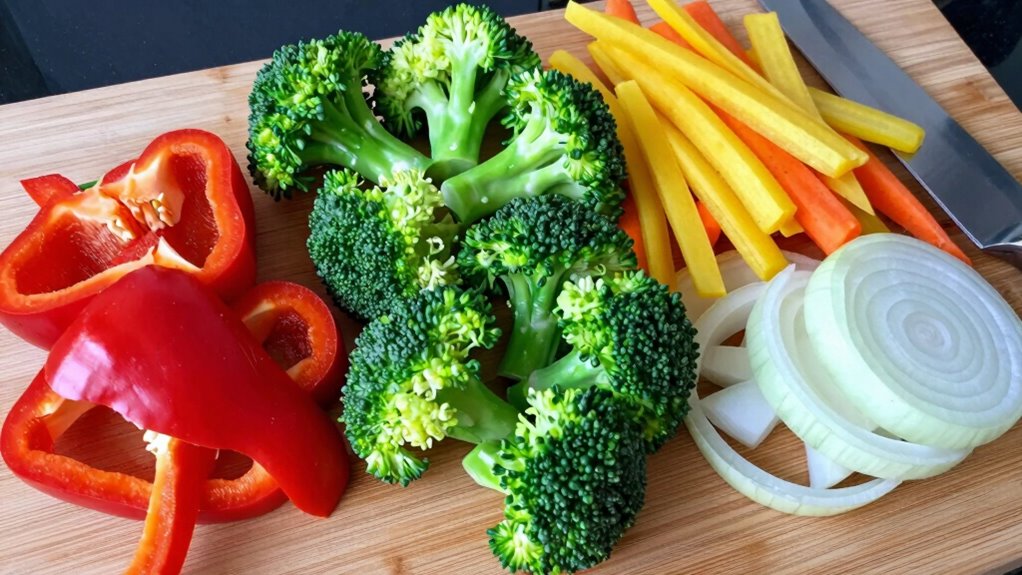

To prep vegetables for evenly cooked stir-fry, start by washing and thoroughly drying them to prevent splattering. Cut your vegetables into uniform-sized pieces, adjusting thickness based on cooking times—thinner slices for quick-cooking veggies and larger chunks for longer ones. For better heat penetration, use slicing or julienning techniques. Start with longer-cooking vegetables in the pan first, then add quicker-cooking ones later. Keep stir-frying on high heat and stir constantly for perfect results. Explore more tips to master your stir-fry.

Get kitchen gear delivered free with Prime
- Fast, free delivery on millions of items
- Prime Video, Amazon Music and more included
- Member-only deals all year
Key Takeaways
- Choose vegetables with similar cooking times and cut them into uniform, appropriately sized pieces for even cooking.
- Wash and thoroughly dry vegetables to prevent splattering and uneven heat distribution.
- Trim tough stems and blemishes to ensure consistent texture and faster cooking.
- Cut vegetables into thinner or smaller pieces for quicker, more even heat penetration.
- Sequence cooking by adding longer-cooking vegetables first, then quicker-cooking ones later.
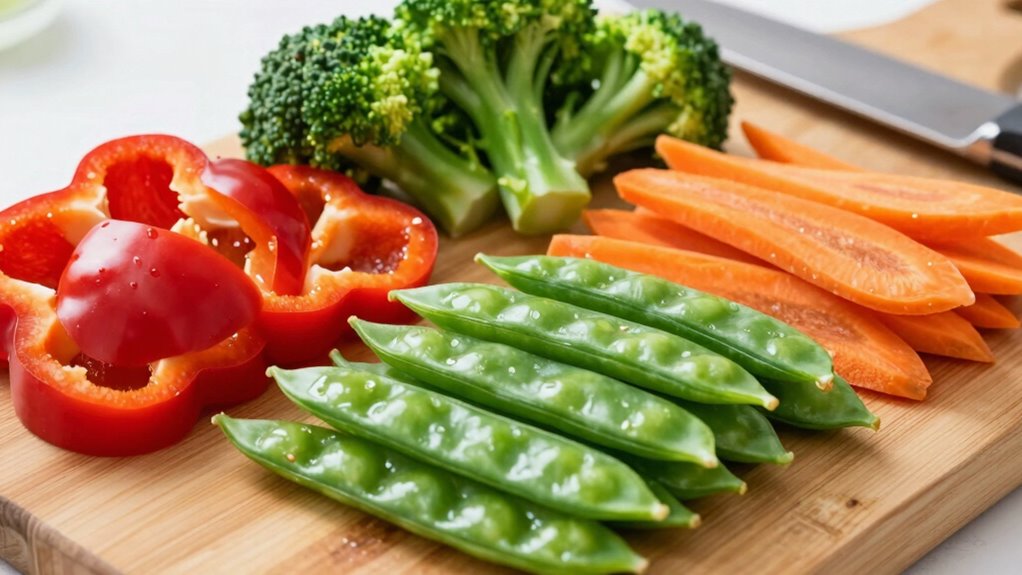
Stir-frying is a quick and flavorful way to prepare vegetables, but the key to perfect results lies in proper prep. When you’re working with vegetables, understanding how different varieties cook is essential. Some veggies, like bell peppers or snap peas, cook quickly, while others, such as carrots or broccoli, need a bit more time. Knowing their cooking times helps you decide how to cut them and when to add them to the pan, ensuring everything finishes at the same time.
Start by selecting the right vegetable varieties. Firm, dense vegetables tend to need longer cooking, so you’ll want to cut them into smaller, uniform pieces to speed up their cooking time. Conversely, softer vegetables like zucchini or spinach cook faster and should be added later in the process to prevent overcooking. When prepping, aim for uniformity in size and thickness to promote even cooking. Thinly slicing or julienning vegetables helps them cook quickly and evenly, while thicker cuts can remain underdone or overdone if not monitored carefully. Proper prep also involves washing and drying your vegetables thoroughly. Excess moisture can cause splattering and uneven cooking, so pat them dry completely before slicing. Once cleaned, trim any tough stems or blemishes that could affect the texture or flavor. For vegetables with different cooking times, consider starting with those that take longer and adding quicker-cooking varieties later. For example, if you’re stir-frying carrots and bell peppers, begin with the carrots, giving them a head start, then toss in the peppers once they’ve softened slightly. Being aware of vegetable cooking times helps you plan the sequence and cuts more effectively. Additionally, understanding cutting techniques can further enhance your stir-fry results by ensuring consistent cooking and texture. Properly identifying vegetable textures can help you choose the right cutting style to optimize cooking evenly. Cooking times are closely linked to how you cut your vegetables. Smaller, thinner pieces cook faster, so adjusting your cuts based on the vegetable variety and desired doneness is vital. Use high heat to sear the vegetables quickly, locking in flavor and texture, but keep an eye on the clock. Stir constantly to promote even heat distribution and prevent burning. By paying attention to the different cooking times and cutting your vegetables uniformly, you’ll create a stir-fry that’s perfectly cooked through, with every bite offering a crisp-tender texture and fresh flavor.
stainless steel vegetable chopper
As an affiliate, we earn on qualifying purchases.
As an affiliate, we earn on qualifying purchases.
Frequently Asked Questions
Can I Prepare Vegetables Ahead of Time for Stir-Fry?
Yes, you can prepare vegetables ahead of time for stir-fry. To do meal prep, chop your vegetables and store them properly using airtight containers or resealable bags. Follow storage tips by keeping them refrigerated and using them within 1-2 days to maintain freshness. This way, you save time during cooking and guarantee your vegetables stay crisp and flavorful, making your stir-fry quick and easy to prepare.
What Types of Knives Are Best for Chopping Vegetables?
Imagine wielding a knife that feels like an extension of your hand—your knife skills sharpened. For chopping vegetables, a sharp chef’s knife or a versatile Santoku is ideal, offering precision and control. These blades excel with various chopping techniques, ensuring even cuts and faster prep. Their quality and sharpness help you maintain consistent cooking times, making your stir-fry perfectly cooked every time. The right knife elevates your culinary game effortlessly.
How Do I Prevent Vegetables From Sticking Together?
To prevent vegetables from sticking together, make sure you dry them thoroughly after washing, as excess moisture causes clumping. Keep vegetable pieces uniform in size for even cooking and avoid overcrowding the pan, which can trap moisture and cause sticking. Stir frequently to maintain their vegetable texture and flavor preservation. Additionally, use enough oil to coat the vegetables evenly, helping them cook separately and retain their individual qualities.
Should I Blanch Vegetables Before Stir-Frying?
Imagine peeling vegetables, then quickly blanching them in boiling water—this preps them perfectly for stir-fry seasoning. Blanching helps vegetables retain their vibrant color and crunch, ensuring even cooking. You should blanch if you’re using dense veggies like carrots or broccoli, as it softens them slightly and reduces stir-fry time. Just a quick dip, then into cold water, and they’re ready to stir-fry without overcooking.
What Oil Is Best for Stir-Frying Vegetables?
You should use oils with high smoke points for stir-frying vegetables, like vegetable oil, canola oil, or peanut oil. These oil types handle high heat without burning, helping you cook vegetables evenly and preserve their textures. Avoid oils with low smoke points, such as olive oil, which can burn quickly. Using the right oil guarantees your vegetables stay crisp and flavorful while cooking thoroughly.
As an affiliate, we earn on qualifying purchases.
Conclusion
By prepping your vegetables with care, you’ll turn a simple stir-fry into a symphony of flavors and textures. Properly sliced, uniformly cooked veggies will elevate your dish from average to unforgettable. When you master these techniques, you’ll feel like a culinary wizard, making dinner magic happen in minutes. So, take your time, stay attentive, and watch your stir-fry transform into a masterpiece. Your taste buds will thank you for this level of perfection—it’s truly a game-changer!
As an affiliate, we earn on qualifying purchases.
As an affiliate, we earn on qualifying purchases.
Halloween Picks
halloween
As an affiliate, we earn on qualifying purchases.