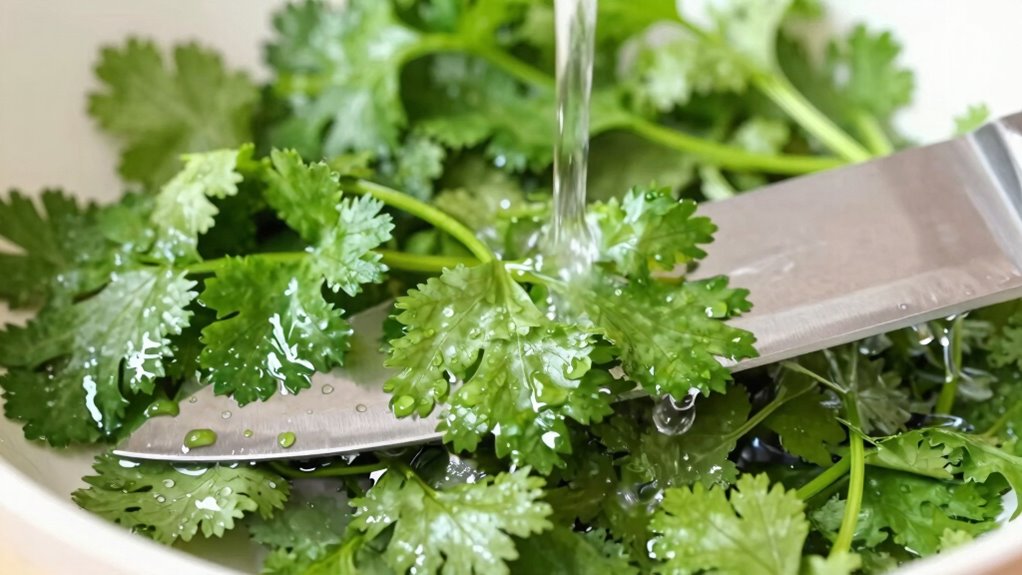
To prep cilantro without muddy flavors, wash it only right before you’ll use it to keep excess moisture from developing. Rinse thoroughly and shake off the water, then gently pat dry with a paper towel. Chop the cilantro immediately before adding it to your dishes to lock in its fresh aroma and vibrant flavor. Proper timing of washing and cutting guarantees your cilantro stays crisp and flavorful—stay tuned for more tips to perfect your prep techniques.
Key Takeaways
- Wash cilantro only right before use to prevent excess moisture that causes muddiness.
- Dry cilantro thoroughly with paper towels or a salad spinner to maintain crispness.
- Store cilantro like fresh flowers in water, covered loosely, and change water regularly.
- Chop cilantro immediately before adding it to dishes to preserve flavor and avoid oxidation.
- Avoid washing or cutting cilantro too early to prevent flavor dulling and muddy notes.
Have you ever wondered how to prepare cilantro so it stays fresh and flavorful? When it comes to handling cilantro, proper preparation is key to maintaining its vibrant taste and aroma. One of the most important steps is understanding the right storage tips and the best timing for washing and cutting. If you wash cilantro too early before storing, it can introduce excess moisture that encourages spoilage, leading to wilting and a muddy flavor. Instead, you want to keep the cilantro as dry as possible until you’re ready to use it. To do this, trim the stems slightly, then gently shake off any dirt or debris, and pat the leaves dry with a paper towel. This reduces moisture and helps preserve the flavor longer. Proper herb storage ensures maximum freshness and flavor retention.
When it’s time to store your cilantro, the goal is to prevent it from losing its freshness. A good storage tip is to treat cilantro like fresh flowers—place the stems in a jar or glass with a little water at the bottom, then cover the leaves loosely with a plastic bag. Keep this setup in the fridge, and change the water every couple of days. This method helps retain the herb’s crispness and aromatic oils, ensuring your cilantro stays vibrant for up to a week. Avoid washing the cilantro before storage because excess moisture accelerates spoilage. Instead, wash it just before you plan to use it, right in the moment when you’re ready to prepare your dish. This approach guarantees flavor preservation, as the herb’s oils and aroma are at their peak right before use.
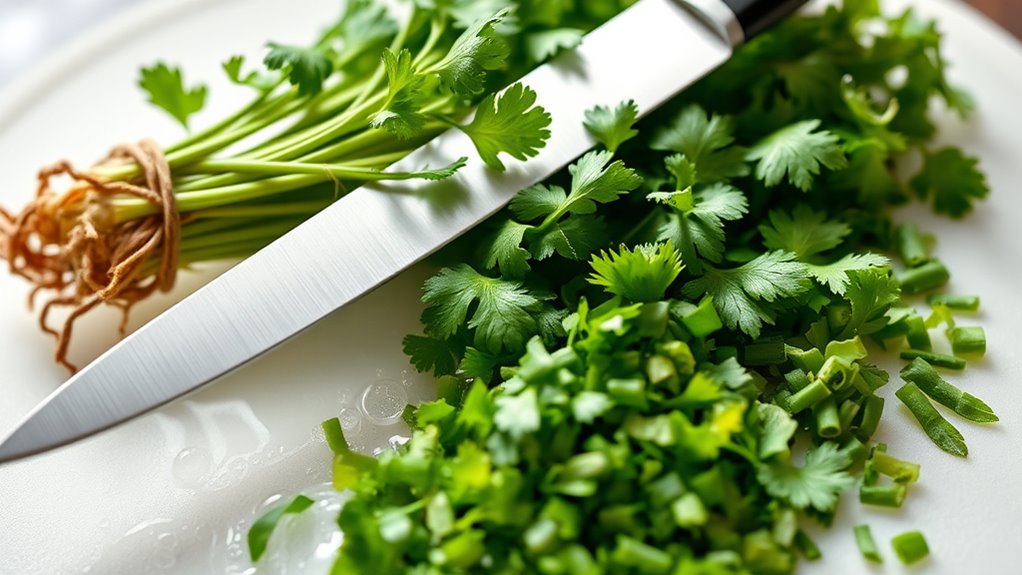
Timing is vital when it comes to cutting cilantro. To prevent muddy flavors, you should chop or cut the cilantro just before adding it to your recipe. Cutting too early exposes the delicate leaves to air, which can cause oxidation and dull the flavor. When you’re ready to cook or garnish, gather the cilantro and chop it roughly or finely, depending on your dish. This minimizes the time the herb spends exposed to air, locking in its freshness and bright flavor. Remember, the more you handle and cut cilantro in advance, the more you risk losing its vibrant aroma and fresh taste. So, plan ahead by washing and drying the cilantro thoroughly, storing it properly, and only cutting it right before you want to use it. This way, you’ll enjoy cilantro’s full flavor without muddy or dull notes.
Frequently Asked Questions
Can I Freeze Cilantro for Later Use?
Yes, you can freeze cilantro for later use. Use freezing methods like chopping the cilantro and placing it in an airtight container or ice cube trays with water or oil for easy portioning. Preservation tips include removing excess moisture and choosing the right container to prevent freezer burn. Keep in mind that frozen cilantro works best in cooked dishes, as its texture changes. Proper freezing helps retain flavor and extends shelf life.
What’s the Best Way to Store Cilantro Long-Term?
Investigating herb preservation reveals that the best way to store cilantro long-term is to keep it fresh and flavorful. You should trim the stems, place the bunch in a jar with water, and cover it loosely with a plastic bag. Store it in the refrigerator, changing the water every few days. This method helps retain flavor and keeps cilantro fresh longer, ensuring you enjoy its vibrant taste whenever needed.
How Do I Prevent Cilantro From Turning Brown?
To prevent cilantro from turning brown, you should focus on fresh herb preservation and cilantro color maintenance. Keep your cilantro dry by gently patting it after washing, then store it in a sealed container with a damp paper towel to maintain humidity. Place it in the fridge, ideally in the crisper drawer. Regularly check and remove any brown or wilted leaves to keep your cilantro vibrant and fresh longer.
Is It Okay to Use Dried Cilantro Instead?
Yes, you can use dried cilantro as a substitute, especially if fresh isn’t available. Dried herb alternatives like ground cilantro or cilantro flakes work well in cooked dishes, but they lack the bright flavor of fresh cilantro. Keep in mind that fresh vs dried cilantro differ markedly in taste and texture. For the best flavor, use dried cilantro sparingly and consider adding a splash of lime or fresh herbs to brighten your dish.
How Do I Remove Pesticides From Store-Bought Cilantro?
You might worry about pesticides on store-bought cilantro, but don’t fret. To effectively remove pesticides, use a thorough washing technique: fill a bowl with cold water, add a splash of vinegar, and swish the cilantro gently for a few minutes. Rinse well under cold running water afterward. This simple step helps with pesticide removal, leaving your cilantro cleaner, safer, and ready to use without that chemical residue worry.
Conclusion
Now that you know how to prep cilantro properly, you’ll avoid that muddy flavor and enjoy fresh, vibrant herbs in every dish. Remember, washing and cutting at the right time makes all the difference. Did you know that cilantro is one of the most popular herbs worldwide, with over 1.5 million tons produced annually? By following these simple steps, you’ll maximize its flavor and freshness, elevating your cooking every time. Happy prepping!