To prep bell peppers for fajitas, start by selecting firm, glossy peppers without blemishes and store them loosely in the fridge to keep them fresh. Rinse and dry the peppers thoroughly, then cut off the stems. Slice each half into uniform strips about ¼ inch wide, using a sharp knife for even cuts. Properly prepped peppers will cook evenly and look vibrant. Keep exploring for tips to perfect your pepper strips and enhance your fajitas.

Get kitchen gear delivered free with Prime
- Fast, free delivery on millions of items
- Prime Video, Amazon Music and more included
- Member-only deals all year
Key Takeaways
- Rinse peppers thoroughly under cold water and pat dry before cutting.
- Cut off the stem end, then slice peppers in half vertically to access seeds.
- Remove seeds and white membranes with a paring knife or fingers for even strips.
- Lay pepper halves flat and slice into uniform ¼-inch strips for consistent cooking.
- Use a sharp knife to ensure clean cuts, which helps peppers cook evenly and retain texture.
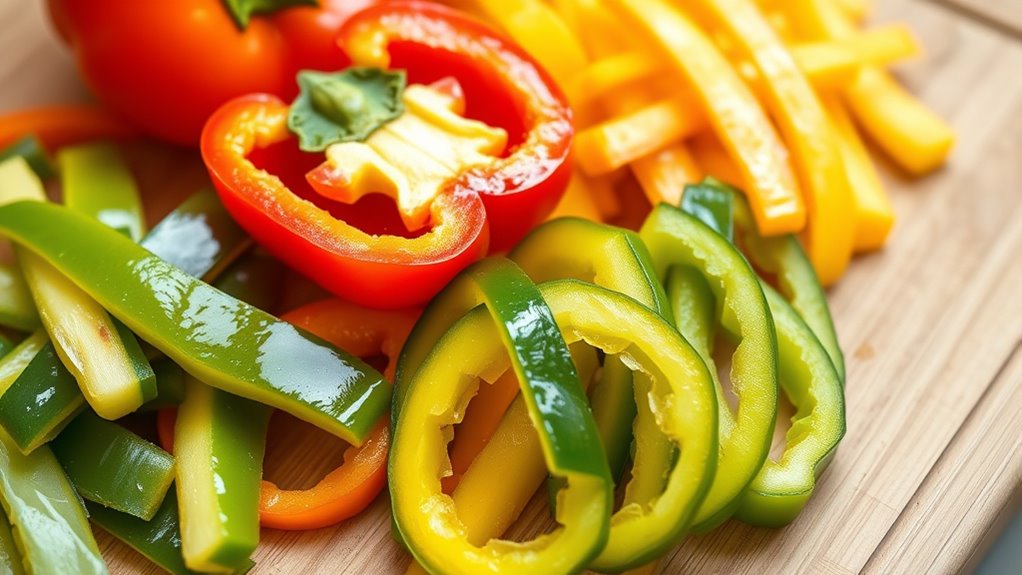
Preparing bell peppers for fajitas is a simple process that can considerably enhance your dish. The first step is choosing peppers that will give your fajitas the perfect flavor, texture, and color. When selecting peppers, look for firm, glossy skins without wrinkles, soft spots, or blemishes. Bell peppers come in a variety of colors—green, red, yellow, orange—and each adds a unique sweetness and vibrancy to your fajitas. Generally, red and yellow peppers tend to be sweeter, while green peppers are slightly more bitter. Pick peppers that feel heavy for their size, as this indicates they’re fresh and juicy. If you’re shopping at the store, opt for peppers with tight stems and smooth, unwrinkled skin. Avoid any with soft spots or signs of mold, as these are indicators of age or poor storage.
Once you’ve chosen the right peppers, proper storage tips can help maintain their freshness until you’re ready to prep. Bell peppers are best stored in the refrigerator’s crisper drawer, ideally in a paper bag or loosely wrapped in a paper towel to absorb excess moisture. This prevents them from getting too humid or shriveled. Avoid storing them in airtight containers or plastic bags for extended periods, as this can trap moisture and promote spoilage. Use your peppers within a week of purchase for ideal flavor and texture, but if you notice any soft spots or spots turning dark, it’s best to use or discard them sooner. Incorporating freshness preservation techniques can help extend their shelf life and quality.
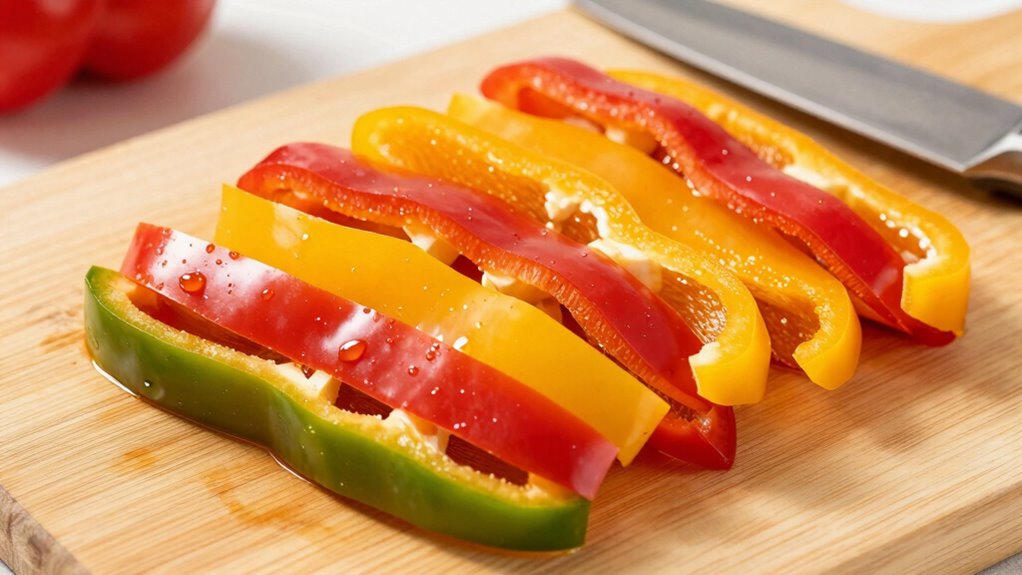
When it comes time to prepare your peppers for fajitas, start by rinsing them thoroughly under cold water to remove any dirt or residue. Pat them dry with a clean towel before cutting. First, cut off the stem end, then slice the pepper in half vertically to expose the seeds and core. Remove the seeds and white membranes with a small paring knife or your fingers. To get strips that cook evenly, lay each pepper half flat on your cutting board, then slice it into uniform strips, about ¼-inch wide. Consistent thickness ensures they cook evenly and retain their tender-crisp texture. Remember to keep your knife sharp; a dull blade can crush the peppers instead of slicing cleanly. Properly prepared peppers will cook uniformly, absorbing flavors well and adding bright color to your fajitas.
As an affiliate, we earn on qualifying purchases.
Frequently Asked Questions
Can I Use Frozen Bell Peppers for Fajitas?
Yes, you can use frozen peppers for fajitas. Frozen peppers are convenient and save prep time, though they tend to be softer than fresh peppers. When comparing fresh vs frozen, keep in mind that frozen peppers may release more moisture, so avoid overcrowding your pan. Thaw and drain excess water before cooking to guarantee they cook evenly and don’t get soggy. They work well in a pinch!
What’s the Best Way to Remove Pepper Seeds Easily?
Think of seeding techniques like unlocking a treasure chest—you gently cut around the top, then peel back the skin to reveal hidden gems. To remove pepper seeds easily, use peeling methods that involve slicing off the stem and opening the pepper, then gently shaking out or scooping the seeds. This keeps the process quick and tidy, ensuring your fajitas stay colorful and flavorful without seed messes.
How Do I Prevent Peppers From Burning While Cooking?
To prevent peppers from burning during cooking, keep an eye on your cooking temperature—use medium heat to guarantee even cooking without charring. Make sure your peppers are sliced uniformly; this helps them cook evenly and prevents some pieces from burning while others remain raw. Stir frequently and avoid overcrowding the pan, which can cause uneven heat distribution and burning. With these tips, your peppers will cook perfectly every time.
How Long Can I Store Prepared Peppers Before Cooking?
Did you know that prepared bell peppers can stay fresh for up to 2-3 days? You should store them in an airtight container or resealable bag in the refrigerator. Follow refrigeration tips like keeping peppers dry and away from ethylene-producing fruits to prevent spoilage. For best results, use your stored peppers within this timeframe to enjoy fresh, flavorful fajita strips without sacrificing quality or safety.
Are There Alternative Peppers for Fajitas if I Dislike Bell Peppers?
If you dislike bell peppers for fajitas, try using alternative peppers like poblano, banana, or cubanelle peppers—they add great flavor and texture. For a spicy twist, consider jalapeños or serranos as substitutions. These peppers cook similarly and can be sliced into strips, giving your fajitas variety and heat. Just adjust the spice level to suit your taste, and enjoy a delicious, customized dish.
sharp paring knife for vegetables
As an affiliate, we earn on qualifying purchases.
As an affiliate, we earn on qualifying purchases.
Conclusion
Now that you know how to prep your bell peppers for fajitas, you’re all set to create a colorful, sizzling masterpiece. When you slice them just right, they’ll cook evenly and taste absolutely sensational—like a fiesta in your mouth! So, fire up that skillet, toss in your perfectly prepared peppers, and enjoy a meal that’s as vibrant and exciting as a fireworks display. Your fajitas are about to become the star of every dinner!
As an affiliate, we earn on qualifying purchases.
vegetable cutting board for kitchen
As an affiliate, we earn on qualifying purchases.
As an affiliate, we earn on qualifying purchases.
Halloween Picks
halloween
As an affiliate, we earn on qualifying purchases.