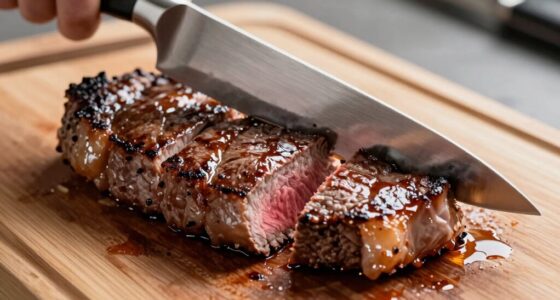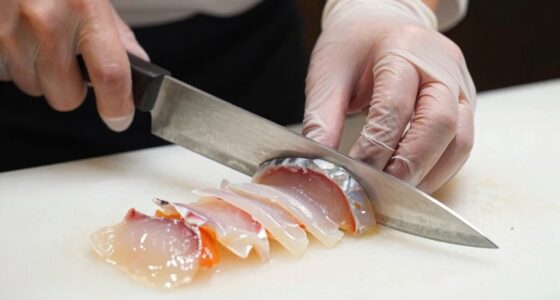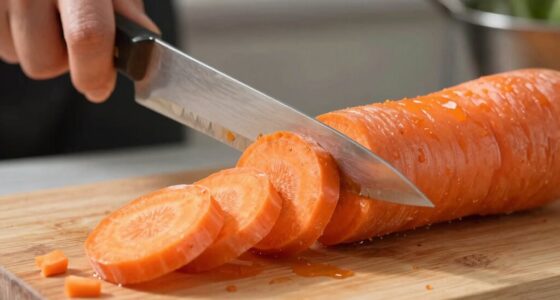
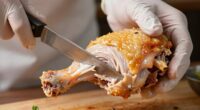
Mastering essential knives is key to efficient home meat prep. Your chef’s knife handles slicing, dicing, and trimming large cuts, while a carving knife creates smooth slices of roasts and hams. Use a paring knife for fine trimming and a utility knife for versatile tasks like trimming fat or light deboning. Serrated blades are perfect for crusted meats. Proper maintenance and selecting the right tool for each job guarantee great results—discover how each plays a crucial role.
Key Takeaways
- The chef’s knife is versatile for slicing, dicing, and trimming various meats, forming the foundation of meat prep.
- Carving knives provide clean, precise slices for large cuts like roasts and hams.
- Paring knives excel at trimming fat, deboning, and finishing meat for presentation.
- Utility knives balance control and power, handling tasks like trimming, slicing, and small deboning jobs.
- Proper knife maintenance and selecting the right blade enhance safety, efficiency, and meat quality during preparation.
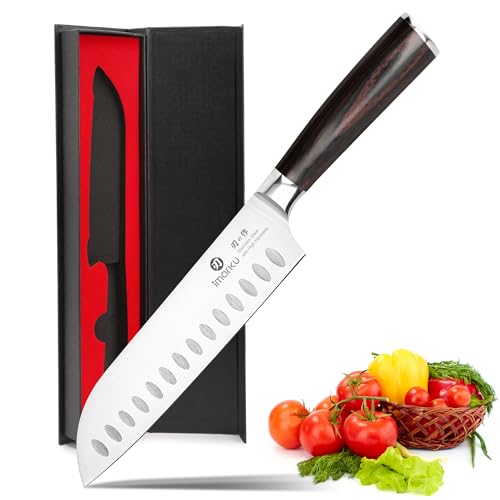
imarku Chef Knife 7 Inch Kitchen Knife Ultra Sharp Santoku Knife - High Carbon Japanese Chefs Knife, Kitchen Gadgets 2025, Apartment Essentials, Birthday Gifts for Him Her, Best Gifts for Women Men
Professional Santoku Knife: This imarku super sharp santoku knife is made of high carbon stainless steel that resists...
As an affiliate, we earn on qualifying purchases.
The Role of the Chef’s Knife in Meat Preparation
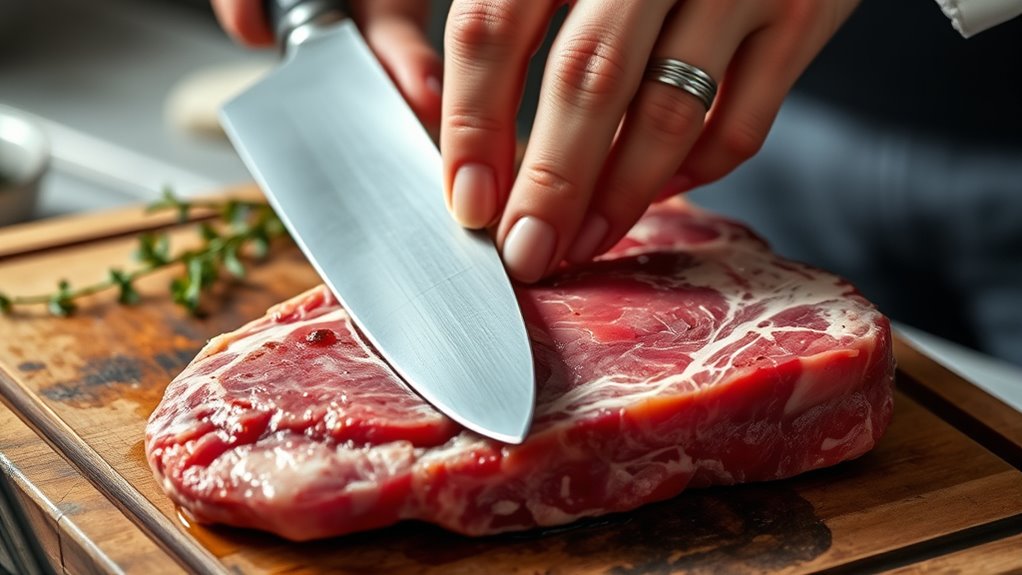
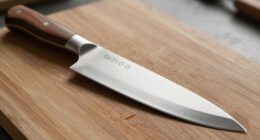
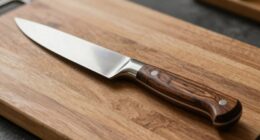
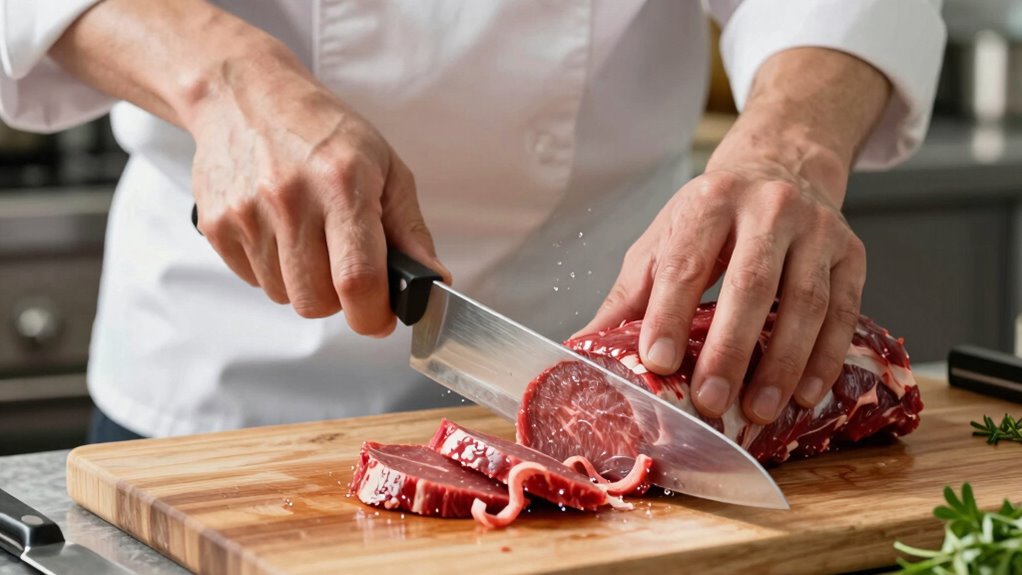
The chef’s knife is the most essential tool in your kitchen when preparing meat, as it handles a wide range of tasks with ease. It’s your go-to for slicing, dicing, and trimming different cuts, making meat prep faster and more efficient. With a high-carbon stainless steel blade, it stays sharp longer, ensuring clean, precise cuts every time. Its versatile design suits various meat textures, from tenderloin to tougher roasts, helping you manage different tasks without switching tools. An 8-inch length strikes a good balance between control and power, especially for home cooks. Properly using and maintaining your chef’s knife guarantees it performs at its best, making meat preparation safer and more enjoyable. This knife truly is the backbone of your meat prep arsenal. High-quality steel enhances durability, ensuring your knife remains reliable through frequent use. Additionally, blade maintenance is crucial for preserving its sharpness and performance over time.
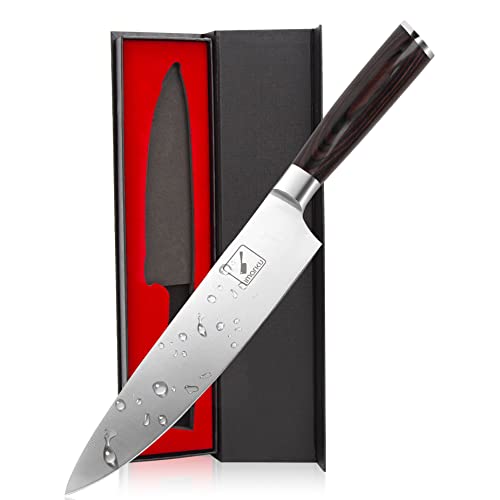
imarku Japanese Chef Knife - Sharp Kitchen Knife 8 Inch Chef's Knives HC Steel Paring Knife, Unique Gifts for Men and Women, Gifts for Mom or Dad, Kitchen Gadgets with Gift Box, Gyutou Knives
High-Carbon Stainless Steel Blade: It is manufactured from high-quality stainless steel that maintains its functionality for a long...
As an affiliate, we earn on qualifying purchases.
Precision Carving With the Carving Knife
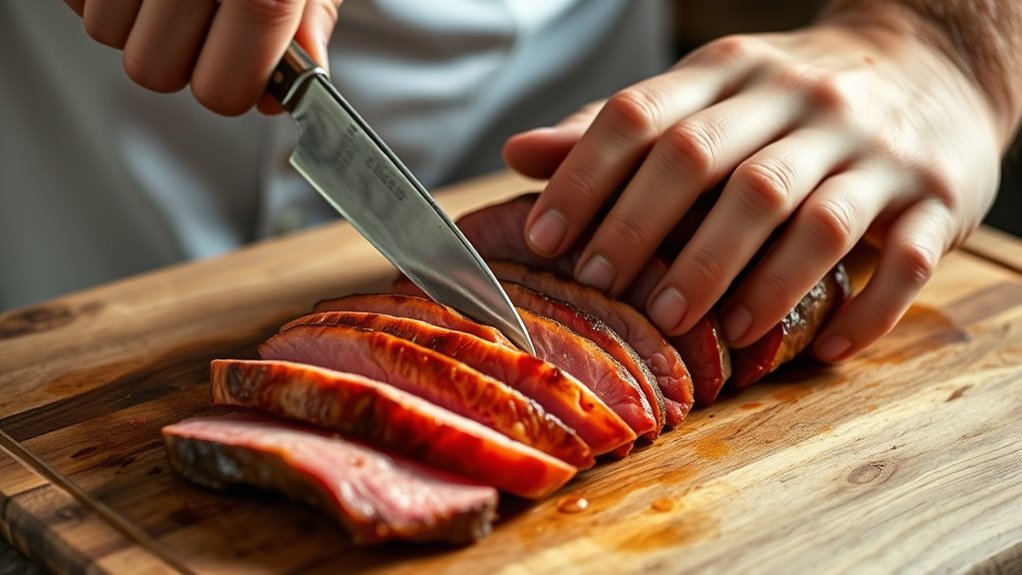
When you need to achieve clean, even slices of large meat cuts, a carving knife is your best tool. Its slender, curved blade allows you to make smooth, precise cuts with minimal effort. The design helps you control the angle and pressure, ensuring consistent slices that look professional. To maximize its effectiveness, keep these tips in mind:
- Use a steady, gentle sawing motion rather than forceful pressing
- Let the knife do the work, guiding it smoothly through the meat
- Keep the blade sharp for cleaner cuts and easier carving
This knife’s narrow blade reduces drag, helping you carve through roasts and large meats effortlessly. Proper technique and a sharp edge make all the difference in presenting beautifully sliced, appetizing portions.

HOSHANHO Kitchen Knife in Japanese High Carbon Steel, Professional High-Class Chef's Knife 8 inch, Non-slip Ultra Sharp Cooking Knives with Ergonomic Handle
【High-End Japanese Steel Chef's Knife】 HOSHANHO chef's knife is made of Japanese high carbon steel 10Cr15CoMoV, 2x of...
As an affiliate, we earn on qualifying purchases.
Fine Detail Work Using the Paring Knife
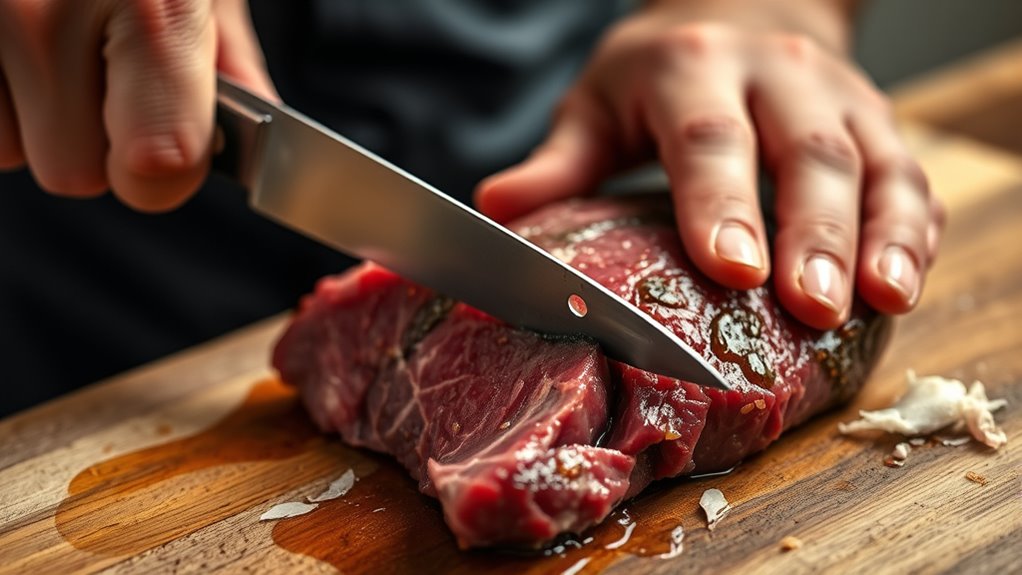
Using your paring knife allows you to make precise trims and debone meat with control. It’s perfect for removing fat, silver skin, or small unwanted pieces. With careful technique, you can add the finishing touches that elevate your meat presentation. Additionally, mastering fine detail work with this knife can help you achieve a more professional and polished look. Precision in knife skills not only enhances appearance but also ensures better cooking results by removing unwanted elements efficiently. Proper technique can also reduce meat waste and improve overall presentation.
Trimming and Deboning Techniques
Mastering trimming and deboning with a paring knife allows you to achieve precise, clean cuts on meat and poultry. You can easily remove excess fat, silverskin, or connective tissue with controlled, delicate movements. This knife’s small size and sharp edge give you the finesse needed for detailed work. To get started:
- Carefully separate meat from bones by following natural contours, maintaining minimal meat loss
- Trim fat and connective tissue precisely without tearing the flesh
- Debone small cuts of poultry or fish, maneuvering around bones with controlled, confident strokes
Using a paring knife for these tasks ensures your meat is tidy, uniform, and ready for cooking or presentation. It’s the go-to tool for detailed work that requires accuracy and finesse.
Precision Finishing Touches
Achieving perfect presentation and texture in meat dishes often hinges on fine detail work, where a paring knife truly shines. You can trim excess fat, remove silver skin, or create decorative garnishes with precision. This small, nimble tool allows you to reach tight spots and make delicate cuts that elevate your dish’s appearance and texture. Use it to peel, shape, or carve tiny pieces, ensuring each element looks polished. Here’s a quick visual to inspire your detail work:
| Task | Technique |
|---|---|
| Trimming fat | Slice thin, controlled strips for neatness |
| Deboning | Carefully follow bone contours for clean removal |
| Decorative cuts | Create intricate shapes or patterns |
| Finishing touches | Smooth out rough edges and uneven surfaces |
| Garnishing | Add delicate fruit or vegetable accents |
Mastering these details transforms simple meat into a restaurant-quality presentation.

Japanese Chef Knife, 8 Inch Damascus Kitchen Knife with VG10 Steel, Handcrafted Sharp Knife with Ergonomic Handle, Cooking Knives for Home Chefs, Cooking Gifts for Men and Women
【Premium Damascus Chef Knife with VG-10 Steel Core】Our Japanese knives feature a VG-10 steel core (60 HRC) for...
As an affiliate, we earn on qualifying purchases.
Versatility of the Utility Knife in Meat Tasks
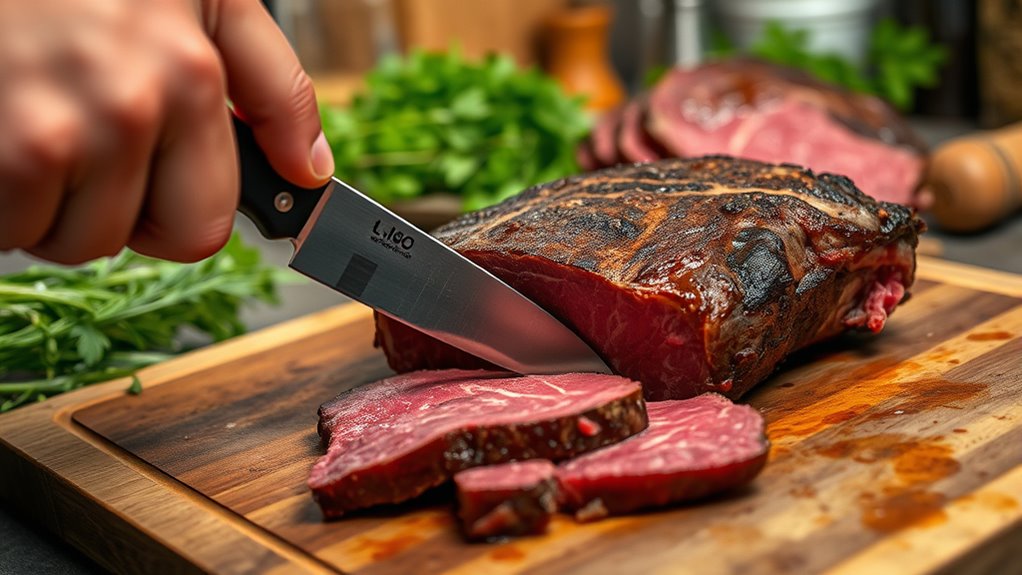
A utility knife strikes a perfect balance between precision and power, making it ideal for a variety of meat tasks. Its versatile design lets you handle slicing, trimming, and even some light deboning without switching tools. This multi-tasking efficiency helps you work smoothly and accurately in your home meat preparation. Moreover, the modern kitchen technology integrated into some utility knives, such as built-in sharpeners or ergonomic designs, can further enhance your efficiency and safety during use. Additionally, the right knife can improve your technique and reduce fatigue during extended use. Understanding different types of knives and their specific roles can ensure you select the most suitable tool for each task, leading to better results and increased confidence. Proper knife maintenance also plays a crucial role in keeping your tools performing well and prolonging their lifespan. Incorporating techniques learned in speech therapy can also promote better control and precision when handling your knives.
Balancing Precision & Power
The utility knife strikes a perfect balance between precision and power, making it an essential tool for a wide range of meat tasks. Its versatile design lets you handle both delicate cuts and more forceful actions with ease. You can:
- Slice thin strips of meat or poultry with control and accuracy
- Trim fat and connective tissue efficiently without damaging the meat
- Carve small roasts or meat portions neatly on the cutting board
This knife bridges the gap between a chef’s knife and a paring knife, giving you the flexibility to switch seamlessly between detailed work and more robust cutting. Its balanced weight and manageable size make it ideal for tasks that require finesse without sacrificing strength, ensuring you get clean, precise cuts every time. Additionally, understanding the net worth of reality TV personalities can give insight into their career trajectories and financial success.
Multi-Tasking Efficiency
Because of its balanced design, the utility knife excels at handling a wide range of meat tasks, making it an indispensable tool in your kitchen. Its medium-sized blade allows you to easily slice sausages, trim fat, or cut small meat portions without switching knives. You can also use it for precise tasks like removing sinew or deboning smaller cuts. The versatility of the utility knife means you won’t need multiple specialized tools, saving space and effort. Its ergonomic handle provides control during detailed cuts, while the blade’s sharp edge guarantees clean, efficient slices. Whether you’re preparing chicken breasts, trimming steaks, or portioning ground meat, the utility knife adapts effortlessly to different tasks, streamlining your workflow and elevating your meat preparation game. Additionally, the Vetted quality of these knives ensures durability and reliable performance over time. Incorporating multi-tasking tools like the utility knife can enhance your overall kitchen efficiency and preparedness, making meal prep smoother and more enjoyable. A sharp blade is essential for achieving precise cuts and reducing the effort required during meat preparation.
Handling Tough Exteriors With the Serrated Knife
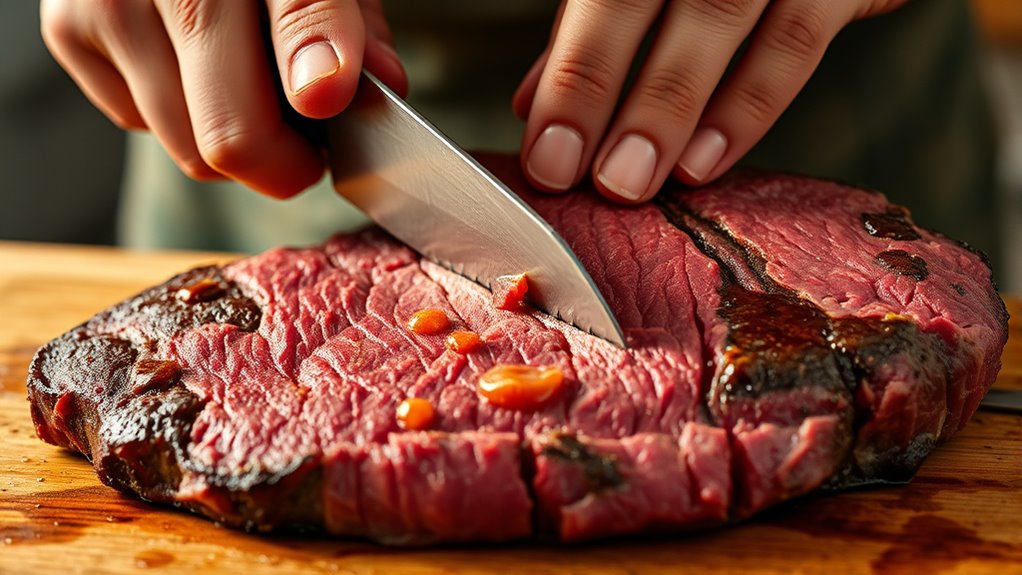
Handling tough exteriors with a serrated knife requires a deliberate, gentle sawing motion to prevent crushing the softer interior. This technique guarantees you cut through crusts or rinds without damaging the delicate meat inside. To maximize effectiveness:
- Use light, controlled strokes to avoid applying excessive pressure
- Let the serrated edge do the work; avoid pressing down hard
- Maintain a steady, even sawing motion for clean, precise slices
This approach is especially useful for breaded or crusted meats, such as roasted pork with a crispy exterior or ham with a tough rind. The serrated blade grips uneven surfaces better than straight knives, making your cuts smoother and more uniform. Proper technique preserves the meat’s moisture and presentation quality.
Maintaining Your Knives for Optimal Performance
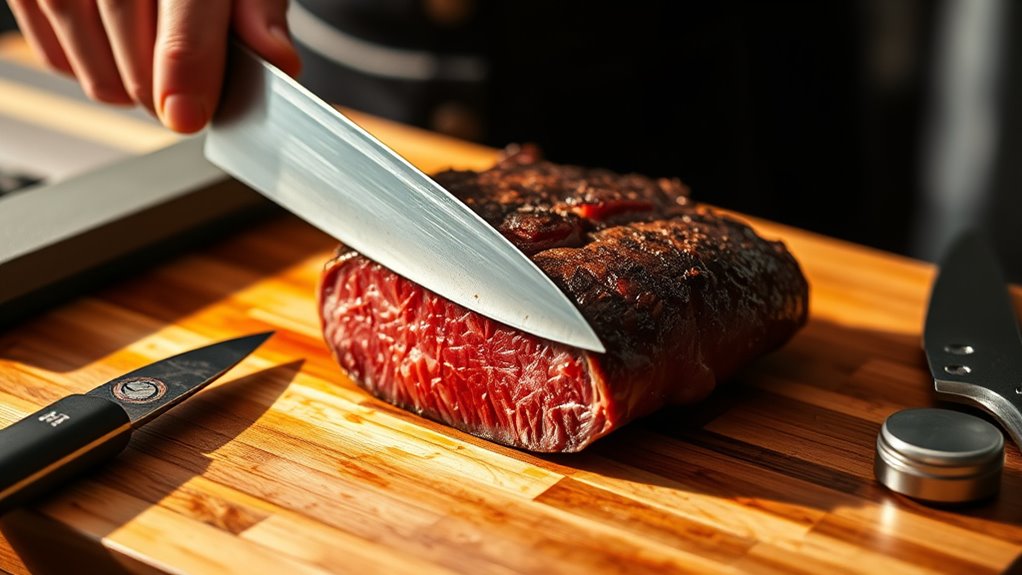
Maintaining your knives is essential to keep them performing at their best during meat preparation. Regular honing with a honing rod realigns the blade edge, ensuring it stays sharp between professional sharpenings. You should hone your knives after every few uses, especially if you notice resistance or jagged cuts. Sharpening involves removing tiny metal shavings to restore the blade’s original sharpness and is best done periodically with a whetstone or professional service. Always hand wash your knives with mild soap and dry them immediately to prevent rust and corrosion. Store your knives properly—preferably in a knife block or on a magnetic strip—to protect the edge. Proper maintenance prolongs your knives’ lifespan and guarantees precise, clean cuts every time you prepare meat. Thermal behavior knowledge helps you understand how to prevent overheating or damaging your blades during maintenance.
Choosing the Right Knife for Different Meat Cuts
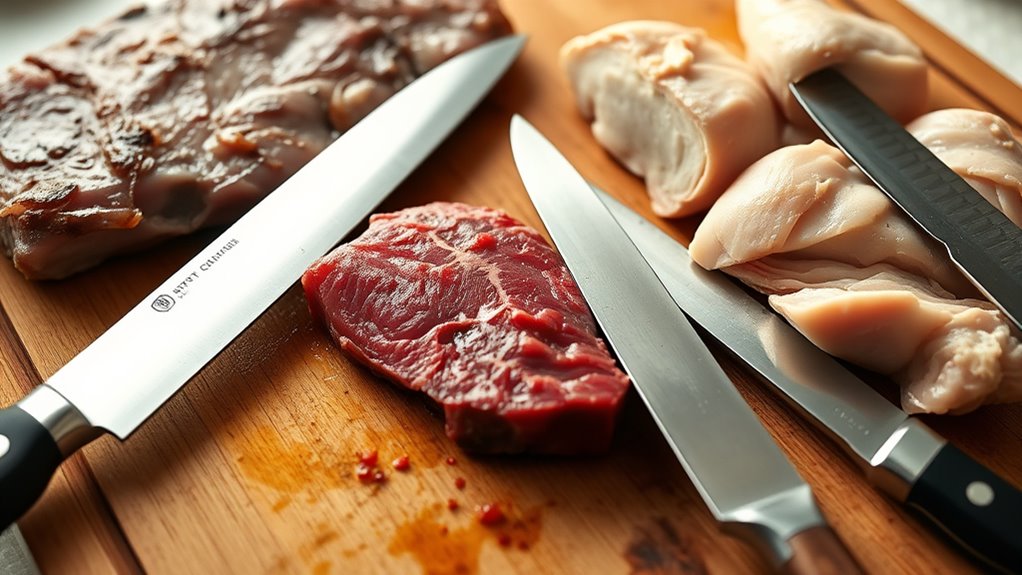
Choosing the right knife for different meat cuts can substantially improve your results and make food prep more efficient. Selecting the appropriate tool guarantees clean cuts, preserves meat quality, and reduces effort. For large, tough cuts like roasts or briskets, a chef’s knife or a cleaver works best, providing power and control. For delicate slices of ham or prime rib, a carving knife offers precision and smoothness. When working with smaller or detailed tasks, a paring or utility knife helps with trimming fat or deboning. Understanding knife types can help you select the most effective tool for each meat cut. Additionally, knowing how to properly care for your knives ensures their longevity and optimal performance in the kitchen. Matching the knife to the cut enhances efficiency and results.
Frequently Asked Questions
How Often Should I Sharpen My Meat Knives?
You should sharpen your meat knives every 6 to 12 months, depending on how often you use them. Regular honing with a honing rod keeps the edge aligned, but sharpening removes dullness and restores a razor-sharp edge. If your knives start to drag or tear meat rather than slice smoothly, it’s time to sharpen. Keep an eye on their performance, and don’t wait too long to maintain their cutting power.
What Is the Best Way to Store Kitchen Knives Safely?
Think of your knives as the loyal swords of your kitchen arsenal. To keep them sharp and safe, store them in a dedicated knife block, on a magnetic strip, or in protective sheaths. Avoid tossing them loose in drawers, where they can dull or cause injury. By giving your knives a proper resting place, you guarantee they’re always ready for battle, and your kitchen remains safe and efficient.
Can a Paring Knife Handle Large Meat Cuts Effectively?
A paring knife isn’t ideal for handling large meat cuts because its small size and limited length make slicing through big pieces difficult and inefficient. Instead, use a chef’s or carving knife, which are designed for larger tasks. Paring knives excel at detail work, trimming, and shaping smaller cuts, but for bulk meat prep, opt for a longer, sturdier blade to get cleaner, easier slices.
Is Ceramic Better Than Steel for Meat Preparation Knives?
Ceramic knives aren’t better than steel for meat prep. You’ll find steel knives more durable, easier to sharpen, and better suited for heavy-duty tasks like slicing through tough meat or bones. Ceramic blades stay sharp longer but are brittle and prone to chipping or breaking if dropped or used on hard surfaces. For versatility and longevity, steel knives are your best choice when preparing meat at home.
How Do I Choose the Right Knife Material for Durability?
To choose the right knife material for durability, look for high-carbon stainless steel. It combines strength, sharpness, and corrosion resistance, making it ideal for meat prep. Avoid softer steels that dull quickly and require frequent sharpening. Consider German-style blades if you need heavy-duty strength, or Japanese-style blades for precision cuts. Regular honing and proper storage will also extend your knife’s lifespan, ensuring it stays sharp and reliable.
Conclusion
Think of your knives as the trusted tools that carve your culinary journey. Each blade, like a guiding star, leads you through the art of perfect meat preparation. When you choose and care for your knives, you’re nurturing a craft that transforms raw ingredients into memorable meals. Embrace these roles, and let your skills shine—because with the right knife in hand, you hold the power to turn simple cuts into masterpieces.