To speed up soup prep, prioritize your knife order in mirepoix: start with peeling and halving the onion, then chop it into uniform dice using horizontal and vertical cuts. Next, prepare carrots by slicing them into manageable planks, then dice or julienne as needed. Finish with celery, trimming, then cutting crosswise into small pieces. This systematic sequence guarantees efficiency, even cooking, and consistent results, making your process faster—continue to explore how mastering these steps can transform your cooking skills.
Key Takeaways
- Start with onions first to leverage their size and layers for quicker, more even chopping.
- Follow with carrots, slicing them into planks and then dice for uniformity and efficiency.
- Finish with celery, cutting into small, manageable pieces using controlled, sharp knife techniques.
- Use a systematic knife order—onions, carrots, then celery—to streamline the prep process.
- Proper technique and sequence reduce prep time and ensure consistent ingredient size for better cooking results.
Have you ever wanted to prepare a flavorful base for your dishes without spending hours chopping vegetables? If so, mastering the art of vegetable chopping through efficient culinary techniques can make a huge difference. One method that stands out is the use of a specific knife order to speed up your prep work, especially when making soups or stews. This technique is called mirepoix fast, and it transforms how you approach vegetable chopping, saving you time while ensuring your ingredients are perfectly prepared.
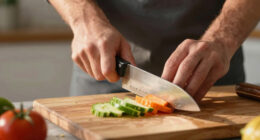
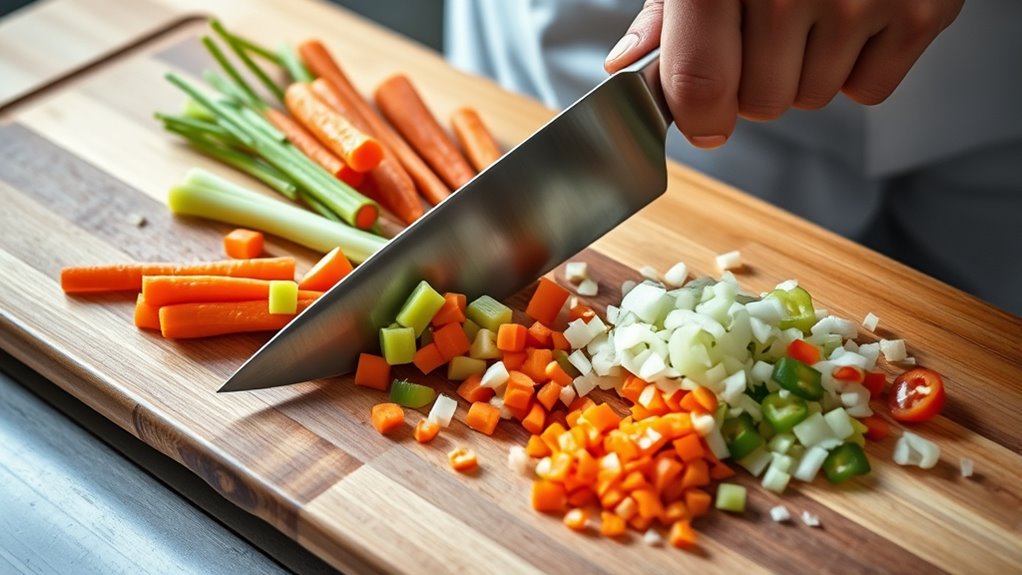
The key to this method lies in understanding the sequence of cutting different vegetables. Typically, mirepoix consists of onions, carrots, and celery, but the goal isn’t just to chop them quickly. It’s about using a systematic approach that streamlines your workflow. Start with the onion, because it takes the longest to chop due to its size and multiple layers. Use a sharp chef’s knife and bring precision to your vegetable chopping. Slice off the root end, peel the skin, then cut the onion in half. Make horizontal and vertical cuts to dice it uniformly, which not only speeds up the process but also ensures even cooking.
Start with onions to save time and ensure even cooking in your vegetable prep.
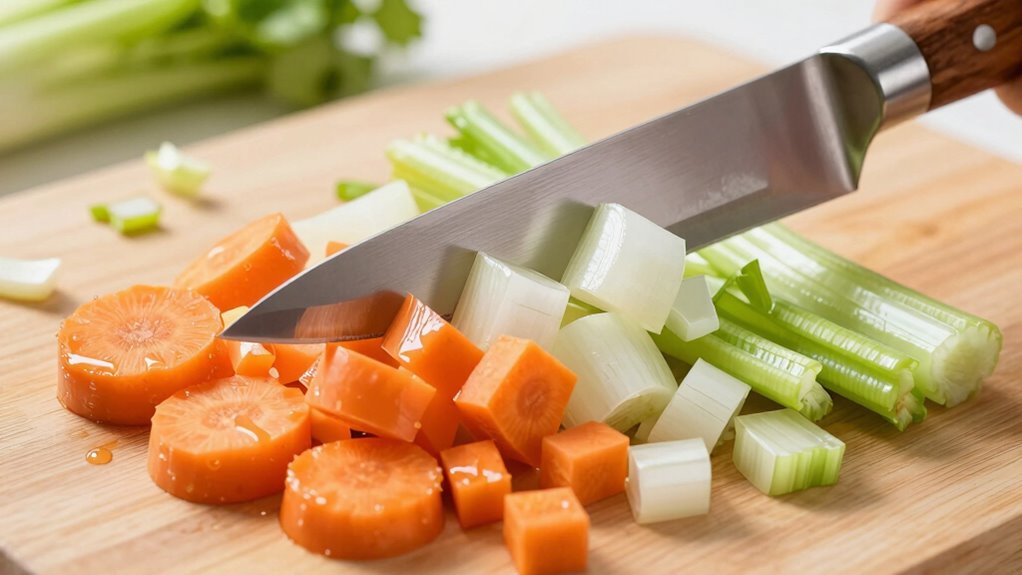
Next, move to the carrots. Since carrots can be tough and require more effort to chop, cut them into manageable pieces first. Then, using proper culinary techniques, slice the carrots lengthwise into planks, followed by cuts across to create small dice. To save even more time, consider using a julienne or matchstick cut if your recipe allows. The key is to keep your cuts consistent, which speeds up your vegetable chopping and helps the vegetables cook evenly.
Finally, tackle the celery. The stalks are easier to chop, but they still require a methodical approach. Trim the ends, slice the stalks into manageable lengths, then cut crosswise into small pieces. Because celery has a fibrous texture, applying a firm, controlled pressure with your knife ensures quicker cuts without slipping or wasting time. Throughout, keep your knife sharp and your cutting board stable—these culinary techniques are essential for safe and efficient vegetable chopping.

DDF iohEF Kitchen Knife, Chef's Knife In Japanese Stainless Steel Professional Santoku Cooking Knife, 7 Inch Non-slip Ultra Sharp Knife with Ergonomic Handle
【Premium Japanese Stainless Steel Chef's Knife】: This chef's knife is made of professional Japanese stainless steel with a…
As an affiliate, we earn on qualifying purchases.
As an affiliate, we earn on qualifying purchases.
Frequently Asked Questions
Can This Knife Order Be Used for Other Vegetable Preparations?
Yes, you can use this knife order for other vegetable preparations. It helps you maintain knife safety while efficiently handling ingredients, preserving their freshness. By following this method, you minimize unnecessary cuts and reduce prep time. Whether slicing, dicing, or chopping, the order keeps your workspace organized, ensuring you work safely and keep your vegetables at their peak freshness. This approach streamlines all your veggie prep tasks effectively.
What Are the Best Knives for Quick Mirepoix Cutting?
For quick mirepoix cutting, you want sharp, versatile knives like a chef’s knife or a Santoku. Keep your knives well-maintained with regular honing and proper sharpening. Choose a sturdy, non-slip cutting board, ideally wood or composite, to guarantee safety and efficiency. These knives make precise cuts faster, reducing prep time, and their balance helps you maintain control, making your vegetable prep smoother and more enjoyable.
How Does This Method Impact the Flavor of the Soup?
They say “timing is everything,” and this method enhances flavor and taste consistency by allowing you to focus on perfecting your mirepoix quickly. Speeding up prep means ingredients hit the pan at ideal freshness, leading to better flavor enhancement. By maintaining a consistent cut, you guarantee even cooking, which deepens the soup’s overall taste, making every spoonful richer and more satisfying.
Is This Technique Suitable for Large-Scale Commercial Kitchens?
Yes, this technique is suitable for large-scale commercial kitchens because it enhances kitchen efficiency. It streamlines the prep process, allowing your staff to work faster and more consistently. With proper culinary training, your team can easily adopt the knife order, saving time without sacrificing quality. Implementing this method helps maintain smooth operations and consistent flavor profiles across multiple batches, making it a valuable addition to high-volume soup production.
Can I Adapt This Technique for Different Types of Soups?
Yes, you can adapt this technique for different types of soups. Focus on vegetable chopping efficiently to prepare ingredients quickly, and tailor the order based on flavor enhancement needs. For example, use softer vegetables early for quicker breakdown or heartier ones later for texture. This approach speeds up prep and guarantees you maximize flavor, regardless of the soup type, making your process more streamlined and consistent.
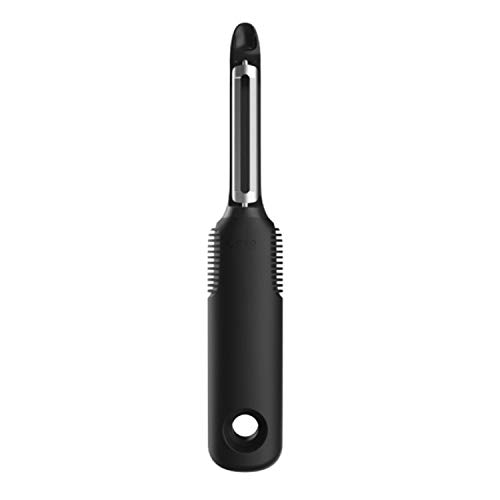
OXO Good Grips Swivel Vegetable Peeler
Easily Peel Potatoes, Apples, and Tough-Skinned Fruit: The swiveling twin blades with flexible action make this much more…
As an affiliate, we earn on qualifying purchases.
As an affiliate, we earn on qualifying purchases.
Conclusion
So, next time you’re making soup, try the quick mirepoix method. Some might think rushing sacrifices flavor, but studies show that proper technique and order can actually enhance taste and efficiency. When you chop in the right sequence, you unleash deeper flavors faster. It’s not just about saving time—it’s about working smarter. Give it a shot and see how a simple knife order transforms your soup prep, proving that efficiency doesn’t mean sacrificing quality.
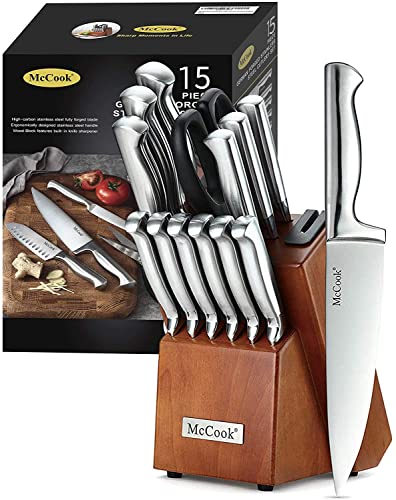
McCook® Knife Sets, German Stainless Steel Kitchen Knife Block Sets with Built-in Sharpener
【Exclusive Built-in Sharpener】Kitchen knife set with sharpener is amazing. The self-sharpening block keeps the knives razor sharp effectively….
As an affiliate, we earn on qualifying purchases.
As an affiliate, we earn on qualifying purchases.

GORILLA GRIP BPA-Free Reversible Kitchen Cutting Board Set of 3, US Designed, Nonporous, Juice Grooves Catch Liquid, Slip Resistant Border, Dishwasher Safe, Durable Large Food Chopping Boards, Black
ULTRA DURABLE STRENGTH: 3rd Party Tested for durability, thick cutting boards have a nonporous surface that won’t splinter…
As an affiliate, we earn on qualifying purchases.
As an affiliate, we earn on qualifying purchases.