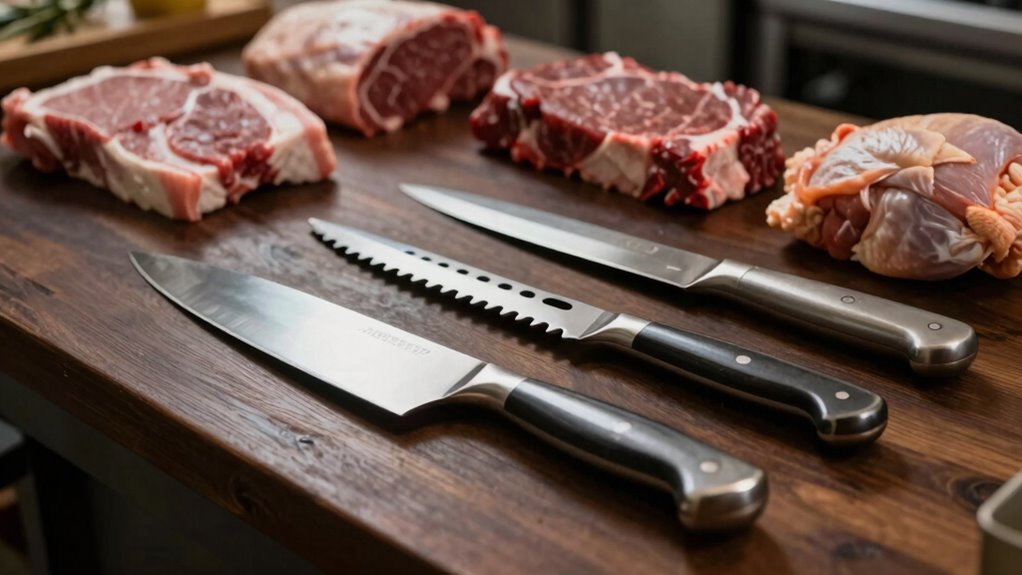
To select the right knife for meat prep across cuisines, consider the specific task and regional traditions. Use a boning or butcher knife for large cuts, a flexible fillet knife for fish, and a specialized honesuki for poultry. Match the blade’s size, flexibility, and style to your needs for precision and ease. Mastering these choices will enhance your skills—continue exploring to find the perfect tools for your culinary ambitions.
Key Takeaways
- Match the knife type to the meat cut, such as heavy-duty butcher knives for large cuts and fillet knives for fish.
- Consider regional culinary traditions; Japanese honesuki for poultry, Western cleavers for bones, Scandinavian flexible fillets for fish.
- Use straight blades for precise portioning, curved knives for breaking down large cuts, and flexible blades for delicate flesh.
- Prioritize proper maintenance—hand wash, sharpen regularly, and store safely—to keep knives effective across cuisines.
- Select ergonomic, well-balanced knives tailored to your comfort and control needs for efficient meat preparation.
Understanding the Different Types of Meat Preparation Knives
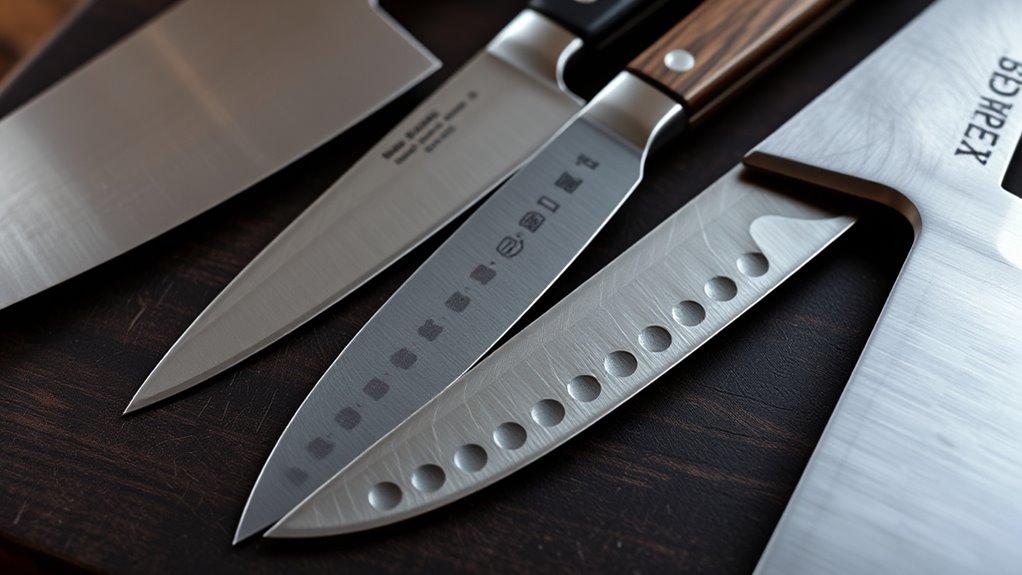
To effectively prepare meat, you need to understand the different types of knives suited for specific tasks. Each knife is designed for a particular function, making your work easier and more precise. Boning knives, for example, have firm blades that excel at slicing around bones and cartilage. Straight models are great for portioning, while curved ones, like Japanese honesuki, are ideal for poultry and joint removal. Fillet knives are flexible, perfect for delicate fish work and skinning. Heavy-duty butcher knives feature curved edges for chopping through ribs or briskets. Cimeter and breaking knives provide control for precise cuts in thick meat, while carving knives with long, narrow blades are perfect for presentation slicing. Knowing these differences helps you choose the right tool for each stage of meat prep.
Selecting the Ideal Blade for Deboning and Butchering Tasks
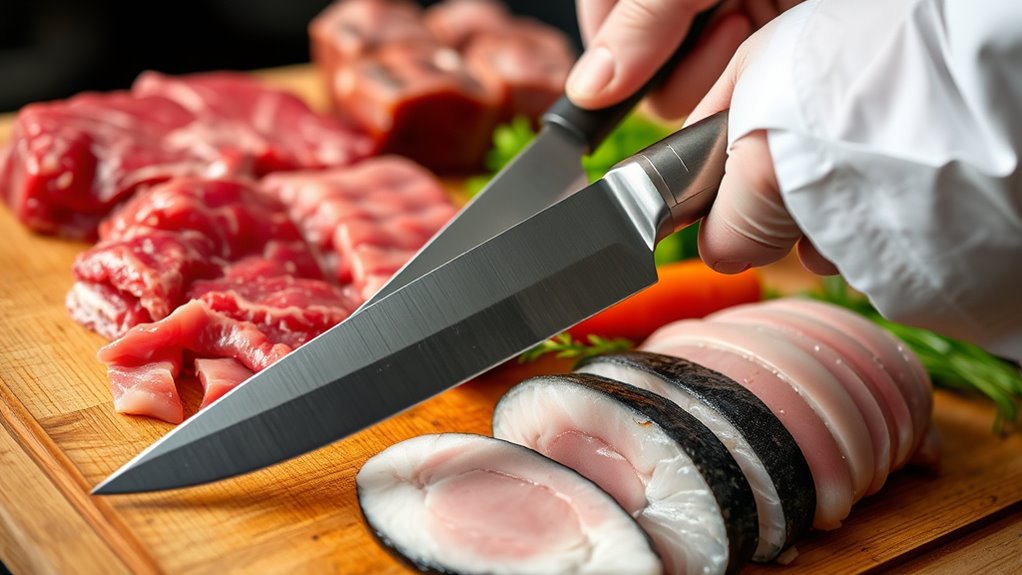
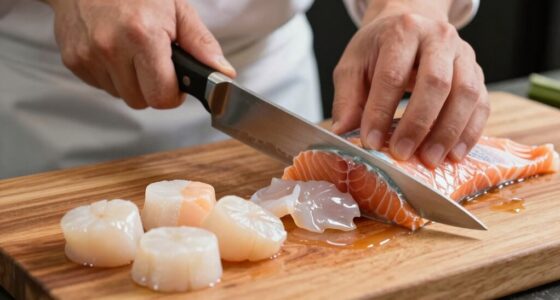
Choosing the right blade for deboning and butchering is essential to achieving clean cuts and efficient work. Your goal is precision, control, and ease of maneuvering through tough or delicate tissues. A straight boning knife is ideal for working around bones, cartilage, and connective tissue, offering leverage and stability. For poultry, a honesuki provides angular control and joint removal capabilities. Select a flexible fillet knife when working with fish and delicate proteins, ensuring gentle muscle separation. Heavy-duty butcher knives excel at breaking down large cuts like ribs or briskets. Use the table below to match your task with the appropriate blade:
| Task | Recommended Knife |
|---|---|
| Deboning poultry | Honesuki or straight boning |
| Fish filleting | Flexible fillet knife |
| Large meat cuts | Heavy-duty butcher knife |
| Precision slicing | Carving knife |
Additionally, choosing a high-quality cutting instrument can make a significant difference in your butchering results. Proper maintenance and selecting a sharp blade are also crucial for safety and efficiency during meat preparation.
The Role of Specialized Knives in Culinary Traditions

Specialized knives have long played a crucial role in shaping culinary traditions across cultures, reflecting unique techniques and regional ingredients. You may notice how Japanese honesuki knives are designed specifically for poultry, with triangular blades that make joint removal seamless. In France, the chef’s knife is essential for a variety of prep tasks, embodying a versatile approach. Western butchering traditions favor heavy-duty cleavers and breaking knives for handling large cuts, emphasizing strength and control. In Scandinavian cuisines, fillet knives with flexible blades enable delicate fish preparation, preserving texture and flavor. These tools are more than just cutting instruments—they embody techniques passed down through generations, reflecting cultural priorities in flavor, presentation, and efficiency. Choosing the right specialized knife connects you to these culinary traditions and techniques.
Tips for Maintaining and Handling Your Meat Preparation Knives

Proper maintenance and handling are essential to keep your meat preparation knives performing at their best. Always wash your knives by hand with warm, soapy water immediately after use, then dry them thoroughly to prevent rust. Avoid putting them in the dishwasher, which can dull blades and damage handles. Sharpen your knives regularly using a whetstone or sharpening system, maintaining the correct angle for your blade type. Use a cutting board made of wood or plastic—avoid glass or marble, which can chip or dull blades. When handling, grip your knife firmly and cut with controlled, deliberate motions to prevent slips and accidents. Store your knives in a knife block, magnetic strip, or sheath, keeping blades protected and maintaining their edge. Proper care prolongs your knives’ sharpness and safety. Additionally, handling your knives with proper technique can help prevent accidents and extend their lifespan. Regularly inspecting your knives and using appropriate filtration and pump protection methods can also prevent damage and ensure optimal performance during prep. To further ensure safety and longevity, consider applying correct storage practices and periodic blade maintenance routines.
Matching Knife Styles to Specific Meat and Cuisine Needs
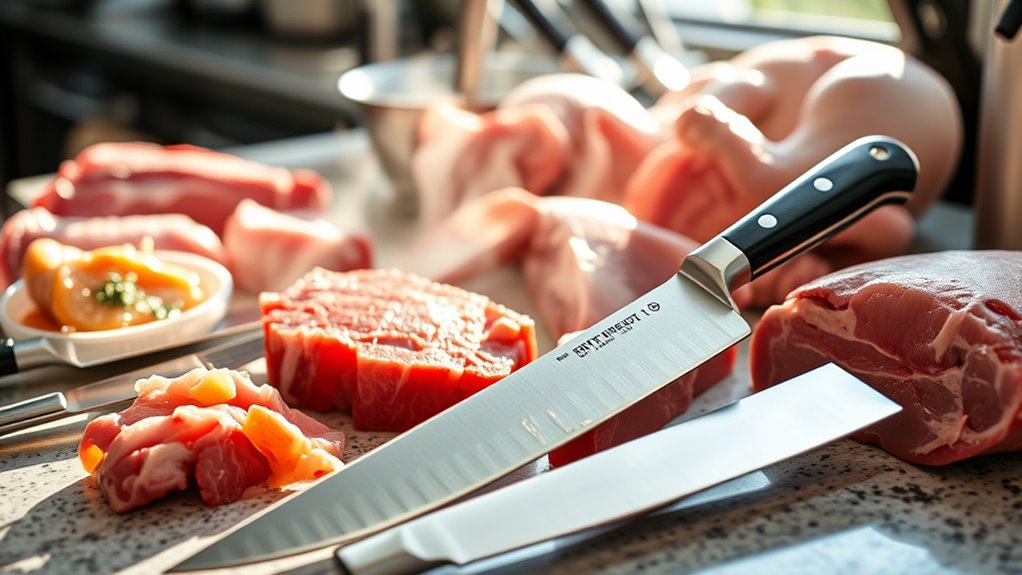
Matching the right knife style to your specific meat and cuisine needs guarantees efficient prep work and ideal results. For poultry, use a honesuki for joint removal and precise cuts. Fish filleting calls for a flexible fillet knife to avoid bones and delicate flesh. Tougher meats like brisket or ribs benefit from a heavy-duty butcher knife for power and control. When presentation matters, a carving knife ensures clean, elegant slices. For more complex cuts, a cimeter knife offers control and precision, making intricate work easier. Additionally, selecting a knife with the appropriate blade length and flexibility enhances your ability to handle various meat textures and styles effectively—choosing the right tool based on the task. Understanding knife ergonomics can also reduce fatigue during prolonged prep sessions, improving overall efficiency. Proper knife maintenance is essential to keep your tools in top condition and ensure safety during use. Regular sharpening and careful storage extend the life of your knives and maintain their cutting performance.
Frequently Asked Questions
How Do I Choose a Knife for Multi-Purpose Meat Processing?
You should select a versatile knife like a heavy-duty butcher knife or a flexible fillet knife, depending on your needs. For general tasks, a butcher knife offers strength for chopping and slicing thick cuts. If you handle delicate proteins or fish, a fillet knife provides precision and flexibility. Combining these tools allows you to efficiently process different meats without switching knives constantly, making your workflow smoother and more effective.
What Safety Precautions Should I Follow With Specialized Meat Knives?
You should always keep your knives sharp and handle them with care. Use a stable cutting surface and grip the handle firmly to prevent slips. Cut away from your body and avoid applying excessive force. Store knives properly in a knife block or sheath, and never leave them loose. Wear cut-resistant gloves if needed, and stay focused during use to prevent accidents. Safety always comes first when working with specialized meat knives.
Can a Single Knife Suit Both Fish and Poultry Preparation?
Yes, a single versatile knife can handle both fish and poultry prep, but it’s not perfect for all tasks. For delicate fish filleting, use a flexible fillet knife. For poultry work, a honesuki or boning knife offers precision. If you want efficiency, choose a high-quality, multipurpose chef’s knife with a sharp edge and good maneuverability. However, for ideal results, specialized knives are best suited for each task.
How Often Should I Sharpen or Replace My Meat Knives?
Did you know that a well-maintained knife can last up to ten times longer than a dull one? You should sharpen your meat knives every 10-15 uses or when you notice they’re not cutting as smoothly. Replace them when they show signs of damage, chips, or if sharpening no longer restores their edge. Regular maintenance keeps your cuts precise and reduces the risk of accidents.
What Are the Best Storage Options to Preserve Knife Sharpness?
You should store your knives properly to keep them sharp. Use a magnetic strip, knife block, or blade guard to prevent blades from dulling or getting damaged. Avoid tossing them loosely in drawers, as this causes nicks and dullness. Regularly clean and dry your knives before storage, and consider honing or sharpening them periodically to maintain their edge. Proper storage prolongs your knife’s lifespan and ensures safe, efficient prep every time.
Conclusion
Choosing the right knife truly elevates your meat prep game, enhancing efficiency and precision. While some might believe a single versatile knife can handle all tasks, research suggests specialized blades often yield better results, especially across diverse cuisines. By understanding your tools and maintaining them well, you guarantee consistent performance. Ultimately, investing in the proper knives isn’t just about tradition—it’s about embracing a proven approach to culinary excellence that’s supported by culinary science.