To choose a fillet knife, match the blade length and flexibility to your fish size and prep style. For small fish like trout, opt for a 6-7 inch, flexible blade for better maneuverability along contours. Larger fish, like salmon, need an 8-9 inch sturdier knife for control and power. If you want precise, close cuts, a highly flexible blade works best; for speed, go heavier. Keep your skills sharp, and more tips await to improve your technique.
Key Takeaways
- Match blade length and sturdiness to fish size: smaller, flexible blades for small fish; longer, stiffer blades for larger fish.
- Choose flexibility based on filleting detail: highly flexible blades for close, delicate cuts; stiffer blades for larger, tougher cuts.
- Consider your prep style: quick cuts benefit from heavier, semi-flexible knives; precise filleting favors highly flexible blades.
- Maintain a sharp, well-maintained knife to ensure safety, efficiency, and clean cuts tailored to fish and task.
- Store and handle fish properly to keep the knife in good condition and ensure safe, effective filleting.
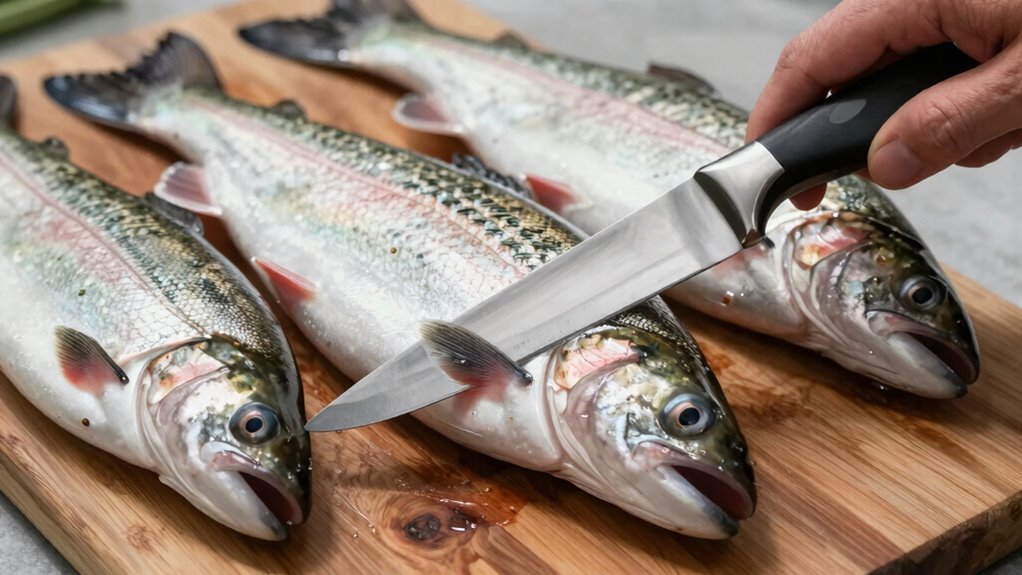
Selecting the right fillet knife is essential for making clean, precise cuts when preparing fish. The size and flexibility of the knife should match the fish you’re working with and your preferred prep style. For smaller fish like panfish or trout, a thin, flexible blade around 6 to 7 inches works best. It allows you to maneuver easily along the contours of the fish, ensuring you get close to the bones without wasting meat. Larger fish, such as salmon or striped bass, require a sturdier, slightly longer knife—around 8 to 9 inches—that offers more control and power for larger cuts. The flexibility of the blade influences how well you can follow the fish’s shape. For delicate, detailed filleting, choose a highly flexible knife. If you’re working quickly on bigger fish and need more strength, opt for a stiffer blade.
Your prep style also impacts your choice. If you prefer a quick, efficient process, a slightly heavier, semi-flexible knife can give you the leverage needed to make faster cuts without sacrificing precision. Conversely, if you focus on meticulous, professional fillets, a highly flexible knife will help you make smooth, clean cuts close to the bones. Remember, maintaining your knife properly is key to ensuring it performs well over time. Regular knife maintenance—such as honing and sharpening—keeps the blade sharp, making filleting easier and safer. A dull knife requires more force, increasing the risk of accidents and damaging your fish. Proper knife maintenance also extends the life of your tool, saving you money and frustration. Additionally, understanding knife sterilization techniques is vital for safe handling, especially when working with different types of fish or multiple fillets. Keeping your knives sanitized prevents cross-contamination and preserves the quality of your catches. Using proper storage techniques for your knives can also help prevent rust and corrosion, ensuring your tools remain in top condition. Incorporating proper fish handling methods can further enhance the ease and safety of your filleting process.
When it comes to fish storage, make sure to keep your fish cold and properly stored before filleting. Fresh fish is easier to work with, and a sharp, well-maintained knife will glide through it smoothly. Once filleted, store the fish appropriately, either on ice or in a sealed container in the refrigerator, to preserve freshness. This not only ensures better taste but also reduces the risk of spoilage that can make filleting more difficult. The quality of fish directly impacts how easy and clean your filleting process will be. The right knife combined with proper fish storage and regular maintenance makes your filleting process more efficient, cleaner, and safer. Whether you’re a beginner or seasoned angler, selecting a knife suited to your target fish size and prep style can significantly improve your results. Keep your tools sharp and your fish cold, and you’ll enjoy cleaner cuts and better meals every time.

Rapala 6-Inch Fillet Knives
Flexible 6" Fillet Blade: Stainless steel blade designed for precision filleting of trout, bass, and panfish
As an affiliate, we earn on qualifying purchases.
As an affiliate, we earn on qualifying purchases.
Frequently Asked Questions
Can I Use the Same Fillet Knife for All Fish Sizes?
You can’t use the same fillet knife for all fish sizes because different fish require different tools. For small fish, a flexible, thinner blade helps navigate fish skin and delicate flesh, while larger fish need a sturdier, balanced knife for control. The right knife guarantees proper handling, especially with fish skin, and maintains knife balance, making your prep easier and safer. Adjust your choice based on fish size and prep style for the best results.
How Do I Maintain and Sharpen My Fillet Knife?
To maintain and sharpen your fillet knife, start by regularly honing the blade with a fine sharpening stone or ceramic rod to keep it sharp. Store it properly in a knife sheath or a designated knife block to prevent damage, and avoid tossing it loosely in a drawer. If the blade becomes too dull or damaged, consider blade replacement to guarantee clean cuts and safety during use.
What Safety Precautions Should I Take When Filleting Fish?
When filleting fish, you should always use a proper knife grip to maintain control and prevent slips. Wear safety gloves to protect your hands from cuts, especially when working around bones or if the knife slips. Keep your fingers away from the blade’s path and work slowly. Make sure your cutting surface is stable. These precautions help keep you safe while achieving clean, precise fillets.
Are There Specific Fillet Knives for Freshwater Versus Saltwater Fish?
A tailor-made tool is worth a hundred generic ones, especially when it comes to fishing. For freshwater versus saltwater fish, you’ll want specialized fishing knives designed for each environment. Saltwater knives often have corrosion-resistant blades, while freshwater knives focus on precision for smaller fish. Using the right knife helps you fillet safely, efficiently, and preserves your catch’s quality, making every fishing trip more successful and enjoyable.
How Does the Handle Material Affect Fillet Knife Performance?
The handle material directly impacts your fillet knife’s performance by influencing grip comfort and durability. A handle with a good grip ensures better control during precision cuts, especially when wet. Materials like rubber or textured plastics provide a secure handle grip, while corrosion-resistant options like stainless steel or certain plastics withstand moisture and saltwater exposure, extending your knife’s lifespan. Choose a handle material that offers both comfort and resistance to corrosion for peak performance.
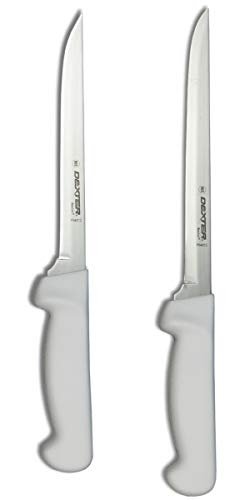
Dexter-Russell 7" and 8" Fillet Knife w/Polypropylene White Handle,Boning Knife, Flexible Fillet Knives for Meat Fish Poultry Chicken,bundle
As an affiliate, we earn on qualifying purchases.
As an affiliate, we earn on qualifying purchases.
Conclusion
Selecting the right fillet knife is like finding the perfect dance partner—smooth, precise, and in sync with your style. With the right blade for your fish size and prep method, you’ll glide through each fillet like a gentle breeze through a calm lake. Trust your instincts, handle your knife with care, and soon, fish will surrender their secrets effortlessly. Embrace the journey, and let your culinary skills shimmer like sunlight on shimmering water.

Cutluxe Fillet Knife for Fish & Meat – 7" Razor Sharp Boning Knife – Flexible High Carbon German Steel, Full Tang Ergonomic Handle Design, Grilling Gifts for Men – Artisan Series
PREMIUM PERFORMANCE – Perfectly engineered fish fillet knife tapered to a razor-sharp edge for effortless filleting, de-boning, trimming,…
As an affiliate, we earn on qualifying purchases.
As an affiliate, we earn on qualifying purchases.
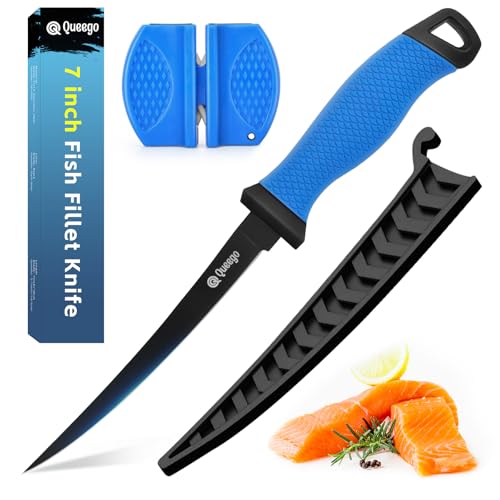
Queego Fillet Knife, 7 Inches Professional Filet Knife for Fish, German G4116 Stainless Steel Blade Fishing Knifes with Two Stage Knife Sharpener,Non-Slip Handles, Protective Nylon Sheath
Sharp G4116 German Stainless Steel Blade —— Queego fillet knife is crafted from G4116 Stainless Steel. The blade…
As an affiliate, we earn on qualifying purchases.
As an affiliate, we earn on qualifying purchases.