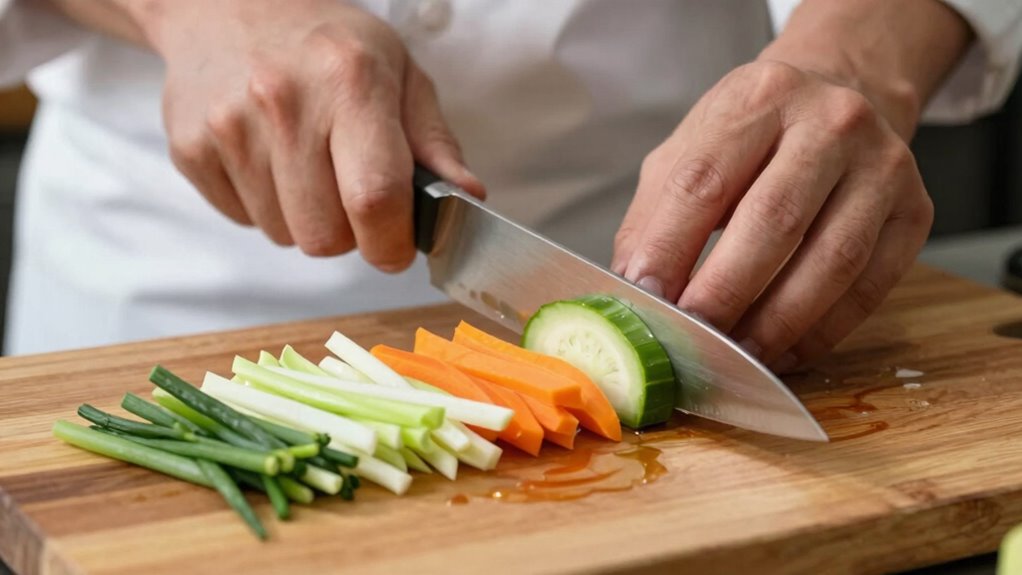

When choosing cut size based on your cooking method, consider whether you’re doing quick-cooking methods like grilling or pan-searing, which work best with smaller, thin slices for rapid heat and flavor absorption. For slow cooking or braising, larger cuts are ideal to break down tissues and stay moist. Stir-frying requires very thin slices for quick, even cooking. Properly matching cut size to method guarantees juicy, flavorful results—continue to explore for more tips.
Key Takeaways
- Match small, thin cuts with quick methods like grilling or stir-frying for even cooking and flavor absorption.
- Use larger, thicker cuts for slow cooking or braising to allow tenderization over time.
- Adjust cut size based on cooking time; smaller pieces cook faster and require shorter durations.
- Consider the desired texture; finer slices promote tenderness in fast methods, while larger cuts preserve moisture in slow methods.
- Properly sized cuts optimize marinade absorption, flavor, and overall dish quality for each cooking technique.
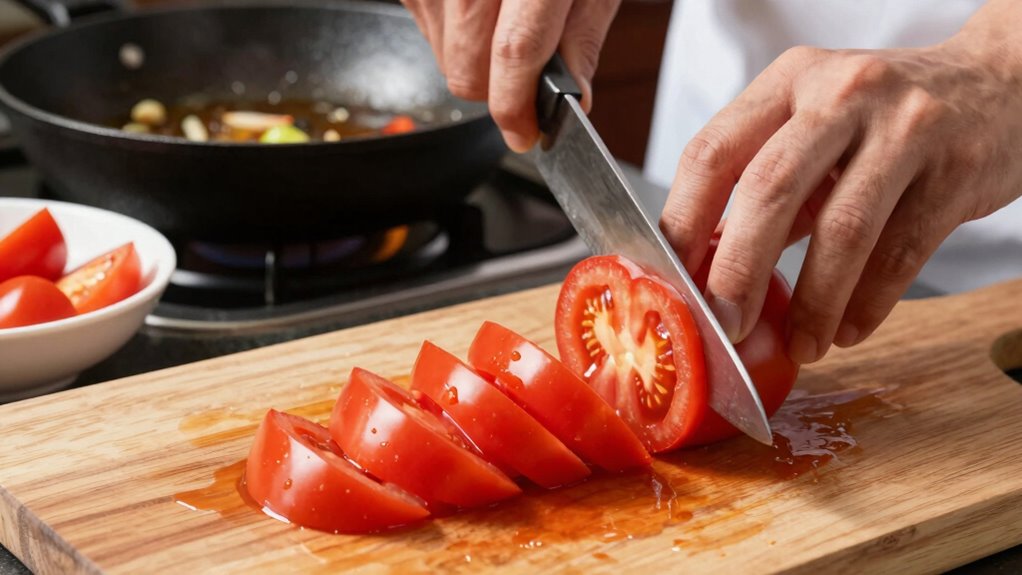
When it comes to cooking, selecting the right cut size can make all the difference in achieving the perfect texture and flavor. The size you choose impacts how heat interacts with the meat, leading to different results in tenderness, juiciness, and overall taste. Whether you’re grilling, braising, or stir-frying, understanding how cut size affects your dish helps you make smarter choices from the start.
Choosing the right meat cut size is key to achieving perfect texture, flavor, and cooking results.
For quick-cooking methods like grilling or pan-searing, smaller cuts or thin slices work best. These allow heat to penetrate quickly, giving you a nicely seared exterior while keeping the interior tender. When you cut meat into uniform, smaller pieces, it also makes marinating techniques more effective. Smaller cuts have more surface area, so they absorb flavors faster and more evenly. This is especially useful when you want that bold marinade flavor or need to tenderize tougher cuts. Keep in mind, though, that smaller pieces cook faster, so you’ll want to keep an eye on cooking time adjustments to avoid overcooking or drying out the meat.
On the other hand, larger cuts are better suited for slow-cooking or braising methods. Thick steaks or sizable roasts need more cooking time to break down connective tissues and develop rich flavors. If you cut these larger cuts into smaller, thinner pieces, you risk losing their structural integrity and could end up with overcooked, dry meat. When working with large cuts, it’s wise to adjust your marinating techniques, allowing enough time for flavors to penetrate deeply. Additionally, consider cooking time adjustments—longer, slow cooking ensures the meat becomes tender without losing moisture. Proper meat preparation enhances the final dish, ensuring optimal results. Incorporating the appropriate size and cut for each method can significantly improve your cooking outcomes and meat quality.
Choosing the correct cooking method based on cut size can also help preserve the nutrients and natural flavors of the meat, contributing to a healthier and more flavorful dish. Stir-frying and sautéing require very thin, uniform slices. This ensures quick, even cooking and prevents burning. When you cut meat into thin strips, you maximize surface area, speeding up marinating absorption and shortening cooking time. Adjustments in cooking time are critical here—thin slices cook rapidly, so you should monitor closely to prevent overcooking. Choosing the right cut size is essential for these methods, as it directly influences both the texture and flavor of your dish.
Ultimately, choosing the right cut size hinges on your intended cooking method. Smaller pieces heat faster and absorb marinades more efficiently but require shorter cooking times. Larger cuts need patience and longer cooking or braising to reach perfect tenderness. By understanding how cut size influences marinating techniques and cooking time adjustments, you can elevate your culinary results, making every dish perfectly cooked and bursting with flavor.

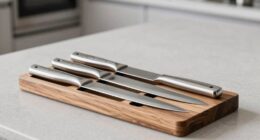
Fox Valley Traders Knife with Adjustable Slicing Guide by Chef's Pride
- Adjustable slice thickness: Turn knob to set thickness
- Razor-sharp serrated blade: Ensures clean cuts
- Versatile cutting capacity: Cuts meat and produce up to 1 inch
As an affiliate, we earn on qualifying purchases.
As an affiliate, we earn on qualifying purchases.
Frequently Asked Questions
How Does Cut Size Affect Cooking Time?
When you cut food into smaller pieces, it cooks faster, reducing overall cooking time. Larger cuts take longer, allowing marinade penetration and maintaining better texture consistency. If you want tender, flavorful results, smaller cuts absorb marinades more quickly but can become overcooked easily. Conversely, larger cuts preserve moisture and texture but need more time to cook through. Balance cut size with your desired flavor and texture for best results.
Can I Adjust Cut Size During Cooking?
You can adjust cut size during cooking, but do so carefully with proper knife techniques to avoid injury. Slice or chop ingredients as needed, keeping safety in mind. Remember to store your tools properly afterward to maintain their sharpness. Adjusting cut size on the fly can help achieve desired textures or doneness, but always prioritize safety and precision, especially when handling hot or tough ingredients.
What Tools Are Best for Precise Cuts?
Your knife is your sword, so choose tools that make precision effortless. A razor-sharp knife is essential, and regular knife sharpening keeps it slicing perfectly. For precise cuts, invest in high-quality, ergonomic knives suited for your tasks. Pair them with a sturdy cutting board—preferably wood or bamboo—to guarantee stability. These tools give you control, accuracy, and safety, making your prep work feel like a smooth dance rather than a battle.
How Does Cut Size Influence Flavor Absorption?
Your cut size directly impacts flavor absorption and texture. Smaller cuts allow marinade penetration more easily, infusing flavors deeply and creating a tender, juicy result. Larger cuts resist marinade penetration, leading to subtler flavors. Additionally, cut size influences texture; smaller pieces become more tender, while larger cuts maintain a hearty bite. Choosing the right cut size guarantees ideal marinade absorption and desired texture, enhancing your overall dish experience.
Which Cut Size Is Best for Quick Stir-Fry?
For a quick stir-fry, you should cut vegetables and meat into small, uniform pieces. Thin slices or small cubes work best because they cook quickly and evenly. Use these cuts for delicate vegetable types like bell peppers or broccoli, and for tender meat textures like chicken or shrimp. This guarantees your ingredients retain flavor, stay tender, and cook fast, making your stir-fry flavorful and perfectly cooked every time.
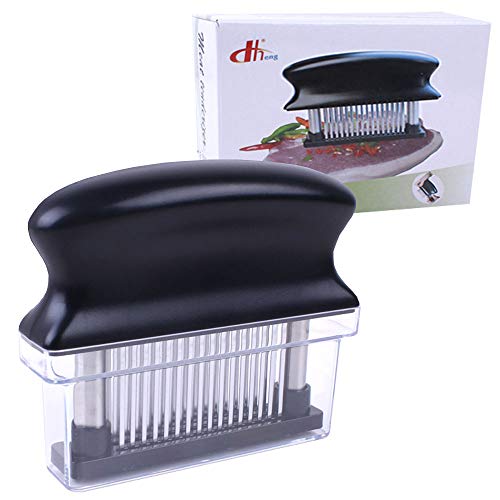
Meat Tenderizer with 48 Stainless Steel Ultra Sharp Needle Blades Heavy Duty Cooking machine for Tenderizing Beef, Turkey, Chicken, Steak, Veal, Pork, Fish etc
- Chef Grade Meat Tenderizer: Creates tiny channels for better marinade absorption
- High-Quality Stainless Steel Blades: Durable, corrosion-resistant, and stays sharp
- Ergonomic ABS Grip: Easy to hold and maneuver during use
As an affiliate, we earn on qualifying purchases.
As an affiliate, we earn on qualifying purchases.
Conclusion
Remember, choosing the right cut size depends on your cooking method and desired texture. It might seem tricky at first, but don’t overthink it—trust the guidelines, and you’ll get better with practice. Even if you’re unsure, start with smaller cuts for faster cooking and adjust as you go. Ultimately, experimenting helps you discover what works best for your taste. So, embrace the process and enjoy creating perfect dishes every time!
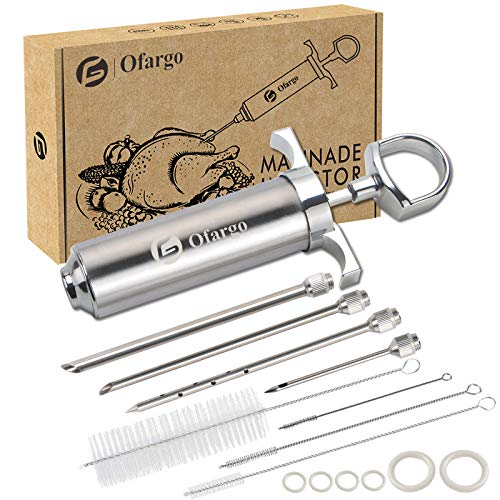
Ofargo Stainless Steel Meat Injector Syringe Kit with 4 Marinade Needles for BBQ Grill Smoker, Father Day Gifts for Dad Husband Men Him, 2-oz Large Capacity, Both Paper User Manual and E-Book Recipe
- Material: Stainless steel and silicone construction
- Safety: Food-safe for marinade and ingredients
- Durability: Leak-proof and heavy-duty design
As an affiliate, we earn on qualifying purchases.
As an affiliate, we earn on qualifying purchases.

Color Coded Cutting Boards Set of 4 with Holder, BPA-Free
- Color-Coded Food Icons: Different colors for food types
- Juice Groove & Non-Slip Grip: Contains liquids and prevents slipping
- Durable & Stable Design: Thicker, warping-resistant boards
As an affiliate, we earn on qualifying purchases.
As an affiliate, we earn on qualifying purchases.