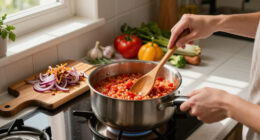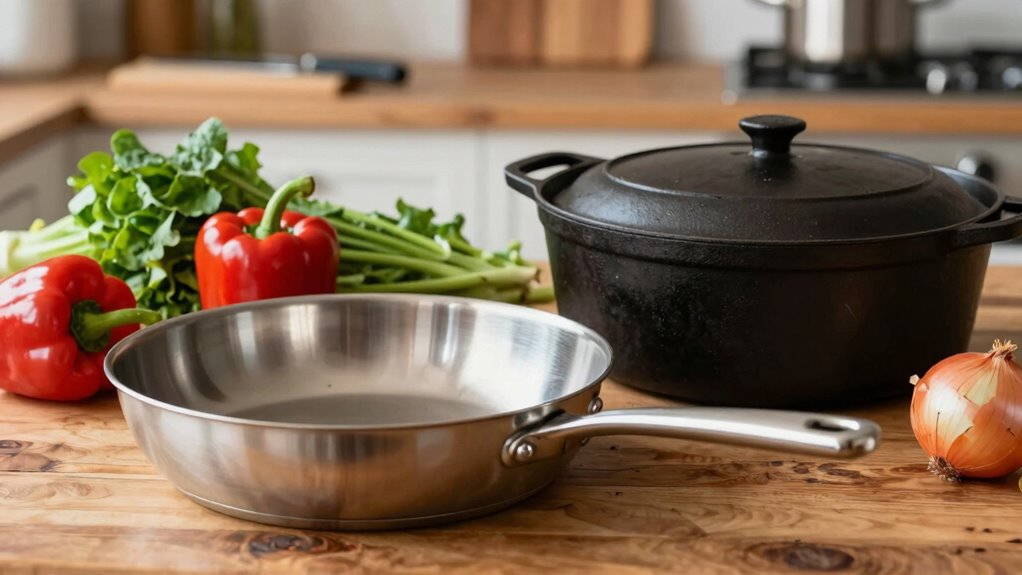
To match prep-heavy cooking, choose durable cookware made from materials like stainless steel or cast iron, which resist damage and withstand frequent use. Look for even heat distribution to prevent hot spots and guarantee consistent results. Non-stick surfaces help with delicate dishes and easy cleanup, but protect them by avoiding metal utensils. Proper maintenance extends the lifespan of your cookware, keeping performance excellent. Keep exploring to discover ways to optimize your heavy-duty kitchen setup.
Key Takeaways
- Opt for durable materials like stainless steel or cast iron to withstand frequent, heavy use.
- Choose cookware with even heat distribution to prevent hot spots and ensure consistent cooking results.
- Select heavy-duty cookware to resist warping, cracking, and surface damage during intense prep sessions.
- Consider non-stick features for easy cleanup and delicate dish preparation, ensuring compatibility with heavy use.
- Prioritize proper maintenance and care to extend the lifespan and maintain performance of heavy-use cookware.
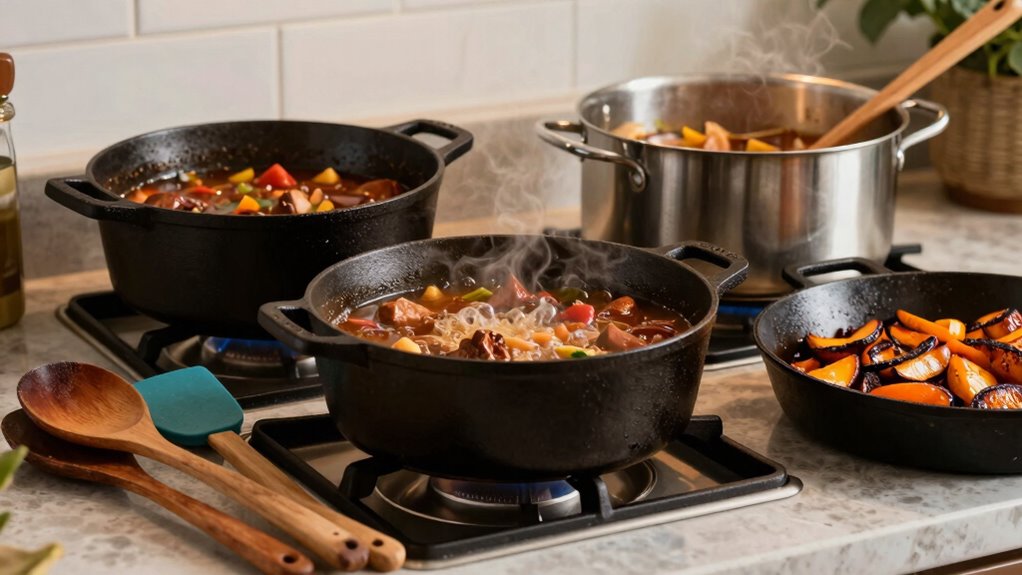
When you’re preparing large batches or handling frequent, intense cooking sessions, choosing the right cookware becomes essential. Heavy cooking demands gear that can withstand constant use without warping, cracking, or degrading. Material durability is at the forefront of your decision—stainless steel, cast iron, and aluminum are popular options, each offering different strengths. Stainless steel is incredibly durable, resisting dents and scratches while maintaining a sleek appearance over years of use. Cast iron, known for its toughness, can handle high heat and is virtually indestructible, making it perfect for heavy-duty tasks. Aluminum, while lightweight, provides excellent heat conduction, but you need to ensure it’s of high quality to prevent warping or discoloration over time. Picking cookware that’s built to last ensures you won’t have to replace it after a few heavy cooking sessions.
Choose durable cookware like stainless steel, cast iron, or high-quality aluminum for heavy, frequent cooking sessions.
Next, think about the non-stick surface. When you’re cooking large quantities or preparing dishes that tend to stick—like fried eggs, pancakes, or delicate sauces—a non-stick surface can be a game-changer. It allows you to cook with less oil, makes cleanup easier, and reduces the risk of food tearing apart or burning. However, not all non-stick coatings are created equal; some can wear out quickly if subjected to frequent use or high heat. Look for high-quality non-stick surfaces, such as ceramic coatings or PTFE-based non-stick layers that can withstand rigorous cooking. Remember, even the best non-stick cookware benefits from proper care—avoid metal utensils and high heat that can scrape or degrade the coating. Additionally, understanding material durability is crucial because it determines how well your cookware will stand up to heavy use over time. Using cookware with a robust construction can further extend its lifespan, especially in demanding cooking environments. Furthermore, selecting cookware with even heat distribution can significantly improve cooking results and reduce hot spots that may damage the surface or warp the material. To maximize the longevity of your cookware, it’s also helpful to consider proper maintenance practices, which can significantly impact durability. Incorporating regular seasoning and proper cleaning can also help maintain the non-stick properties and overall performance of your cookware.
When choosing cookware for heavy cooking, consider how well it balances material durability with the non-stick surface. A cast iron skillet with a seasoned surface can provide excellent non-stick qualities and withstand frequent use, but it requires proper maintenance. Stainless steel pots with a non-stick insert or coating may offer a good compromise—durable and easier to clean, with the added benefit of excellent heat retention. Aluminum pans with reliable non-stick layers can be lightweight and efficient but may need more careful handling to prevent damage.
In the end, you want cookware that can endure your busiest cooking days without losing performance. Prioritize material durability so your investment lasts, and choose a non-stick surface that simplifies your work and keeps your dishes intact. This combination ensures you’re ready for any prep-heavy, intense cooking session with tools designed to handle the challenge.
heavy-duty stainless steel cookware set
As an affiliate, we earn on qualifying purchases.
As an affiliate, we earn on qualifying purchases.
Frequently Asked Questions
What Materials Are Best for Non-Stick Cookware?
For non-stick cookware, look for durable non-stick coatings like ceramic or PTFE, which provide excellent food release and easy cleanup. Aluminum and hard-anodized aluminum materials are popular because they offer great heat conduction and durability, making them ideal for prep-heavy cooking. Avoid cheap non-stick coatings that peel or scratch easily. Choose cookware with a sturdy base and high-quality non-stick coatings to guarantee longevity and reliable performance during your busy cooking sessions.
How Do I Maintain Cookware Used for Heavy-Duty Cooking?
Did you know that proper maintenance can extend your cookware’s lifespan by up to 50%? To maintain cookware used for heavy-duty cooking, focus on regular cleaning and careful handling. Avoid abrasive scrubbers, which can damage surfaces, and always follow manufacturer guidelines for cleaning. Keep your cookware dry after washing and periodically check for wear. This proactive approach guarantees better cookware longevity, making your investment last longer and perform better.
Can I Use the Same Cookware for Baking and Stovetop?
Yes, you can use the same cookware for baking and stovetop if it has good baking compatibility and stove versatility. Look for versatile materials like cast iron, ceramic, or stainless steel that perform well in both settings. These options heat evenly and can handle the high temperatures needed for baking and stovetop cooking. Just make certain the cookware’s design suits your specific baking and stove needs for safe and effective use.
What Size Cookware Is Ideal for Large Meal Prep?
For large meal prep, opt for sizable cookware like a 12-inch skillet or a 6-quart stockpot to handle big batches efficiently. This guarantees you can cook enough food at once, reducing prep time. Keep your kitchen organized with meal prep containers to store leftovers neatly. Using appropriately sized cookware helps streamline your kitchen workflow, making meal prep smoother and more manageable, especially when preparing large quantities.
Are There Any Safety Concerns With Heavy-Duty Cookware?
Heavy-duty cookware can pose safety concerns if you ignore fire safety and chemical safety. Always check for proper heat resistance and make sure handles stay cool to prevent burns. Use cookware with non-toxic, food-safe coatings to avoid chemical contamination. Be cautious with high heat, and never leave heavy pots unattended to prevent fires. Regularly inspect cookware for cracks or damage, and follow manufacturer instructions for safe, secure, and savvy cooking.
As an affiliate, we earn on qualifying purchases.
Conclusion
Choosing the right cookware transforms your prep-heavy sessions from chaos to control. Think of your pots and pans as the sturdy stage where your culinary masterpiece unfolds—each piece supporting your creativity and effort. Just like a reliable partner in a busy kitchen, the right cookware makes your tasks smoother and more enjoyable. When your tools are well-matched, those chaotic prep moments become a calm, confident dance—every ingredient in its perfect place.
non-stick cookware for frequent cooking
As an affiliate, we earn on qualifying purchases.
As an affiliate, we earn on qualifying purchases.
high-quality aluminum pots and pans
As an affiliate, we earn on qualifying purchases.
As an affiliate, we earn on qualifying purchases.