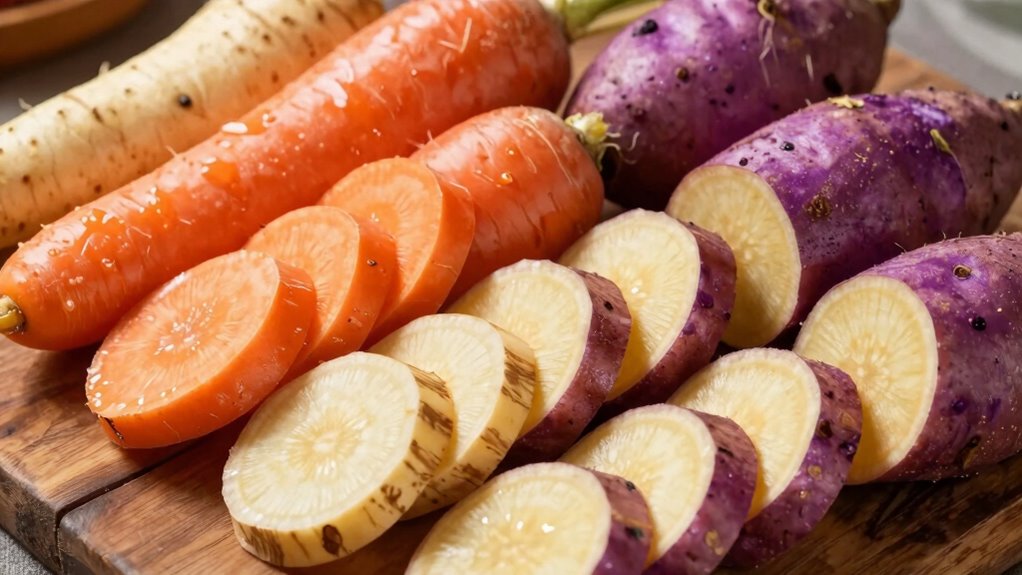

For evenly roasted root vegetables, cut them into uniform pieces, ideally around 1 to 1.5 inches, whether as cubes, sticks, or slices. Smaller, consistent shapes promote even cooking and better caramelization, while larger pieces can cook unevenly. You can choose slices or rounds for quicker roasting, but keep them uniformly thick. Properly preparing and shaping your vegetables helps develop flavor and texture — keep going to discover even more tips for perfect results.
Key Takeaways
- Cut root vegetables into 1 to 1.5-inch cubes or sticks for even cooking and optimal caramelization.
- Use uniform slices or rounds for quicker roasting, ensuring consistent thickness.
- Avoid uneven or oversized pieces to prevent undercooking or burnt exteriors.
- Opt for shapes that maximize surface area, like sticks, to enhance browning.
- Consistent shapes improve presentation and heat transfer during roasting.
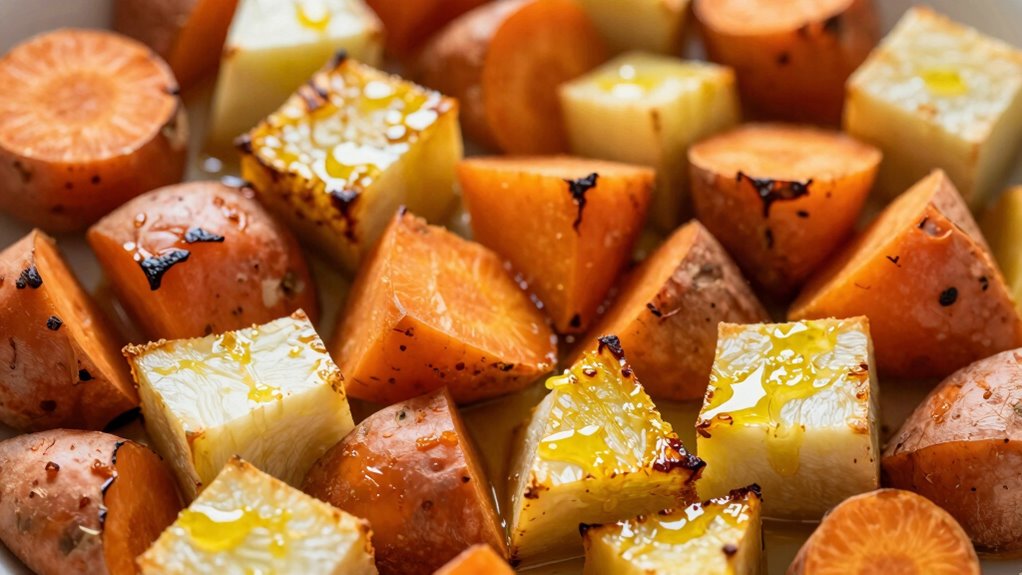
When roasting root vegetables, choosing the right cut shape can make a significant difference in how evenly they cook and how their flavors develop. The size and shape of your vegetable pieces influence cooking time, texture, and how well they caramelize. To achieve perfect results, you need to pay attention to vegetable peel techniques and roasting temperature tips. Peeling can sometimes be optional, depending on the vegetable and your preference, but properly preparing the peel can improve texture and flavor. For instance, scrubbing potatoes thoroughly and peeling tougher skins like beets or carrots can prevent bitterness and improve overall taste. If you decide to leave the skin on, make sure to wash the vegetables well, as dirt and grit can interfere with roasting. Proper preparation of vegetables not only enhances flavor but can also affect their cooking behavior. When it comes to cut shapes, uniformity is key. Cutting your vegetables into consistent pieces ensures they cook evenly, preventing some pieces from becoming mushy while others remain underdone. For root vegetables like carrots, parsnips, or sweet potatoes, cutting them into roughly 1 to 1.5-inch cubes or sticks works well. These shapes promote even heat distribution and allow the vegetables to develop that desirable caramelized exterior while remaining tender inside. Slices or rounds are also good options, especially if you want a slightly quicker cook time, but keep the thickness consistent to avoid uneven cooking. Additionally, choosing the appropriate cut shape can enhance the presentation and texture of your roasted vegetables. Using the right shape can also help optimize heat transfer during roasting, resulting in more consistent results. Paying attention to vegetable size can further improve roasting outcomes by ensuring all pieces reach the ideal internal temperature simultaneously. Roasting temperature tips are just as important as your vegetable cut shapes. A common mistake is roasting at too low a temperature, which can result in limp vegetables that lack flavor. For optimal caramelization and flavor development, aim for a roasting temperature between 400°F and 425°F (200°C to 220°C). This high heat helps to develop a crispy exterior and tender interior. If you’re roasting a large batch or denser vegetables, consider increasing the temperature slightly or roasting in two stages—starting at a higher temperature to develop color and then lowering it to finish cooking through. Remember to toss your vegetables with oil and seasonings before roasting to enhance flavor and promote even browning.
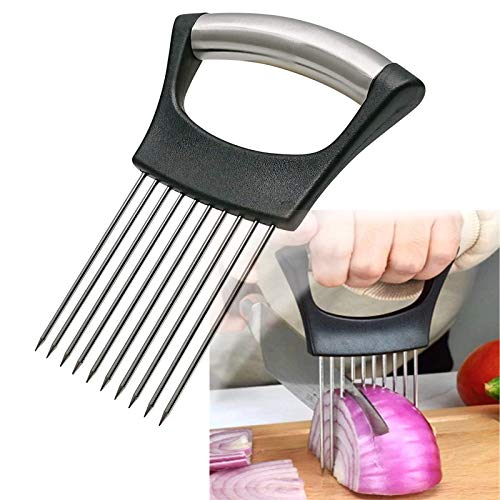
Stainless Steel Onion Holder for Slicing,Onion Slicer Holder,Kitchen Gadget
- Safe and Even Slicing: Sharp stitches prevent slippage and ensure uniform cuts
- Multi-purpose Use: Can be used as a meat tenderizer and vegetable slicer
- Time-Saving Tool: Speeds up slicing and chopping, reducing prep time
As an affiliate, we earn on qualifying purchases.
As an affiliate, we earn on qualifying purchases.
Frequently Asked Questions
How Does Cutting Size Affect Roasting Time?
Cutting root vegetables into uniform sizes guarantees they roast evenly, preventing some pieces from overcooking while others are underdone. Smaller pieces roast faster, while larger ones take longer, affecting roasting time. Consistent size also helps retain moisture, keeping vegetables tender and flavorful. To achieve perfect results, aim for uniformity in size, which simplifies timing and ensures all pieces reach ideal tenderness simultaneously.
Should Root Vegetables Be Peeled Before Cutting?
You should peel root vegetables before cutting for a smoother texture, much like peeling a shell to reveal the jewel inside. Use peeling techniques that remove only the dirt and thin skins to preserve flavor and nutrients. When you peel first, you can achieve uniformity in cuts, ensuring even roasting. Skipping peeling can leave rough patches, leading to uneven cooking and less appealing results, especially with thicker or tougher skins.
Are There Specific Cut Shapes for Different Root Vegetables?
Yes, different root vegetables benefit from specific cut shapes to enhance their vegetable flavor and presentation aesthetics. For instance, carrots and parsnips look great when sliced into rounds or sticks, while beets are often cubed or cut into wedges to boost their visual appeal. These shapes help guarantee even roasting, maximize flavor, and create a more attractive dish. Tailoring your cuts to each vegetable elevates both taste and presentation.
Can I Prepare Cuts in Advance for Roasting Later?
Think of your prepared vegetables as soldiers ready for battle; cutting them in advance means you’re giving them a head start. You can prep cuts ahead of time for roasting later, but store them properly in airtight containers or vegetable storage bags to prevent spoilage and browning. Use preparation tips like keeping them submerged in water if needed, and refrigerate promptly to maintain freshness. This way, your roasting process becomes quicker and hassle-free.
How Do Cut Shapes Influence the Caramelization Process?
Cut shapes directly affect caramelization because they alter the cutting surface area, which influences how heat interacts with the vegetable. Larger pieces caramelize more slowly, while smaller or thinner cuts promote faster browning using caramelization techniques. When you cut vegetables into uniform, smaller shapes, you increase the surface area, encouraging more even and rapid caramelization, resulting in richer flavor and better texture.

Jenivaint Vegetable Spiral Cutter and V Shaped Carving Knife Set, Fruit Spiralizer Kitchen Garnishing Tools for Cucumber Potato Watermelon Salad Decor Party Platter (1 Set)
- Complete Carving Set: Includes spiral cutter and V-shaped knife
- Intricate Spiral Patterns: Creates spirals and star shapes in vegetables
- Precise V Cuts: Delivers clean, angled cuts for detailed carving
As an affiliate, we earn on qualifying purchases.
As an affiliate, we earn on qualifying purchases.
Conclusion
When roasting root vegetables, choosing the right cut shape can make all the difference in texture and flavor. For example, evenly-sized cubes or wedges ensure uniform cooking and caramelization. Notably, a study shows that cutting vegetables into smaller pieces increases their surface area by up to 50%, enhancing browning and flavor development. So, whether you prefer chunky or thin slices, your choice of cut shape directly impacts your roasting success and taste experience.

LEM Products Commercial-Quality French Fry Cutter for Potatoes and Vegetables, Cast Iron
- Construction Material: Heavy-duty cast iron for durability
- Cutting Plates: Includes two stainless steel plates
- Cutting Sizes: Thin and regular fry options
As an affiliate, we earn on qualifying purchases.
As an affiliate, we earn on qualifying purchases.

Half Sheet Pans with Rack Set, 18 Inch Commercial Quality Baking Sheet Pan Set, Natural Aluminum Cookie Sheet, Warp Resistant Nonstick Thick Cookie Tray Pans for Baking, Roasting
- Heavy-Duty Aluminum Construction: Resists warping and rusting at high temperatures
- Includes Cooling Rack: Stainless steel rack for cooling and roasting
- Large Baking Surface: 17.32 x 12.8 inches exterior size
As an affiliate, we earn on qualifying purchases.
As an affiliate, we earn on qualifying purchases.