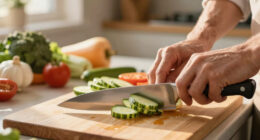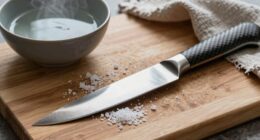
To chiffonade like a pro and stop tearing leaves, start by selecting tender, fresh leaves and align their edges tightly. Gently roll the leaves into a compact bundle, pressing edges together for stability. Use a sharp, steady knife at a consistent angle to make clean, precise cuts. Keep your workspace organized and handle the leaves and knife carefully. Mastering this leaf-roll trick guarantees smooth, uniform slices—if you want to learn more, you’re in the right place.
Key Takeaways
- Carefully align the leaves’ edges before rolling to create a tight, uniform bundle that resists tearing.
- Use fresh, firm, and slightly moist leaves to ensure flexibility and reduce tearing during rolling and slicing.
- Roll the leaves tightly with even pressure, maintaining control to keep the roll stable and prevent tearing.
- Handle the knife at a consistent angle with smooth, controlled motions to make clean, tear-free cuts.
- Keep your workspace organized and use a sharp knife to enhance safety and precision during chiffonade preparation.
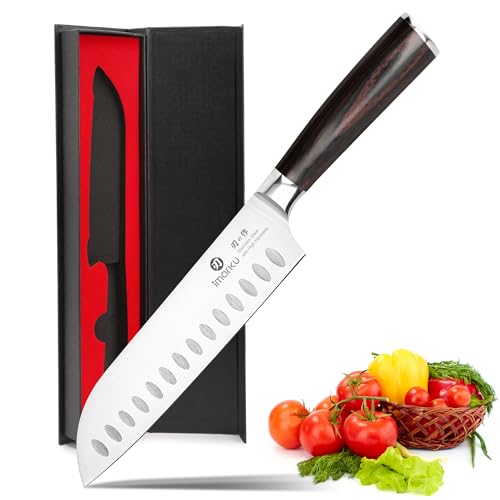
imarku Chef Knife 7 Inch Kitchen Knife Ultra Sharp Santoku Knife – High Carbon Japanese Chefs Knife, Kitchen Gadgets 2025, Apartment Essentials, Birthday Gifts for Him Her, Best Gifts for Women Men
Professional Santoku Knife: This imarku super sharp santoku knife is made of high carbon stainless steel that resists…
As an affiliate, we earn on qualifying purchases.
As an affiliate, we earn on qualifying purchases.
Selecting the Perfect Leaves for Chiffonade
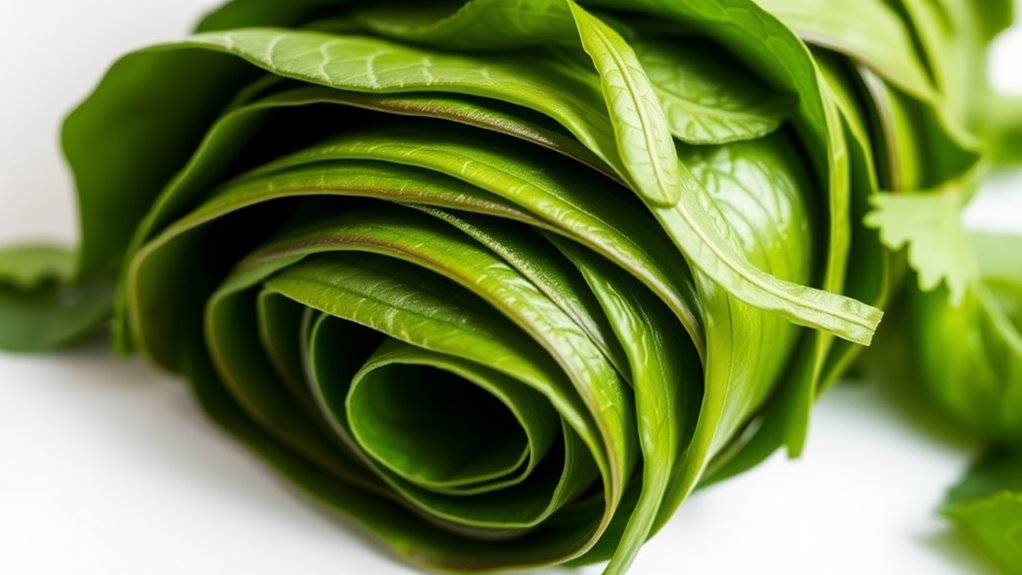
Choosing the right leaves is vital for achieving beautiful chiffonade. When selecting leaves, focus on leaf selection that offers a tender, supple texture, which makes rolling and slicing easier. Leaf texture plays an important role; sturdy, thick leaves can tear or resist clean cuts, while delicate, smooth leaves glide smoothly into thin ribbons. Opt for fresh, healthy greens like basil, spinach, or lettuce, avoiding wilted or bruised leaves. Look for leaves with a consistent, even surface free of blemishes or tears. The right leaf texture ensures you can roll tightly without resistance, resulting in uniform, elegant strips. Proper leaf selection not only improves your chiffonade’s appearance but also makes the process safer and more enjoyable. Choosing the right leaves is also essential for maintaining the freshness and flavor of your herbs and greens. Additionally, understanding leaf structure can help you identify which leaves are best suited for chiffonade, ensuring optimal results. Recognizing leaf flexibility can further assist in selecting leaves that are easier to roll and cut. Being aware of leaf moisture content can help you choose leaves that won’t slip or tear during slicing.
vegetable chiffonade cutting board
As an affiliate, we earn on qualifying purchases.
As an affiliate, we earn on qualifying purchases.
Preparing Your Workspace and Tools
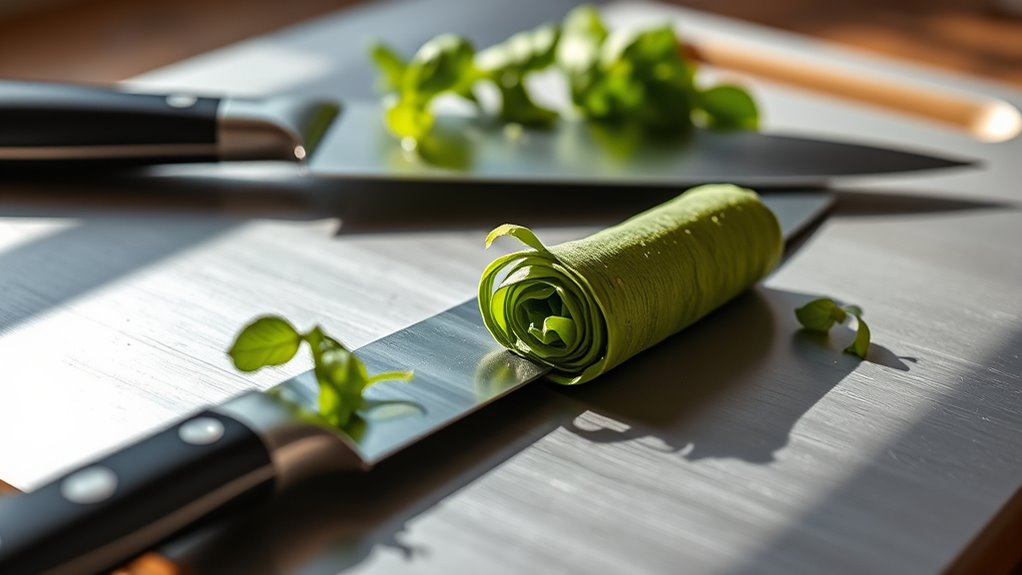
Setting up your workspace and tools before you start guarantees a smooth chiffonade process. Make sure your cutting surface is clean and stable to prevent slips. Organize your workspace so your knife, cutting board, and leaves are within easy reach. Prioritize knife safety: use a sharp knife to reduce slips and cut away from your body. Keep your knife clean and dry, and handle it with care. Proper workspace organization minimizes clutter and distractions, helping you focus on precise cuts. Clear away any unnecessary items to create ample space for your hands and the leaves. Additionally, ensuring your workspace has good lighting can significantly improve your precision and safety during slicing. Using ergonomic tools can further enhance comfort and control during your prep. Incorporating a proper cutting technique can also help prevent tearing and ensure uniform slices. Maintaining a comfortable working posture can reduce fatigue and improve your overall control while slicing. Being mindful of workstation ergonomics can help prevent strain and improve your overall efficiency during preparation.

Prepara Herbs n' Greens Cool Tool, White/Green
Minimal size stores away simply
As an affiliate, we earn on qualifying purchases.
As an affiliate, we earn on qualifying purchases.
How to Properly Stack and Align Leaf Layers
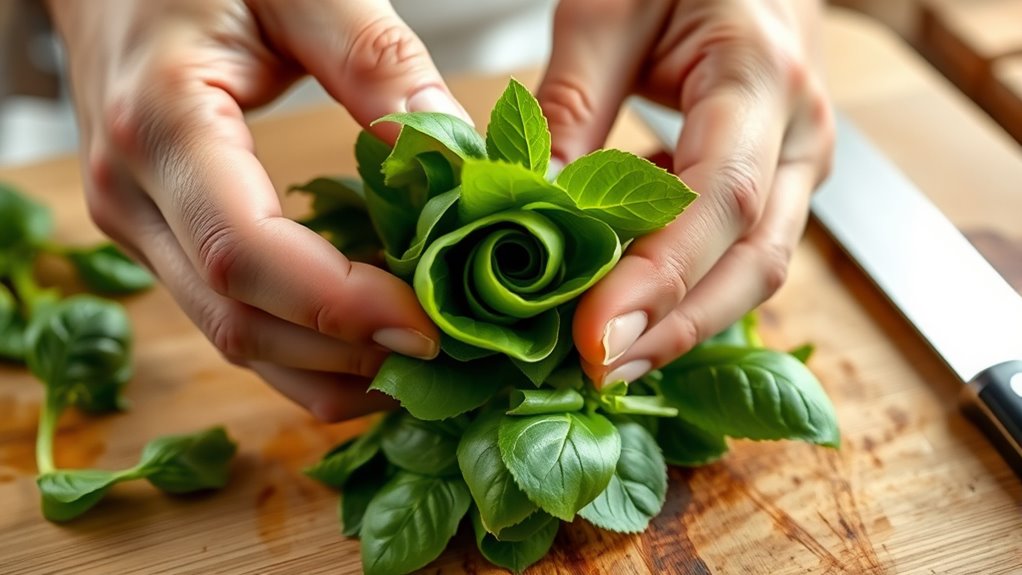
Start by selecting uniform leaves to guarantee consistent layers. Carefully align the edges so the layers sit smoothly on top of each other. Handle the leaves gently to prevent tearing and maintain a clean, neat stack. Ensuring your workspace is organized can also help prevent damage during the process. Incorporating visual and auditory cues can further assist in maintaining precision and reducing errors.
Choose Uniform Leaves Carefully
To achieve clean, uniform chiffonade cuts, you need to carefully select and prepare your leaves. Focus on leaf texture and leaf size to guarantee consistency. Uniform leaves help prevent tearing and make slicing smoother. When choosing leaves, consider these factors:
- Opt for leaves with similar leaf texture—firm but not too tough—for even slicing.
- Select leaves of comparable size to ensure thickness and length are consistent.
- Avoid damaged or wilted leaves, as irregularities can cause tearing or uneven cuts.
- Paying attention to industry standards for quality ensures your leaves meet optimal criteria for slicing.
Aligning leaves with similar texture and size creates a stable stack, making your chiffonade clean and professional. This careful selection minimizes tearing and ensures each roll is even, giving you perfect strips every time. Proper leaf choice is key to mastering this technique.
Align Edges Precisely
Ensuring your leaf layers are precisely aligned is essential for achieving clean chiffonade strips. When stacking leaves, make sure edges line up perfectly to create uniform cuts. Use a gentle yet firm grip, always prioritizing knife safety, especially during chopping vegetables or delicate herbs. Proper alignment reduces tearing and ensures even slices. To help, arrange your leaves in a neat pile, then press the edges together before slicing. Here’s a quick guide:
| Step | Tip | Result |
|---|---|---|
| Stack | Align edges carefully | Even layers |
| Secure | Hold with fingers | Stability |
| Cut | Use a sharp knife | Clean, precise strips |
This method keeps your leaves intact and makes chiffonading safer and easier. Remember, practicing proper knife skills can further improve your results and safety in the kitchen. Additionally, maintaining a sharp knife minimizes tearing and ensures cleaner cuts during your chiffonade process. Being aware of knife safety practices can help prevent accidents while working with herbs and vegetables. Using a cutting board with a non-slip surface can also provide extra stability, making your slicing more controlled and safe. Properly cleaning and maintaining your knives ensures they stay sharp and effective over time.
Stack With Gentle Care
Gently stacking your leaves is key to achieving clean, uniform chiffonade strips. Carefully align the edges, considering leaf texture to prevent tearing and guarantee smooth cuts. A neat stack minimizes movement, enhancing cutting safety and control. To do this effectively:
- Layer leaves with similar textures for consistent thickness.
- Use your fingertips to lightly press and stabilize the stack.
- Keep the edges aligned, avoiding unnecessary pressure that can damage delicate leaves.
Proper stacking helps maintain the integrity of each leaf, making your chiffonade look professional and clean. It also reduces the risk of tearing, which can compromise cutting safety. With this careful approach, you’ll produce beautiful, even strips every time, elevating your culinary prep.

Intelitopia Complete Knife Sharpening Stone Set – Dual Grit Whetstone 400/1000 3000/8000 Knife Sharpener with Leather Strop, Flattening Stone, Bamboo Base, 3 Non-slip Rubber Bases & Angle Guide
【Complete Knife Sharpening Stone Kit】You don't need to be a Pro to sharpen your blades, all you need…
As an affiliate, we earn on qualifying purchases.
As an affiliate, we earn on qualifying purchases.
The Technique of Rolling Leaves for Uniformity
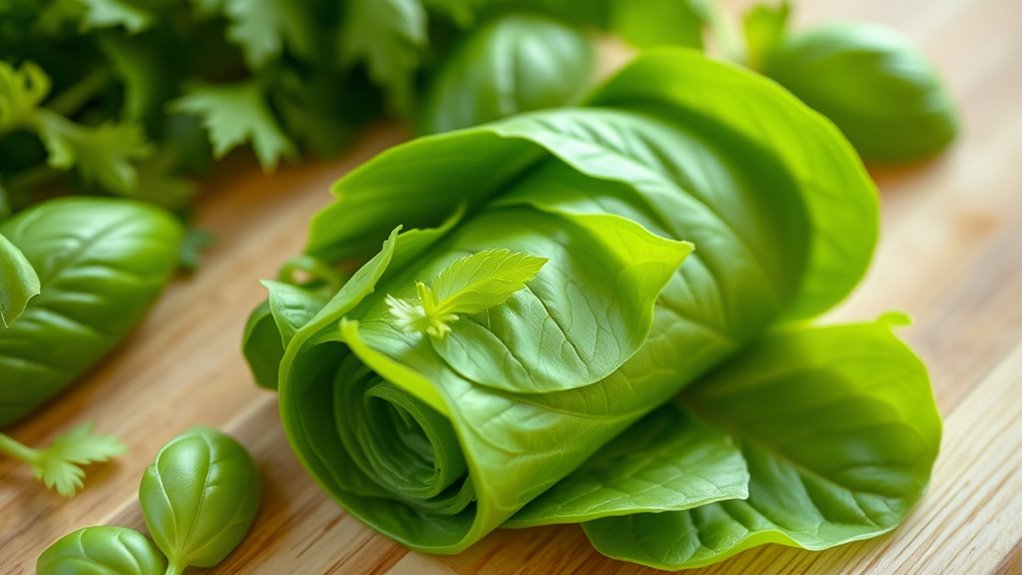
Start by selecting fresh, firm leaves to guarantee they roll smoothly. Next, align the edges carefully so the roll stays tight and uniform. Finally, roll the leaves tightly and evenly to create consistent strips for your chiffonade.
Select Fresh, Firm Leaves
Have you ever wondered how to pick the best leaves for your chiffonade? Choosing fresh, firm leaves is essential for clean, even cuts. Start with leaf selection: look for vibrant, crisp leaves that aren’t wilted or bruised. Proper leaf storage keeps them fresh longer—store in a paper towel in the refrigerator to maintain firmness. When selecting, consider these key points:
- Visual firmness: Leaves should feel sturdy and resilient.
- Color check: Bright, vivid hues indicate freshness.
- Avoid damage: Skip leaves with tears or dark spots, which can tear during rolling and slicing.
- Understanding leaf quality standards helps ensure you pick the best leaves for your chiffonade.
- Additionally, selecting leaves that meet food safety guidelines can prevent contamination and ensure optimal freshness.
Align Edges Precisely
To achieve uniform, professional-looking chiffonade slices, you need to align the leaves’ edges precisely before rolling. Start by selecting leaves with straight, even edges—good leaf selection makes alignment easier. Once you’ve chosen the right leaves, lay them flat on a clean cutting surface. Use your knife safely by keeping your fingers clear of the blade and cutting away from your body. Carefully trim any uneven or torn edges to create a straight edge. Align the leaves so their edges match perfectly, ensuring a smooth, even roll. Proper alignment minimizes tearing and helps you achieve consistent slices. Taking the time to ensure edges are aligned not only improves your presentation but also enhances safety, preventing slips or accidents while handling the knife. Proper technique ensures safety and efficiency during preparation. Additionally, practicing knife skills can further improve your precision and confidence in the kitchen. Being mindful of kitchen safety practices is essential for preventing injuries while working with sharp tools.
Roll Tightly and Even
Ever wonder how to guarantee your chiffonade slices look uniform and professional? It all starts with rolling leaves tightly and evenly. A secure roll prevents tearing and ensures clean cuts. To do this effectively:
- Use knife safety by keeping your fingers clear and cutting with controlled, even strokes.
- Ensure the leaf has the right moisture; too dry, and it’ll crack, too wet, and it’s slippery.
- Apply consistent pressure as you roll, maintaining a firm, tight bundle to avoid uneven slices. Paying attention to the leaves’ condition can also enhance the uniformity and safety of your chiffonade. Additionally, being aware of cutting techniques can help you develop more precise and safe slicing skills.
- Understanding the performance metrics of your technique can help you improve your results over time.
- Developing proper cutting techniques can further refine your slices and increase safety during preparation.
This technique not only improves the appearance of your chiffonade but also makes slicing safer and more precise. Remember, a well-rolled leaf provides stability and control, leading to professional-looking results every time.
Making Precise and Safe Cuts With a Sharp Knife
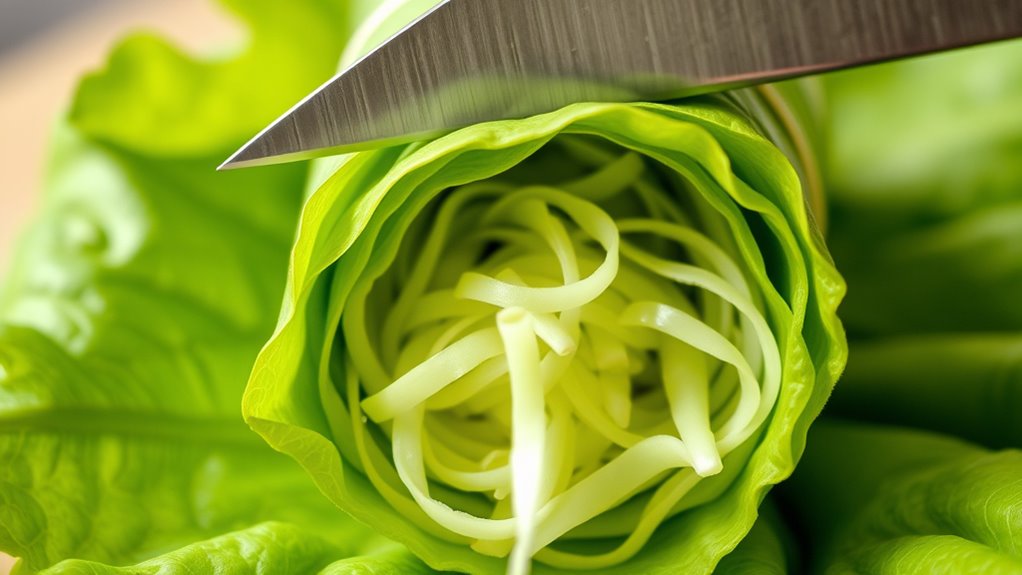
Using a sharp knife is essential for making precise and safe cuts in the kitchen. A sharp blade reduces the risk of slips and accidents, ensuring you maintain control. Always prioritize knife safety by holding the handle firmly and keeping your fingers away from the blade’s path. When using cutting techniques, employ a steady, controlled motion rather than force. Proper technique involves using your knuckles as a guide to keep the knife consistent and avoid injuries. Keep your work area clean and stable to prevent slips. Regularly sharpening your knife maintains its edge, making cuts cleaner and safer. Remember, a well-maintained, sharp knife not only improves precision but also makes the task easier and safer.
Tips for Maintaining Consistent Thickness
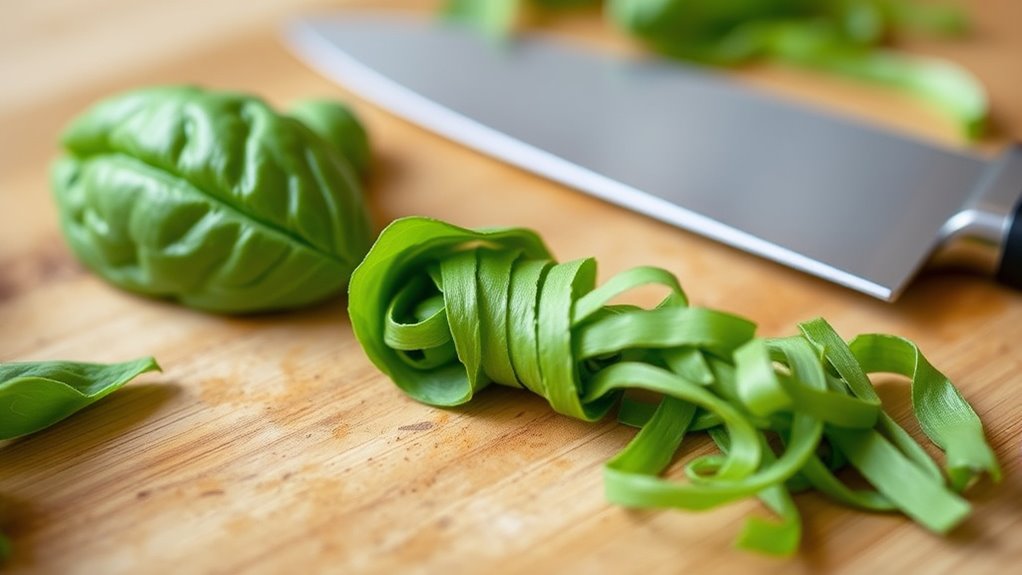
Maintaining a consistent thickness when slicing ingredients guarantees even cooking and a professional presentation. To achieve this, focus on controlling leaf thickness and adjusting your cutting angles. First, keep your knife at a uniform angle to ensure even slices. Second, use a steady, smooth motion to avoid variations in leaf thickness. Third, practice consistent pressure; pressing too hard or too lightly can create uneven cuts. Remember, precise cutting angles help you manage leaf thickness effectively, especially with delicate herbs or greens. By honing these skills, you’ll produce uniform chiffonade and prevent tearing, making your dishes look polished and cook evenly. Mastering consistent thickness elevates your knife skills and results in a more refined culinary presentation.
Troubleshooting Common Tearing Issues
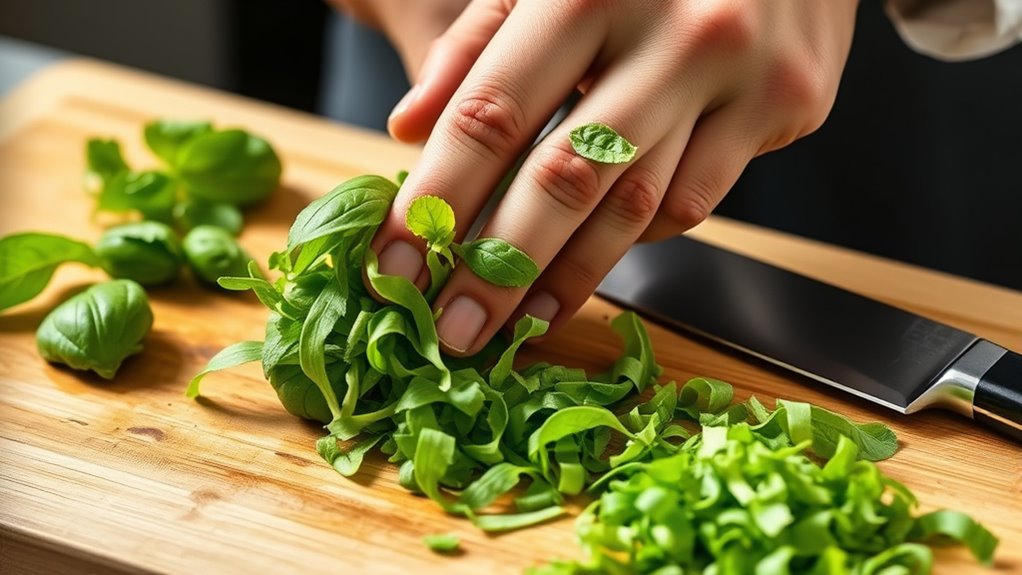
Tearing during chiffonade can be frustrating, especially when working with delicate herbs or greens. To avoid this, always prioritize knife safety by using a sharp, well-maintained knife, which reduces the risk of ripping. Pay attention to leaf texture; softer, more fragile leaves are more prone to tearing, so handle them gently. When slicing, use smooth, controlled motions rather than forcing the knife through the leaf. If you notice tearing, consider adjusting your technique or stabilizing the leaf more securely with your fingers. Also, ensure your knife angle is appropriate, maintaining a consistent, clean cut. Practicing these steps helps protect delicate leaf edges, making your chiffonade cleaner and more uniform, with fewer tears and better presentation.
Incorporating the Leaf-Roll Method Into Your Routine
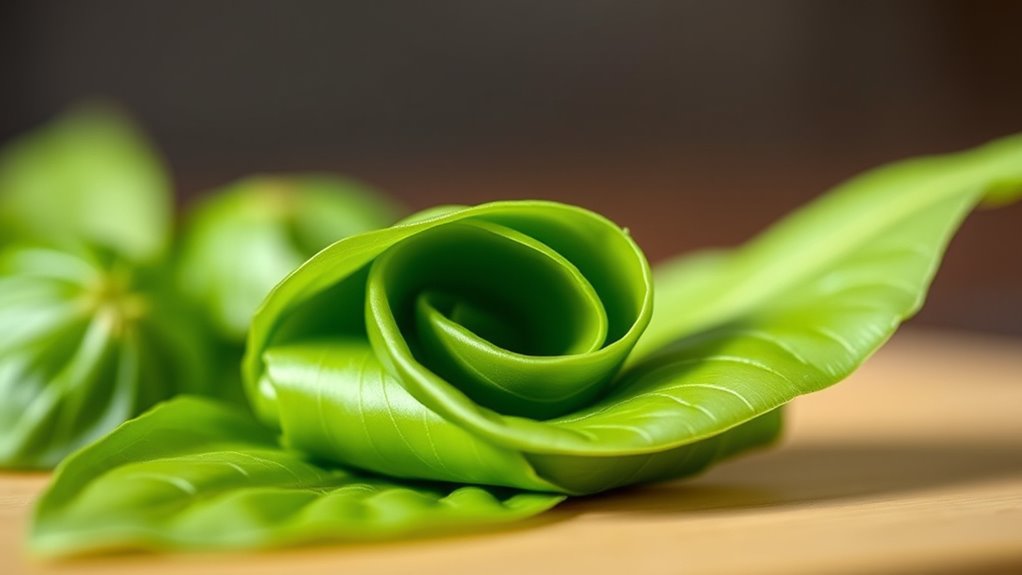
Start by preparing your leaves properly to guarantee clean, even rolls. Focus on mastering the rolling technique tips to make precise cuts effortlessly. Then, discover how to seamlessly incorporate the leaf-roll method into your dishes for beautiful presentation and efficient prep.
Preparing the Leaf Properly
Before you begin slicing with the chiffonade technique, preparing the leaf properly is essential. Start with careful leaf selection—choose firm, fresh leaves free of bruises or tears. Next, set up your workspace to guarantee safety and efficiency; a clean, stable surface with sharp knives makes a big difference. To prepare the leaf:
- Wash the leaf gently to remove dirt.
- Pat it dry thoroughly to prevent slipping.
- Trim off tough stems or edges that could interfere with rolling.
This process ensures your leaf is clean, stable, and easy to handle. Proper preparation minimizes tearing and sets the stage for a smooth leaf-roll method. With the right leaf and workspace setup, you’re ready to slice confidently and achieve perfect chiffonade strips.
Rolling Technique Tips
Have you tried incorporating the leaf-roll method into your chiffonade routine? To do this safely, focus on knife safety by keeping your fingers curled away from the blade and using a sharp knife for cleaner cuts. When rolling the leaf, ensure it’s snug but not too tight to avoid tearing. This technique helps you control the leaf better and creates uniform slices. Before you start, store your leaves properly to keep them fresh and firm, making rolling easier. Practice the roll with gentle pressure, maintaining a steady hand. With consistent practice, this method minimizes tearing and speeds up your prep. Remember, a well-stored leaf and careful handling are key to mastering this rolling technique and achieving perfect chiffonade slices.
Incorporating Into Dishes
Incorporating the leaf-roll method into your dishes can elevate both presentation and flavor. This technique shines in herb preparation, making herbs look refined and professional. You can use chiffonade-style herbs as eye-catching garnishes, adding a fresh pop to salads, soups, or pasta. To maximize its impact, consider these key points:
- Use the rolled herbs as a vibrant garnish that enhances visual appeal.
- Incorporate finely sliced herbs into sauces or dressings for a burst of aroma.
- Practice consistent, thin slices to maintain uniformity and elegance.
Creative Uses for Chiffonade Cuts in Dishes
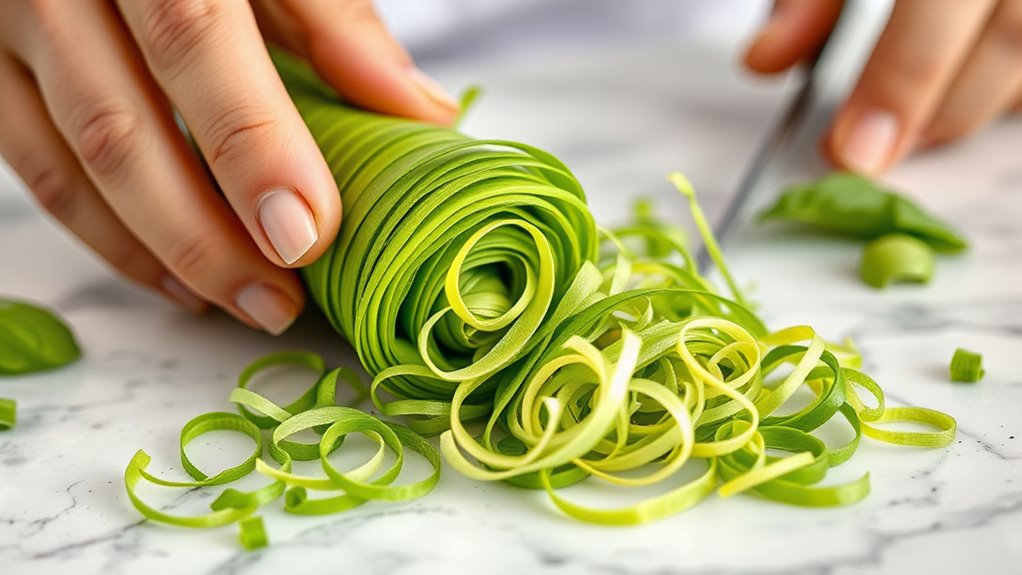
Chiffonade cuts aren’t just for salads—they can add visual appeal and flavor to a variety of dishes. You can sprinkle delicate leafy greens or herb garnishes on soups, pizzas, or pasta to elevate presentation instantly. This technique makes dishes look more refined and appetizing. Use a chiffonade to create thin, uniform strips that distribute flavor evenly. For example, basil or mint leaves add fresh aroma and color when chiffonaded over grilled meats or roasted vegetables. Experiment with different herbs and greens to enhance textures and visual interest.
| Leafy Greens | Herb Garnishes |
|---|---|
| Spinach, Swiss chard | Basil, mint, cilantro |
| Kale, arugula | Parsley, dill |
Cleaning and Maintaining Your Knife and Workspace
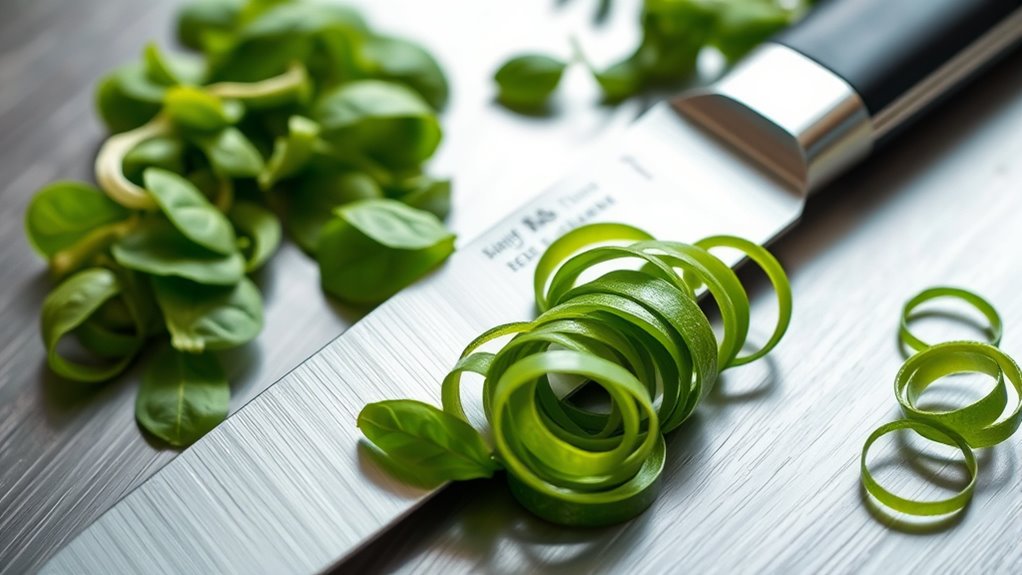
After using your knife for chiffonade cuts, properly cleaning and maintaining it guarantees it stays sharp and safe to use. To assure knife safety and keep your workspace organized, follow these essentials:
- Wash your knife immediately after use with warm, soapy water, avoiding the blade edge.
- Dry it thoroughly to prevent rust and keep it in top condition.
- Store your knife in a designated knife block or magnetic strip to protect the blade and prevent accidents.
Regular maintenance sharpens your knife, making chiffonade cuts cleaner and safer. A well-organized workspace minimizes clutter, reduces the risk of injury, and keeps your tools in prime condition. Proper cleaning and organization are key to safe, efficient slicing every time.
Frequently Asked Questions
Can I Chiffonade Fragile Herbs Without Tearing Them?
Yes, you can chiffonade fragile herbs without ripping them. Use a sharp knife for better knife safety and precise ingredient preparation. Gently roll the herbs into a tight cigar shape, then slice across with a swift, clean motion. This technique minimizes tearing, keeping your herbs intact and looking professional. Always focus on controlled, confident cuts to protect your fingers and ensure even, delicate chiffonade slices.
What Types of Leaves Are Best Suited for the Leaf-Roll Trick?
You should use delicate herbs like basil, mint, and parsley, as well as leafy greens such as spinach and kale, for the leaf-roll trick. These leaves are flexible enough to roll without tearing, making it easier to achieve thin, uniform slices. When you roll them tightly, it reduces strain and tearing, giving you clean, professional-looking chiffonade cuts that enhance your dishes and keep your herbs fresh.
How Do I Prevent Leaves From Slipping During Slicing?
Think of your leaves as dancers on a stage—if they slip, the performance falters. To prevent this, guarantee leaf stability by trimming the tough stems and drying the leaves slightly. Use a sharp knife and press the leaf firmly against a steady cutting surface. Keep your hand close, applying gentle pressure, so the leaves stay in place. This way, your slices stay smooth and controlled, like a graceful dance.
Is This Technique Suitable for Large or Thick Leafy Vegetables?
Yes, this technique works well for large leafy greens and thick leafy vegetables. You can easily roll and slice even bulky leaves, making them manageable and preventing tearing. Just guarantee you securely roll the leaf tightly before slicing to maintain control. This method helps you achieve uniform strips, regardless of the leaf size or thickness, making it ideal for preparing large or thick leafy vegetables efficiently and neatly.
How Can I Adapt This Method for Seasoned or Coated Leaves?
Ever wonder how to chiffonade seasoned or coated leaves without disrupting their flavor? To adapt this method, gently rinse and pat the leaves dry to remove excess seasonings or coatings, then proceed with the leaf-roll technique. This minimizes tearing and preserves the seasoned layers. Do you want clean, uniform strips that maintain flavor integrity? With careful handling, you can easily chiffonade even seasoned or coated leaves for elegant presentation.
Conclusion
With the leaf-roll trick, you transform delicate greens from fragile to fearless, like a master sculptor shaping art from paper. No more tears or frustration—just sleek, uniform chiffonade that elevates your dishes. As you master this technique, imagine the vibrant colors and crisp textures dancing on your plate, a proof to your precision. Embrace this method, and let your kitchen become a canvas where every cut reveals your skill and creativity.