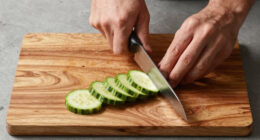
To keep your cutting board clean mid-prep without losing momentum, keep a spray bottle with a diluted sanitizer or white vinegar nearby. Quickly spray the surface after handling raw ingredients or switching tasks, then wipe it down with a clean cloth or paper towel. For plastic boards, you can rinse or run them through the dishwasher during pauses. Properly maintaining your board guarantees food safety and smooth workflow—learn more about tailored cleaning tips for different materials to stay efficient.
Key Takeaways
- Keep sanitized wipes or spray nearby to quickly disinfect the board between tasks.
- Use a separate cutting surface or section for raw ingredients to minimize cross-contamination.
- Regularly rinse the board with hot water and use a quick scrub with soap to remove debris.
- Sanitize with a spray of diluted bleach or vinegar during pauses to maintain cleanliness without halting prep.
- Dry the board thoroughly after each cleaning to prevent bacteria growth and maintain a safe workspace.
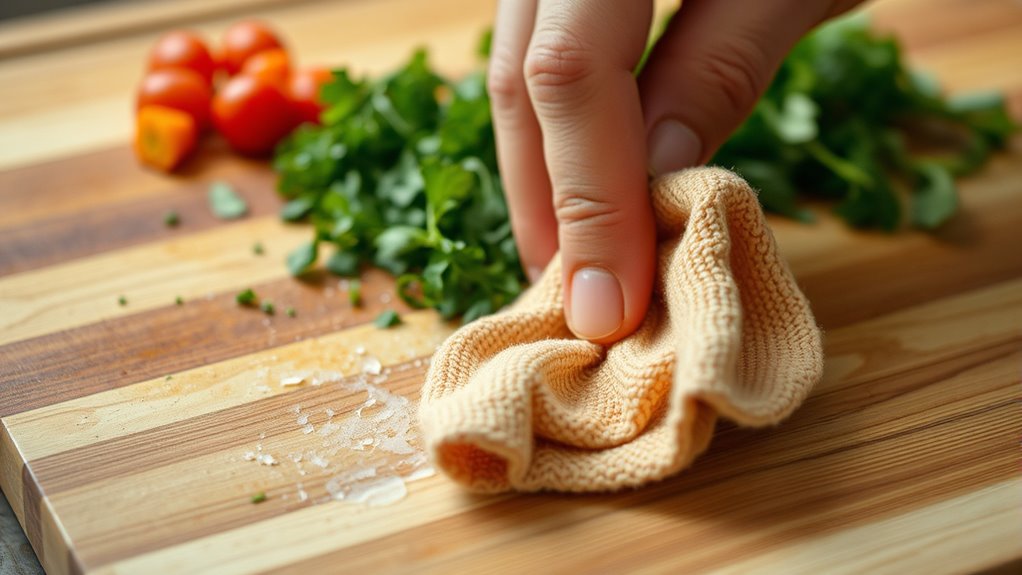
Keeping your cutting board clean is essential for food safety and maintaining its longevity. When you’re in the middle of meal prep, it’s easy to overlook hygiene, but quick, effective sanitizing techniques can keep your workspace safe without slowing you down. First, consider your cutting board’s material, as this influences how you should sanitize it. Wooden boards are porous, so they require gentler cleaning and more thorough drying to prevent bacteria buildup. Plastic boards are non-porous, making them easier to sanitize quickly and thoroughly. Glass or bamboo boards also have their own care routines, but plastic tends to be the most convenient for quick sanitizing mid-prep.
Properly cleaning your cutting board ensures food safety and extends its lifespan.
To sanitize efficiently, keep a spray bottle of a diluted bleach solution or a commercial sanitizer nearby. When you notice cross-contamination risk—say, after chopping raw chicken and then vegetables—spray the surface with your chosen sanitizer. Let it sit for a few seconds to kill germs, then wipe it down with a clean cloth or paper towel. This process helps maintain hygiene without interrupting your workflow. For a more natural approach, white vinegar or hydrogen peroxide can serve as effective sanitizers, especially if you’re concerned about chemical residues. Just spray and wipe; they evaporate quickly, leaving the surface sanitized and ready for the next ingredient.
Material considerations come into play when choosing your cleaning strategy. Wooden boards, while durable and gentle on knives, are more sensitive to moisture and require immediate wiping and air drying to prevent bacteria from thriving in the pores. Plastic boards, on the other hand, are dishwasher safe and can be scrubbed with hot, soapy water for a quick refresh. If you’re working with glass or bamboo, check their care instructions, but generally, these materials are easy to sanitize with alcohol-based wipes or sprays. Always remember, no matter the material, avoid using abrasive scrubbers on delicate surfaces to prevent scratches that harbor bacteria.
In a busy kitchen, you want sanitizing techniques that are fast and effective. Keep your cleaning tools at hand—brushes, cloths, or disposable wipes—and choose sanitizers compatible with your board’s material. Regularly inspecting your cutting board for deep cuts or scoring is crucial, as bacteria can settle in these grooves, making it harder to sanitize thoroughly. When you’re in the thick of meal prep, quick sanitizing between tasks is your best line of defense against cross-contamination. By understanding your cutting board’s material considerations and employing proper sanitizing techniques, you can keep your workspace safe and your ingredients fresh—without losing momentum. Additionally, maintaining a high-quality cutting surface can significantly reduce bacteria harboring and improve your overall kitchen hygiene.
plastic cutting board sanitizer spray
As an affiliate, we earn on qualifying purchases.
As an affiliate, we earn on qualifying purchases.
Frequently Asked Questions
How Often Should I Sanitize My Cutting Board During Meal Prep?
You should sanitize your cutting board after every use, especially when switching between raw meats and vegetables. Follow the frequency guidelines to prevent cross-contamination, and use sanitation tips like hot, soapy water or a vinegar solution. Regular sanitizing keeps bacteria at bay and maintains a safe prep area. Make it a habit to wipe down your board after each task, ensuring continuous cleanliness without losing momentum.
Can I Use Vinegar to Clean My Cutting Board Effectively?
Yes, you can use vinegar to clean your cutting board effectively. Vinegar cleaning is a natural disinfectant, making it a safe, eco-friendly choice. Some worry it’s not strong enough, but it kills bacteria and removes odors well. Simply pour vinegar over the surface, let it sit for a few minutes, then scrub and rinse. This method keeps your board hygienic without harsh chemicals, helping you maintain momentum during meal prep.
What’s the Best Way to Remove Stubborn Stains From My Cutting Board?
To remove stubborn stains from your cutting board, use effective stain removal techniques like sprinkling coarse salt or baking soda on the stain, then scrubbing with a lemon or a damp scrub brush. Let it sit for a few minutes before rinsing thoroughly. For deep stains, you can also apply a mixture of hydrogen peroxide and baking soda. These cleaning techniques help restore your board’s surface without damaging it.
How Do I Prevent Cross-Contamination Between Different Foods?
To prevent cross-contamination, you should follow good kitchen hygiene and food storage tips. Always use separate cutting boards for raw meats, vegetables, and cooked foods, and wash them thoroughly between uses. Keep your workspace clean, sanitize surfaces regularly, and store raw ingredients away from cooked foods. These habits help you avoid bacteria transfer, ensuring your meals stay safe and your kitchen remains hygienic.
Are There Specific Cleaning Tools Recommended for Maintaining My Cutting Board?
A stitch in time saves nine, so choose the right tools to keep your cutting board spotless. Rubber scrapers and silicone brushes are great for cleaning between uses, as they effectively remove debris without scratching. Use a rubber scraper to lift stubborn bits, and a silicone brush for thorough scrubbing. These tools help maintain hygiene and speed up your prep, keeping your kitchen safe and efficient.
food safe cutting board disinfectant wipes
As an affiliate, we earn on qualifying purchases.
As an affiliate, we earn on qualifying purchases.
Conclusion
Keeping your cutting board clean mid-prep is key to efficient cooking and food safety. By rinsing it regularly and using a damp cloth, you prevent bacteria buildup and cross-contamination. Did you know that over 48 million cases of foodborne illnesses occur annually in the US? Staying vigilant with your cutting board helps keep your meals safe and your momentum going. With these simple tips, you can cook confidently without missing a beat.
dishwasher safe plastic cutting board
As an affiliate, we earn on qualifying purchases.
As an affiliate, we earn on qualifying purchases.
natural disinfectant for kitchen cutting boards
As an affiliate, we earn on qualifying purchases.
As an affiliate, we earn on qualifying purchases.