To mince ginger without stringy bits, start by peeling it carefully with a spoon to remove skin while preserving the flesh. Cut it into thin, even slices, then chop into small, uniform pieces using a sharp knife. Mince by rocking the knife back and forth, stopping before the ginger becomes overly fibrous. Practice steady, controlled cuts and set aside any stubborn strings. Keep exploring for more tips to perfect your technique and get that perfect minced ginger.
Key Takeaways
- Peel ginger thoroughly using a spoon to remove all fibrous skin before mincing.
- Slice ginger as thinly as possible to create uniform pieces that mince smoothly.
- Mince ginger in a steady, controlled rocking motion with a sharp knife for even results.
- Sprinkle a small amount of salt over ginger to help break down fibers during chopping.
- Stop mincing once pieces are fine, and set aside any stubborn fibrous bits to prevent stringiness.
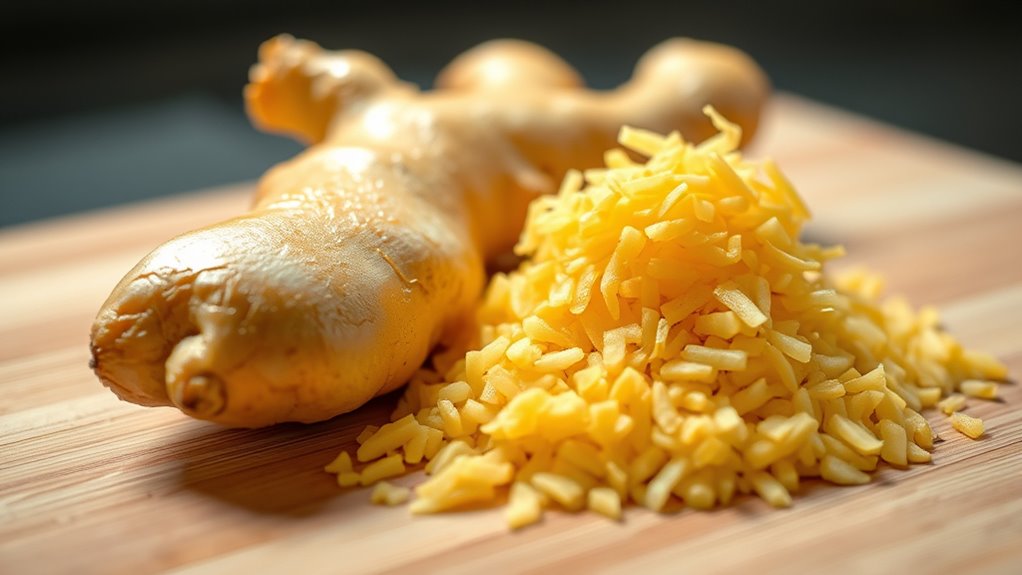
Mincing ginger is a simple process that adds fresh, zesty flavor to your dishes. To get the best results, it’s important to start with properly prepared ginger. Proper ginger storage ensures your root stays fresh longer, making it easier to work with when you’re ready to mince. Keep ginger in a paper bag or a breathable container in the fridge’s vegetable drawer to prevent mold and prolong its shelf life. If you find your ginger slightly dried out, you can still use it; just make sure it doesn’t have soft spots or mold before proceeding.
Proper ginger storage keeps it fresh longer, making mincing easier and more effective.
Ginger peeling is a vital step before mincing, especially if you want a smooth, clean flavor without stringy bits. You can peel ginger with a spoon, gently scraping off the thin skin. This method minimizes waste and preserves more of the fresh ginger’s flesh. Alternatively, some prefer to use a vegetable peeler for larger pieces, but a spoon offers more control for delicate peeling. Once peeled, you’ll notice the ginger’s vibrant color and firm texture, indicating it’s fresh and ready to be minced.
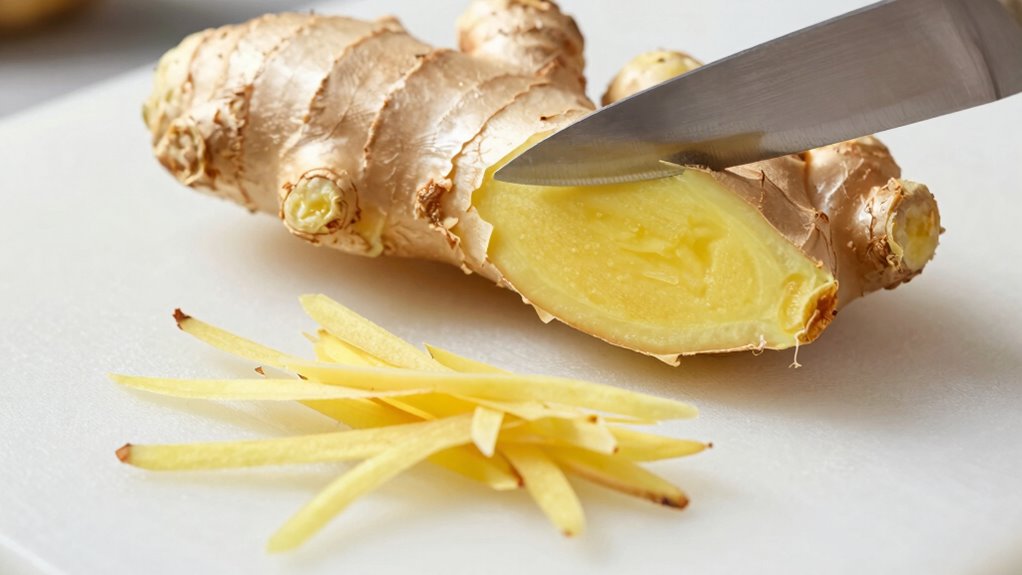
When you’re ready to mince, start by cutting the ginger into manageable chunks. This makes the process safer and more controlled. To avoid stringy bits, it’s best to use a sharp chef’s knife and focus on slicing the ginger as thinly as possible. After slicing, gather the strips and lay them flat on the cutting board. Use a rocking motion with your knife to chop the slices into tiny pieces. Keep your fingers tucked under your knuckles to maintain safety and precision. If you prefer even finer mince, you can sprinkle a little salt over the ginger and give it a quick chop, which helps break down the fibers further. Additionally, understanding the importance of high-quality tools can significantly improve your mincing results.
As you mince, be mindful of the texture. Stringy bits often come from uneven chopping or over-mincing fibrous parts. To prevent this, only mince the ginger until it reaches your desired size, stopping before the texture becomes too fibrous or stringy. If you notice any stubborn fibrous pieces, set them aside—they won’t blend well into your dish and can affect the overall texture. With practice, you’ll develop a steady hand that produces evenly minced ginger without stringy bits, ensuring a smooth, fresh flavor that enhances your recipes. Remember, fresh ginger provides the best aroma and taste when minced properly, so taking your time during peeling and chopping will always pay off.
Top picks for "mince ginger without"
Open Amazon search results for this keyword.
As an affiliate, we earn on qualifying purchases.
Frequently Asked Questions
Can I Use a Food Processor to Mince Ginger?
Yes, you can use a food processor to mince ginger. Just peel the ginger first, then pulse it briefly until you reach your desired fineness. This method maintains the ginger flavor and makes it easy to incorporate into your culinary uses. Be careful not to over-process, as it can turn into a paste. Using a food processor saves time and ensures even mincing, perfect for stir-fries, sauces, or marinades.
What’s the Best Way to Peel Ginger Quickly?
Peeling ginger is like unwrapping a gift—quick and satisfying. To swiftly reveal its vibrant ginger flavor, use a spoon to peel off the skin instead of a knife; it’s gentler and removes the thin layers effortlessly. Press gently, follow the natural contours, and you’ll have fresh ginger ready to mince in no time. This peeling technique keeps your ginger pure and flavorful, making cooking a breeze.
How Do I Store Minced Ginger Properly?
To store minced ginger properly, place it in an airtight container or wrap it tightly with plastic wrap to preserve its ginger flavor. Keep it in the refrigerator for up to a week or freeze it for longer storage. Use good kitchen tools like a small spatula or spoon to scoop it out, and always guarantee the ginger stays fresh and flavorful for your cooking needs.
Can I Freeze Minced Ginger for Later Use?
Yes, you can freeze minced ginger for later use. Just store it in an airtight container or ice cube tray, which helps preserve its ginger flavor and ginger health benefits. Freezing prevents spoilage and keeps the ginger fresh longer, so you can enjoy its spicy aroma and medicinal properties whenever you need. Just pop out a small portion when cooking, and you’ll have fresh-tasting ginger every time.
Is It Safe to Consume Ginger With Stringy Bits?
Ginger with stringy bits is like a rough sketch in an artist’s palette—safe but less refined. It’s perfectly safe to consume, but those strings can affect the ginger flavor and texture, especially in delicate culinary uses. To enhance your dishes, try removing the fibrous parts for a smoother, more vibrant ginger taste. Removing the strings guarantees your recipe’s flavor shines without distraction, elevating your culinary creations to a new level.
Conclusion
Now that you know how to mince ginger without those pesky stringy bits, you can add a fresh, smooth zing to all your dishes. Just remember, a little practice makes perfect, so don’t be discouraged if it’s not flawless at first. With patience and a gentle touch, you’ll turn that stubborn root into a silky, flavorful treasure. Enjoy the process and savor every tasty, string-free bite you create!