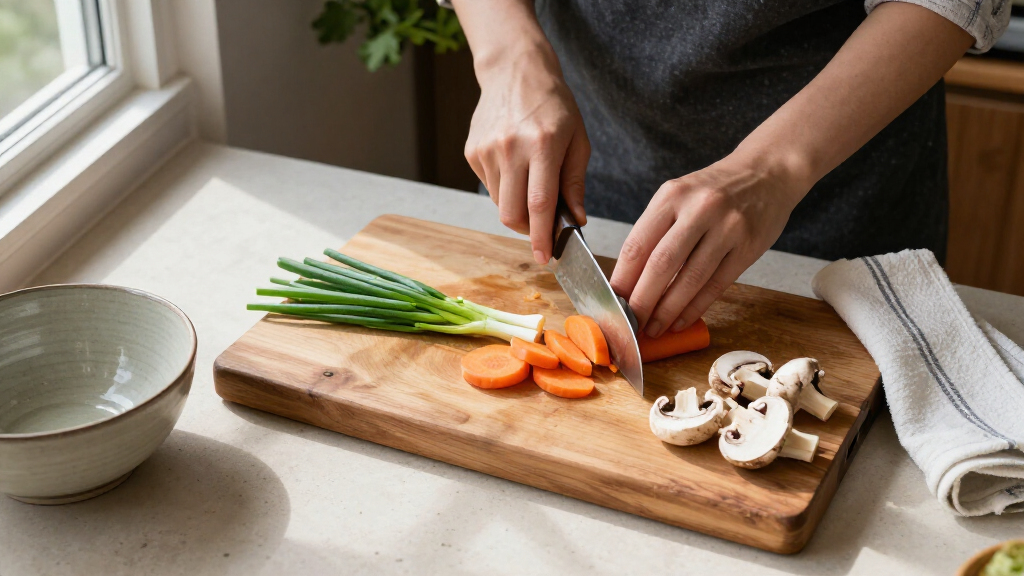
Choosing the right Japanese santoku knife can transform your prep work, offering a balance of weight, sharpness, and versatility that Western chefs’ knives often lack. My top overall pick is the Shun Premier 7-Inch Santoku Knife, which delivers exceptional edge retention and a comfortable hammered finish that prevents food from sticking. For those prioritizing budget-friendly performance without sacrificing sharpness, the imarku 7-Inch Santoku Knife stands out as a reliable entry-point. The main tradeoff in this category lies between premium VG10 or SG2 steels that hold an edge longer but require careful maintenance, versus softer stainless steels that are easier to sharpen but dull faster. Continue reading for a detailed breakdown of each model to determine which blade best fits your cooking style and maintenance willingness.

Get kitchen gear delivered free with Prime
- Fast, free delivery on millions of items
- Prime Video, Amazon Music and more included
- Member-only deals all year
Complete the kit


Key Takeaways
- Blade length is the primary differentiator for home cooks, with 5-inch models offering superior control for small tasks while 7-inch versions provide the leverage needed for chopping large vegetables and proteins.
- Steel quality dictates maintenance frequency; models with VG10 or high-carbon cores stay sharp longer but are more brittle, whereas generic stainless steels are durable against chipping but require frequent honing.
- Handle material significantly impacts grip security during wet or oily prep, with textured pakkawood and hammered finishes outperforming smooth plastic or polished wood in slip resistance.
- Price does not always correlate with kitchen performance, as several mid-range options utilizing 3-layer stainless steel construction offer nearly identical cutting geometry to premium single-layer Damascus blades.
- Weight balance varies widely among santoku designs, with some models favoring handle-heavy balance for safety and others offering blade-heavy balance for aggressive downward chopping strokes.
| HOSHANHO 5-Inch Japanese Santoku Chef Knife |  | Best Compact Santoku | Blade length: 5 inches | Blade material: 10Cr15CoMoV high-carbon stainless steel | Blade construction: Forged, triple-layer laminated steel | VIEW LATEST PRICE | See Our Full Breakdown |
| Huusk 7.1-Inch Damascus Santoku Chef Knife |  | Best Damascus-Style Pick | Blade length: 7.1 inches | Item length: 13 inches | Blade core: VG10 steel | VIEW LATEST PRICE | See Our Full Breakdown |
| Shun Premier 7-Inch Santoku Knife |  | Best Premium Japanese-Made Pick | Blade length: 7 inches | Blade material: VG-MAX steel core with 68 layers of Damascus stainless steel cladding | Edge angle: 16 degrees | VIEW LATEST PRICE | See Our Full Breakdown |
| imarku 3-Piece Japanese High-Carbon Stainless Steel Knife Set |  | Best Starter Knife Set | Set contents: 8-inch chef knife, 7-inch nakiri, and 3.5-inch paring knife | Blade material: High-carbon Japanese stainless steel | Blade hardness: 57±1 HRC | VIEW LATEST PRICE | See Our Full Breakdown |
| HOSHANHO 7-Inch Damascus Santoku Knife with Olive Wood Handle |  | Best for Everyday Full-Size Prep | Blade length: 7 inches | Blade material: 10Cr15CoMoV steel core with 67-layer Damascus steel | Blade hardness: 62 HRC | VIEW LATEST PRICE | See Our Full Breakdown |
| HOSHANHO 7-Inch Santoku Kitchen Knife |  | Best for Hard Edge Retention | Blade Material: 10Cr15CoMoV High-Carbon Steel | Hardness: 62 HRC | Blade Length: 7 Inches | VIEW LATEST PRICE | See Our Full Breakdown |
| MITSUMOTO SAKARI 7-Inch Japanese Santoku Knife with Rosewood Handle |  | Best Aesthetic & Presentation | Blade Material: 3-Layer 9Cr18MoV High-Carbon Steel | Blade Length: 7 Inches | Construction: Forged San-Mai | VIEW LATEST PRICE | See Our Full Breakdown |
| Atumuryou 7-Inch Japanese Santoku Knife with VG10 Damascus Steel |  | Best Premium Kit & Accessories | Blade Material: VG10 Core with 67-Layer Damascus | Hardness: 62 HRC | Blade Length: 7 Inches | VIEW LATEST PRICE | See Our Full Breakdown |
| imarku 7-Inch Santoku Knife |  | Best for Beginners & Low Maintenance | Blade Material: High-Carbon Stainless Steel | Blade Length: 7 Inches | Edge Angle: 15–18 Degrees | VIEW LATEST PRICE | See Our Full Breakdown |
| SHAN ZU 7-Inch Japanese Santoku Knife |  | Best for Value & Balance | Blade Material: Japanese 10Cr15MoV Steel | Construction: 9-Layer Forged | Hardness: 62 HRC | VIEW LATEST PRICE | See Our Full Breakdown |
| KAWAHIRO 7-Inch Japanese Santoku Knife with VG10 Core |  | Best for Gift-Giving and Traditional Aesthetics | Blade Length: 7 inches | Steel Core: VG10 | Hardness: 60–62 HRC | VIEW LATEST PRICE | See Our Full Breakdown |
| imarku 7-Inch Japanese Santoku Knife, 10Cr15CoMoV 3-Layer Stainless Steel | 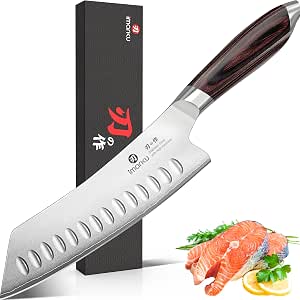 | Best Value for Everyday Precision | Blade Length: 7 inches | Blade Material: 10Cr15CoMoV 3-layer clad | Hardness: 59±2 HRC | VIEW LATEST PRICE | See Our Full Breakdown |
| HOSHANHO 7-Inch Japanese Santoku Chef Knife |  | Best for Heavy-Duty Chopping | Blade Length: 7 inches | Blade Material: 10Cr15CoMoV high-carbon stainless | Hardness: 62 HRC | VIEW LATEST PRICE | See Our Full Breakdown |
| imarku 7-Inch Santoku Knife |  | Best for Low-Maintenance Convenience | Blade Length: 7 inches | Blade Material: High-carbon stainless steel | Handle Material: Stainless steel | VIEW LATEST PRICE | See Our Full Breakdown |
| HOSHANHO 7-Inch Santoku Knife |  | Best Premium Feel for Balanced Control | Blade Length: 7 inches | Blade Material: 10Cr15CoMoV high-carbon steel | Hardness: 60±2 HRC | VIEW LATEST PRICE | See Our Full Breakdown |
| Japanese santoku knife | Handle material | Blade length | Blade material | Weight |
|---|---|---|---|---|
| HOSHANHO 5-Inch Japanese Santo | African pakkawood | 5 inches | 10Cr15CoMoV high-carbon stainless steel | 9.6 ounces |
| Huusk 7.1-Inch Damascus Santok | Resin | 7.1 inches | — | — |
| Shun Premier 7-Inch Santoku Kn | Pakkawood | 7 inches | VG-MAX steel core with 68 layers of Damascus stainless steel cladding | 212 g |
| imarku 3-Piece Japanese High-C | Pakkawood | — | High-carbon Japanese stainless steel | — |
| HOSHANHO 7-Inch Damascus Santo | Olive wood | 7 inches | 10Cr15CoMoV steel core with 67-layer Damascus steel | 220 g |
| HOSHANHO 7-Inch Santoku Kitche | Rosewood | 7 Inches | 10Cr15CoMoV High-Carbon Steel | 210 g |
| MITSUMOTO SAKARI 7-Inch Japane | Rosewood | 7 Inches | 3-Layer 9Cr18MoV High-Carbon Steel | 0.29 kg |
| Atumuryou 7-Inch Japanese Sant | Stabilized Wood and Resin | 7 Inches | VG10 Core with 67-Layer Damascus | 0.5 kg |
| imarku 7-Inch Santoku Knife | Pakkawood | 7 Inches | High-Carbon Stainless Steel | 6.88 ounces |
| SHAN ZU 7-Inch Japanese Santok | Octagonal Red Sandalwood | — | Japanese 10Cr15MoV Steel | 272 g |
| KAWAHIRO 7-Inch Japanese Santo | Octagonal wood | 7 inches | — | 0.4 lb (180 g) |
| imarku 7-Inch Japanese Santoku | Pakkawood | 7 inches | 10Cr15CoMoV 3-layer clad | — |
| HOSHANHO 7-Inch Japanese Santo | African pakkawood | 7 inches | 10Cr15CoMoV high-carbon stainless | 350 g |
| imarku 7-Inch Santoku Knife | Stainless steel | 7 inches | High-carbon stainless steel | — |
| HOSHANHO 7-Inch Santoku Knife | Rosewood | 7 inches | 10Cr15CoMoV high-carbon steel | 197 g |
More Details on Our Top Picks
HOSHANHO 5-Inch Japanese Santoku Chef Knife
Among these santoku options, this is the pick I’d favor for small kitchens and close, controlled prep. Its 5-inch blade is shorter than the 7-inch blades on the Shun Premier and HOSHANHO Damascus Santoku, making it easier to maneuver for trimming, smaller vegetables, and quick jobs at a crowded board. The 15-degree edge and forged, triple-layer 10Cr15CoMoV steel point to a fine cutting profile, while the grooved blade is intended to reduce sticking. The African pakkawood handle adds a traditional-feeling grip, though the listed 9.6-ounce weight may feel substantial for such a short knife. That compact reach is also the main compromise: it is less suited to large produce or broad slicing strokes. No care guidance is supplied, so buyers should be ready to seek out appropriate knife-care instructions.
Pros:- Compact 5-inch blade is easier to control in tight prep spaces
- Forged triple-layer 10Cr15CoMoV stainless steel construction
- 15-degree edge supports fine slicing and precise cuts
- Grooves are designed to reduce food sticking
Cons:- Short blade limits reach on large ingredients and long slicing strokes
- At 9.6 ounces, it may feel weighty for a compact knife
- Supplied details do not include care or maintenance guidance
Best for: Cooks with smaller cutting boards who often prep fruit, herbs, and modest portions and prefer a compact blade.
Not ideal for: Cooks who regularly slice large vegetables, portion large proteins, or want one santoku for broad, full-length cuts.
- Blade length:5 inches
- Blade material:10Cr15CoMoV high-carbon stainless steel
- Blade construction:Forged, triple-layer laminated steel
- Blade hardness:62 HRC
- Edge angle:15 degrees
- Handle material:African pakkawood
- Weight:9.6 ounces
Our verdict“Choose this HOSHANHO if compact control matters more than the longer reach offered by the Shun Premier or HOSHANHO Damascus Santoku.”
Huusk 7.1-Inch Damascus Santoku Chef Knife
I’d put the Huusk on the list for cooks who want a full-length santoku with a distinctive Damascus finish and a VG10 core. At 7.1 inches, its blade offers a little more reach than the Shun Premier’s 7-inch blade, which may suit cooks who use long slicing strokes across vegetables or boneless proteins. The hand-sharpened edge and balanced design are aimed at controlled slicing, dicing, and mincing; the navy resin handle also gives it a different look and feel from the pakkawood handles on the Shun and HOSHANHO models. The tradeoff is thinner documentation: the supplied details give no edge angle, hardness, care advice, or storage solution. I’d choose it over the compact HOSHANHO 5-inch only when length and presentation matter more than compact handling and clearer specifications.
Pros:- 7.1-inch blade offers useful reach for general chopping and slicing
- VG10 core clad in 67 layers of steel
- Hand-sharpened edge is described for slicing, dicing, and mincing
- Balanced design and navy resin handle distinguish it from wood-handled picks
Cons:- No blade hardness or edge angle is provided in the supplied details
- No care instructions or sheath and storage details are provided
- Resin handle may not appeal to buyers seeking a traditional wood grip
Best for: Home cooks seeking a full-length santoku with a VG10 core, resin handle, and prominent Damascus pattern for varied prep.
Not ideal for: Buyers who need detailed care guidance, a specified edge geometry, or included storage protection.
- Blade length:7.1 inches
- Item length:13 inches
- Blade core:VG10 steel
- Blade construction:67 layers of steel
- Construction type:Forged
- Handle material:Resin
- Color:Navy blue
Our verdict“Pick the Huusk for a long, Damascus-patterned VG10 santoku, but choose the Shun Premier if specified edge details and sharpening support matter more.”
Shun Premier 7-Inch Santoku Knife
The Shun Premier is my premium choice for cooks who prioritize Japanese handcraft and defined edge specifications over a basic all-purpose blade. Its VG-MAX core, 68-layer Damascus cladding, and 16-degree edge give buyers more construction detail than the Huusk, while the hammered finish is designed to help ingredients release more readily. The 7-inch blade keeps it in the familiar santoku range, and its contoured Pakkawood handle is listed for left- and right-handed users. Compared with the HOSHANHO 7-inch Damascus Santoku, the Shun adds stated Japanese handcrafting, a limited lifetime warranty, and free sharpening and honing support. The tradeoff is upkeep: the edge needs sharpening and honing, and its fine cutting profile calls for attentive care. This is a less compelling fit for someone seeking a low-maintenance, no-frills knife.
Pros:- VG-MAX core with 68-layer Damascus stainless steel cladding
- Specified 16-degree edge and hammered finish designed to aid clean cutting and food release
- Contoured Pakkawood handle listed for left- and right-handed users
- Handcrafted in Japan with limited lifetime warranty and sharpening and honing support
Cons:- Requires sharpening and honing to maintain its edge
- Fine edge calls for careful handling and maintenance
- May be more knife than occasional cooks need compared with simpler santoku options
Best for: Cooks who want a Japanese-handcrafted 7-inch santoku, detailed blade specifications, and access to sharpening and honing support.
Not ideal for: Buyers seeking a low-maintenance knife or a simple, care-free option for rough handling and frequent neglect.
- Blade length:7 inches
- Blade material:VG-MAX steel core with 68 layers of Damascus stainless steel cladding
- Edge angle:16 degrees
- Construction:Forged
- Handle material:Pakkawood
- Weight:212 g
- Origin:Handcrafted in Japan
- Warranty:Limited lifetime warranty
Our verdict“Choose the Shun Premier if Japanese handcraft, a specified fine edge, and ongoing sharpening support outweigh your preference for minimal upkeep.”
imarku 3-Piece Japanese High-Carbon Stainless Steel Knife Set
This imarku set earns a place as the most versatile entry point for a kitchen that needs more than a santoku. It includes an 8-inch chef knife, a 7-inch nakiri, and a 3.5-inch paring knife, so buyers get distinct tools for large prep, vegetable work, and small trimming jobs. That is a different proposition from the Shun Premier, which is a single dedicated santoku with a more specified steel and edge profile. The imarku’s 15-degree double bevel and 57±1 HRC steel offer a practical general-purpose setup, while the pakkawood handles are described as balanced. The key limitation for this roundup is that there is no santoku in the set; the nakiri covers some similar vegetable tasks but has a different blade shape. Hand washing and drying are recommended, so it also needs more care than a dishwasher-friendly set.
Pros:- Three blades cover broad prep, vegetable chopping, and small trimming tasks
- 15-degree double-bevel edges provide a consistent stated edge angle
- Pakkawood handles are designed for a balanced grip
- Hand washing and drying guidance is clearly supplied
Cons:- Set does not include a santoku knife
- Requires hand washing and drying after use
- 57±1 HRC specification is less hard than the 62 HRC HOSHANHO options
Best for: New home cooks who need a small, coordinated group of knives for vegetables, general prep, and detail work rather than a dedicated santoku.
Not ideal for: Santoku shoppers who specifically want a single-purpose Japanese santoku blade or buyers who prefer dishwasher cleanup.
- Set contents:8-inch chef knife, 7-inch nakiri, and 3.5-inch paring knife
- Blade material:High-carbon Japanese stainless steel
- Blade hardness:57±1 HRC
- Blade thickness:2.3 mm
- Edge:15-degree double bevel
- Handle material:Pakkawood
- Care:Hand wash and dry after use
Our verdict“Choose this set to outfit a kitchen with three complementary knives, but pick a dedicated santoku such as the Shun Premier if that blade shape is your priority.”
HOSHANHO 7-Inch Damascus Santoku Knife with Olive Wood Handle
For a cook who wants a full-size santoku with a wood handle and a fine stated edge, this HOSHANHO is a strong everyday-prep candidate. Its 7-inch, 67-layer Damascus blade has a 10Cr15CoMoV core rated at 62 HRC, and the 15-degree-per-side edge is more fully specified than the Huusk’s edge. Grooves are intended to limit food sticking during repeated vegetable cuts, while the olive wood handle gives it a distinct alternative to the pakkawood grip on the Shun Premier. Compared with the compact HOSHANHO 5-inch, this model offers more reach for larger ingredients and longer cuts, though it gives up that knife’s easier maneuverability in tight spaces. The 220 g weight and 2.5 mm blade thickness provide useful context, but no care instructions are supplied—a notable gap for a wood-handled knife.
Pros:- 7-inch blade offers more reach than the HOSHANHO 5-inch compact model
- 10Cr15CoMoV core with 67-layer Damascus construction and 62 HRC hardness
- 15-degree-per-side edge angle is clearly specified
- Grooved blade is designed to reduce food sticking
Cons:- No care or maintenance instructions are included in the supplied details
- 220 g weight may feel substantial during extended prep
- Wood handle requires more attentive care than a synthetic grip may require
Best for: Home cooks who want a full-length 7-inch santoku for routine vegetable and protein prep and prefer an olive wood handle.
Not ideal for: Cooks with very small boards, buyers who want a lighter compact knife, or anyone who needs supplied wood-handle care instructions.
- Blade length:7 inches
- Blade material:10Cr15CoMoV steel core with 67-layer Damascus steel
- Blade hardness:62 HRC
- Blade edge angle:15 degrees per side
- Blade thickness:2.5 mm
- Construction:Forged
- Handle material:Olive wood
- Weight:220 g
Our verdict“Choose this HOSHANHO for full-length everyday prep and an olive wood grip, but favor the 5-inch model if maneuverability matters more than blade reach.”
HOSHANHO 7-Inch Santoku Kitchen Knife
The HOSHANHO 7-Inch Santoku stands out for its aggressive 62 HRC hardness and forged 10Cr15CoMoV steel construction. This high carbon content allows the blade to hold a razor-sharp 12° edge longer than softer stainless alternatives, making it ideal for cooks who prioritize cutting performance over low maintenance. Compared to the imarku 7-Inch Santoku, which uses a more forgiving stainless steel, the HOSHANHO demands stricter care to prevent corrosion but delivers superior sharpness retention. The octagonal rosewood handle provides excellent tactile feedback, helping users maintain precise control during intricate prep tasks. However, the lack of a protective sheath is a notable omission for a knife of this caliber, requiring separate storage solutions to protect the fine edge.Pros:- Forged 62 HRC steel offers superior edge retention
- Sharp 12° double-sided bevel for precise cuts
- Octagonal rosewood handle enhances grip and control
Cons:- High-carbon steel is prone to corrosion if not dried immediately
- No protective sheath or case included in the package
Best for: Cooks who prioritize maximum sharpness and are willing to hand-wash and dry immediately to prevent rust.
Not ideal for: Busy households or beginners who may leave the knife wet or in the sink, risking corrosion.
- Blade Material:10Cr15CoMoV High-Carbon Steel
- Hardness:62 HRC
- Blade Length:7 Inches
- Edge Angle:12° Double-Sided
- Handle Material:Rosewood
- Weight:210 g
- Construction:Forged
Our verdict“Choose this for its professional-grade hardness and sharpness, provided you commit to rigorous maintenance.”
MITSUMOTO SAKARI 7-Inch Japanese Santoku Knife with Rosewood Handle
This knife appeals to those who value tradition and visual appeal, featuring a hand-hammered Tsuchime finish that reduces food sticking while adding artisanal character. The 3-layer San-Mai construction with a 9Cr18MoV core balances hardness with durability, offering a more forgiving edge than the pure carbon steel in the HOSHANHO 7-Inch Santoku. While the octagonal rosewood handle ensures a secure grip, the true differentiator is the included sandalwood storage box, which elevates the unboxing experience significantly. This makes it a strong contender for gifts, though the lack of explicit care instructions in the description requires buyers to research proper maintenance for the high-carbon core independently.Pros:- Hand-hammered Tsuchime finish reduces suction and sticking
- Includes a premium sandalwood storage box
- San-Mai construction balances edge retention with toughness
Cons:- Lacks explicit care and sharpening guidance in the listing
- Heavier at 290g compared to lighter competitors
Best for: Gift-givers and traditionalists who appreciate artisanal finishes and premium packaging.
Not ideal for: Minimalists who find the bulky sandalwood box unnecessary and prefer compact storage.
- Blade Material:3-Layer 9Cr18MoV High-Carbon Steel
- Blade Length:7 Inches
- Construction:Forged San-Mai
- Finish:Hand-Forged Tsuchime
- Handle Material:Rosewood
- Weight:0.29 kg
- Included:Sandalwood Box
Our verdict“Ideal for those who want a beautiful, gift-ready knife with traditional aesthetics and decent performance.”
Atumuryou 7-Inch Japanese Santoku Knife with VG10 Damascus Steel
The Atumuryou Santoku distinguishes itself with a complete accessory package, including a genuine leather sheath, certificate, and cleaning cloth. The VG10 steel core within a 67-layer Damascus pattern offers a premium balance of hardness (62 HRC) and corrosion resistance, outperforming the basic stainless blades found in the imarku 7-Inch Santoku. The full-tang stabilized wood handle ensures perfect balance, making it feel substantial without being unwieldy. While the 0.5 kg weight might feel heavy to some compared to the lighter HOSHANHO, the included sheath addresses a key pain point for high-end knives: safe and stylish storage. It is a comprehensive solution for those who want everything they need in one purchase.Pros:- Includes leather sheath, certificate, and cleaning cloth
- VG10 core offers excellent sharpness and corrosion resistance
- Full-tang construction ensures superior balance and durability
Cons:- Heavier than average at 0.5 kg, which may cause fatigue
- Stabilized wood handle may lack the natural feel of solid wood
Best for: Buyers who want a complete, gift-ready package with high-end materials and protective accessories.
Not ideal for: Lightweight knife enthusiasts who prefer ultra-light handles and minimal accessories.
- Blade Material:VG10 Core with 67-Layer Damascus
- Hardness:62 HRC
- Blade Length:7 Inches
- Edge Angle:12°
- Handle Material:Stabilized Wood and Resin
- Weight:0.5 kg
- Included:Leather Sheath, Gift Box, Certificate
Our verdict“The best choice for those seeking a premium, all-inclusive kit with top-tier VG10 performance.”
imarku 7-Inch Santoku Knife
The imarku Santoku prioritizes ease of use and forgiveness, making it an excellent entry point for new cooks. Its hollow-ground edge is specifically designed to reduce food sticking, a common frustration for beginners using flat-ground blades. With a 15–18° edge angle, it is more durable and less prone to chipping than the ultra-fine 12° edges seen in the HOSHANHO or Atumuryou models. The Pakkawood handle provides a comfortable, slip-resistant grip that requires minimal conditioning compared to natural woods. While it lacks the extreme sharpness retention of high-carbon competitors, its stainless steel composition makes it far more resistant to rust, reducing the mental load of maintenance.Pros:- Hollow edge design reduces food sticking during slicing
- Stainless steel composition resists corrosion and rust
- Ergonomic Pakkawood handle offers a comfortable, secure grip
Cons:- Thicker 2.5mm blade reduces precision compared to thinner options
- Softer steel requires more frequent sharpening than 62 HRC models
Best for: Beginners and busy cooks who need a durable, rust-resistant knife with easy-to-maintain features.
Not ideal for: Professional chefs seeking maximum sharpness and edge retention for heavy-duty prep.
- Blade Material:High-Carbon Stainless Steel
- Blade Length:7 Inches
- Edge Angle:15–18 Degrees
- Handle Material:Pakkawood
- Weight:6.88 ounces
- Blade Thickness:2.5 mm
- Design:Hollow Edge
Our verdict“A practical, low-maintenance choice for home cooks who value durability over extreme sharpness.”
SHAN ZU 7-Inch Japanese Santoku Knife
The SHAN ZU Santoku offers a compelling middle ground with its 9-layer forged construction and 10Cr15MoV steel core. Hardened to 62 HRC, it rivals the edge retention of the HOSHANHO but adds the structural benefits of layered steel for improved toughness. The matte-finish blade helps mask fingerprints and minor scratches, maintaining a cleaner look over time. The octagonal red sandalwood handle provides a distinct aesthetic and secure grip, though the 272g weight feels more substantial than the lighter imarku. It lacks the premium accessories of the Atumuryou, but for a standalone blade, it delivers high-end specs at a competitive tier, focusing purely on cutting performance.Pros:- 9-layer construction enhances durability and edge stability
- Matte finish resists fingerprints and minor surface scratches
- Octagonal red sandalwood handle provides excellent control
Cons:- No specific maintenance instructions provided for the steel
- Heavier than basic stainless models, potentially causing fatigue
Best for: Value-conscious buyers who want high hardness and multi-layer construction without paying for extras.
Not ideal for: Those who prefer lightweight knives or want included storage solutions like a sheath.
- Blade Material:Japanese 10Cr15MoV Steel
- Construction:9-Layer Forged
- Hardness:62 HRC
- Blade Angle:12°
- Handle Material:Octagonal Red Sandalwood
- Weight:272 g
- Blade Finish:Matte
Our verdict“A solid performer for those seeking high-hardness steel and robust construction in a straightforward package.”
KAWAHIRO 7-Inch Japanese Santoku Knife with VG10 Core
This knife stands out for its traditional kurouchi finish and lightweight build, making it a compelling choice for those who value aesthetics alongside performance. At just 0.4 lb, it feels more agile than the heavier HOSHANHO 7-Inch Santoku Chef Knife, which reduces wrist fatigue during extended prep sessions. The VG10 steel core offers superior edge retention compared to the 10Cr15CoMoV steel found in budget alternatives, meaning you will sharpen less frequently. However, the octagonal wood handle requires more diligent maintenance than modern composites; it is not dishwasher safe and must be kept dry to prevent cracking. While the wooden gift box adds appeal for presenters, the lack of explicit care instructions for the wood finish means buyers must research maintenance separately. This is a beautiful tool, but it demands respect for its materials.
Pros:- Lightweight 0.4 lb design reduces hand fatigue
- VG10 core offers better edge retention than standard stainless
- Traditional kurouchi finish adds visual character
- Includes a premium wooden gift box
Cons:- Wood handle requires careful drying and occasional oiling
- Not dishwasher safe, limiting convenience
- Higher maintenance burden than synthetic handles
Best for: Gift-givers and traditionalists who prioritize hand-forged aesthetics and are willing to hand-wash and oil their handles.
Not ideal for: Busy home cooks who rely on dishwashers or prefer low-maintenance composite handles.
- Blade Length:7 inches
- Steel Core:VG10
- Hardness:60–62 HRC
- Weight:0.4 lb (180 g)
- Handle Material:Octagonal wood
- Finish:Kurouchi (black-forged)
- Included Components:Knife, certificate, manual, cloth, box
Our verdict“Choose this if you want a lightweight, beautiful VG10 knife that looks premium on display and in hand.”
imarku 7-Inch Japanese Santoku Knife, 10Cr15CoMoV 3-Layer Stainless Steel
This model strikes a balance between sharpness and practicality, featuring hollow-edge dimples that prevent food from sticking—a significant advantage over flat-bladed competitors like the KAWAHIRO 7-Inch Japanese Santoku Knife. The 10Cr15CoMoV steel is hardened to 59±2 HRC, which is slightly softer than the 62 HRC of the HOSHANHO 7-Inch Japanese Santoku Chef Knife. This means the imarku edge may dull slightly faster but is generally easier to resharpen at home. The Pakkawood handle provides a secure grip and better knuckle clearance than the seamless steel handle of the imarku 7-Inch Santoku Knife (the dishwasher-safe version). While it lacks the premium VG10 core, the 12±2° edge angle ensures precise slicing for vegetables and boneless proteins. It is a robust, no-nonsense workhorse that delivers high performance without the fragility of higher-hardness steels.
Pros:- Hollow-edge dimples reduce food suction and sticking
- Pakkawood handle offers a secure, ergonomic grip
- Sharp 12° edge angle for precise slicing
- Balanced weight for comfortable control
Cons:- Steel is softer than premium alternatives, requiring more frequent sharpening
- Not suitable for cutting bones or frozen foods
Best for: Everyday home cooks who want a sharp, versatile knife with anti-stick features and easy maintenance.
Not ideal for: Users seeking maximum edge retention who are willing to pay more for VG10 or high-carbon steel.
- Blade Length:7 inches
- Blade Material:10Cr15CoMoV 3-layer clad
- Hardness:59±2 HRC
- Edge Angle:12±2° per side
- Handle Material:Pakkawood
- Overall Length:12.23 inches
- Edge Type:Hollow (Granton)
Our verdict“This is the smart choice for daily use, offering excellent cutting performance and anti-stick features at a reasonable cost.”
HOSHANHO 7-Inch Japanese Santoku Chef Knife
Weighing in at 350 g, this knife is significantly heavier than the KAWAHIRO 7-Inch Japanese Santoku Knife, a trait that benefits users who prefer the knife’s own weight to do the work. The 62 HRC hardness places it on the harder end of the spectrum, similar to premium chef knives, offering excellent edge retention for tough vegetables and dense proteins. Its double-sided grooves help reduce friction, though the solid feel may require more arm strength than lighter models. The African pakkawood handle is ergonomic and resistant to moisture, unlike the pure wood on the KAWAHIRO. While the 15-degree edge is slightly less acute than the 12-degree edge on the imarku 7-Inch Japanese Santoku Knife, it provides greater durability against chipping. This is a tank of a knife, built for those who chop rather than glide.
Pros:- Heavy 350g weight aids in chopping hard foods
- High 62 HRC hardness offers strong edge retention
- Double-sided grooves reduce cutting resistance
- Ergonomic African pakkawood handle resists moisture
Cons:- Heavier weight can cause fatigue during long prep sessions
- Lack of provided care instructions may confuse new owners
Best for: Cooks who prefer a heavier knife for chopping hard vegetables and want high edge durability.
Not ideal for: Users with smaller hands or wrist sensitivity, as the 350g weight can cause fatigue.
- Blade Length:7 inches
- Blade Material:10Cr15CoMoV high-carbon stainless
- Hardness:62 HRC
- Edge Angle:15 degrees
- Weight:350 g
- Handle Material:African pakkawood
- Construction:Triple-layer laminated, forged
Our verdict“Select this if you want a durable, heavy-duty santoku that can handle rigorous chopping tasks.”
imarku 7-Inch Santoku Knife
This is the outlier in the lineup due to its seamless stainless steel handle and explicit dishwasher safety. Unlike the imarku 7-Inch Japanese Santoku Knife with its Pakkawood grip, this model eliminates the risk of handle swelling or cracking from moisture. It is ideal for households that prioritize cleanup speed over traditional aesthetics. However, the solid steel handle can feel heavier and colder in the hand compared to the warm, textured grip of the HOSHANHO 7-Inch Japanese Santoku Chef Knife. The hollow edge helps with food release, but frequent dishwasher use will dull the blade faster than hand-washing, negating some of the steel’s benefits. It is a utilitarian choice: robust and easy to clean, but it lacks the refined balance and hand-feel of its wood-handled siblings.
Pros:- Dishwasher safe for easy cleanup
- Seamless stainless handle is hygienic and durable
- Hollow edge aids in food release
- Rust- and stain-resistant construction
Cons:- Dishwasher use will dull the blade faster than hand-washing
- Steel handle lacks the ergonomic warmth of wood or composite
Best for: Users who insist on dishwasher-safe tools and prioritize durability and easy cleanup over hand-feel.
Not ideal for: Enthusiasts who value traditional ergonomics and want to maximize blade longevity through hand-washing.
- Blade Length:7 inches
- Blade Material:High-carbon stainless steel
- Handle Material:Stainless steel
- Dishwasher Safe:Yes
- Construction:Forged
- Blade Edge:Hollow
- Overall Length:12 inches
Our verdict“Buy this if you need a rugged, dishwasher-friendly santoku and accept that you will sharpen it more often.”
HOSHANHO 7-Inch Santoku Knife
This model offers a refined middle ground, weighing 197 g—lighter than the heavy-duty HOSHANHO Chef Knife but sturdier than the ultra-light KAWAHIRO 7-Inch Japanese Santoku Knife. The octagonal rosewood handle provides a classic Japanese grip that many users find more comfortable than the Pakkawood on the imarku 7-Inch Japanese Santoku Knife. With a 60±2 HRC hardness, it balances edge retention with resistance to chipping, making it a safe bet for general use. The 12–15° edge angle is versatile, capable of delicate slicing and robust chopping. However, the lack of a sheath or explicit care guide means owners must be proactive about storage and maintenance. It feels more like a professional tool than a consumer starter knife, offering a premium tactile experience without the extreme hardness that requires expert sharpening.
Pros:- Balanced 197g weight for agile yet controlled cutting
- Comfortable octagonal rosewood handle
- Hardened 60±2 HRC steel for good edge retention
- Hand-sharpened edge for immediate precision
Cons:- No protective sheath or storage solution included
- Lack of care instructions requires user research
Best for: Serious home cooks who appreciate traditional rosewood handles and want a balanced weight for varied tasks.
Not ideal for: Those looking for a complete kit with a sheath or explicit maintenance guidance included.
- Blade Length:7 inches
- Blade Material:10Cr15CoMoV high-carbon steel
- Hardness:60±2 HRC
- Edge Angle:12–15° on both sides
- Weight:197 g
- Handle Material:Rosewood
- Handle Design:Octagonal
Our verdict“This is the best choice for those who want a traditional, well-balanced santoku with a premium handle feel.”
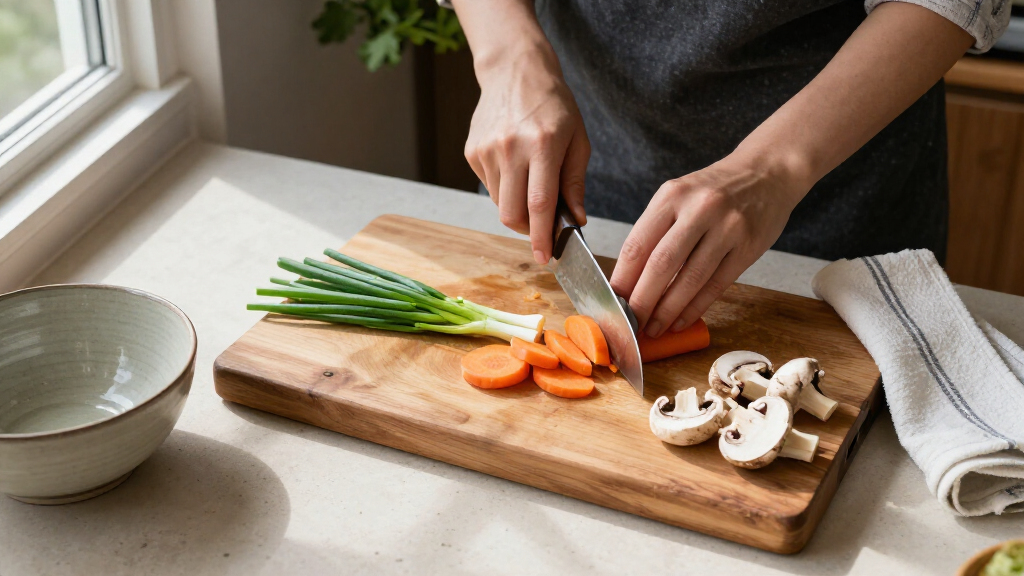
How We Picked
To rank these fifteen santoku knives, I evaluated each model based on three core pillars: cutting performance, ergonomic design, and long-term durability. Cutting performance was assessed by analyzing the steel composition and heat treatment methods described by manufacturers, focusing on Rockwell hardness ratings and edge geometry. Ergonomic design involved comparing handle shapes, materials, and weight distribution to determine how each knife would feel during prolonged use, such as mincing garlic or dicing onions. Durability was judged by the corrosion resistance of the steel and the structural integrity of the tang and handle materials.
The ranking logic prioritizes versatility for the average home cook. A knife that is incredibly sharp but difficult to maintain or uncomfortable to hold for twenty minutes was ranked lower than a slightly softer blade with excellent balance and ease of care. Premium materials like Damascus patterns were acknowledged for their aesthetic and functional benefits (reduced friction), but they did not automatically elevate a product if the core blade steel was inferior to cheaper alternatives. This approach ensures the recommendations reflect real-world usability rather than just spec-sheet appeal.
Factors to Consider When Choosing Japanese Santoku Knives
Selecting a santoku knife involves balancing technical specifications with personal comfort. Here are the critical factors to weigh before making your purchase.Steel Types and Edge Retention
Understanding the steel is vital because it determines how often you will need to sharpen the knife. Most budget-friendly santokus use generic stainless steel (like 3Cr13 or 4Cr13), which is tough and resistant to rust but loses its edge quickly. Mid-range options often feature VG10 or SG2 cores, which are high-carbon steels that hold a razor-sharp edge for months. The tradeoff is that harder steel is more brittle; dropping a VG10 knife can chip the blade, whereas a softer steel might just bend. If you cook daily, investing in harder steel saves time on maintenance; if you cook weekly, softer steel is forgiving and easy to hone with a standard steel rod.
Blade Length and Task Suitability
While the standard santoku length is 7 inches, 5-inch versions are becoming increasingly popular for specific tasks. A 5-inch santoku is ideal for precision work, such as slicing thin herbs, peeling ginger, or cutting small fruits, offering better control for users with smaller hands. Conversely, the 7-inch model is the workhorse, allowing for the long, sweeping motion required to dice large onions or slice through squash. Buying a 7-inch knife for small tasks can feel cumbersome, while using a 5-inch knife for large proteins requires multiple strokes, leading to ragged cuts. Assess your typical ingredient sizes before choosing your length.
Handle Ergonomics and Material
The handle is where the knife meets your hand, and poor design here causes fatigue. Traditional Japanese handles are often octagonal and lightweight, promoting a pinch grip that offers maximum control. However, many Western-market santokus feature pakkawood or plastic handles with a fuller, rounded shape for a comfortable hammer grip. Textured handles or those with a hammered finish (tsuchime) on the blade provide better grip when hands are wet or oily. Avoid smooth, polished wood handles if you cook in a messy kitchen, as they can become slippery and unsafe during heavy prep sessions.
Damascus Cladding vs. Single Steel
Damascus patterns are often marketed as a luxury feature, but their primary benefit in kitchen knives is functional rather than just aesthetic. The wavy lines indicate layers of steel wrapped around a hard core, which can reduce friction and prevent food from sticking to the blade. However, a single-layer stainless steel knife with a high-quality polish can perform just as well if the geometry is correct. Do not pay a premium solely for the Damascus pattern; ensure the core steel is high-quality (VG10 or higher). A cheap steel with a Damascus pattern is inferior to a high-quality single steel with a simple grind.
Maintenance and Care Requirements
Japanese knives are precision tools that demand respect. Unlike German knives that can often go into the dishwasher, Japanese santokus must be hand-washed and dried immediately to prevent corrosion, especially those with high-carbon cores. You will also need a proper sharpening system. A honing steel realigns the edge, but a whetstone (water stone) is required to actually sharpen the blade. If you are unwilling to learn whetstone sharpening, choose a knife with softer steel that can be maintained more easily, or consider a set that includes a basic sharpening tool. Neglecting maintenance will ruin even the most expensive blade within months.
Frequently Asked Questions
What is the actual difference between a santoku and a chef’s knife?
The santoku is a Japanese adaptation of the Western chef’s knife, but the geometry differs significantly. A chef’s knife typically has a curved belly that facilitates a rocking motion, ideal for mincing herbs. In contrast, the santoku has a flatter profile and a thinner, lighter blade, designed for an up-and-down chopping motion. This makes the santoku better suited for slicing vegetables and boneless proteins with clean, precise cuts, while the chef’s knife excels at tasks requiring leverage and rocking. If you prefer pushing through ingredients rather than rocking, the santoku is the superior choice.
Can I use a Japanese santoku knife to cut through bones or frozen food?
No, you should never use a Japanese santoku for bones, frozen items, or hard squash like butternut. These knives are ground to a very acute angle (typically 15-16 degrees per side) to achieve extreme sharpness. This thin edge is brittle and will chip or roll if it encounters excessive lateral force or hard materials. Use a dedicated cleaver or a robust Western chef’s knife with a 20-degree edge for heavy-duty tasks. Treating your santoku as a precision instrument for soft-to-medium foods will extend its life and maintain its performance.
How do I know if a santoku knife is too hard for a beginner to maintain?
Hardness is measured on the Rockwell scale (HRC). Knives with an HRC of 60 or higher, such as those made with VG10 or SG2 steel, are harder and hold an edge longer but are more prone to chipping if misused. For beginners, an HRC of 55-58 is often a better starting point because the steel is more forgiving. However, many entry-level models in this roundup use softer stainless steels that are easy to sharpen with simple pull-through sharpeners. If you are new to knife care, start with a mid-range model that balances hardness with durability, and avoid ultra-premium artisan blades until you are comfortable with whetstone sharpening.
Is the hammered finish on the blade just for looks?
While the hammered finish (tsuchime) is visually striking, it serves a practical purpose. The dimples on the blade surface create small air pockets that reduce suction between the knife and wet or starchy foods like potatoes, cucumbers, and cheese. This prevents food from sticking to the blade, allowing for faster, cleaner slices. However, the finish can be slightly more difficult to clean if food particles get trapped in the dimples, so thorough rinsing is required. It is a beneficial feature for those who frequently slice moist ingredients, but it is not strictly necessary for all cooking styles.
Why are some Japanese knives significantly more expensive than others?
Price variations in Japanese knives usually reflect the steel quality, the complexity of the forge, and the craftsmanship of the handle and fit. High-end knives use proprietary steel alloys that offer a superior balance of hardness and toughness, often forged by master craftsmen using traditional techniques. Additionally, premium brands invest heavily in quality control, ensuring every blade meets strict geometric tolerances. Budget knives may use similar steel compositions but lack the precise heat treatment or attention to detail in the grind. You are paying for consistency and longevity; a cheaper knife might cut well initially, but a premium knife will maintain that performance for years with proper care.
Conclusion
Choosing the right Japanese santoku knife depends largely on your willingness to maintain it and the specific tasks you perform most often. For the best overall performance, the Shun Premier 7-Inch Santoku Knife remains the gold standard, balancing premium VG10 steel with a user-friendly hammered finish and exceptional balance. If you are on a tight budget but still want reliable sharpness, the imarku 7-Inch Santoku Knife offers incredible value, utilizing solid stainless steel construction that is easy to care for. For those who prioritize aesthetics and grip, the HOSHANHO 7-Inch Damascus Santoku Knife with Olive Wood Handle provides a distinctive look and secure handling for wet conditions.
Beginners should look toward the imarku 3-Piece Japanese High-Carbon Stainless Steel Knife Set, which provides a complete toolkit with forgiving steel that won’t chip easily. Conversely, experienced cooks seeking premium edge retention should consider the MITSUMOTO SAKARI 7-Inch Japanese Santoku Knife with Rosewood Handle for its refined grind and superior steel. Ultimately, the best knife is the one you will actually maintain; choose the model that fits your maintenance routine, and your prep work will improve immediately.
Halloween Picks
halloween
As an affiliate, we earn on qualifying purchases.