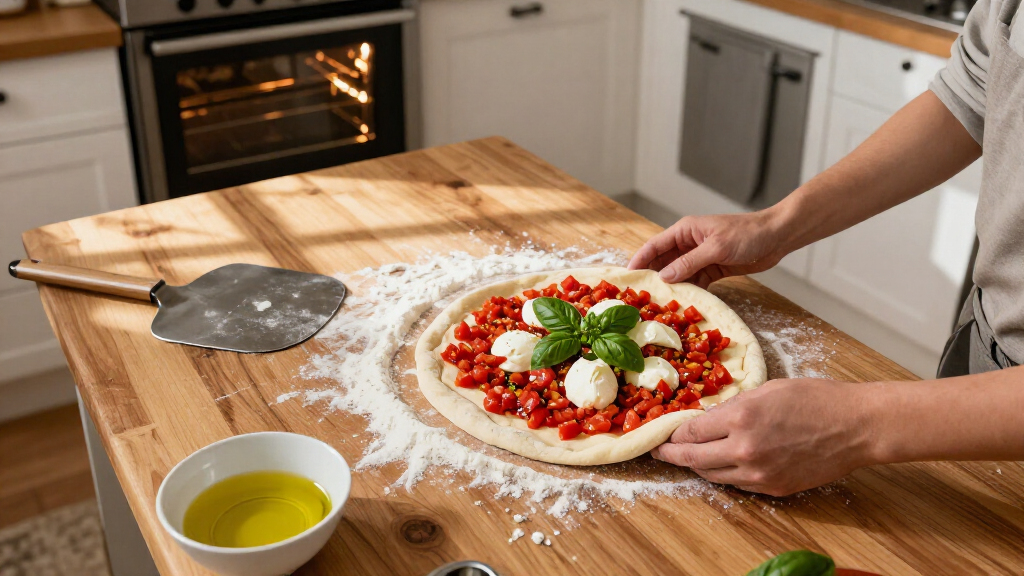
🔍 Read the full analysis: Pizza Margherita At Home: Getting Close To Naples In A Home Oven on Mad Tasting

Get kitchen gear delivered free with Prime
- Fast, free delivery on millions of items
- Prime Video, Amazon Music and more included
- Member-only deals all year
TL;DR
Mad Tasting’s home-pizza guide says cooks can approximate some qualities of Naples-style Pizza Margherita with a standard oven by using quality ingredients, long-fermented dough and a thoroughly preheated pizza steel or stone. A home oven remains much cooler than a traditional Neapolitan oven, so the result is not an exact replica.
Mad Tasting has published a guide to making Pizza Margherita in a standard home oven, recommending quality ingredients, long-fermented dough and a well-heated pizza steel or stone to approximate some features of Naples-style pizza. The advice addresses a basic equipment gap: the source says home ovens typically reach about 500°F (260°C), far below the 800–900°F (430–480°C) cited for traditional Neapolitan ovens.
The guide puts the greatest emphasis on ingredient quality and restraint. It recommends Italian 00 flour for the dough, canned San Marzano tomatoes or other high-quality Italian tomatoes for the sauce, fresh mozzarella, basil, olive oil and a small amount of salt. It names mozzarella di bufala and fior di latte as options, describing the former as creamier and tangier and the latter as milder. The guide says fresh mozzarella’s moisture can affect the crust, making careful ingredient selection relevant to avoiding a soggy base.
For dough, Mad Tasting recommends a fermentation period of 24 to 72 hours and gives a hydration range of about 62–65%. It says slower fermentation can develop flavor and make the dough more extensible, while higher hydration can help produce a more open crumb but makes handling harder. Those are recommendations in the guide, not a guarantee of a particular result; flour, temperature and technique can affect how dough behaves.
For baking, the guide advises heating the oven to its maximum setting for at least 45 minutes with a pizza steel or thick stone inside. It says a steel transfers heat quickly to the dough, helping form a crisp base and browned spots. The source presents that setup as a way to narrow the gap with a pizzeria oven, while acknowledging that household equipment does not reach the same temperatures.
Getting Closer to Naples, One Home Bake at a Time
Quality ingredients, patient fermentation and a fully heated steel or stone can bring some Naples-style qualities to a standard oven. The temperature gap remains: this is an informed approximation, not an exact replica.
“This isn’t about perfect imitation; it’s about understanding the essentials and making them work in your kitchen.”
Mad Tasting · The guiding ideaBridge the heat gap
A baking steel or thick stone stores heat and transfers it to the base. It improves the setup, but it cannot make a home oven reach pizzeria temperatures.
Maximum temperatures cited in the guide
Bars use 900°F as the upper comparison point. Temperatures vary by oven; the chart illustrates the gap described by Mad Tasting.
Keep the topping simple
With just a few components, ingredient choice and moisture management matter. The guide recommends restraint so the flavors come through without weighing down the crust.
00 flour & time
Use Italian 00 flour and allow 24–72 hours for fermentation. The guide says slower fermentation can develop flavor and extensibility; actual results depend on flour, temperature and technique.
Good tomatoes, light hand
Mad Tasting suggests canned San Marzano or other high-quality Italian tomatoes, with a small amount of salt. The supplied material does not independently compare varieties.
Choose your style
Mozzarella di bufala is described as creamier and tangier; fior di latte as milder. Fresh mozzarella brings moisture, so selection and handling can help limit a soggy base.
Fresh and fragrant
Finish with basil and olive oil. The guide keeps the ingredient list short, using herbs and oil to complement rather than crowd the tomato and cheese.
62–65% range
Higher hydration may support a more open crumb, but wetter dough can be harder to shape. The suggested range is guidance, not a guarantee of a particular texture.
Let the core flavors lead
A modest amount of salt and a short topping list keep the pizza balanced. The source presents these choices as culinary advice, not required rules.
Preparation to bake
Plan for dough time and preheating. The source does not specify exact weights, shaping directions or a bake time.
Ferment
Prepare dough with the suggested hydration, then allow 24–72 hours under a suitable recipe and schedule.
Top lightly
Spread tomato, add mozzarella with moisture in mind, and keep the overall topping restrained.
Heat thoroughly
Set the oven to its maximum and preheat the steel or thick stone inside for at least 45 minutes.
Bake & finish
Follow a reliable recipe for your oven, watch the pizza as it cooks, then finish with basil and olive oil.
What the method can—and can’t—tell you
The guide offers practical techniques, while leaving several recipe and equipment questions open.
| Choice | What the guide says | What remains uncertain |
|---|---|---|
| Steel or stone | Both are recommended after a thorough preheat; steel is described as transferring heat quickly. | No controlled comparison establishes which works best for every oven. |
| Dough schedule | Ferment for 24–72 hours; slower fermentation can develop flavor. | No single schedule accounts for every flour, room temperature or refrigerator. |
| Oven temperature | Home ovens are cited near 500°F; traditional ovens at 800–900°F. | Actual household oven temperatures vary, and a steel or stone does not erase the gap. |
| Recipe details | Use a restrained topping and the suggested ingredients and technique. | No exact ingredient weights, dough-ball size, rack position, shaping method or bake time is supplied. |
Quick answers
Use the advice as a set of techniques and adjust for your kitchen and chosen recipe.
Can a home oven make Naples-style pizza?
It can approximate some qualities with good ingredients, long-fermented dough and a preheated steel or stone. It will not bake under the same conditions as a traditional Neapolitan oven.
How long should dough ferment?
The guide recommends 24–72 hours. Choose a schedule suited to your recipe and temperature; the source does not give one universal timetable.
Steel or stone—which is better?
The guide recommends either and says steel transfers heat quickly. It provides no direct test proving one is best for every setup.
How long should the oven preheat?
Set it to its maximum and preheat the steel or thick stone for at least 45 minutes. Follow a reliable recipe for bake time and keep watch as the pizza cooks.
Plan → heat → bake
Three practical levers shape the attempt. Each helps, but none promises an identical pizzeria result.
Give dough time
Long fermentation is the guide’s route to developed flavor and more extensible dough.
Preheat the surface
A steel or stone improves heat transfer at the base after a thorough oven preheat.
Adapt to your oven
Monitor the bake and adjust handling to your equipment. Getting closer is the goal; exact equivalence is not established.
A Home Oven’s Heat Gap
The main practical point is that home cooks do not need a wood-fired oven to make a Margherita with some Naples-style characteristics. The guide offers a method for improving heat transfer and dough texture with equipment many home kitchens can accommodate, while keeping toppings simple enough not to weigh down the crust.
There is still a limit to what the method can reproduce. The temperature difference described by Mad Tasting means a standard oven will not bake the pizza under the same conditions as a traditional Neapolitan oven. A steel or stone can improve the baking surface’s heat, but it does not make the oven itself reach 800–900°F. The guide is best read as practical advice for getting closer, not a claim of exact equivalence.
For readers, that distinction helps set expectations and frames the choices involved: longer planning for fermentation, time for preheating, and possible extra cost for a steel or stone in exchange for a crust the source says can be more blistered and crisp.
As an affiliate, we earn on qualifying purchases.
The Method Behind the Advice
Pizza Margherita relies on a short list of components—dough, tomato, mozzarella and basil—so the guide focuses on how each affects the finished pizza rather than adding more toppings. It argues that strong ingredients and restrained seasoning let those flavors come through, though its descriptions of particular tomato varieties and cheese performance are culinary guidance rather than independently verified comparisons in the supplied material.
The baking challenge is the difference between a domestic oven and a high-temperature pizzeria oven. According to the source, home ovens commonly top out near 500°F, while traditional Neapolitan ovens can operate at 800–900°F. Its proposed workaround is to store heat in a steel or stone and thoroughly preheat it before baking. The method also depends on handling: the source notes that wetter dough can be harder to shape and calls for a gentle touch.
“This isn’t about perfect imitation; it’s about understanding the essentials and making them work in your kitchen.”
— Mad Tasting
As an affiliate, we earn on qualifying purchases.
Results Depend on Your Setup
The source does not provide a tested recipe with exact ingredient weights, dough-ball sizes, oven rack position, bake time or shaping instructions. It also does not report controlled comparisons of steel versus stone, or measurements of how closely either method matches a Naples pizzeria. Results will vary with the oven’s actual temperature, the steel or stone, dough fermentation conditions and the cook’s technique.
The guide describes its ingredient and fermentation choices as ways to improve flavor and texture, but it does not establish that every cook will obtain the same outcome or that the suggested ingredients are required. It also does not give a specific alternative for cooks who lack a steel or stone. The exact publication date is not included in the supplied source material.
As an affiliate, we earn on qualifying purchases.
From Preparation to Baking
The guide’s sequence is to prepare the dough and allow it to ferment, assemble a restrained topping of tomato and mozzarella, then bake on a steel or stone after the oven has heated at its highest setting for at least 45 minutes. It emphasizes basil and olive oil as finishing ingredients. The supplied material does not specify a bake time, so cooks should follow a reliable recipe suited to their oven and monitor the pizza as it cooks.
No additional testing, recipe update or follow-up announcement is described in the source. For now, the actionable next step is to treat the method as a set of techniques—not a promise of an identical Neapolitan bake—and adjust dough handling and baking to the equipment available.
As an affiliate, we earn on qualifying purchases.
Key Questions
Can I make Naples-style Pizza Margherita in a standard home oven?
Mad Tasting says a home cook can approximate some Naples-style qualities with quality ingredients, long-fermented dough and a preheated steel or stone. A standard oven does not reach the temperatures the guide cites for traditional Neapolitan ovens, so the result will not be an exact match.
How long should the dough ferment?
The guide recommends 24 to 72 hours of fermentation. It says longer fermentation can develop flavor, but the source does not provide a single schedule that will suit every room temperature or refrigerator.
How hot should the oven be, and how long should it preheat?
Mad Tasting recommends setting the oven to its maximum temperature and preheating a pizza steel or thick stone for at least 45 minutes. Its stated home-oven figure is about 500°F (260°C), though individual ovens vary.
Is a pizza steel better than a stone?
The guide says steel transfers heat quickly and recommends a steel or thick stone, but it does not provide a direct comparison or establish that one is best for every oven. Either choice should be heated thoroughly, and both can be heavy and require careful handling.
Which mozzarella should I use?
The guide lists mozzarella di bufala and fior di latte. It describes bufala as creamier and tangier, and fior di latte as milder. It also cautions that mozzarella moisture can affect the crust, but gives no specific draining instructions.
Source: Mad Tasting
Halloween Picks
halloween
As an affiliate, we earn on qualifying purchases.