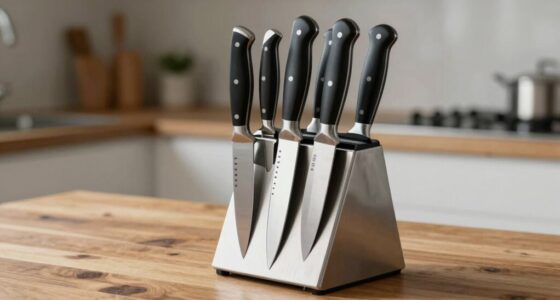

Using a chef knife for large chopping tasks and a utility knife for peeling or detailed work helps you save time and stay safe in the kitchen. The chef knife’s larger blade handles bigger jobs efficiently, while the smaller utility knife offers better control for precision cuts. Choosing the right knife for each task also reduces effort and prolongs their sharpness. Keep exploring to discover how mastering these differences can boost your kitchen skills even further.

Get kitchen gear delivered free with Prime
- Fast, free delivery on millions of items
- Prime Video, Amazon Music and more included
- Member-only deals all year
Key Takeaways
- Use a chef knife for large cutting tasks like chopping vegetables and slicing bread to improve efficiency.
- Choose a utility knife for peeling, trimming, and detailed work on small ingredients for better control.
- Selecting the correct knife based on task reduces effort, saves time, and extends blade lifespan.
- Proper ergonomic handles enhance safety and comfort during extended or precise cutting tasks.
- Task-specific knife use optimizes workflow, minimizes accidents, and ensures better kitchen performance.

When it comes to kitchen tools, choosing the right knife can make a big difference in your cooking experience. The two most common options are the chef knife and the utility knife. Each is designed for specific tasks, and understanding their differences can save you time and effort in the kitchen. One of the key factors that influence a knife’s performance is the blade material. High-carbon stainless steel is popular for chef knives because it offers excellent edge retention and durability, making it ideal for chopping, slicing, and dicing. Utility knives often feature similar blade materials but are typically smaller and more precise, perfect for detailed work or cutting through smaller ingredients. The quality of the blade material determines how long your knife stays sharp, which directly impacts your efficiency and safety. A dull blade requires more force and increases the risk of slips and cuts, so selecting a knife with a durable, high-quality blade is essential. Additionally, the blade geometry of a knife affects how efficiently it cuts through different ingredients, influencing your overall performance in the kitchen.
Handle ergonomics also play a vitally important role in how comfortable and safe your knife feels during use. A well-designed handle should fit comfortably in your hand, providing a secure grip that minimizes fatigue and slippage. For chef knives, handles tend to be larger and contoured to support a firm, balanced grip, especially during prolonged chopping or slicing sessions. Utility knives usually have smaller handles, but ergonomic designs are still important to ensure precise control and reduce hand strain, especially when working on detailed tasks. Material choices for handles vary, from wood to synthetic composites, and each offers different benefits in terms of grip and maintenance. An ergonomic handle that feels good in your hand allows you to work more efficiently, with less discomfort over extended periods.
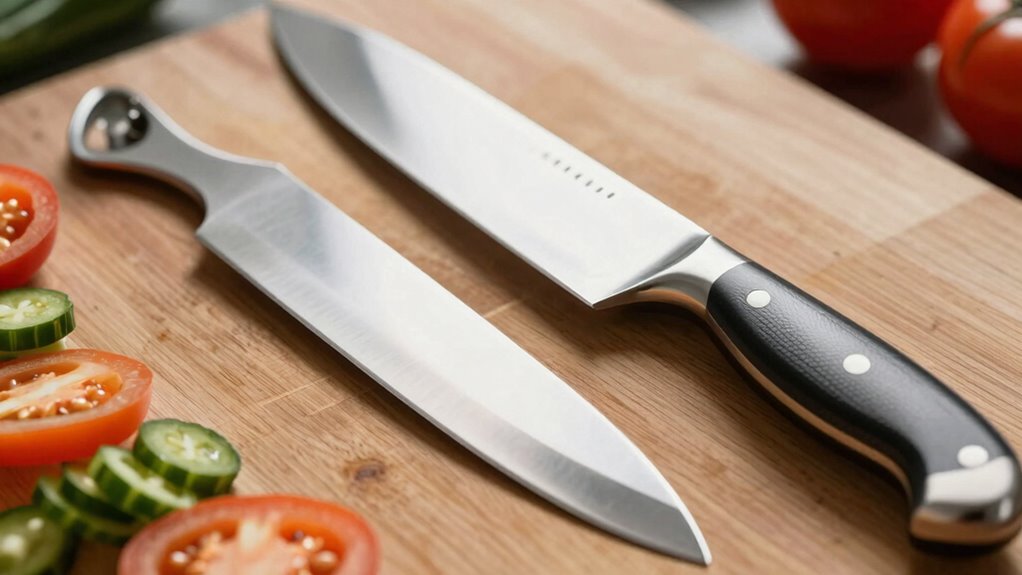
Knowing when to use a chef knife versus a utility knife depends on the task at hand. For larger cutting tasks like breaking down a chicken, slicing a loaf of bread, or chopping vegetables, the chef knife’s longer, heavier blade provides the leverage and power needed. Its design, supported by a high-quality blade material and ergonomic handle, helps you cut smoothly and accurately. On the other hand, when you need to peel, trim, or do detailed work on small ingredients, a utility knife is your best bet. Its smaller size, precision blade, and comfortable handle allow for controlled, delicate cuts. Using the right knife for each task not only streamlines your workflow but also prolongs the life of your knives and keeps you safer. Mastering these differences ensures you’re prepared to handle any kitchen challenge efficiently.
high-carbon stainless steel chef knife
As an affiliate, we earn on qualifying purchases.
As an affiliate, we earn on qualifying purchases.
Frequently Asked Questions
Can a Utility Knife Replace a Chef Knife Entirely?
Sure, a utility knife can replace a chef’s knife—if you enjoy constant limitations. Its multifunctionality focus and ergonomic design make it handy for small tasks, but it often falls short for more complex cuts. Relying solely on it means sacrificing efficiency and precision. So, while it’s great for quick jobs, you’ll likely wish for a proper chef’s knife when tackling bigger, more demanding tasks in the kitchen.
Which Knife Is Better for Precise Cuts?
You’ll find a chef’s knife better for precise cuts because of its longer, broader blade, which provides better control and blade sharpness. Its design allows for more accurate slicing, dicing, and julienning. A utility knife, while versatile, lacks the same level of cutting precision needed for intricate tasks. For delicate, detailed work, rely on the chef’s knife to achieve cleaner, more precise results efficiently.
How Do I Maintain Both Knives Properly?
Imagine the satisfaction of a razor-sharp blade meeting your task. You keep your knives in good shape by regularly knife sharpening, honing the edges to maintain their precision. Proper storage solutions, like a magnetic strip or knife block, prevent damage and corrosion. Always hand wash knives, dry thoroughly, and avoid dishwasher use. With consistent care, both your chef and utility knives stay sharp, safe, and ready for any culinary challenge.
Are There Safety Concerns Using These Knives?
Yes, there are safety concerns when using these knives. Always wear safety gear like cut-resistant gloves and use proper handling techniques to avoid injuries. Keep your knives sharp, as dull blades require more force and can slip. Focus on your cutting motion, cut away from your body, and store knives securely when not in use. Staying attentive and following safety protocols helps prevent accidents and keeps you safe while cooking.
What Are the Cost Differences Between Them?
Like comparing apples to oranges, the cost differences depend on blade material and ergonomic design. A chef knife typically costs more due to high-carbon stainless steel blades and professional-grade construction, while utility knives are more budget-friendly with simpler materials. If you prioritize durability and comfort, expect to pay a premium. However, if you only need basic cuts, a utility knife offers a cost-effective choice without sacrificing performance.
ergonomic utility knife for detailed work
As an affiliate, we earn on qualifying purchases.
As an affiliate, we earn on qualifying purchases.
Conclusion
Ultimately, choosing the right knife depends on your task and skill level. While some may argue that a versatile utility knife can replace a chef’s knife, investing in both guarantees precision and efficiency in your kitchen. Don’t underestimate the value of a dedicated chef’s knife for complex cuts; it can save you time and effort. By understanding their specific roles, you’ll elevate your cooking and avoid the frustration of unsuitable tools—making every task smoother.
As an affiliate, we earn on qualifying purchases.
precision utility knives for peeling
As an affiliate, we earn on qualifying purchases.
As an affiliate, we earn on qualifying purchases.
Halloween Picks
halloween
As an affiliate, we earn on qualifying purchases.