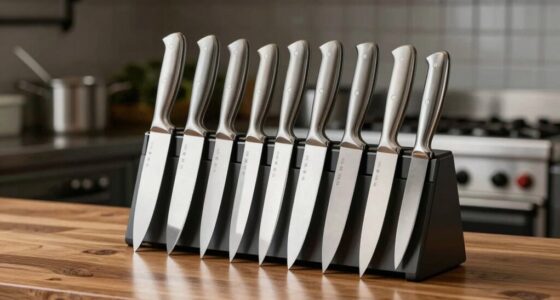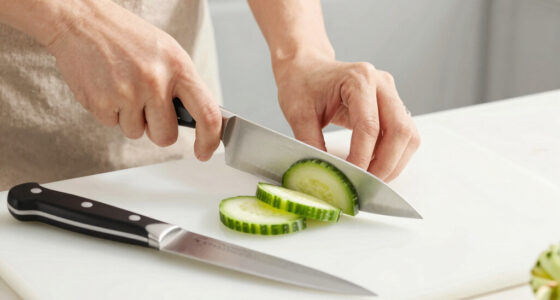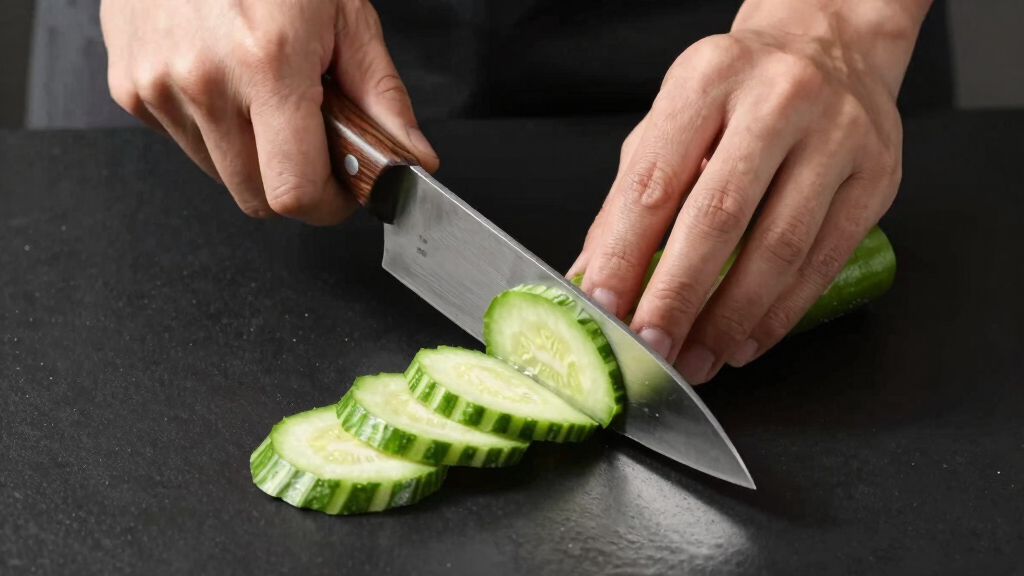
Finding the best Japanese chef knife under $300 involves balancing quality, performance, and price. The MITSUMOTO SAKARI 8 inch Gyuto stands out for its excellent craftsmanship and sharpness, making it a top choice for most home cooks. The HOSHANHO 7 Inch Santoku offers a more affordable option with high carbon stainless steel for durability and ease of maintenance. Meanwhile, the Shun Sora 8-Inch Chef’s Knife provides a lightweight, balanced feel, ideal for precision cutting. Buyers often face tradeoffs between blade material, handle comfort, and versatility—spending more for craftsmanship or saving by choosing simpler designs. Continue reading to see how these options compare and which one fits your needs best.
Key Takeaways
- High-quality VG-10 and Damascus steels consistently elevate performance in this price range.
- Handles vary from traditional rosewood and pakkawood to modern ergonomic designs, influencing comfort and control.
- Most top picks balance sharpness, durability, and ease of maintenance, but heavier blades may be less suited for extended use.
- The best value options often include slightly smaller or simpler knives that still deliver excellent performance for home cooks.
- Premium-looking options with Damascus steel or handcrafted blades tend to come with higher price points within this budget.


More Details on Our Top Picks
MITSUMOTO SAKARI 8 inch Gyuto Chef Knife with Rosewood Handle
This knife stands out for its handcrafted, three-layer construction using high-quality 9CR18MOV steel, which delivers exceptional sharpness and durability. Compared with the Japanese Gyutou knives, like the Japanese Gyutou Knife Pro, it offers a more traditional forging pattern and an ergonomic rosewood handle that balances comfort with aesthetics. The ultra-thin blade reduces tearing, making it ideal for precise, juice-preserving cuts. However, the high carbon steel demands careful maintenance to prevent rust, and the handle can be slippery when wet. This pick makes the most sense for cooks who value authentic craftsmanship and are willing to maintain their tools regularly.
Pros:- Hand-forged with traditional craftsmanship for sharpness and durability
- Ergonomic rosewood handle for comfortable grip
- Ultra-thin blade reduces tearing and preserves food quality
Cons:- High carbon steel requires careful maintenance to prevent rust
- Handle may be slippery when wet
Best for: Professional chefs or serious home cooks who appreciate traditional forging and are committed to proper knife care
Not ideal for: Casual cooks or those who prefer low-maintenance, rust-resistant knives, due to the steel’s susceptibility to rust and handle slipperiness
- Blade Length:8 inches
- Steel Type:9CR18MOV high carbon steel
- Handle Material:Rosewood
- Layering:3-layer
- Forging Pattern:Water ripple
Bottom line: This knife is perfect for those who want a beautifully crafted, traditional Japanese gyuto and are prepared for ongoing maintenance.
HOSHANHO 7 Inch Japanese Chef Knife – High Carbon Stainless Steel Santoku with Pakkawood Handle
This 7-inch Santoku combines a high-carbon stainless steel blade with a frosted, hand-sharpened edge, offering a good balance of durability and precision. Unlike the HOSHANHO 8-inch Chef’s Knife, it’s smaller and more nimble, making it ideal for intricate tasks like slicing vegetables or dicing meat with control. The Pakkawood handle ensures comfort during extended use, although it may require occasional maintenance to prevent cracking or drying. Its double-side groove minimizes food sticking, enhancing efficiency. While the steel’s high hardness (62 HRC) ensures longevity, beginners should handle with care to avoid accidental slips. This makes a compelling choice for home cooks seeking premium features at a lower price point.
Pros:- High-quality, durable Japanese steel blade
- Ergonomic and comfortable Pakkawood handle
- Versatile for slicing, dicing, and chopping
Cons:- Handle may require maintenance to prevent drying or cracking
- Blade may be too sharp for inexperienced users without proper handling
Best for: Home cooks or amateur chefs looking for a versatile, elegant knife that handles a variety of tasks with ease
Not ideal for: Users seeking a low-maintenance knife or those who prefer dishwasher-safe tools, as Pakkawood needs specific care
- Blade Length:7 inches
- Material:High Carbon Stainless Steel (10Cr15CoMoV)
- Blade Hardness:62 HRC
- Handle Material:African Pakkawood
- Blade Design:Frosted, hand sharpened 15-degree angle
- Design Features:Double-side groove
Bottom line: This Santoku offers a blend of premium steel, ergonomic design, and versatility for dedicated home cooks who want a reliable all-rounder.
Japanese Gyutou Knife Pro – 8 inch Handcrafted Forged Chef Knife with VG-10 Damascus Steel
This handcrafted 8-inch Gyutou knife combines traditional hand-forging with VG-10 Damascus steel, resulting in an ultra-sharp, multi-layered blade that elevates any culinary routine. Compared with the Shun Sora, it offers a more artisanal aesthetic with 67 layers of Damascus, making it a true kitchen showpiece. The temperature-quenching process exceeds 1000°C, ensuring durability and edge retention. The handle, made from wood and resin, complements its luxurious appearance but may not suit all grip preferences. As a downside, its premium price might stretch the budget for some, and it requires careful maintenance to preserve its sharpness. This is ideal for chefs who see their knife as both a functional tool and a piece of art.
Pros:- High-quality VG-10 Damascus steel with 67 layers for sharpness and durability
- Handcrafted by artisans with traditional techniques
- Beautiful Damascus pattern as a kitchen art piece
Cons:- Premium price may be prohibitive
- Handle design may not fit all grip styles
- Requires careful maintenance to keep sharpness
Best for: Cooks who value craftsmanship, aesthetics, and high-performance steel, and are willing to invest in a show-stopping piece
Not ideal for: Casual users or those preferring low-cost, low-maintenance knives, as it demands careful handling and maintenance
- Blade Length:8 inches
- Steel Type:VG-10 Damascus Steel
- Layering:67 layers
- Handle Material:Wood/Resin
- Construction:Forged
- Edge:0-degree razor-sharp
Bottom line: This knife is best suited for those who want a handcrafted, visually striking Japanese gyuto with exceptional cutting performance, and are prepared for its upkeep.
HOSHANHO 7 Inch Nakiri Knife, Japanese High Carbon Stainless Steel Chef Knife with Pakkawood Handle
This Nakiri knife excels for vegetable and fruit prep, thanks to its hand-polished, ultra-sharp blade made from high carbon stainless steel. It’s more specialized than the versatile Shun Sora but excels in straight, clean cuts on produce. The 7-inch length and forged construction make it easy to maneuver, while the pakkawood handle offers comfort and control. Its 60 HRC steel provides a good balance of sharpness and corrosion resistance, but requires proper care to prevent rust. The scalloped side adds a non-stick quality for slicing delicate items. This is a smart choice for cooks who focus heavily on vegetable prep and want a dedicated, precision tool.
Pros:- Sharp, precise cutting edge for effortless slicing
- Ergonomic handle reduces fatigue
- Stylish, non-stick scalloped side for delicate produce
Cons:- High carbon steel may rust if not properly maintained
- Handle may be slippery when wet for some users
Best for: Vegetable-focused cooks or professional chefs who need a dedicated vegetable knife for detailed work
Not ideal for: Those seeking a multi-purpose chef’s knife, as Nakiris are primarily specialized for vegetables and fruits
- Blade Length:7 inches
- Material:Japanese 10Cr15CoMoV high carbon stainless steel
- Blade Hardness:60 HRC
- Handle Material:Pakkawood
- Blade Edge:15-degree sharp edge
- Construction:Forged
Bottom line: This Nakiri is ideal for users who prioritize vegetable preparation and want a dedicated, precise cutting tool.
Shun Sora 8-Inch Chef’s Knife
The Shun Sora 8-inch chef’s knife offers a well-rounded option for various kitchen tasks, with a VG10 steel edge supported by a stainless steel bolster for durability. Compared with the handcrafted Japanese Gyutou Knife Pro, it provides a more accessible, mass-produced option that still benefits from Japanese craftsmanship. The balanced full-tang handle ensures control for slicing, dicing, and mincing, though its less curved profile may require some adjustment for users accustomed to Western-style knives. Regular sharpening will keep its edge performing well, but its slightly higher price might be a barrier for budget-conscious buyers. This knife makes the most sense for cooks looking for a dependable, versatile all-purpose chef’s knife with Japanese pedigree.
Pros:- Sharp VG10 steel edge for excellent cut precision
- Full-tang handle offers balanced control
- Handcrafted in Japan with traditional techniques
Cons:- May require regular sharpening to maintain performance
- Less curved than Western knives, which may require adjustment
Best for: Amateur cooks and home chefs seeking a reliable, versatile Japanese-style chef’s knife for everyday use
Not ideal for: Users wanting a handcrafted or artisanal knife, as this model is more mass-produced and less ornate
- Blade Length:8 inches
- Blade Material:VG10 steel with 420J stainless steel support
- Edge Angle:16 degrees
- Handle Material:Textured PP/TPE polymer blend
- Country of Manufacture:Japan
- Blade Style:Gyuto
Bottom line: This knife is best suited for home cooks who want a dependable, versatile Japanese chef’s knife at a reasonable price point.
imarku 7-Inch Chef Knife – High Carbon Japanese Santoku Knife with Hollow Edge and Pakkawood Handle
The imarku 7-Inch Santoku stands out for its sharp, durable high carbon steel blade, which offers excellent edge retention. Its hollow scalloped edge reduces sticking, making slicing smoother—a significant advantage over plain-edged blades like the HOSHANHO 8-inch. The ergonomic Pakkawood handle enhances comfort during prolonged use, but requires careful maintenance to prevent cracking, especially in humid kitchens. While its 7-inch size limits some heavy-duty tasks, it’s a practical choice for daily slicing and dicing. Compared to larger knives, it offers more control, though at the expense of some versatility for bigger cuts.
Pros:- Sharp, high-quality steel for lasting performance
- Hollow edge reduces food sticking
- Ergonomic Pakkawood handle for comfort
- Suitable for a variety of kitchen tasks
Cons:- Handle requires maintenance to prevent cracking
- Limited to 7-inch size, less suited for large cuts
Best for: Home cooks and professional chefs who want a balanced, versatile knife for everyday tasks that’s easy to handle.
Not ideal for: Users needing a larger, 8-inch or bigger chef’s knife for big batches or heavy-duty chopping, as the 7-inch length can be limiting.
- Blade Length:7 inches
- Material:High carbon stainless steel
- Blade Thickness:2.5 mm
- Edge Angle:15-18 degrees per side
- Handle Material:Pakkawood
- Design:Hollow edge, scalloped
Bottom line: This knife makes the most sense for those seeking a sharp, well-balanced santoku for everyday use with manageable size and comfort.
HOSHANHO 8-inch Japanese High Carbon Steel Chef’s Knife – Professional Ultra Sharp Kitchen Knife with Ergonomic Handle
The HOSHANHO 8-inch chef’s knife excels in sharpness and durability thanks to Japanese high carbon steel, making it ideal for slicing meats, vegetables, and cheeses with precision. Its forged construction and 60 HRC hardness ensure long-lasting edge retention, outperforming less hardened blades. The ergonomic handle improves control and reduces fatigue, but the 8-inch size might be too bulky for users with smaller hands or limited space. Compared with the more decorative KAWAHIRO VG10, this knife offers a straightforward, professional-grade tool focused on performance over aesthetics. Its premium price reflects its high steel quality, which might be a stretch for budget-conscious buyers.
Pros:- High carbon steel for excellent sharpness
- Forged and well-balanced for precision
- Ergonomic handle for comfortable grip
- Good rust resistance and durability
Cons:- Price may be high for some buyers
- Size may be too large for delicate or small tasks
Best for: Professional chefs or serious home cooks who prioritize sharpness and size for detailed slicing tasks.
Not ideal for: Beginners or users with smaller hands who might find the 8-inch length unwieldy or prefer a lighter, smaller knife.
- Blade Material:Japanese high carbon steel 10Cr15CoMoV
- Blade Length:8 inches
- Hardness:60 HRC
- Handle Material:Wood
- Blade Finish:Matte
- Blade Angle:13 degrees per side
Bottom line: This pick is best for those seeking a sizable, ultra-sharp Japanese chef’s knife with a focus on performance and longevity.
Japanese Chef Knife with 67 Layers Damascus Steel, 8.27 Inch Gyuto Knife with Ebony Handle
The Damascus steel Gyuto offers a stunning layered pattern combined with AUS-10 core steel, delivering exceptional sharpness and corrosion resistance. Its 8.27-inch blade is versatile for slicing, dicing, and chopping, while the full-tang ebony handle provides ergonomic comfort. Compared with the KAWAHIRO VG10, this knife focuses heavily on visual appeal alongside performance, making it a favorite among those who value craftsmanship and beauty. However, the premium price and delicate handle mean it’s best for dedicated cooks willing to care for their tools. Its aesthetic and layered steel design make it a statement piece, but requires maintenance to preserve its look and function.
Pros:- Beautiful Damascus pattern enhances strength
- AUS-10 core steel for sharpness
- Ergonomic ebony handle for comfort
- Excellent edge retention
Cons:- Premium cost limits accessibility
- Handle needs care to maintain appearance
- Requires proper sharpening to preserve performance
Best for: Enthusiasts who appreciate craftsmanship, aesthetics, and sharpness in a premium kitchen knife.
Not ideal for: Casual cooks or those on a tight budget, as the price and maintenance needs are higher than simpler models.
- Material:67 Layers Damascus Steel with AUS-10 core
- Blade Length:8.27 inches
- Handle Material:Ebony wood
- Edge Angle:10-12 degrees
- Design:Full-tang, ergonomic, layered
Bottom line: This knife is ideal for those valuing artful craftsmanship and high performance, willing to invest in maintenance.
KAWAHIRO Japanese Chef Knife, 8 Inch Hand Forged VG10 Kitchen Knife with Octagonal Handle
The KAWAHIRO VG10 Gyuto offers razor-sharp cutting with its high-quality VG10 steel, known for its excellent edge retention. Its 8-inch blade is perfect for precise slicing, while the octagonal handle provides a comfortable, controlled grip, making it suitable for both professional and home chefs. Compared with the imarku Santoku, this knife emphasizes elegance and craftsmanship with its layered steel design and hand-forged construction. The premium price reflects its quality, but the handle material and careful maintenance are necessary to keep it in top condition. Its aesthetic appeal makes it a fitting gift, while the razor-sharp edge suits detailed culinary work.
Pros:- Razor-sharp VG10 steel for precise cuts
- Elegant layered steel design
- Ergonomic octagonal handle for control
- Beautiful gift-ready appearance
Cons:- Premium price may be prohibitive
- Handle material needs maintenance
- Hand wash recommended to preserve quality
Best for: Cooks who desire a combination of sharpness, craftsmanship, and visual sophistication for detailed kitchen tasks.
Not ideal for: Budget-conscious buyers or those looking for a more casual, low-maintenance option, as the handle and steel require careful care.
- Blade Length:8 inches
- Material:VG10 stainless steel with 3-layer composite
- Handle Material:Ruby wood, turquoise, ebony
- Blade Type:Gyuto
- Edge:Razor sharp
- Forging Technique:Hand-forged, black forge
Bottom line: This knife suits those seeking a highly precise, beautifully crafted knife that doubles as a collectible or gift item.
KYOKU Chef Knife – 8″ Shogun Series Japanese VG10 Steel Damascus Blade with Sheath & Case
The KYOKU Chef Knife stands out for its exceptional combination of craftsmanship and practical features. Its 67-layer Damascus VG-10 steel blade offers outstanding sharpness, edge retention, and corrosion resistance—surpassing many competitors like the Shun Premier, which, despite its handcrafted appeal, costs more and requires more maintenance. The balanced fiberglass handle ensures comfort during prolonged use, making it suitable for serious home cooks and pros alike. However, its premium price tag might deter budget-conscious buyers, and the high-quality steel demands careful upkeep to prevent damage. This pick makes the most sense for those who prioritize precision and durability in a versatile, all-purpose knife.Pros:- Exceptional sharpness and edge retention due to VG-10 Damascus steel
- Balanced, ergonomic handle for comfortable use
- Includes protective sheath and case for safe storage
Cons:- Premium pricing may be prohibitive for some buyers
- Requires careful maintenance to prevent damage or corrosion
Best for: Experienced home cooks or professional chefs seeking a durable, high-performance knife with a premium feel.
Not ideal for: Casual cooks on a tight budget who prefer a more affordable, low-maintenance option.
- Blade Length:8 inches
- Material:VG-10 Damascus Steel
- Layers:67 layers
- HRC:58-60
- Handle Material:Fiberglass
- Included:Sheath and Case
Bottom line: This knife is best for those who want a premium, versatile chef’s knife with exceptional performance and are willing to invest in upkeep.
MITSUMOTO SAKARI Japanese Chef’s Knife Set, 4 Pcs, Hand Forged High Carbon Steel, Rosewood Handles & Sandalwood Box
This set from Mitsumoto Sakari offers remarkable value by providing four meticulously hand-forged knives with high carbon steel blades, comparable in quality to single premium options like the Kyoku. While it doesn’t feature VG-10 steel, the 9CR18MOV steel used is highly durable and capable of maintaining sharpness with proper care. The elegant rosewood handles and sandalwood box elevate its presentation, making it a compelling gift or starter set. The main tradeoff lies in needing more maintenance to prevent rust, unlike the VG-10’s corrosion resistance. Compared to the imarku or Matsato options, this set emphasizes craftsmanship and aesthetic appeal without sacrificing performance, making it ideal for budget-conscious buyers who want multiple blades.Pros:- High-quality hand-forged craftsmanship with durable high carbon steel
- Elegant rosewood handles for comfortable grip
- Beautiful sandalwood box makes it a great gift
Cons:- High carbon steel requires careful maintenance to prevent rust
- Price may be high for casual or infrequent users
Best for: Home cooks or budding professionals looking for a complete, high-quality starter set at an accessible price.
Not ideal for: Those seeking a single, low-maintenance, highly corrosion-resistant knife for daily heavy use.
- Number of Pieces:4
- Blade Material:9CR18MOV high carbon steel
- Blade Thickness:2.5mm
- Handle Material:Rosewood
- Handle Design:Octagonal, ergonomic
- Includes:Sandalwood box, knife blade oil
Bottom line: This set offers a balanced mix of craftsmanship, aesthetics, and affordability, perfect for those wanting multiple reliable blades.
imarku Japanese Chef Knife – 8 Inch High-Carbon Stainless Steel Gyutou with Ergonomic Pakka Handle
The imarku 8-inch Gyutou offers a practical entry point for those new to Japanese knives. Its high-carbon stainless steel blade ensures sharpness and durability, comparable to more expensive handcrafted options like the Shun Premier, but with less delicate maintenance needs. The ergonomic Pakka handle provides a comfortable grip, reducing fatigue during extended prep. While the steel’s high carbon content boosts performance, it also requires regular sharpening and careful cleaning to prevent rust—similar to the Matsato but with a slightly more refined handle. This model is better suited for someone starting their knife collection or who wants a reliable, easy-to-use option without the premium price.Pros:- Sharp, durable blade with high carbon content for long-lasting edge
- Ergonomic handle reduces hand fatigue
- Multi-purpose knife suitable for slicing, dicing, chopping
Cons:- Handle may need frequent cleaning to maintain appearance
- Requires proper sharpening and care to sustain edge
Best for: Beginners or home cooks seeking a straightforward, sharp Japanese chef’s knife that balances performance and affordability.
Not ideal for: Experienced chefs or those seeking a knife with a more premium or handcrafted feel, due to its simpler design.
- Blade Length:8 inches
- Material:High-Carbon Stainless Steel
- Hardness:HRC 56-58
- Handle Material:Pakka (FSC-Certified wood)
- Chrome Content:16-18%
- Carbon Content:0.6-0.75%
Bottom line: This knife provides reliable performance for newcomers and casual cooks wanting a sharp, easy-to-maintain Japanese chef’s knife.
Matsato Chef Knife – 6.3 Inch Japanese Stainless Steel Kitchen Knife for Cooking and Chopping
The Matsato 6.3-inch Chef Knife is designed for those who need a smaller, versatile option. Its traditional Japanese craftsmanship combined with modern stainless steel makes it highly resistant to dulling and chipping, comparable to full-sized knives like the Shun Premier but in a more manageable size for delicate tasks. Its balanced weight and solid oak handle make it easy to control, ideal for precise vegetable or herb prep. The main tradeoff involves its limited blade length, which might not suit larger tasks or heavy-duty chopping. Compared with larger options, this is perfect for cooks who value maneuverability and precision in a compact form.Pros:- Sharp, chip-resistant stainless steel blade
- Well-balanced and easy to control
- Traditional craftsmanship with modern quality
Cons:- Limited blade length may restrict versatility
- Requires hand washing to preserve finish
Best for: Cooks with limited space or those who prefer a smaller, more precise knife for detailed tasks.
Not ideal for: Users needing a full-sized chef’s knife for heavy-duty chopping or larger ingredients.
- Blade Length:6.3 inches
- Blade Thickness:0.14 inches
- Blade Material:Japanese 4116 stainless steel
- Handle Material:Solid oak
- Weight:0.4 lbs
Bottom line: This compact knife is ideal for precise, everyday kitchen tasks where control and size matter most.
Shun Premier 8″ Chef’s Knife, Handcrafted Japanese Kitchen Knife with VG-MAX Steel and Pakkawood Handle
The Shun Premier 8-inch Chef’s Knife exemplifies handcrafted Japanese artistry, with VG-MAX steel layered in Damascus for exceptional sharpness and edge retention. Its beautifully textured hammered finish helps reduce food sticking, making prep smoother—an upgrade over the Kyoku in aesthetic appeal and craftsmanship. The Pakkawood handle offers a comfortable, secure grip, though it may be less suitable for those preferring synthetic or more modern grips. Its premium price reflects the handcrafted quality, but this also means demanding careful maintenance to prevent corrosion, similar to the Kyoku and imarku. This knife is perfect for those who want a handcrafted, visually stunning piece that performs at a professional level.Pros:- Exceptional handcrafted Japanese craftsmanship
- VG-MAX steel with Damascus layers for superb sharpness
- Beautiful hammered finish reduces sticking
Cons:- Higher price point may deter budget buyers
- Requires careful maintenance to prevent corrosion
- Handle may be less suitable for those preferring synthetic grips
Best for: Professional chefs or serious home cooks who value craftsmanship, aesthetics, and superior cutting performance.
Not ideal for: Casual cooks or buyers seeking a low-cost, low-maintenance knife, due to its higher price and care requirements.
Bottom line: This handcrafted knife delivers premium Japanese quality and aesthetics for those ready to invest in a truly refined kitchen tool.
How We Picked
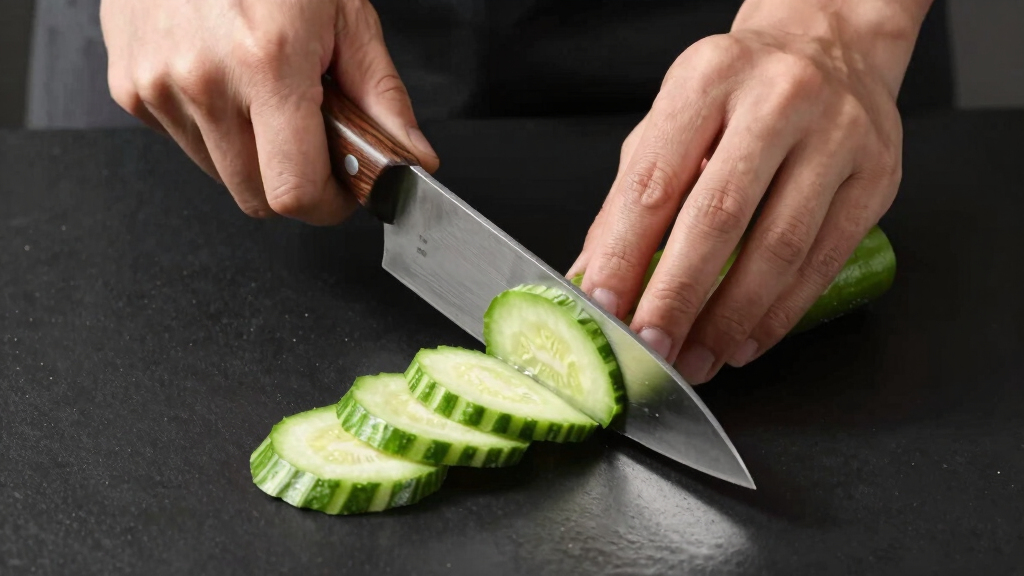
This lineup was curated based on a combination of factors that matter most to buyers under $300. Blade quality and steel type were prioritized for sharpness and durability, while handle ergonomics influenced comfort during prolonged use. We also considered craftsmanship, overall build quality, and user feedback to identify knives that offer the best balance of performance and value. Each knife was compared against others on versatility—whether suited for slicing, dicing, or general use—and ease of maintenance. The ranking reflects not just initial quality but how well each knife performs over time and its suitability for different skill levels and kitchen needs.Factors to Consider When Choosing Best Japanese Chef Knife Under $300
Choosing the best Japanese chef knife under $300 involves understanding several key factors. First, consider the steel type, which influences sharpness, edge retention, and ease of sharpening. Next, handle design impacts comfort and control, especially during longer prep sessions. Blade shape and size should match your typical tasks—gyuto for versatility, santoku for slicing, nakiri for chopping. Additionally, think about weight, balance, and maintenance requirements. Finally, weighing craftsmanship and aesthetics can help select a knife that not only performs well but also feels satisfying to use daily.Steel Type and Edge Retention
The steel used in a Japanese chef knife is critical for its cutting performance. High-carbon steels like VG-10 or VG-EX tend to hold an edge longer and sharpen more easily, making them ideal for frequent use. Damascus steel offers a layered look and often combines durability with aesthetic appeal, but some layered steels may need more careful maintenance to prevent chipping. Cheaper steels might require more frequent sharpening but can be more forgiving for beginners. Understanding your willingness to sharpen and maintain your knife will influence your steel choice.
Handle Comfort and Control
Handles vary from traditional rosewood and pakkawood to modern ergonomic synthetic designs. The right handle should feel secure in your hand, reducing fatigue during extended chopping or slicing. Rounded, contoured handles tend to provide better control, especially for delicate tasks. Heavier handles can improve balance but may feel cumbersome over time. Consider how much grip and control you prefer, especially if you have smaller hands or are new to Japanese knives.
Blade Shape and Size
The size and shape of your knife influence its versatility. An 8-inch gyuto generally offers the most flexibility, suitable for a wide range of tasks. A 7-inch santoku or nakiri can be easier to handle for those with smaller hands or those who prioritize slicing and chopping. Smaller blades are often lighter and easier to maneuver but might lack the heft needed for some tasks. Match the blade size to your typical prep work to avoid frustration or inefficiency in the kitchen.
Weight, Balance, and Maintenance
Weight and balance affect how comfortable a knife is during use. A well-balanced knife reduces hand fatigue and increases precision. Thicker, heavier blades excel at chopping through dense ingredients but can be tiring if used for extended periods. Maintenance involves regular honing and occasional sharpening, especially for high-carbon steels prone to rust if not cared for properly. Consider your willingness to maintain the knife versus your need for performance and durability.
Craftsmanship and Aesthetics
Although performance is key, the aesthetic appeal of a Japanese knife adds to the overall experience. Hand-forged blades with layered Damascus patterns or elegant handles can be inspiring tools. However, aesthetic features often come at a premium within this budget—be sure to balance beauty with function. A well-made, simple design might outperform a more ornate but less practical option in daily use.
Frequently Asked Questions
How do I know if a Japanese chef knife is right for me?
If you cook frequently and value sharpness, precision, and craftsmanship, a Japanese chef knife can significantly improve your prep work. Consider your typical tasks—if slicing vegetables, fish, or meats is common, a well-chosen gyuto or santoku will offer versatility. For beginners, selecting a balanced, comfortable handle and a manageable size helps ease the learning curve. Ultimately, the right knife feels comfortable in your hand and matches your cooking style, making prep work more enjoyable and efficient.
Should I prioritize steel quality or handle comfort?
Both matter but depend on your usage and preferences. Steel quality directly impacts sharpness, edge retention, and ease of sharpening—critical for maintaining performance over time. Handle comfort influences control and fatigue, especially during lengthy prep sessions. If you cook daily, a durable steel with a comfortable handle is ideal. For occasional use, a slightly softer steel with a comfortable grip might suffice. Balancing these factors ensures your knife remains effective and pleasurable to use.
Can I sharpen Damascus steel knives myself?
Yes, Damascus steel knives can be sharpened at home, but they often require specific care due to layered construction. Using sharpening stones or whetstones designed for Japanese knives yields the best results. Be cautious of uneven layers or micro-chipping if you sharpen aggressively. For those unfamiliar with sharpening techniques, professional honing or guiding services can help preserve the layered aesthetic and performance. Regular maintenance will prolong the life and beauty of your Damascus steel knife.
Is a higher price within the $300 range worth it?
Generally, spending closer to the top of the $300 budget can provide better steel, craftsmanship, and handle quality. These knives often feature premium VG-10 or Damascus steels and more refined forging, translating into sharper edges and longer-lasting cuts. However, not every higher-priced option is necessarily better for every user—consider your specific needs and how much you value aesthetics versus performance. A well-chosen mid-range knife can outperform a more expensive but less suitable one for your style of cooking.
What should I avoid when buying a Japanese chef knife under $300?
Avoid knives with overly cheap or soft steels that dull quickly, requiring frequent sharpening. Steer clear of handles that feel uncomfortable or insecure in your hand, as they can cause fatigue or accidents. Be cautious of poorly balanced blades or those with uneven forging, which can impair control. Lastly, steer away from knives with exaggerated aesthetics that compromise durability or functionality—form should never compromise function in a good kitchen tool.
Conclusion
For most home cooks, the MITSUMOTO SAKARI 8 inch Gyuto offers a stellar blend of craftsmanship, performance, and value, making it the best overall choice. Those seeking a more affordable, durable option might prefer the HOSHANHO 7 Inch Santoku for everyday versatility. Beginners will appreciate the balanced, lightweight feel of the Shun Sora 8-Inch Chef’s Knife, while dedicated enthusiasts or professionals may lean toward the Japanese Gyutou Knife Pro with its handcrafted Damascus steel. Ultimately, your choice depends on your specific needs, but these options represent the best balance of quality and price under $300 for 2026.