
To teach knife safety to new home cooks, start with proper grip techniques like the pinch grip for better control. Emphasize controlled, deliberate cutting motions and keep fingers curled away from the blade in a claw shape. Guarantee the workspace is safe with a stable, non-slip surface. Stay attentive, practice patience, and regularly check techniques for safety. If you keep exploring, you’ll discover even more ways to build confidence and prevent accidents in the kitchen.

Get kitchen gear delivered free — and shop member deals
- Fast, free delivery on millions of items
- Access to Prime Big Deal Days deals on October 6–7
- Prime Video, Amazon Music and more included
Key Takeaways
- Demonstrate and practice the proper knife grip, such as the pinch grip, to ensure control and safety.
- Teach controlled, deliberate cutting motions with fingers curled inward to prevent accidents.
- Emphasize creating a safe, stable workspace with non-slip surfaces and organized surroundings.
- Reinforce mindfulness by encouraging attentiveness and regular safety checks during cutting tasks.
- Use slow, supervised practice to build muscle memory, confidence, and safe handling habits.
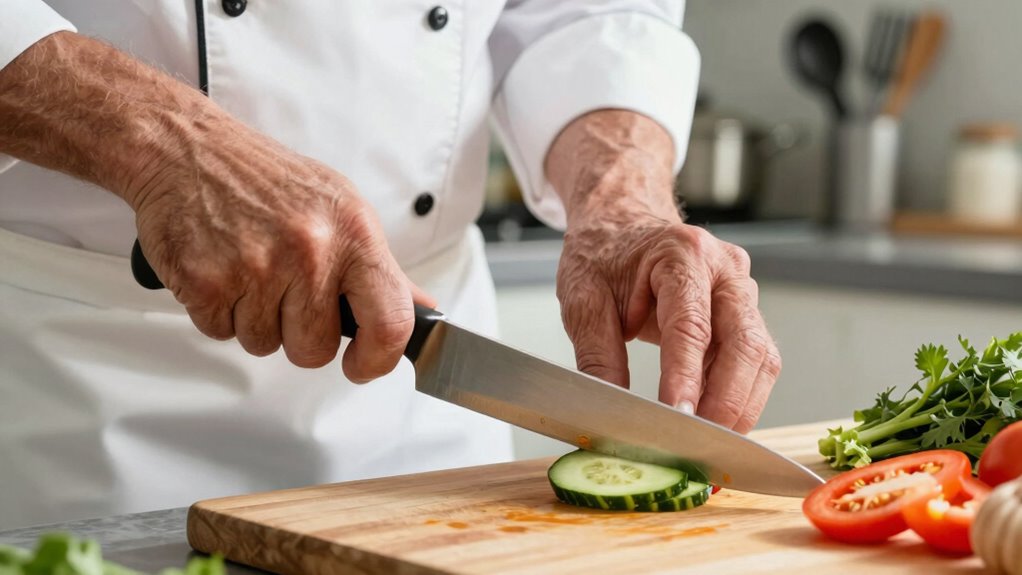
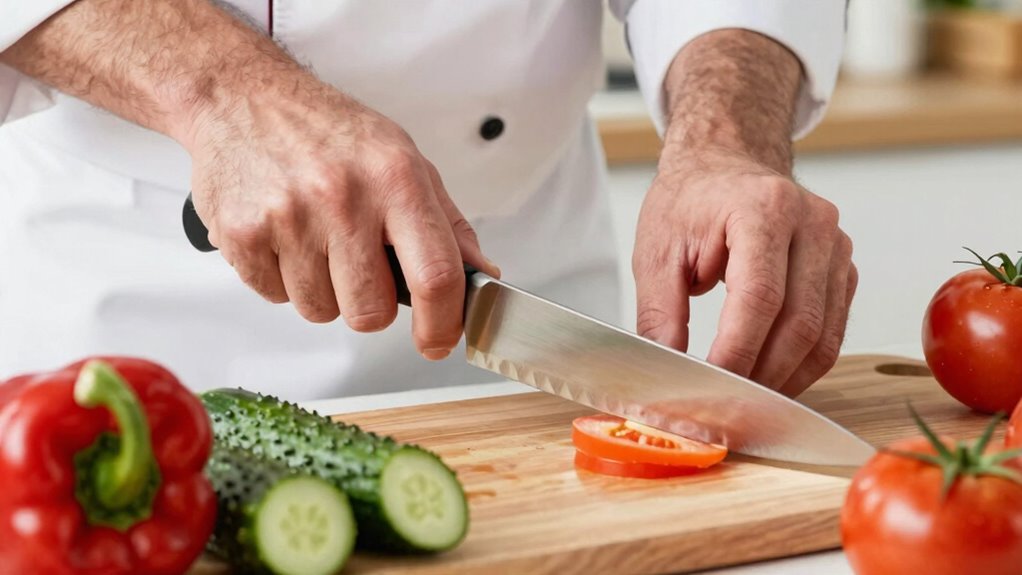
Learning to handle knives safely is essential for any new home cook, especially since proper technique can prevent injuries and improve your cooking skills. The first step is teaching the correct knife grip, which is fundamental for control and safety. You should hold the handle firmly with your dominant hand, using your thumb and index finger to grip the blade just above the handle. This pinch grip provides better stability and precision, making it easier to control your cuts. Once you get comfortable with this grip, you can experiment with different cutting techniques, but mastering the grip is the foundation.
Master the pinch grip for better control and safety when handling knives.
Next, focus on proper cutting techniques. Start with simple, controlled motions rather than rushing through your cuts. Keep your fingers curled inward on the hand holding the food, forming a claw shape. This way, your fingertips are tucked away from the blade, reducing the risk of accidental cuts. As you slice, move the knife in a smooth, rocking motion, using your wrist and arm rather than applying excessive pressure. This not only makes your cuts more even but also minimizes fatigue and promotes safety. Developing a safe cutting environment by ensuring your workspace is organized and free of clutter can further enhance safety. Additionally, practicing knife handling skills regularly can help build muscle memory and confidence in your techniques. Remember, staying aware of your surroundings and keeping your focus on your task is key to maintaining a safe workspace.
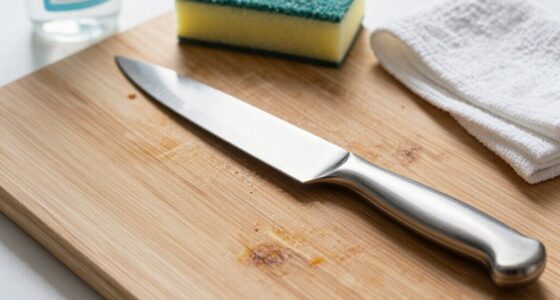
It’s also important to teach how to position the cutting surface. Always use a stable, non-slip cutting board, and ensure it’s placed on a damp towel or a rubber mat to prevent slipping. When chopping or slicing, position the food properly on the board, keeping your fingers and thumb tucked in as you work. This technique, often called the “claw grip,” helps you maintain control and keeps your fingers protected. Additionally, understanding the fundamentals of knife safety is crucial to prevent accidents and build confidence in your skills.
Demonstrating the proper way to hold the knife and perform cuts repeatedly will reinforce good habits. Encourage slow, deliberate movements at first, emphasizing control over speed. As your confidence grows, you can gradually increase your pace. Remember, the goal is precision and safety, not haste. Remind yourself to always pay attention to where your fingers are and to never use excessive force, which can cause the knife to slip. Developing a mindful approach to cutting is crucial for knife safety and overall confidence in the kitchen. Consistent practice of these techniques will help make safe knife handling second nature. Incorporating regular safety checks into your routine can help identify potential hazards before they lead to accidents.
Finally, emphasize the importance of paying attention and being mindful during every cut. No matter how experienced you become, accidents can happen if you’re distracted. Regularly checking your grip, maintaining proper cutting techniques, and staying focused will make knife handling second nature. With consistent practice and attention to safety, you’ll develop confidence and skill in the kitchen, turning knife safety into an integral part of your cooking routine.
As an affiliate, we earn on qualifying purchases.
Frequently Asked Questions
How Often Should I Replace My Kitchen Knives?
You should replace your kitchen knives when they become dull, chipped, or if they’re no longer safe to use. Regular knife maintenance, like honing and sharpening, extends their life, but safety gear like cut-resistant gloves can protect you if a blade becomes unpredictable. Keep an eye on your knives’ performance, and don’t hesitate to replace them when they compromise your safety or efficiency in the kitchen.
What Are Common Mistakes Beginners Make With Knives?
Many beginners slip up by not mastering the proper grip and cutting technique, risking accidents. You might think you can learn on the go, but focusing on a proper grip keeps the knife steady, while a good cutting technique ensures control and safety. Avoid rushing, and practice slowly to develop muscle memory. These foundational skills prevent slips and injuries, making your cooking safer and more enjoyable from the start.
Is It Necessary to Sharpen Knives Regularly?
Yes, you should sharpen your knives regularly to maintain safety and efficiency. Proper knife maintenance guarantees your blades stay sharp, reducing the risk of slips and accidents. Dull knives require more force, increasing injury chances. Always follow safety precautions when sharpening, like using a stable surface and proper tools. Regular sharpening keeps your knives in top condition, making cutting tasks safer and easier for you.
How Can I Prevent My Knives From Slipping During Use?
To prevent your knives from slipping, focus on your knife grip and the cutting surface. Hold the knife firmly with a proper grip, keeping your fingers tucked under your knuckles for control. Use a stable, non-slip cutting surface like a wooden or silicone board. Make sure your cutting surface is secure and steady. These steps help you maintain control, reduce slipping, and work safely and efficiently.
What Are the Signs of a Dull or Damaged Knife?
Your knife feels like it’s dragging through butter instead of slicing smoothly—that’s a sign it’s dull or damaged. You might notice uneven cuts, a lack of precision, or the blade’s edge curling or chipping. Regular knife maintenance keeps blades sharp and safe, emphasizing safety precautions. If your knife struggles to cut, it’s time to hone or replace it, ensuring your kitchen stays a safe, efficient space for cooking adventures.
As an affiliate, we earn on qualifying purchases.
Conclusion
Teaching knife safety is essential for confident, injury-free cooking at home. By starting with proper techniques, emphasizing focus, and practicing regularly, you build skills and habits that last. Did you know that nearly 70% of kitchen injuries involve cuts from knives? This highlights how crucial it is to learn safety early on. So, take your time, stay alert, and remember—safe cooking is enjoyable cooking. Your kitchen adventures will be safer and more fun!
chef's knife with ergonomic handle
As an affiliate, we earn on qualifying purchases.
As an affiliate, we earn on qualifying purchases.
As an affiliate, we earn on qualifying purchases.
Fall Picks
fall essentials
As an affiliate, we earn on qualifying purchases.