
To diagnose poor food release without guessing, observe when sticking occurs—early or after some contact time. Make certain your surface is clean, dry, and properly preheated, as these factors affect sticking. Check if your cookware is scratched or damaged, which can worsen food adhesion. Monitor how your food responds during cooking—if it refuses to release or sticks suddenly, it indicates surface or heat issues. Pay close attention and you’ll find the clues to improve your technique and surface prep.

Get kitchen gear delivered free with Prime
- Fast, free delivery on millions of items
- Prime Video, Amazon Music and more included
- Member-only deals all year
Key Takeaways
- Observe exactly when food begins to stick, indicating possible issues with surface preparation or heat control.
- Check if the cookware is properly preheated and seasoned to ensure optimal non-stick performance.
- Assess if the pan surface has scratches or damage that reduce non-stick effectiveness.
- Ensure the cookware is thoroughly cleaned and dried before cooking to prevent residue-related sticking.
- Monitor cooking temperature to avoid excessively high or low heat that affects food release.
Have you ever noticed food sticking stubbornly to your cookware, making cleaning a hassle and meal presentation less appealing? When that happens, it’s a clear sign that something’s off with your cooking process or surface preparations. To diagnose poor food release without guessing, you need to pay close attention to how you’re cooking and how your cookware is prepared beforehand. The first step is to evaluate your cooking techniques. Are you using the right heat levels? Too high heat can cause food to stick and burn, while too low might prevent proper searing or browning. Adjust your heat so that food sizzles upon contact, indicating a well-heated pan. Proper cooking techniques also involve timing; leaving food in one place too long without moving or flipping can lead to sticking. Practice patience and ensure you’re not overcrowding the pan, which lowers temperature and encourages sticking.
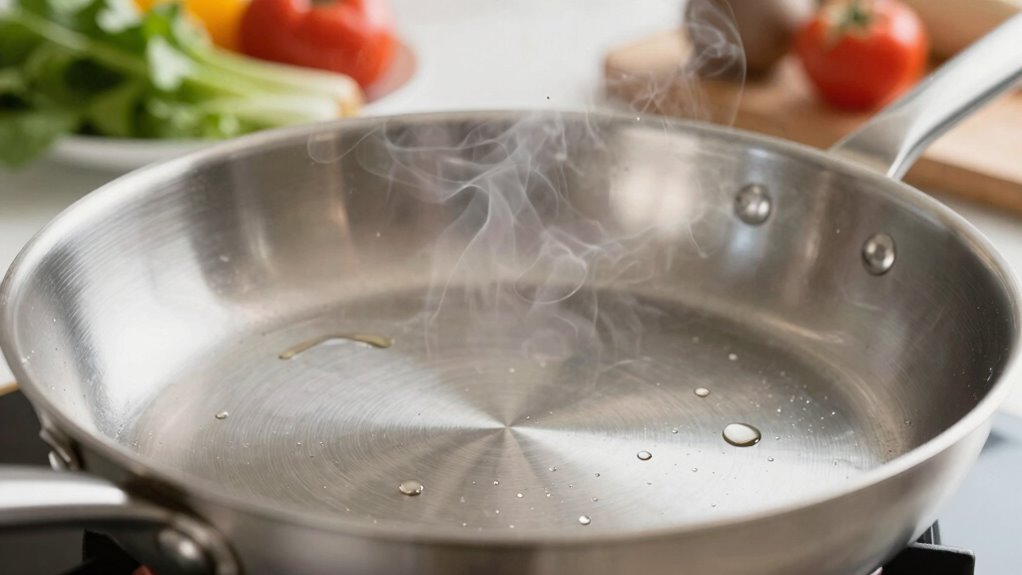
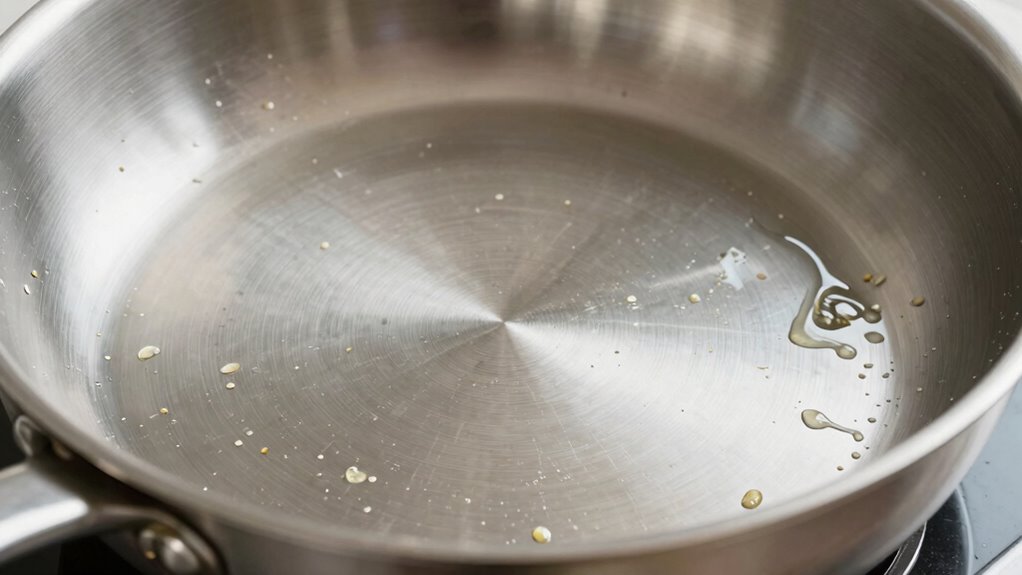
Next, focus on surface preparations. Before cooking, always ensure your cookware is clean and dry. Residual grease, soap residue, or moisture can prevent the non-stick properties from functioning correctly. For non-stick pans, a light coating of oil or fat before adding ingredients can create a barrier that helps release food easily. For cast iron or stainless steel, proper seasoning or preheating is crucial. Seasoned cast iron develops a natural non-stick surface over time, but it requires regular maintenance. When you’re ready to cook, heat the pan thoroughly before adding oil and then ingredients. This step ensures that food doesn’t stick and that surface preparations are effective. Additionally, maintaining the seasoning of your cookware is essential for optimal non-stick performance. Using the correct surface preparation techniques can dramatically improve food release and longevity of your cookware. Recognizing the importance of cookware materials** can also influence how you approach surface treatments and cooking methods. Understanding the properties of different cookware materials** helps you choose the best tools for your specific cooking needs and ensures proper care.
Ensure cookware is clean, dry, and properly preheated to prevent food from sticking during cooking.
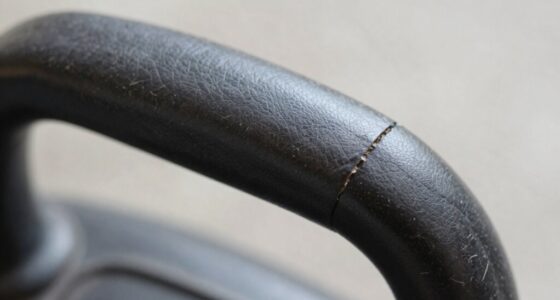
Another aspect to consider is the type of cookware you’re using. Different materials respond differently to surface preparations and cooking techniques. Non-stick pans, for example, need gentle handling and minimal oil, while stainless steel benefits from proper preheating and oiling. Cast iron requires seasoning and consistent maintenance. If you’re experiencing persistent sticking, it could be time to reassess the condition of your cookware. Scratched or damaged surfaces reduce non-stick effectiveness, so replacing or refurbishing your pots and pans might be necessary. Also, understanding how the properties of cookware materials influence heat distribution can help you optimize your cooking and prevent sticking issues.
Finally, observe how your food behaves during cooking. Are you noticing sticking early on, or only after some time? This can indicate issues with surface preparations or incorrect heat. Consistently poor food release signals that you need to refine your cooking techniques and surface preparations. By paying close attention to these factors, you can accurately diagnose the root causes of sticking without guesswork, leading to better results and easier clean-up every time.
non-stick cookware cleaning and seasoning kit
As an affiliate, we earn on qualifying purchases.
As an affiliate, we earn on qualifying purchases.
Frequently Asked Questions
What Are Common Signs of Poor Food Release?
You’ll notice poor food release through a sticky or uneven food surface, where food clings to the pan instead of sliding off. The release consistency is compromised when food sticks, making flipping or serving difficult. If you see food tearing, breaking apart, or leaving residue behind, these are clear signs. These indicators help you identify issues early, so you can adjust your cooking techniques or pan preparation accordingly.
How Does Temperature Affect Food Release?
Temperature effects food release considerably, influencing how easily food detaches. When you heat your cookware properly, it reduces food adhesion, making release smoother. Conversely, too low a temperature can cause food to stick, while excessive heat may burn or damage the surface, worsening release. Maintaining a suitable temperature creates the perfect environment for effortless food release, ensuring your cooking process is efficient, your dishes are clean, and your food slides off easily every time.
Can Type of Food Impact Release Quality?
Yes, the type of food impacts release quality due to its food composition and surface coating. For example, sticky or moist foods tend to stick more, especially if their composition includes high sugar or moisture content. A proper surface coating, like non-stick spray or silicone, can markedly improve release. Understanding how different foods interact with your cookware helps you choose the right coating and adjust cooking techniques for better food release.
What Tools Are Best for Testing Release?
You should use specialized tools like release testers or peel tests to evaluate food release effectively. Focus on inspecting surface coatings and release agents, as these considerably influence performance. A release tester applies consistent pressure and measures how easily the food detaches, providing objective data. Regularly testing with these tools helps you identify issues early, ensuring your surface coatings and release agents are optimized for reliable, consistent food release every time.
How Often Should Equipment Be Inspected for Release Issues?
You should inspect your equipment regularly, ideally following your cleaning schedules and maintenance protocols. This means conducting daily visual checks and more thorough inspections weekly or monthly, depending on usage and manufacturer recommendations. Regular inspections help catch release issues early, preventing food sticking or contamination. By adhering to your cleaning schedules and maintenance routines, you guarantee consistent food release and maintain high standards of safety and efficiency in your operation.
cast iron skillet preheating and seasoning tools
As an affiliate, we earn on qualifying purchases.
As an affiliate, we earn on qualifying purchases.
Conclusion
Think of your mold as a trusted friend who’s just a little stubborn sometimes. If the food doesn’t release easily, it’s like missing a secret handshake—something’s not quite right underneath. By carefully checking your mold’s surface and understanding its needs, you avoid guessing and build a better relationship. Remember, clear communication and attention to detail turn a frustrating situation into a smooth, successful partnership—making your food release as effortless as a well-executed dance.
stainless steel cookware surface repair kit
As an affiliate, we earn on qualifying purchases.
As an affiliate, we earn on qualifying purchases.
As an affiliate, we earn on qualifying purchases.
Fall Picks
fall essentials
As an affiliate, we earn on qualifying purchases.