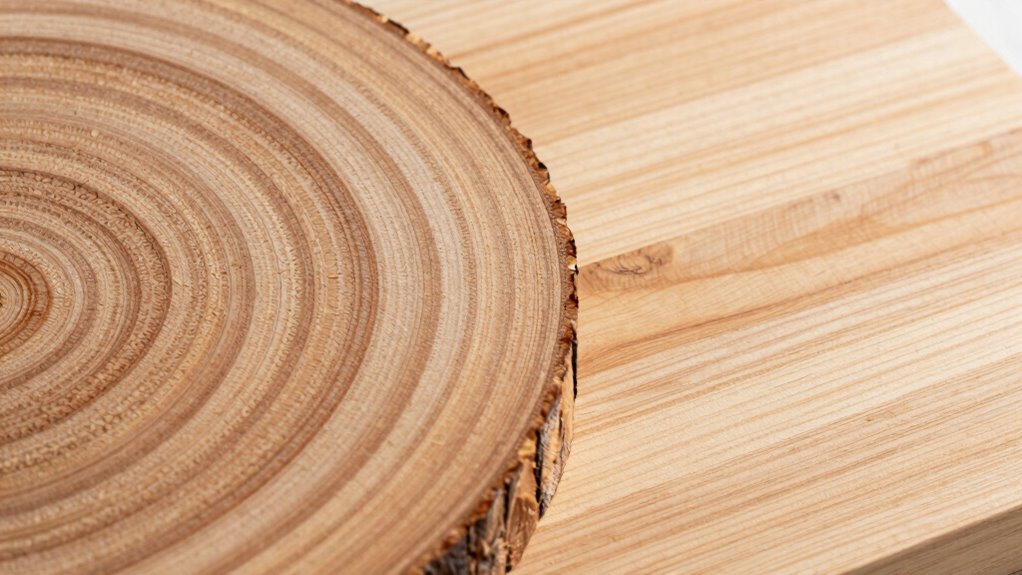
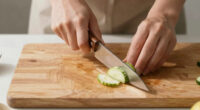
End grain boards have a cross-section surface that’s tough, absorbs less moisture, and resists knife marks, making them great for daily chopping. Edge grain boards offer a flatter, easier-to-clean surface that’s less porous and more hygienic, ideal for lighter tasks. Proper maintenance like regular oiling and cleaning keeps both types safe and durable. If you want to learn more about how these surfaces impact your kitchen routine, keep exploring the details below.
Key Takeaways
- End grain is more durable, resistant to knife marks, and absorbs less moisture, making it ideal for daily chopping.
- Edge grain offers a flatter, easier-to-clean surface suitable for general food prep tasks.
- Regular maintenance like oiling and sanding keeps both types safe and prolongs their lifespan.
- End grain surfaces are more porous and require thorough cleaning to prevent bacterial buildup.
- Edge grain boards are less porous and easier to sanitize, making them more hygienic for everyday use.
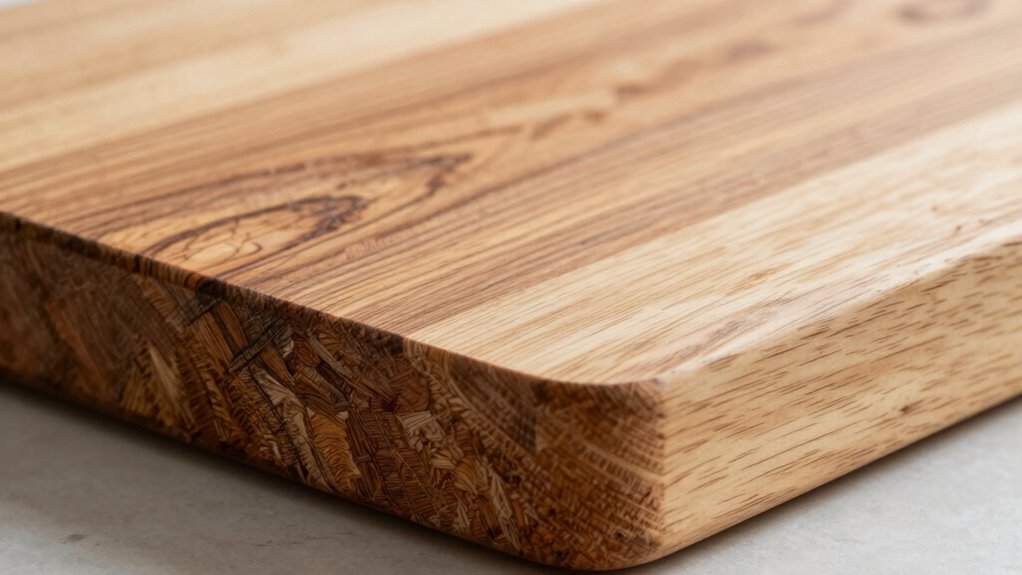
When choosing wood for your project, understanding the differences between end grain and edge grain is vital, as each offers unique benefits and challenges. This knowledge can directly impact your daily prep, especially when it comes to kitchen safety and cleaning techniques. End grain, which refers to the cut surface showing the wood’s cross-section, tends to be more durable and resistant to knife marks. It absorbs less moisture and resists splintering, making it a popular choice for cutting boards that handle daily chopping. However, because end grain surfaces are more porous, they can harbor bacteria if not properly cleaned. That’s why paying attention to cleaning techniques is fundamental—regularly sanitizing with food-safe solutions helps prevent cross-contamination and guarantees your kitchen remains safe. Additionally, understanding the porous nature of end grain can help you better care for your cutting board to prevent bacterial buildup. Proper maintenance, such as applying mineral oil, can also help seal the surface and reduce bacteria retention. Using the right cleaning and maintenance techniques tailored to each grain type is essential for ensuring food safety and extending the life of your boards.
In contrast, edge grain, where the wood’s long edges are visible, offers a smooth, flat surface that’s easier to clean thoroughly. It’s less porous than end grain, which means it’s less likely to trap bacteria and easier to maintain hygiene. This makes edge grain boards ideal for tasks that don’t involve raw meat or juices, but it’s still important to clean them properly after use. Using warm water and mild soap, followed by thorough drying, helps keep the surface in good condition and prevents warping or cracking. Understanding these cleaning techniques not only prolongs the life of your cutting surfaces but also guarantees your kitchen remains a safe environment for food prep. Choosing the right cleaning products and methods, based on the type of grain, can significantly extend the lifespan of your board. Regular inspections and maintenance are also key to preventing surface damage, which can harbor bacteria and compromise safety.
When considering kitchen safety, it’s important to recognize that end grain surfaces, while more resistant to knife cuts, can sometimes be more uneven and prone to splinters if not well-maintained. Regular sanding or oiling helps keep the surface smooth and safe for hands and knives. Edge grain boards, being flatter and less porous, tend to be more forgiving in terms of maintenance but still require consistent cleaning to prevent bacterial growth. Whichever type you choose, establishing a routine cleaning technique—using hot, soapy water, avoiding soaking, and regularly oiling the wood—can help reduce risks and keep your food prep safe. Being mindful of the maintenance requirements for each type ensures your cutting board remains hygienic and durable over time. Proper storage in a dry, well-ventilated area also helps maintain the integrity of both grain types and prolongs their usability.

THETCHRY Walnut Wood Cutting Boards for Kitchen, End Grain Chopping Board Double Sided, Large Cutting Board with Handle, Charcuterie Butcher Block for Meal Prep & Serving with Gift Box, 17"×13"×1"
Still looking for a cutting board that is both beautiful and practical? THETCHRY end grain walnut cutting board…
As an affiliate, we earn on qualifying purchases.
As an affiliate, we earn on qualifying purchases.
Frequently Asked Questions
Which Wood Type Is Best for a Specific Kitchen Task?
For a specific kitchen task, maple wood is your best choice due to its high durability and smooth surface, making it ideal for cutting and chopping. Its aesthetic appeal is clean and classic, fitting well with various kitchen styles. You’ll find it resistant to scratches and stains, ensuring longevity. Choosing maple helps you balance both wood durability and aesthetic appeal, making your daily prep efficient and visually pleasing.
How Do End Grain and Edge Grain Affect Cleaning and Maintenance?
Oh, the joy of choosing between end grain and edge grain—your cleaning nightmare or dream! End grain resists stains better, making it easier to clean, but demands delicate care. Edge grain’s durability makes maintenance simpler, yet its aesthetic differences can hide scratches, causing frustration. So, if you love fuss-free cleaning, go for durability. If you crave a stunning look, accept the upkeep. Your kitchen, your rules!
Are There Safety Concerns With Using End Grain Cutting Boards?
Using end grain cutting boards is generally safe, but you should be cautious with knife durability. End grain boards can be tougher on knives, leading to quicker dulling if you’re not careful. For food safety, make sure you clean and sanitize the board thoroughly after each use, especially when cutting raw meats. Proper maintenance minimizes safety concerns, keeping your cutting surface safe and your knives in good condition.
Can End Grain or Edge Grain Be Refinished or Repaired?
Yes, you can refinish or repair both end grain and edge grain cutting boards, but doing so helps maintain food safety by reducing bacterial growth. Sanding the surface smooth removes surface cuts and bacteria, making it safer for daily prep. For end grain boards, be gentle to preserve the intricate grain pattern. Regular refinishing prolongs the board’s life, keeps it hygienic, and guarantees safe, effective food preparation.
How Do Cost Differences Impact Choosing Between the Two?
Cost differences considerably influence your choice between end grain and edge grain, mainly due to material durability and aesthetic appeal. End grain tends to be more durable and offers a unique look, but it’s often pricier. Edge grain is generally more affordable and provides a sleek appearance, making it ideal if budget matters. Your decision hinges on balancing cost with the durability and visual appeal you want for your daily prep surface.
THETCHRY Walnut Wood Cutting Boards for Kitchen, End Grain Chopping Board Double Sided, Large Cutting Board with Handle, Charcuterie Butcher Block for Meal Prep & Serving with Gift Box, 17"×13"×1"
Still looking for a cutting board that is both beautiful and practical? THETCHRY end grain walnut cutting board…
As an affiliate, we earn on qualifying purchases.
As an affiliate, we earn on qualifying purchases.
Conclusion
Choosing between end grain and edge grain cutting boards impacts your daily prep, with each offering unique benefits. For instance, if you’re slicing tomatoes daily, an end grain board can help keep your knives sharp longer. Imagine a home cook who switches to an end grain board after noticing dull blades; they find chopping easier and more enjoyable. Ultimately, understanding these differences helps you select the right board for your cooking style, making prep safer and more efficient.
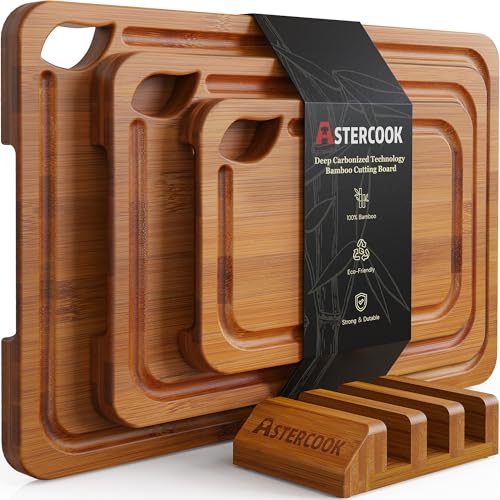
Astercook Deep-Carbonized Bamboo Cutting Boards for Kitchen with Wood Storage Stand, Reversible Charcuterie & Chopping Boards with Juice Grooves and Easy-Grip Handles, Fathers Day Gift for Men
【Deep-Carbonized Bamboo for Lasting Strength】 Crafted from premium bamboo and treated with high-heat carbonization, this wood cutting board…
As an affiliate, we earn on qualifying purchases.
As an affiliate, we earn on qualifying purchases.

Titanium Cutting Board for Kitchen, Cutting Board Double Sided Food Grade, Pure Titanium/PP, Easy to Clean Large Size 15”×10.3”
【2 IN 1 Cutting Board 】Cutting board is a versatile 2 in 1 kitchen tool, with one side…
As an affiliate, we earn on qualifying purchases.
As an affiliate, we earn on qualifying purchases.