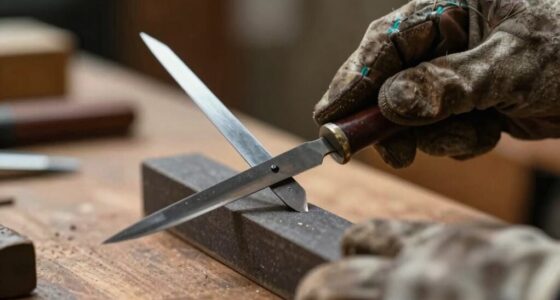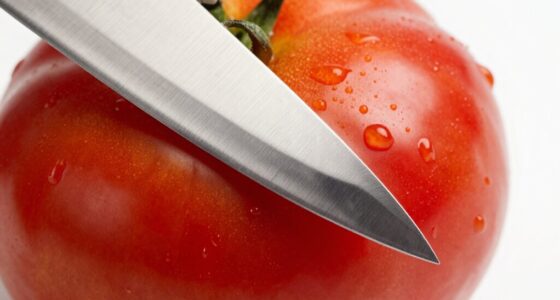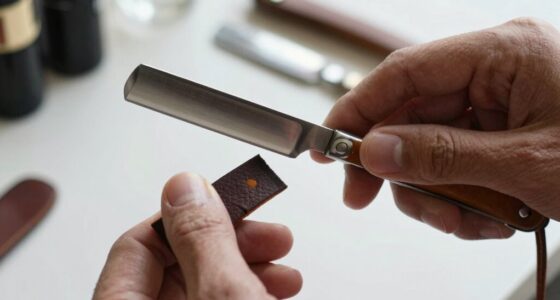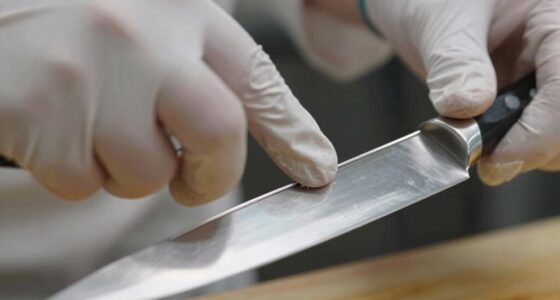
To decide if your knife needs a coarse stone, examine its edge closely for severe damage like chips, bends, or rounded tips. If it feels dull and shows significant dullness or damage, a coarse stone can restore its shape quickly. For minor dullness or smooth edges, fine stones might suffice. Also, consider how often you use your knife and the material it’s made of. Keep going to discover more tips for evaluating your blade effectively.

Get kitchen gear delivered free — and shop member deals
- Fast, free delivery on millions of items
- Access to Prime Big Deal Days deals on October 6–7
- Prime Video, Amazon Music and more included
Key Takeaways
- Check for severe damage like chips, bends, or rounded edges indicating coarse sharpening is needed.
- Assess dullness; significant dullness or loss of edge sharpness often requires coarse grit.
- Consider blade usage; heavy-duty or frequent use may necessitate a coarse stone for restoration.
- Inspect the steel hardness; softer steels dull faster and need more aggressive sharpening.
- Evaluate edge condition visually; smooth or slightly dull edges may only need fine stones.
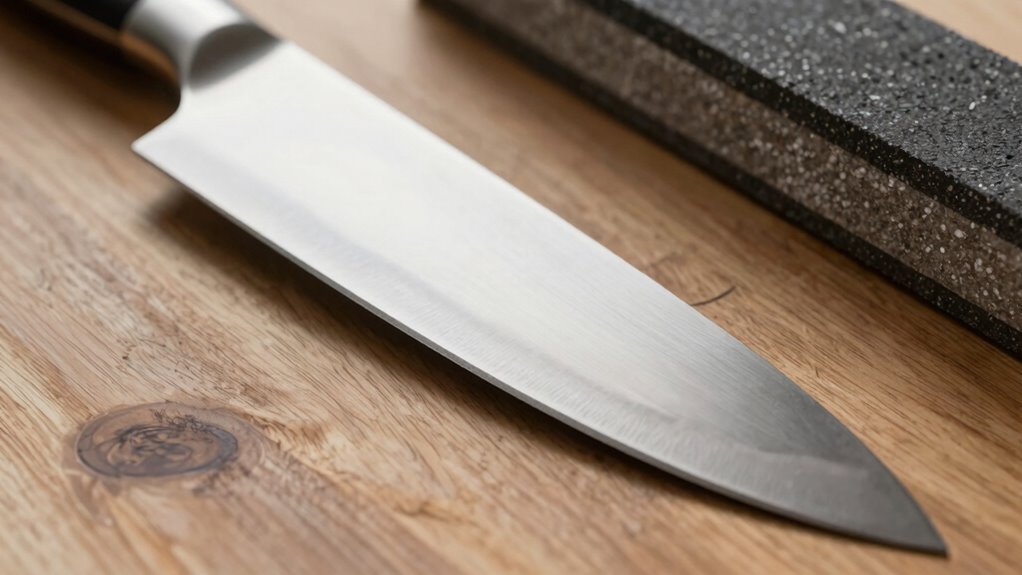
Deciding whether your knife needs a coarse stone begins with evaluating its current condition. You need to look closely at the blade’s edge—does it feel dull or chipped? If the blade material is softer steel, it may dull faster and require more frequent sharpening, but the type of steel also influences whether you need a coarse stone. Harder steels tend to hold an edge longer, so they might not need aggressive sharpening as often. Conversely, softer blades tend to become dull quickly and may benefit from a coarse stone to reshape or reprofile the edge. Contemplate how often you use your knife; if you’re using it daily for tough tasks, sharpening frequency increases, and a coarse stone might be essential for maintaining performance.
Next, examine the visible state of the edge. If it’s noticeably rounded, bent, or has nicks, a coarse stone is usually recommended to restore the blade to a sharper, more functional edge. Fine stones might polish the edge, but they won’t remove significant damage or reshape the bevel. A coarse stone, with its larger grit particles, can quickly remove material and help you bring the blade back to its original profile. If your knife only feels slightly dull or has a smooth edge, a finer stone might suffice, and you can skip the coarse step. But when the damage is more severe, the coarse stone becomes your best tool to rescue the blade. Blade damage can often be an indicator that a coarse stone is needed to effectively restore the edge.
Another factor to deliberate is the type of tasks you perform. Heavy-duty cutting, chopping, or slicing through tough materials often results in more wear and tear, making a coarse stone more necessary to maintain a sharp edge. Light kitchen tasks or delicate slicing may only require fine or medium grit stones. Remember, using a coarse stone too often on a blade that doesn’t need it can remove unnecessary material, shortening the lifespan of your knife. It’s all about matching the sharpening method to the blade’s condition and the material it’s made of. Blade material influences how often you need to sharpen and whether you should start with a coarse stone. Softer blades dull faster and may need more aggressive sharpening, while harder steels can usually go longer between coarse sharpening sessions. Additionally, understanding the steel hardness of your blade can help determine the appropriate sharpening approach.
coarse sharpening stone for knives
As an affiliate, we earn on qualifying purchases.
As an affiliate, we earn on qualifying purchases.
Frequently Asked Questions
Can a Coarse Stone Damage My Knife’s Edge?
A coarse stone can damage your knife’s edge if you use improper sharpening techniques or if the blade material is very soft. For softer blades, aggressive grinding might cause chipping or excessive wear. Conversely, harder materials like high-carbon steel handle coarse stones well if you maintain proper pressure and angle. Always match the sharpening technique to your blade’s material to avoid damage, and use a coarse stone only when necessary for heavy dullness or chips.
How Often Should I Use a Coarse Stone?
You should use a coarse stone when your knife’s blade material shows significant dullness or chips, typically every few months or as needed. If your knife handle feels loose or the blade struggles with tough cuts, it’s a sign to sharpen more often. Coincidentally, regular maintenance keeps your knife balanced, preventing damage. Remember, over-sharpening can wear down the blade, so balance it with proper care and timing.
Is a Coarse Stone Suitable for All Types of Knives?
A coarse stone isn’t suitable for all knives, especially those with softer blade materials or delicate finishes. It’s best for knives with hard blades or damaged edges needing significant reshaping. If your sharpening technique involves removing a lot of material quickly, a coarse stone works well. However, for fine honing or maintaining a polished edge, you should switch to finer stones. Always consider your knife’s blade material before choosing your sharpening method.
What Signs Indicate My Knife Needs a Coarse Stone?
If your knife struggles with blade durability and fails to cut smoothly, it’s time for a coarse stone. Signs include visible chips, a dull edge, or uneven sharpening results, indicating the need for aggressive sharpening techniques. You’ll notice a rougher feel and increased effort during use, which means a coarse stone can restore the edge more effectively. Don’t ignore these signs; they signal your knife needs a more robust sharpening approach.
Can I Sharpen a Dull Knife Without a Coarse Stone?
Yes, you can sharpen a dull knife without a coarse stone by exploring alternative sharpening methods like using a honing rod, ceramic rod, or even a sharpening steel. These tools can help realign the blade and improve sharpness. However, if your knife remains dull despite these methods, it’s time to replace the stone or consider more aggressive options. Knowing when to replace a stone guarantees you maintain an effective, safe sharpening process.
As an affiliate, we earn on qualifying purchases.
Conclusion
If your knife still struggles to cut even after honing, it’s time for a coarse stone — otherwise, you’re just sharpening a sword for a paper cut. Don’t let dullness turn your kitchen into a battleground; a coarse stone can transform your blade from a dull, ineffective tool into a razor-sharp weapon. Trust your senses and the state of your knife, and when in doubt, remember: a good edge isn’t just a luxury — it’s your secret weapon in the kitchen.
heavy-duty knife sharpener coarse grit
As an affiliate, we earn on qualifying purchases.
As an affiliate, we earn on qualifying purchases.
professional knife sharpening stone
As an affiliate, we earn on qualifying purchases.
As an affiliate, we earn on qualifying purchases.
Fall Picks
fall essentials
As an affiliate, we earn on qualifying purchases.